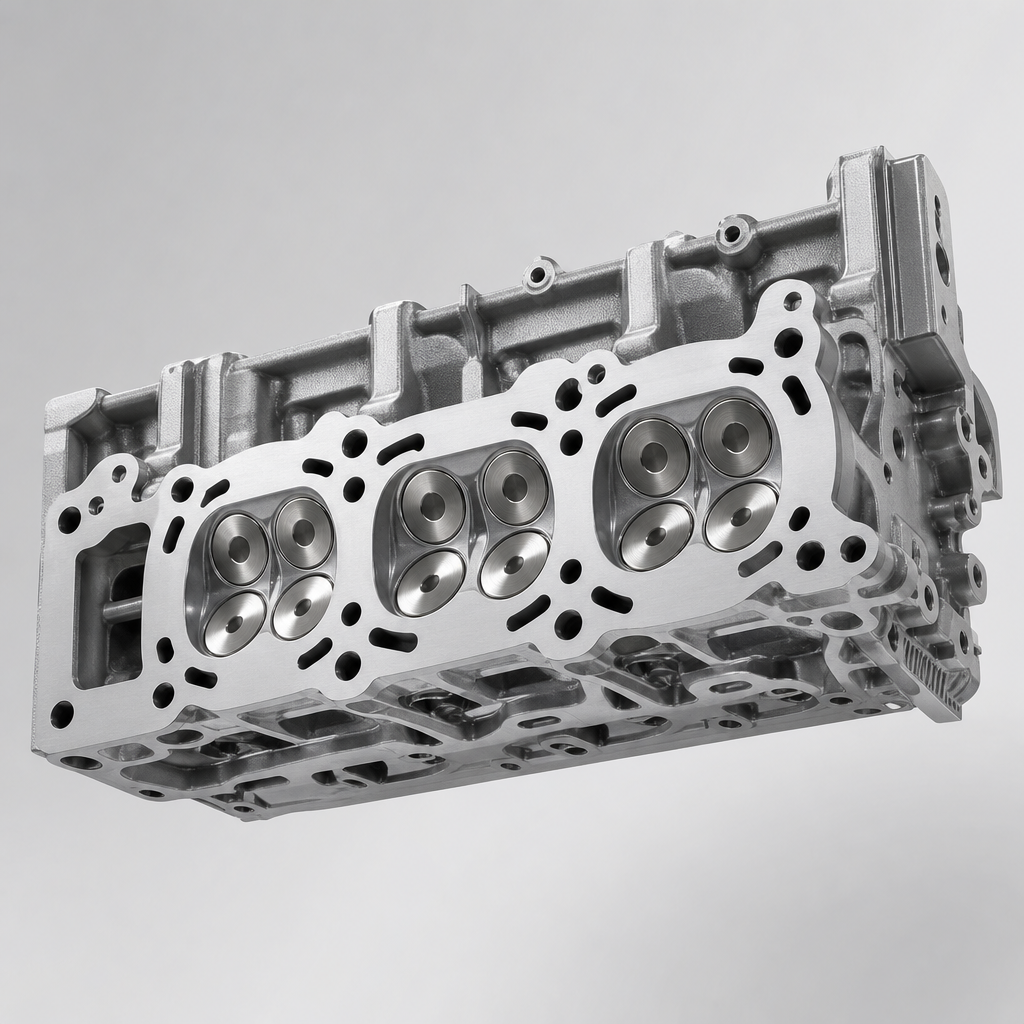
Camshaft Phaser Mitsubishi Supplier Guide for Buyers
A camshaft phaser Mitsubishi supplier should not be chosen from a catalog line alone. The part has to match the engine code, cam side, oil-feed layout, locking strategy, phasing range, and mounting geometry. The supplier also has to prove that the same dimensions, cleanliness level, packaging condition, and batch records can be repeated after the sample order.
For procurement teams, the decision is usually a mix of three questions. Will it fit the Mitsubishi application without timing faults? Can the factory control machining, assembly, leakage, and traceability at volume? Do the commercial terms support real replenishment instead of a one-time low price? Driventus supplies engine and powertrain components from a vertically integrated plant in Taizhou, Zhejiang, operating under IATF 16949:2016 and ISO 9001:2015 systems. Driventus is an independent aftermarket manufacturer; vehicle brand names and OE references are used only for fitment identification.
This guide gives buyers a more practical way to qualify a source: start with failure risks, compare the commercial model, demand useful records, and lock the inspection rules before issuing a purchase order.
Start With the Failure Modes, Not the Part Number
The fastest way to avoid a bad sourcing decision is to ask how the part can fail in your application. For this product family, many problems start with a small dimensional or hydraulic mismatch. A 0.2-0.5 mm error in locating diameter, oil-port position, bolt-circle geometry, or seal face height can be enough to create installation issues, oil leakage, slow phasing response, or timing faults even when the catalog description looks correct.
Check these risks first:
Wrong OE cross-reference because the vehicle badge was used instead of the engine application
Intake and exhaust phasers confused on engines that use different side-specific designs
Incorrect vane chamber count or phasing angle, commonly in the 20-60 crankshaft-degree range depending on design
Oil feed port, seal face, or internal leakage control mismatched to the oil control strategy
Lock-pin release pressure or default park position that does not match the engine requirement
Surface hardness, cleanliness, or corrosion protection below the required standard
A capable supplier should answer with drawings, dimensional reports, sample parts, and application-specific data. For Mitsubishi applications, that means checking engine family, production period, side designation, and oil control valve relationship before production quantity is approved.
Driventus can build the review around the relevant application file, map it to our catalog, and support goods-in checks such as locating diameter, mounting face runout, oil-port alignment, visual cleanliness, and carton traceability. The aim is simple: prove the cross-reference before the shipment becomes a receiving dispute.
Compare the Commercial Model Behind the Quote
A technically correct part can still be a weak sourcing choice if the supply model is unstable. When comparing camshaft phaser Mitsubishi supplier options, do not stop at unit price. Ask whether the supplier can handle trial orders, repeat batches, replenishment timing, and documentation on every shipment.
Criterion
What to Ask
Practical Buyer Check
MOQ
Minimum order quantity by part number
Is the first run manageable, for example 50-200 pcs for stocked references or higher for made-to-order items?
Sample lead time
Time to first samples
Are samples made from production tooling and normal process flow, typically 7-20 days when tooling is ready?
Mass production lead time
Standard weeks from PO to shipment
Can the supplier hold 30-45 day replenishment for active items or explain longer 45-75 day make-to-order timing?
Price logic
Unit price by volume break
Does the quote separate sample price, 100 pcs, 500 pcs, and annual forecast levels instead of giving one vague number?
Traceability
Batch, lot, or carton identification
Can each carton be linked to production date, operator or process record, and inspection report?
Packaging
Corrosion protection and transit control
Will parts arrive clean, dry, separated, and ready for inbound inspection after sea freight?
Change control
Tooling, material, or process revisions
Will the buyer be notified before a controlled change is released, with sample or PPAP-style approval if required?
</tr></thead><tbody> </tbody></table>Lead-time control is often more valuable than a small price reduction. Aftermarket distributors, repair networks, and regional importers need replenishment they can plan around. A stronger supplier should be able to separate stocked items from made-to-order parts, explain batch consolidation, and identify any production constraints before the PO is placed.
Calculate landed cost, not just unit cost. Include inner box and master carton quantity, pallet loading, sea or air freight, inspection cost, duty code assumptions, and the cash impact of ordering more than true demand just to meet MOQ.
Ask for Records That Prove Control
A certificate is useful, but it is not a quality system by itself. A serious supplier should show how the process is controlled and how records are retained. Driventus operates under IATF 16949:2016 and ISO 9001:2015, supporting process control, corrective action, supplier management, calibration, and record retention.
For export markets, buyers may also need material and regulatory alignment. Depending on part configuration and destination market, request documentation against REACH (EC) No 1907/2006 where material compliance is relevant. If the purchase requires performance evidence, ask for validation records that match the intended duty cycle instead of accepting a generic claim.
Useful documents include:
Dimensional inspection report for locating diameter, mounting face, bolt-hole position, oil-port location, and runout
Material certificate or chemistry report where applicable, including steel grade or powder-metal specification if controlled by the drawing
Hardness, surface treatment, or coating confirmation reported by lot, not copied from a catalog
Packing specification and corrosion-protection method, including VCI bag, anti-rust oil, desiccant, or sealed inner-box method
Lot traceability record linking production batch, inspection date, and carton or pallet mark
PPAP-style submission package when required, often including process flow, control plan, FMEA, MSA, and initial sample report
Corrective action response format covering containment, root cause, corrective action, and verification timing
Driventus provides documentation suited to B2B procurement review, factory audits, and inbound inspection workflows. The approval process should rest on evidence: application data, controlled production records, calibrated gauges, and a defined path for resolving nonconformance.
For first orders, set acceptance rules before shipment. A practical approach is 100% visual and packaging check, sampling inspection for critical dimensions, and functional verification on samples from each lot, with AQL or customer-specific sampling levels agreed in the PO.
Build a Validation Matrix Before Approving Samples
Camshaft phaser validation should follow the actual risk profile of the component. The key concerns are oil control stability, timing response, leakage, wear resistance, locking function where applicable, and behavior under temperature cycling. Ask the supplier how the part is checked before release and which tests are used for new or revised applications.
Common buyer-relevant checks include:
Functional response under controlled oil pressure, with pressure and oil temperature stated in the report
Phasing repeatability over multiple cycles, including advance and retard movement rather than one static measurement
Leakage and sealing verification across the working oil-pressure range
Lock-pin or return-position function where the design includes it, including release pressure and re-lock confirmation
Noise evaluation at operating temperature, especially after thermal cycling or endurance running
Durability under engine-relevant duty cycles, with cycle count, speed, load, oil temperature, and inspection points recorded
Corrosion resistance of exposed surfaces, such as 24-96 hour neutral salt spray or a customer-specified benchmark
Cleanliness checks for oil passages and assembled parts, including particle size limits where specified
Where environmental or durability benchmarking is required, test plans may reference published methods such as SAE J2527 for corrosion testing, or OEM-specific validation routes when the buyer supplies the requirement set. For emissions-related applications, buyers may ask how the component supports compliance work tied to ECE R-83 at vehicle level. The supplier should not claim vehicle approval; the correct role is to document component performance so the integrator or vehicle-level responsible party can complete certification work.
For a new programme, request a validation matrix before approving samples. It should list the test item, sample quantity, acceptance criteria, equipment used, date, and responsible engineer. This format makes two suppliers easier to compare and stops a short pass/fail summary from hiding weak test coverage.
Audit the Plant Like a Repeatability Test
Factory audits are where sourcing teams usually separate a real manufacturing source from a trading-only channel. A useful audit does more than confirm that machines exist. It should show whether the plant can control production from raw or semi-finished input through machining, cleaning, assembly, inspection, packing, and shipment.
Look for evidence of:
Vertical integration of machining, cleaning, assembly, and inspection
Process flow that supports stable lot control from incoming material to finished carton
Defined inspection points for critical dimensions and function, with frequency stated in the control plan
Final inspection before packing, including visual condition, marking, movement check, and packaging confirmation
Calibration control for gauges and fixtures, including gauge ID, calibration date, and next-due date
Controlled handling of nonconforming material, with quarantine area and disposition authority
Documented corrective action handling, including response timing for 8D or customer-specific reports
Driventus manufactures engine and powertrain parts in Taizhou, Zhejiang, and supports audit requests from distributors, OEM and Tier-1 buyers, and multi-location repair chains. Our quality system covers the controls that matter during supplier qualification, while the part mix in our catalog helps buyers consolidate sourcing across related engine components.
One audit exercise is especially revealing: choose one packed camshaft phaser and trace it back to its production batch, inspection sheet, operator station, and incoming material record. If the chain breaks, the issue is usually traceability discipline, not paperwork style. The practical audit question is whether the supplier can repeat the same part, at the same dimensions, under the same control plan, after the first shipment has cleared.
Fitment Q&A for OE Cross-References
A camshaft phaser is not a generic commodity. Mitsubishi applications can vary by engine family, displacement, emissions package, valve timing strategy, and production year. A reliable camshaft phaser Mitsubishi supplier should check the OE reference against the application context, not treat one reference as proof of universal fitment.
What application details should be checked?
Engine code and displacement
Model year or production-period range, including mid-year changes where the service market separates them
Camshaft drive configuration, chain or belt layout, and sprocket tooth count where relevant
Intake or exhaust side designation, especially when the visual shape is similar but oil routing differs
Oil control valve interface where applicable, including solenoid location and oil-feed path
Trigger wheel, sensor, or position relationship if integrated
Related gasket, bolt, washer, or installation requirements where they affect service fit
Does an OE number prove fitment by itself?
No. OE references are useful identifiers, but the supplier should still confirm the application context. When the market uses OE part-number references such as OE 06A107065 style identifiers, Driventus uses them for identification only and does not imply vehicle-maker endorsement.
What should a buyer send for a fitment review?
Send the OE number, engine code, VIN sample or production month if available, intake/exhaust side, target market, and photos of the removed unit from the front face, rear face, and oil-port side. For disputed cases, ask the supplier to compare critical dimensions in a table so your receiving team can check the sample with calipers, height gauge, pin gauges, and a runout fixture.
If your team is building a broader sourcing basket, the adjacent engine components range can help reduce the number of suppliers involved in one programme and simplify documentation review across related parts.
When Custom Manufacturing Makes Sense
Some buyers need a direct aftermarket replacement. Others need a controlled variant for a regional fleet, private-label range, repair-chain programme, or distributor catalog. Custom manufacturing can support those cases, but only if engineering changes and commercial requirements are kept under control.
A specific surface finish, treatment, or coating requirement, with salt spray, hardness, or oil-retention target stated in the specification
Packaging labels matched to your distribution flow, including SKU, barcode, country of origin, and batch number
Carton marking, barcode, or private-label presentation for warehouse scan-in and customer resale
A dimensional variant tied to a controlled application set, with drawing revision and sample approval before production
Document packs adapted to your customer requirements, such as inspection report, material note, and packing list by lot
Volume scheduling aligned to forecast releases, for example monthly call-offs against a quarterly or annual estimate
Pre-shipment inspection steps matched to your receiving standard, including photo report, measurement report, and carton count
This matters for procurement teams supporting multiple countries, where label language, carton marking, and inspection records can differ by market. A supplier that manages those details reduces receiving rework, avoids warehouse relabeling, and makes repeat orders easier to control.
Keep engineering approval and commercial approval separate. First approve the sample and drawing revision. Then lock carton quantity, MOQ, price break, lead time, and change-control rules. That prevents a packaging or branding request from becoming an uncontrolled engineering change.
Ten PO Controls That Prevent First-Order Problems
Before the first purchase order, use a short checklist that forces the technical and commercial assumptions into writing. The goal is to confirm the application, prove the supplier can make the part consistently, and avoid surprises when the shipment reaches your warehouse.
1. Confirm OE cross-reference and engine application. 2. Check engine code, production-period range, and intake or exhaust side. 3. Review drawing, critical dimensions, oil ports, mounting interface, and phasing angle. 4. Request sample lead time and mass production lead time, separating stock parts from made-to-order parts. 5. Verify MOQ, price breaks, carton quantity, pallet plan, and shipment terms. 6. Ask for inspection records and traceability format before approving the first shipment. 7. Confirm packaging, corrosion protection, and shelf-life expectations, especially for sea freight or humid markets. 8. Align on change-control notice and defect response time, including 24-48 hour containment for urgent receiving issues. 9. Define what happens if incoming inspection finds a mismatch, including replacement, credit, sorting, or return process. 10. Record the approved sample, drawing revision, label format, and inspection criteria in the PO or supply agreement.
For time-sensitive sourcing, start with the application data, compare it against the supplier drawing, then validate the sample batch against your receiving standards. That sequence prevents most avoidable mismatch issues and gives both sides a technical record before volume purchasing begins.
To move faster on sourcing, use request a quote with the engine code, part reference, target quantity, expected annual demand, destination market, and required delivery window.
Frequently asked questions
Yes. Driventus supplies aftermarket camshaft phaser parts for defined applications. We verify fitment by engine code, OE cross-reference, drawings, oil-port layout, side designation, and application data. Brand names are referenced for fitment only.
Buyers can request dimensional reports, traceability records, packing details, quality-system evidence, and relevant material or process documentation. For programme work, Driventus can also support customer-specific submission packs, control-plan review, and audit review.
MOQ and lead time depend on the exact application, tooling status, stock position, and order volume. As a practical range, stocked references may support smaller trial quantities, while made-to-order items usually require higher MOQ and longer production planning. Share the part reference, target quantity, forecast demand, and delivery window, and Driventus will confirm the commercial terms for that item.
No. Driventus is an independent aftermarket manufacturer; vehicle brand names and OE references are used for fitment identification only. We do not claim approval or endorsement by any vehicle manufacturer.
Send your engine code, OE reference, target volume, annual forecast, delivery window, and destination market, and Driventus will review the application fitment and supply terms. Start here: /contact.html