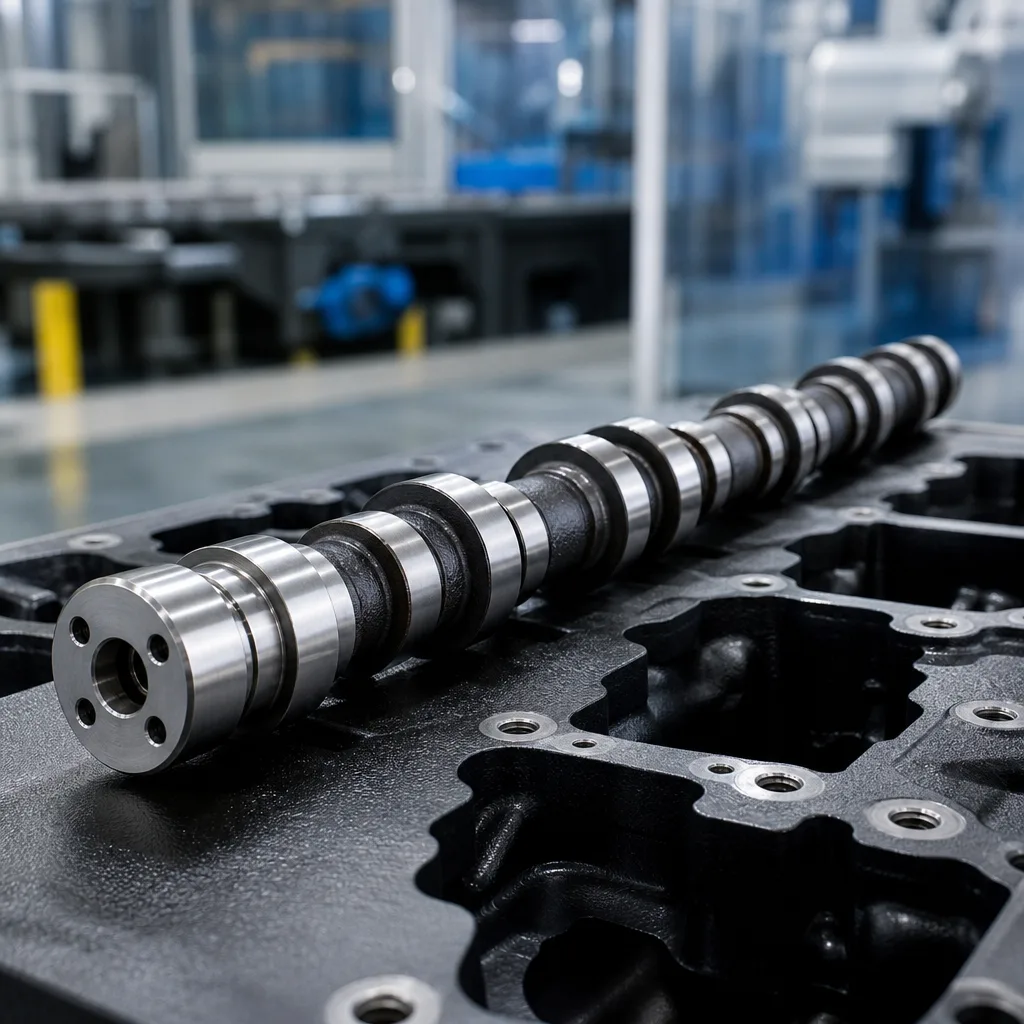
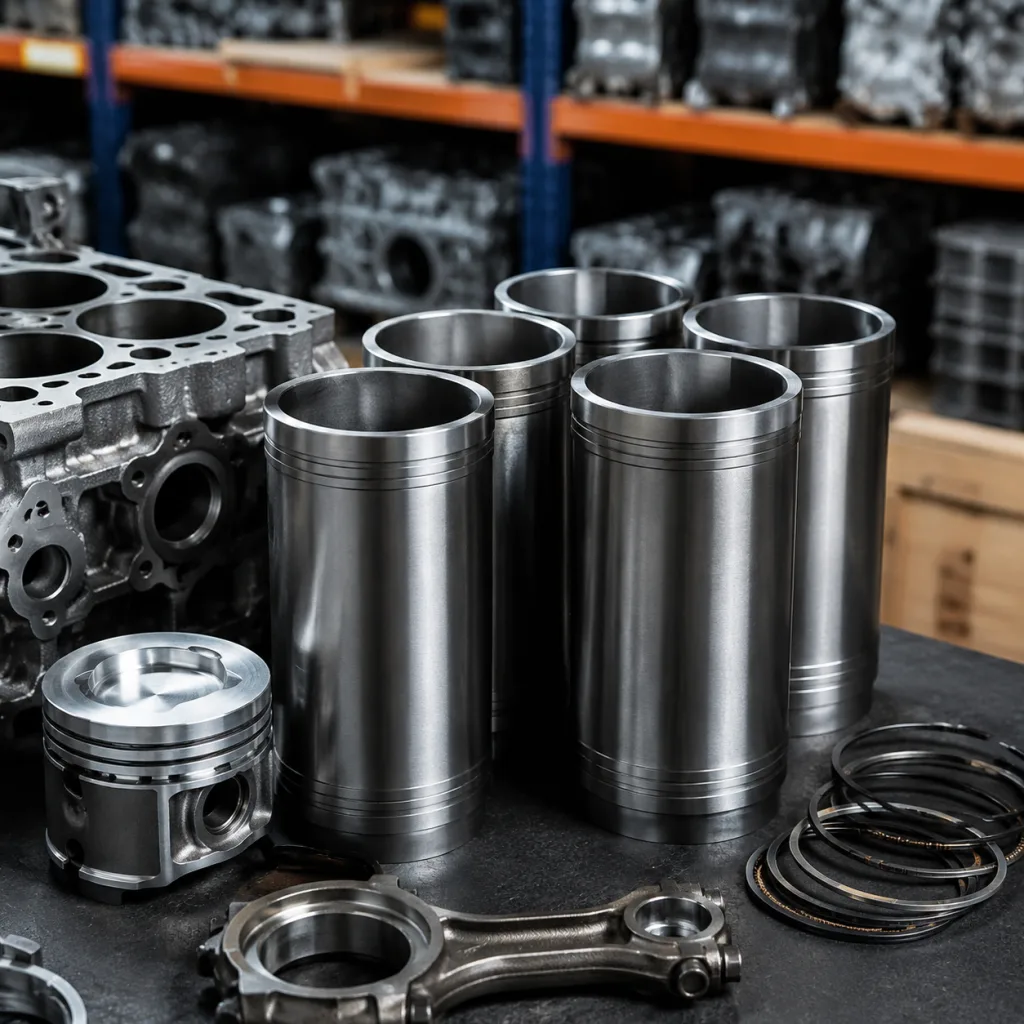
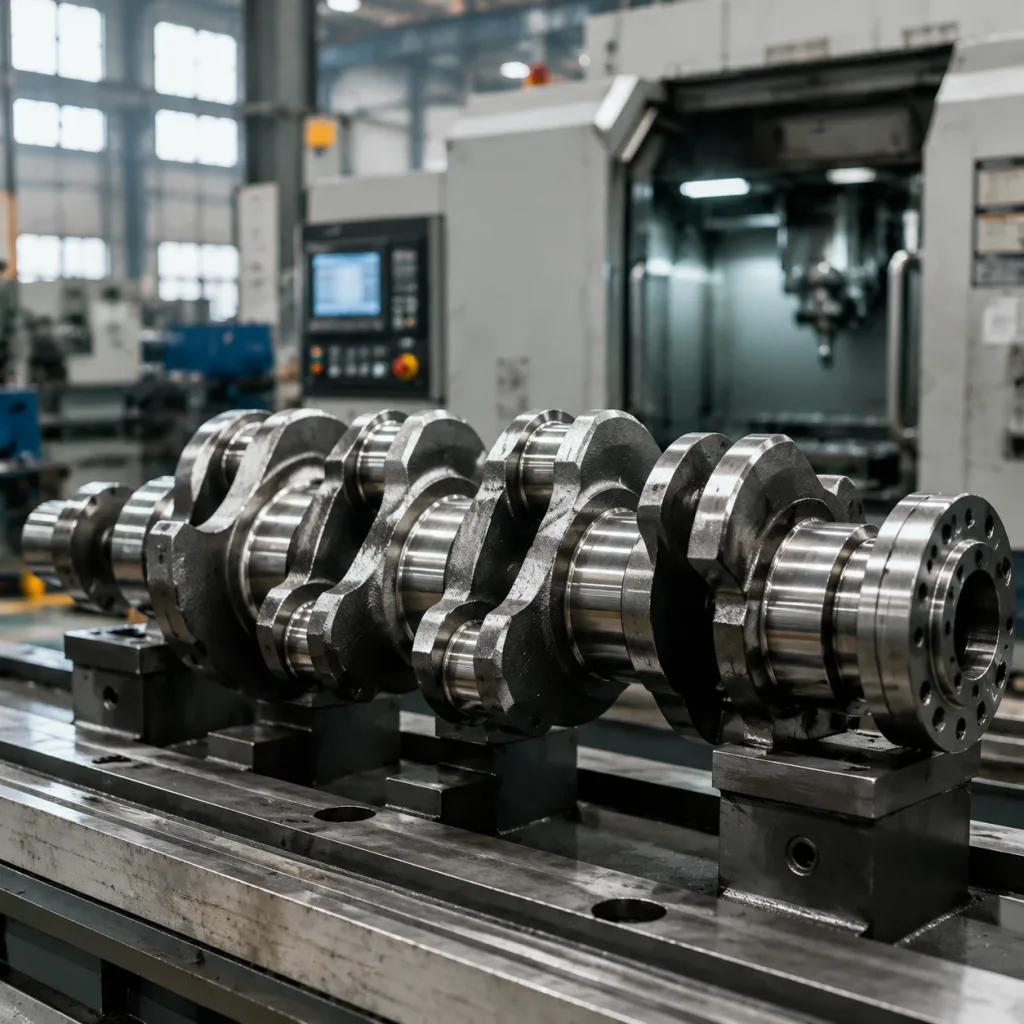
Camshaft phaser Mini wholesale sourcing depends on more than matching a part to a timing system. Buyers need confidence that every shipment will hold the same fitment accuracy, oil-control response, locking-pin function, surface finish, and packaging standard across repeat orders. For distributors, importers, repair chains, and private-label programmes, the larger risk is usually consistency rather than one-time sample performance.
Driventus manufactures engine and powertrain components in Taizhou, Zhejiang, and supplies B2B customers in more than 60 countries. For Mini applications, procurement teams typically evaluate camshaft phasers by OE-format cross-reference, engine family, tooth profile, advance/retard range, oil gallery design, camshaft interface, and solenoid compatibility. This guide explains what to check before placing a wholesale order, how to structure RFQs, and which quality records can reduce incoming inspection work. Driventus is an independent aftermarket manufacturer; brand names are referenced for fitment identification only.
Wholesale Fitment Scope for Mini Applications
Mini camshaft phasers are used in variable valve timing systems, where controlled oil pressure changes the camshaft position relative to the timing drive. In wholesale purchasing, visual similarity is not enough. The starting point should be a controlled fitment matrix that connects each phaser to the correct engine code, model year range, timing chain or belt layout, actuator type, and OE-format reference.
A sourcing file should include:
Application range by engine family and production period
Intake or exhaust position, where applicable
OE-format cross-reference, such as OE 06A... or OE 11251..., only when supplied by the buyer's data
Camshaft mounting interface and bolt specification
Timing sprocket tooth count and chain pitch
Locking-pin position at rest
Oil feed hole quantity, diameter, and orientation
Solenoid interface or oil-control compatibility notes
Required packaging label format for regional warehouses
The same model name can cover different engine families or production breaks, so buyers should confirm fitment against application data rather than relying on catalogue title alone. Driventus can review buyer-supplied samples, drawings, or TecDoc-style application data against our catalog. Where a distributor needs a private SKU structure, the same physical phaser can be mapped to regional numbering, carton labels, and pallet configuration while keeping one technical record for production and inspection.
Key RFQ Data: MOQ, Lead Time, and Order Structure
A clear RFQ reduces quotation cycles and prevents later disputes over fitment, packaging, or documentation. For camshaft phaser mini wholesale programmes, buyers should separate initial validation orders from rolling supply orders. A sample order is useful for dimensional checks and trial installation, but it should not be treated as proof of stable mass production unless the same process route, materials, and inspection plan are used for later orders.
RFQ item
Recommended buyer input
Why it matters
Annual demand
Units by SKU and destination
Supports tooling, machining capacity, and safety stock planning
Trial order
50-200 units per reference
Allows incoming inspection and installer feedback before full release
Production MOQ
Confirm by SKU family
Depends on casting, forging, machining, and packaging commonality
Standard lead time
Quoted after BOM and capacity review
Affected by raw material, heat treatment, machining load, and validation work
Packaging
Neutral, buyer brand, or bulk service pack
Impacts carton cost, label control, and customs documentation
Documentation
PPAP-style file, inspection report, material declaration
Reduces buyer audit and approval time
Incoterms
FOB, CIF, EXW, or other agreed term
Clarifies freight cost, risk transfer, and landed-cost comparison
</tr></thead><tbody> </tbody></table>For repair-chain and distributor customers, a practical first order often combines fast-moving references with low-volume coverage parts. That structure tests market response while limiting slow inventory. For OEM or Tier-1 projects, Driventus can discuss custom manufacturing, including drawing review, process capability targets, sample submission requirements, and buyer-specific validation documents.
Manufacturing Controls That Matter
A camshaft phaser is both a hydraulic control device and a precision mechanical assembly. Small deviations in vane clearance, rotor position, spring force, oil passage cleanliness, or locking-pin geometry can cause noise, slow response, diagnostic trouble codes, or unstable valve timing. Procurement teams should therefore audit the manufacturing process as well as the finished part.
Important process controls include:
CNC machining of rotor, stator, sprocket, and mounting faces
Controlled deburring of oil passages, vane edges, and feed holes
Heat treatment or surface hardening where specified by design
Cleaning and particle control before assembly
Locking-pin engagement and release verification
Spring force or return-position checks where applicable
Torque control for fasteners and cover assembly
End-of-line leakage and functional rotation checks
Traceability by batch, production date, and inspection lot
Oil-control stability depends heavily on repeatable internal clearances and clean passages. A phaser that passes a static dimensional check can still perform poorly if burrs, particles, or inconsistent sealing surfaces affect oil flow. Driventus operates under IATF 16949:2016 and ISO 9001:2015 management systems. These standards do not replace part validation, but they provide a framework for process control, corrective action, document control, supplier management, and continual improvement. Buyers can review the Driventus quality system as part of supplier pre-qualification or factory audit preparation.
Validation and Compliance Expectations
Wholesale buyers should define acceptance criteria before production. For a camshaft phaser, appearance inspection is only a small part of approval. A stronger control plan combines dimensional inspection, material checks, functional testing, and packaging verification, with clear pass/fail limits for the features most likely to affect timing performance.
A typical validation package may include:
Dimensional report for critical-to-fit features
Material certificate for specified steel or powder metal components
Hardness or surface-treatment report where applicable
Concentricity and runout checks for sprocket and cam interface
Leakage test under defined oil pressure and temperature conditions
Angular movement test across the designed advance/retard range
Locking-pin hold and release test
Cleanliness or particle-control report for oil passages
Salt-spray or coating test if corrosion resistance is specified
Carton drop or transport simulation for export packaging
Regulatory obligations vary by destination and product classification. For EU importers, REACH (EC) No 1907/2006 substance requirements may apply to material declarations. UK REACH or other national chemical reporting rules may also apply depending on the buyer's market. Vehicle emissions regulations, such as ECE R-83, relate to complete vehicle type approval and should not be presented as a direct approval claim for an independent replacement phaser. Driventus does not claim vehicle manufacturer approval or endorsement. Driventus is an independent aftermarket manufacturer; brand names are referenced for fitment identification only.
Factory Audit Points for Importers and Distributors
A factory audit should focus on repeatability. The aim is to confirm that the supplier can make the same phaser correctly after the first approved lot, during seasonal demand peaks, and after raw material, tooling, or process changes. Audit teams should connect what they see on the shop floor to the control plan, inspection records, and traceability system.
Useful audit questions include:
Is there a controlled drawing or master sample for each reference?
Are critical dimensions marked in the inspection plan?
How are oil passage cleanliness and burr control verified?
Are gauges calibrated and traceable?
What is the reaction plan for leakage-test failure?
How are nonconforming parts identified, segregated, and reviewed?
Can the supplier isolate affected batches by date code or lot number?
Are packaging labels checked against the purchase order before shipment?
Is there a formal change-control process before material, tooling, or process changes?
For multi-location repair chains, warranty administration is also important. Each carton should support batch identification, and each shipment should include enough documentation for regional distribution centres to handle incoming inspection and field claims. For aftermarket wholesalers, pallet stability, carton strength, barcode readability, and mixed-SKU loading rules can affect warehouse cost as much as the unit price.
Commercial Terms and Risk Reduction
Price comparison should be made on a landed-cost basis. A lower unit price can be offset by higher inspection labour, weak packaging, inconsistent labels, customs delays, or excess claim handling. Buyers should request a quotation that separates product price, tooling or fixture cost where relevant, packaging cost, sample cost, documentation requirements, and freight terms.
Recommended sourcing sequence:
1. Send application data, OE-format references, annual volume, and target markets. 2. Request fitment confirmation, available samples, MOQ, and standard lead time. 3. Review drawings, inspection items, and validation plan. 4. Place a controlled sample or pilot order. 5. Conduct incoming inspection and trial installation with documented feedback. 6. Confirm packaging artwork, barcode format, carton marks, and pallet rules. 7. Release production order with agreed labels, batch traceability, and shipment documents. 8. Review the first three shipments for claim rate, delivery stability, and carton condition.
For camshaft phaser mini wholesale purchasing, the most stable programmes are built around shared data and clear release criteria. Driventus can support distributors and importers with catalog cross-reference review, private-label packaging discussion, validation planning, and production scheduling for repeat orders. Buyers can request a quote with target SKUs, volume, and destination market.
Frequently asked questions
Send the application list, engine family, intake or exhaust position, OE-format reference if available, annual volume, target MOQ, packaging requirement, and destination country. A sample, drawing, or inspection report from the current supplier helps speed technical review.
Yes. Driventus can discuss neutral cartons, buyer-brand cartons, barcode labels, export pallet requirements, and mixed-SKU packing rules after the SKU list and order volume are confirmed. Packaging approval should be completed before mass production release.
No approval or endorsement by a vehicle manufacturer is claimed. Driventus supplies independent aftermarket components, and brand names are used only to identify fitment and application scope.
For sourcing review, sample discussion, or a wholesale quotation, send your SKU list, annual demand, and destination market to Driventus. Start the process at /contact.html