Buying a camshaft phaser from China is a sourcing decision, not a simple part purchase. For Isuzu applications, the risk is rarely obvious at the quote stage; it shows up later in fitment, oil-control behavior, timing response, or repeat-order drift. Procurement teams need a supplier that can prove dimensional match, traceable materials, stable lead times, and the ability to hold the same specification across production windows. Driventus manufactures engine and powertrain components in Taizhou, Zhejiang, and supplies B2B customers in more than 60 countries. We work to IATF 16949:2016 and ISO 9001:2015 systems, and we support independent aftermarket, OEM, and Tier-1 sourcing programs. Driventus is an independent aftermarket manufacturer; brand names are referenced for fitment only. The real question is not whether a sample looks right. It is whether the factory can document, repeat, and defend the specification when the order scales.
What can go wrong before the first shipment?
When sourcing a camshaft phaser Isuzu manufacturer China program, the biggest failures usually happen before the first carton leaves the factory.
The OE part number matches, but the engine code, emission package, or build year does not.
The mounting pattern fits, yet vane travel, lock-pin position, or oil-gallery geometry is off.
A sample passes visual inspection, but the production lot drifts on runout, end play, or leakage.
The supplier quotes a price without separating tooling, packaging, test time, or freight terms.
The factory says “within spec” but cannot show the actual tolerance band or measurement method.
If any of those sounds familiar, the issue is not price. It is control. For phasers, the buyer should not approve a source until the function, acceptance criteria, and test method are written down in the same language.
Which specs matter most in RFQ review?
A useful RFQ does not ask for everything. It asks for the few dimensions and test points that decide whether the part will work in the vehicle.
Control item
Buyer target / typical RFQ ask
Housing material
Aluminum alloy or steel, with alloy designation stated on the material cert
Rotor material
Hardened steel or sintered steel, with heat-treatment record
Critical bore tolerance
State drawing limit; commonly an RFQ asks for ±0.01 mm on functional bores
Radial runout
Measure at a defined datum; buyers often request ≤0.03 mm unless OE requires tighter
End play
Confirm against OE tolerance band; record actual measured value by lot
Vane travel
Match calibration requirement and state minimum effective angle
Lock pin operation
Confirm lock/unlock repeatability at cold start and idle conditions
Oil pressure response
Test at specified pressure and temperature, with pass/fail recorded at each set point
Internal leakage
No abnormal leakage beyond the approved limit at test pressure
Surface treatment
Anti-corrosion finish, clean oil passages, no burrs, no sharp edges
Packaging
Rust prevention, cavity protection, and part-level identification
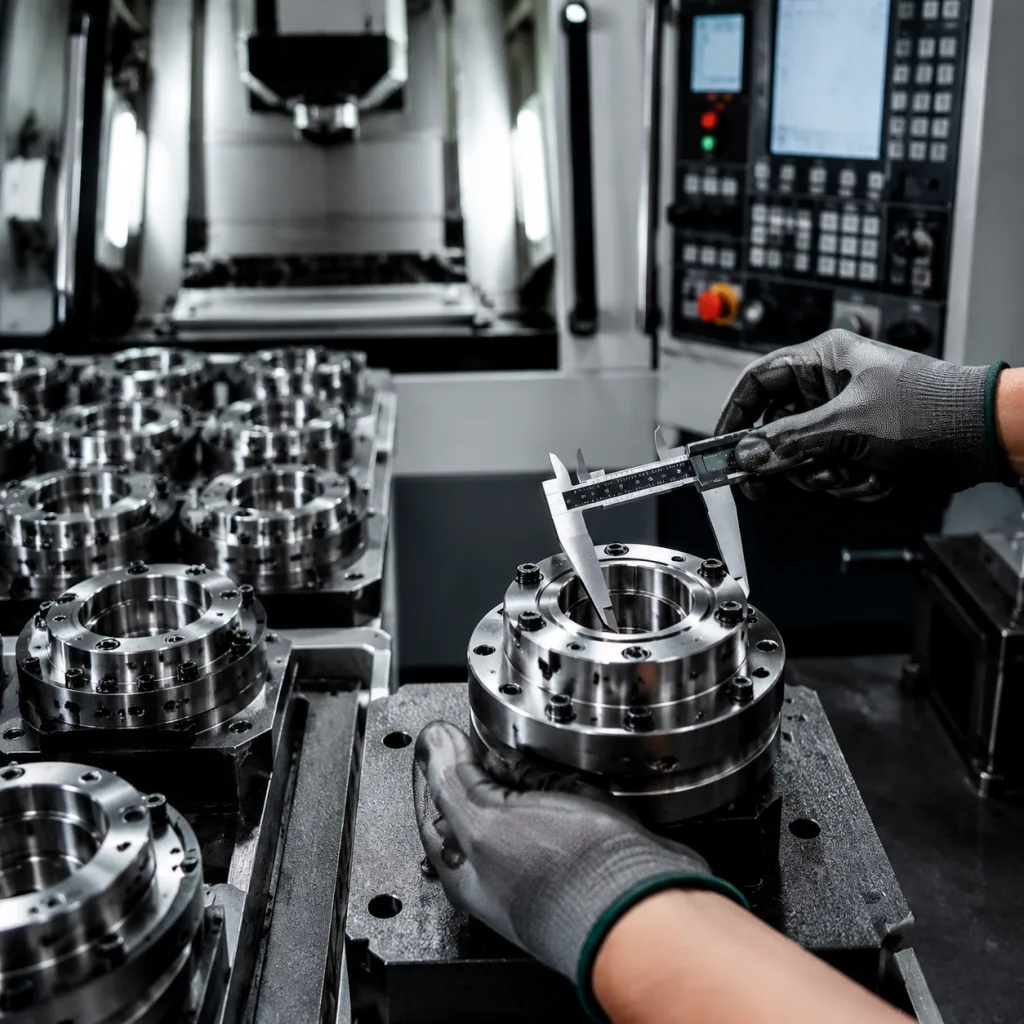
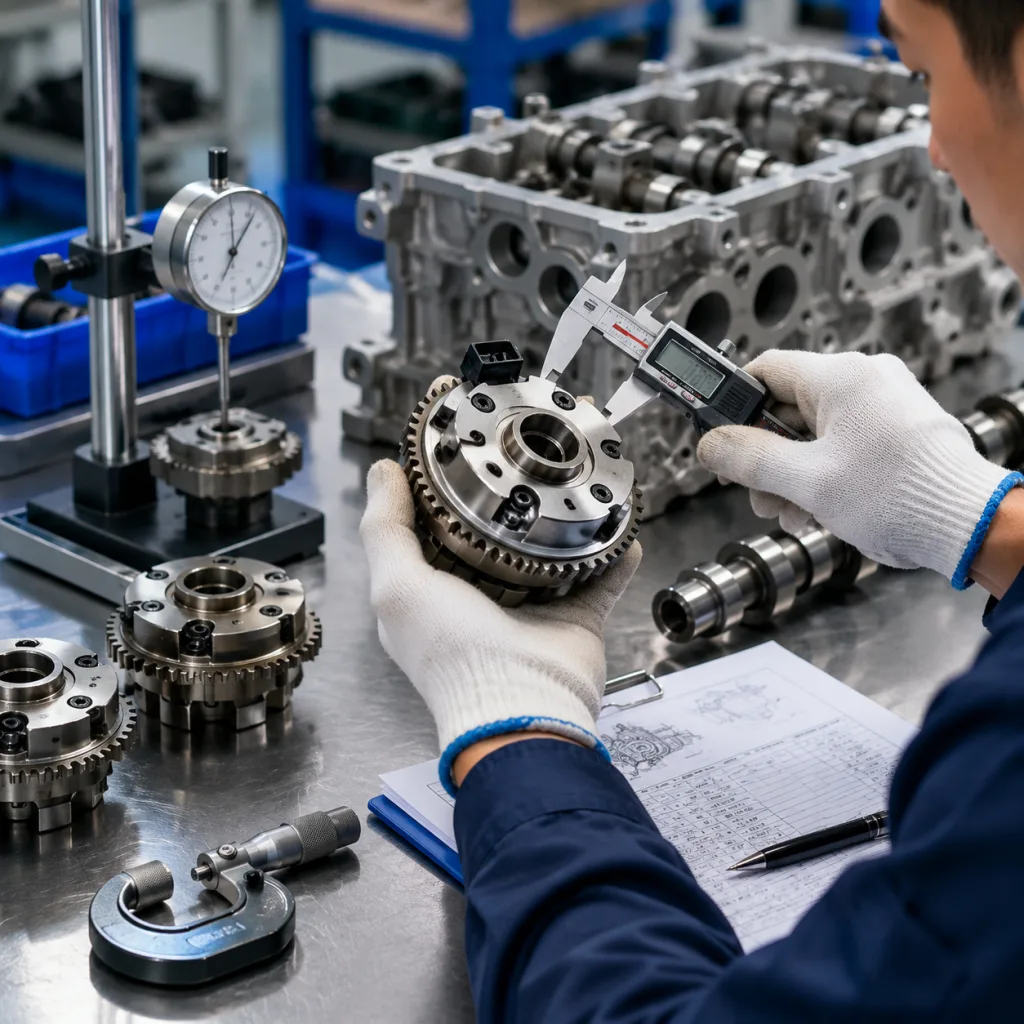
</tr></thead><tbody> </tbody></table>The supplier should also state how these numbers are measured: gauge type, datum, temperature condition, and sample size. Without that, two quotes may look identical while representing very different quality risk.
Why factory capability decides repeat order quality
A camshaft phaser is sensitive to machining accuracy, oil cleanliness, and assembly control. That is why a clean-looking sample is not enough. A weak process can still produce a good part once.
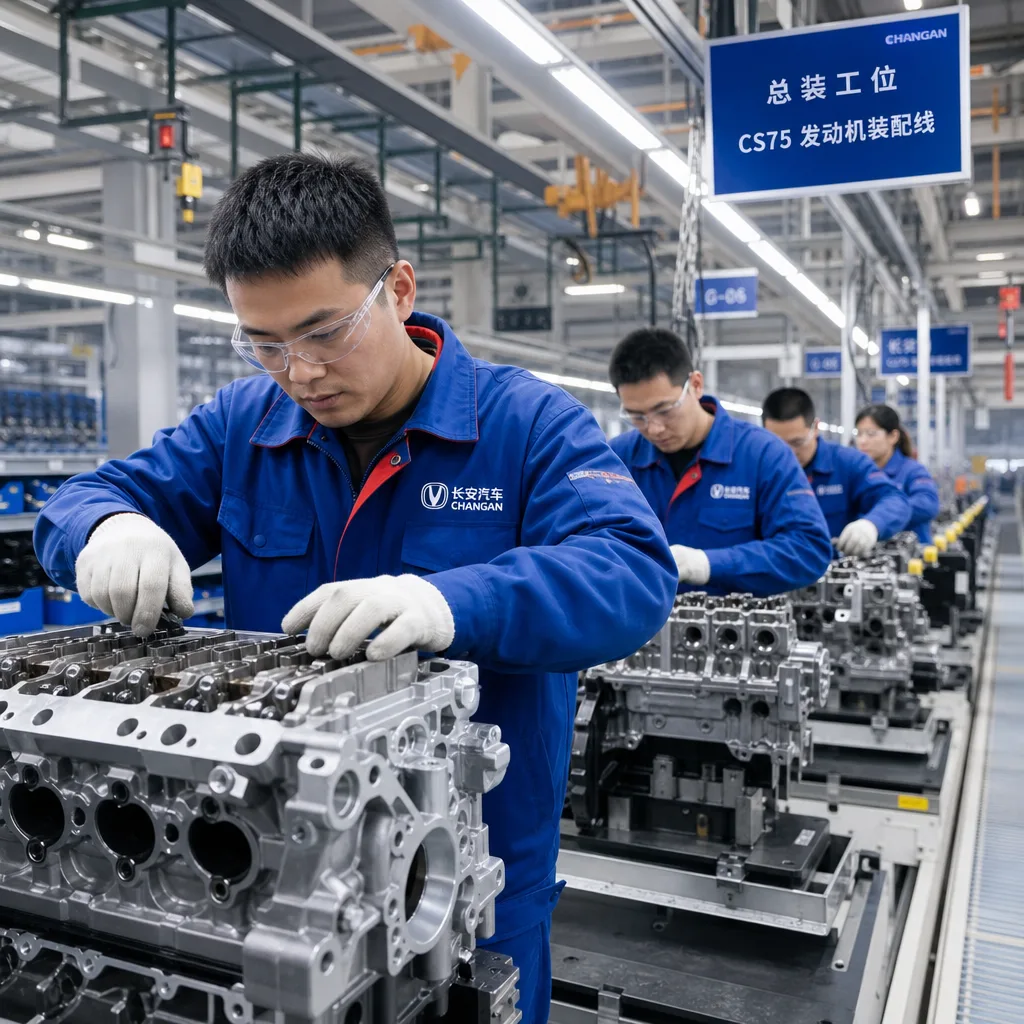
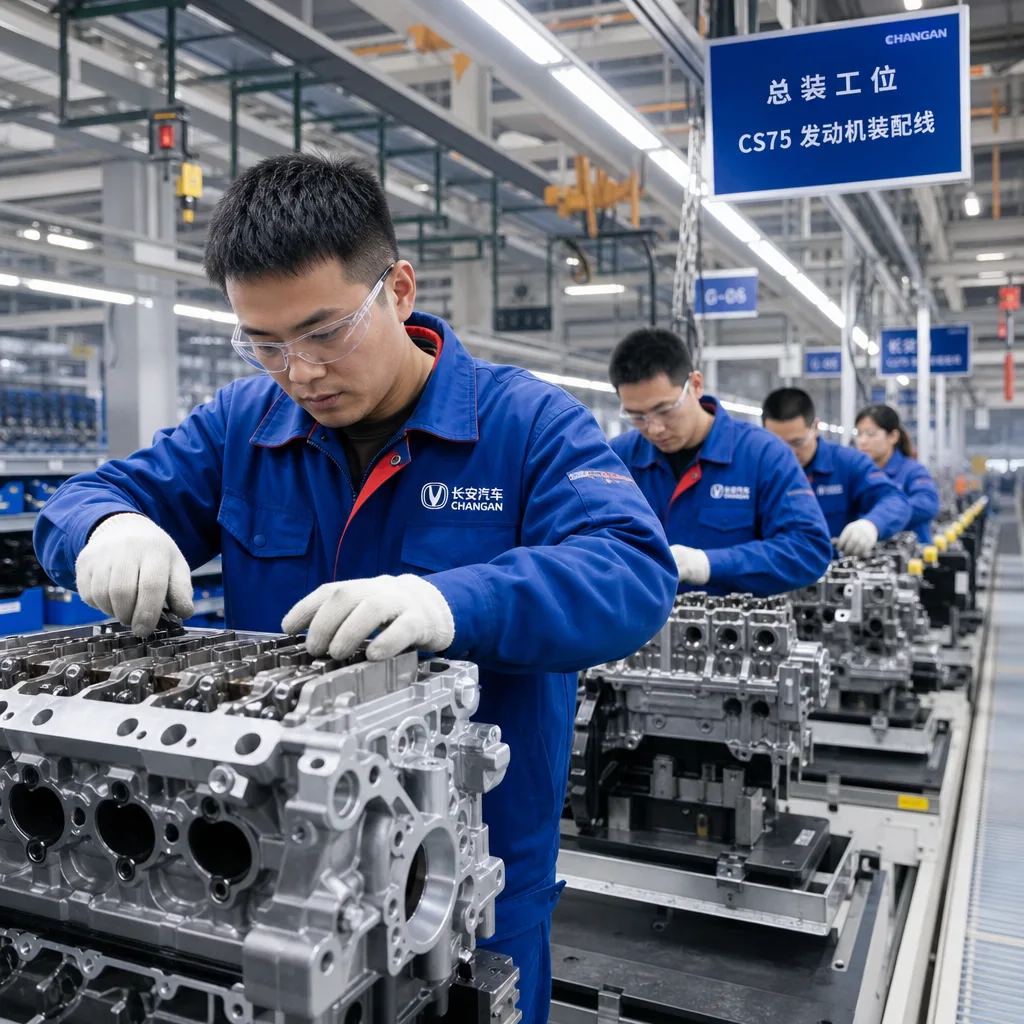
Driventus runs vertically integrated production for engine components, which helps control machining, heat treatment, cleaning, assembly, and final inspection. For buyers, that reduces handoffs and makes it easier to trace a variation back to the exact operation.
In a factory audit, ask direct questions:
Is incoming material verified by heat number, chemistry, and mill certificate before release?
Are critical dimensions checked with calibrated gauges and recorded by lot, shift, and operator?
Is assembly done in a controlled area with contamination control for oil passages and seal surfaces?
Are test rigs available for phasing response, lock-pin function, leakage checks, and pressure decay tests?
Is nonconforming product segregated, tagged, and traceable back to the specific operation?
Are gauges, fixtures, and test benches on a documented calibration schedule with expired tools removed from use?
The deeper check is repeatability. Ask how the factory handles engineering changes, tooling maintenance, and reorders after a gap of several months. A stable process is what keeps the approved sample from quietly changing.
How do MOQ, lead time, and export terms compare?
For most buyers, the commercial comparison is simple: how much, how fast, and with what paperwork.
MOQ: usually depends on complexity, packaging, and whether the program is catalogue or custom; common RFQ ranges are 100–300 pcs for standard references and higher for new tooling or private-label packaging.
Lead time: should cover machining, heat treatment, assembly, testing, and export packing; ask for separate sample lead time and mass-production lead time.
Price logic: the quote should separate unit price, tooling or fixture amortization, packaging cost, and freight terms so landed cost can be compared cleanly.
Export support: should include carton labeling, HS-code support, shipping marks, and booking coordination with the forwarder.
Documentation: commercial invoice, packing list, batch numbers, and product identification should match across cartons and inspection records.
The best supplier is not always the cheapest one. It is the one that can give you a realistic schedule, a clean document set, and a stock plan that works for both fast-moving and slower references.
How should buyers validate fit before approval?
Even when a part number looks familiar, replacement fitment still needs proof. Camshaft phasers are not static parts; they interact with oil pressure, timing control, and engine software.
Use a short validation sequence:
1. Confirm the OE reference, engine code, build year, and emissions variant. 2. Measure the mounting interface, connector position, and oil-port alignment against the target engine. 3. Check free movement, lock/unlock behavior, and any spring-return force specified by the OE. 4. Review oil-supply cleanliness requirements and confirm the installation oil filter condition. 5. Run functional testing at operating pressure, hot and cold, and record response time if the program requires it. 6. Confirm no fault codes after installation on the target vehicle platform and verify idle stability, start-up noise, and cam correlation data. 7. Retorque fasteners to spec and recheck for leaks after the first run cycle.
If the part is going into a broader repair or distribution program, it helps to validate one reference family first, then expand to adjacent engine variants. That reduces avoidable returns and prevents a bad cross-reference from spreading through the catalog.
Where does Driventus fit in this sourcing decision?
Driventus works with aftermarket distributors, OEM and Tier-1 supply chains, and repair network buyers. The model is built around technical consistency, export documentation, and responsive communication.
Key credentials and controls:
IATF 16949:2016 and ISO 9001:2015 management systems
Export experience across 60+ countries
In-house manufacturing for engine and powertrain parts
Batch traceability, inspection records, and lot-based release control
Technical support for fitment review, RFQ clarification, and sample approval
We do not claim vehicle-maker approval or endorsement. Instead, we focus on specification control, repeatability, and commercial reliability. For buyers comparing China-based manufacturers, that combination is often the difference between an acceptable sample and a stable supply program. If you need a supplier that can quote to drawing, hold tolerances, and document process controls, Driventus can support the review from inquiry through shipment.
Frequently asked questions
Yes, subject to engine code, OE reference, and required dimensions. We review fitment data before quoting and can support catalogue or custom programs with sample, production, and packaging requirements.
We work to IATF 16949:2016 and ISO 9001:2015 systems and can provide inspection, traceability, and lot-release records relevant to the order, plus additional test data where the program requires it.
Yes. If the program requires a modified interface, packaging, or development support, start with our custom manufacturing page and RFQ details. We can also align MOQ, lead time, and tooling costs before sample approval.
If you are sourcing a repeatable camshaft phaser supply from China, send your OE reference, target volume, inspection requirements, tolerance targets, and expected annual usage. Request a quote at /contact.html