Camshaft Phaser Ford Manufacturer China: Sourcing Guide
Procurement teams sourcing a camshaft phaser Ford manufacturer China are usually balancing three requirements: dimensional fit, controlled supply, and documented quality. For engine programmes and aftermarket programmes, the part must match the OE interface, maintain oil control, and pass validation testing before volume release. Driventus manufactures engine and powertrain components in Taizhou, Zhejiang, and exports to 60+ countries. We support aftermarket distributors, OEM and Tier-1 suppliers, and multi-location repair chains.
Driventus is an independent aftermarket manufacturer; brand names are referenced for fitment only. Our production systems are certified to IATF 16949:2016 and ISO 9001:2015, and our material and process controls can be aligned to REACH (EC) No 1907/2006 and customer-specific requirements. This article explains what buyers should verify when sourcing camshaft phasers, how to compare suppliers, and what data to request before placing an order.
What buyers should verify before sourcing
A camshaft phaser is not a simple machined part. Buyers should verify the full system interface: vane count, rotor and housing geometry, oil passage alignment, locking position, and response range. For Ford fitment programmes, the supplier must confirm OE cross-reference data, but not claim OEM approval. When a listing cites an OE number such as OE 06A107065, the supplier should show the matching application, engine family, and revision level.
Basic sourcing checks
Material specification for housing, rotor, and critical internal components
Heat treatment route and hardness range
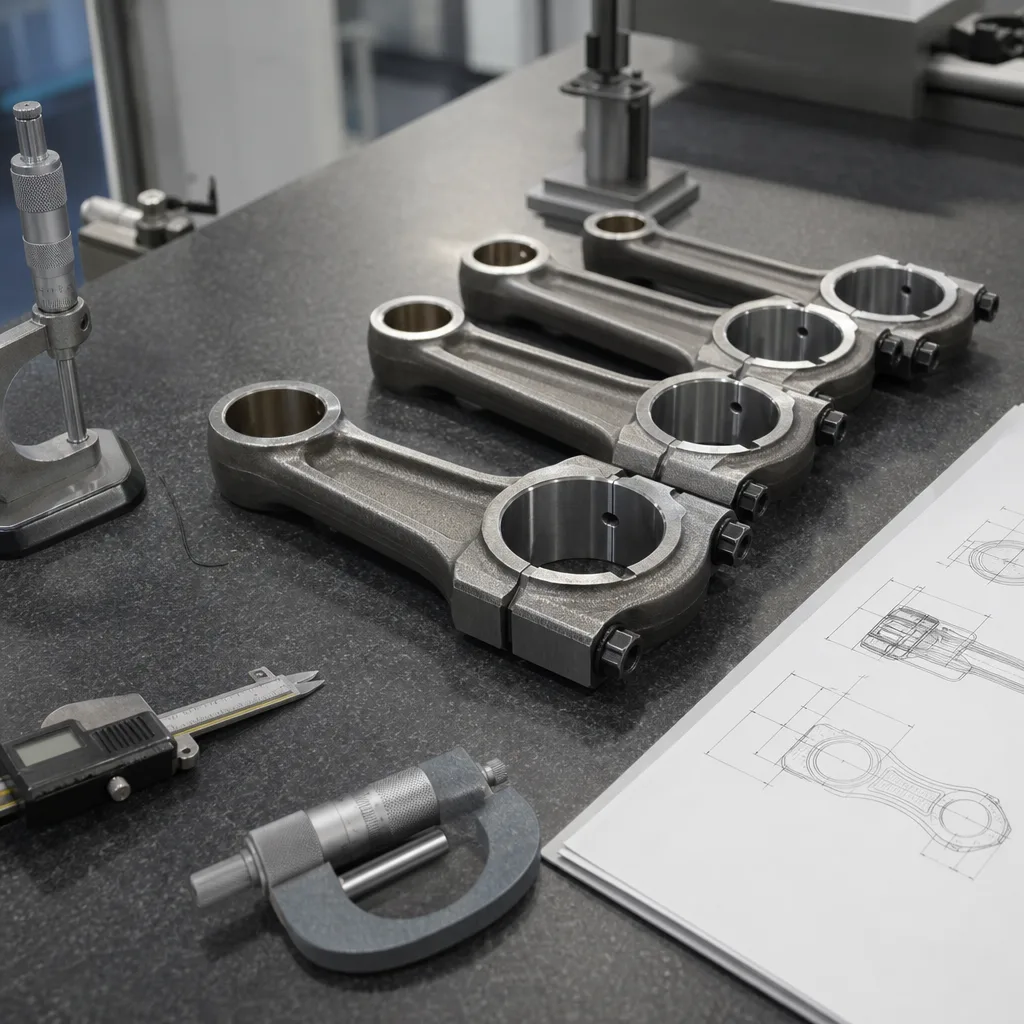
Dimensional inspection plan for key oil control surfaces
Runout, backlash, and angular response limits
Packaging and corrosion protection for export
Traceability by batch, date code, or lot number
If the supplier cannot provide these items, the part risk is high even if the external dimensions appear correct.
Why certification and traceability matter
For procurement, certification is useful only when it is backed by process control. IATF 16949:2016 is relevant for automotive production because it requires documented risk control, traceability, and corrective action discipline. ISO 9001:2015 supports the same basic management framework, but it does not replace automotive-specific process control.
Driventus operates a documented quality system with incoming inspection, in-process checks, final inspection, and nonconformance control. More detail is available on our quality system. For buyers, the practical question is simple: can the factory show inspection records for critical characteristics, retain samples, and corrective actions linked to the same part number and batch? If the answer is yes, supplier qualification is easier and PPAP-style submission is more efficient.
For export programmes, ask for material declarations aligned with REACH (EC) No 1907/2006 where required, plus any customer-specific restricted substance list. This is especially important for gasketed assemblies and plated components that may enter regulated markets.
Comparison of supply options for camshaft phasers
Different supply routes create different risk profiles. The table below shows the practical trade-offs buyers normally see.
Supply option
Typical strengths
Typical risks
Best fit
OE channel
Direct application match, established reference data
Limited flexibility, higher cost, slower lead time
Programs that prioritise established part identity
Aftermarket manufacturer
Cost control, flexible MOQ, custom packing
Needs stronger technical validation
Distributors, repair chains, and export programmes
Trading company
Broad sourcing access
Inconsistent traceability, variable quality control
Spot buying when full validation is already complete
</tr></thead><tbody> </tbody></table>For volume procurement, a direct manufacturer is usually easier to audit than an intermediary. Buyers can request capability data, sample reports, and dimensional records before committing to a framework order. If your programme needs a special finish, logo-free packaging, or non-standard kit contents, see custom manufacturing for the options available.
Technical data to request from the factory
A serious supplier should be able to provide a controlled technical sheet, not just a sales brochure. For camshaft phasers, request the following:
Base material and component material specification
Critical-to-quality dimensions with tolerance bands
Oil pressure operating window, if tested
Response or angle sweep data under defined test conditions
Lock pin engagement behaviour
Surface finish requirements on mating faces
Corrosion protection method and salt-spray result if applicable
Test method references used internally or by the customer
If a supplier references durability testing, ask what cycle profile was used. For automotive validation, buyers often want evidence of thermal cycling, oil contamination tolerance, and endurance under repeated phase changes. Where applicable, the programme may reference ECE R-83 for emissions-related behaviour, SAE J2527 for environmental durability testing, or customer-specific endurance protocols. The important point is not the test name alone, but whether the test conditions match the intended engine duty cycle.
Lead time, MOQ, and commercial terms for procurement teams
For import managers and category buyers, supply performance is as important as part performance. A factory should state MOQ, standard lead time, sample lead time, and packing details before the first PO. For structured sourcing, ask for:
Sample availability and sample approval timeline
MOQ by part number or by project
Standard production lead time after approval
Incoterms offered for export shipments
Carton quantity, palletisation, and outer case labelling
Spare seal kits or accessory items, if offered
Driventus serves distributors and repair networks that need repeatable replenishment, not one-off sales. That means batch consistency, export documentation, and stable scheduling matter as much as unit price. If you need a wider engine portfolio to consolidate purchasing, review our catalog and the related engine components range.
How Driventus supports programme development
As a vertical manufacturer in Taizhou, Driventus can support part development from drawing review through trial production and export packing. Our custom manufacturing process is designed for buyers who need controlled fitment, branded or neutral packaging, and repeatable supply.
What buyers typically receive:
Drawing review and application confirmation
Sample or pilot run for dimensional validation
Batch traceability and inspection records
Export-ready packaging for retail or workshop channels
Technical communication in English for sourcing teams
Driventus is an independent aftermarket manufacturer; brand names are referenced for fitment only. We do not claim vehicle manufacturer approval or endorsement. Instead, we focus on specification control, stable capacity, and documentation that procurement teams can audit. If your sourcing brief requires cross-reference matching, ask for OE number confirmation, sample images, and measurement data before order placement.
Frequently asked questions
Yes, subject to fitment confirmation and part-number review. We support aftermarket and export programmes, but we do not claim OEM approval. Brand names are used for fitment only.
Ask for a technical sheet, dimensional report, material declaration, batch traceability details, lead time, MOQ, and sample approval terms. If needed, request validation data tied to the application.
Yes. We can support neutral or private-label packaging, export marking, and programme-specific pack quantities through our OEM service workflow.
If you are qualifying a camshaft phaser supplier, send your drawing, OE reference, and target volume for review. Request a quote here: /contact.html