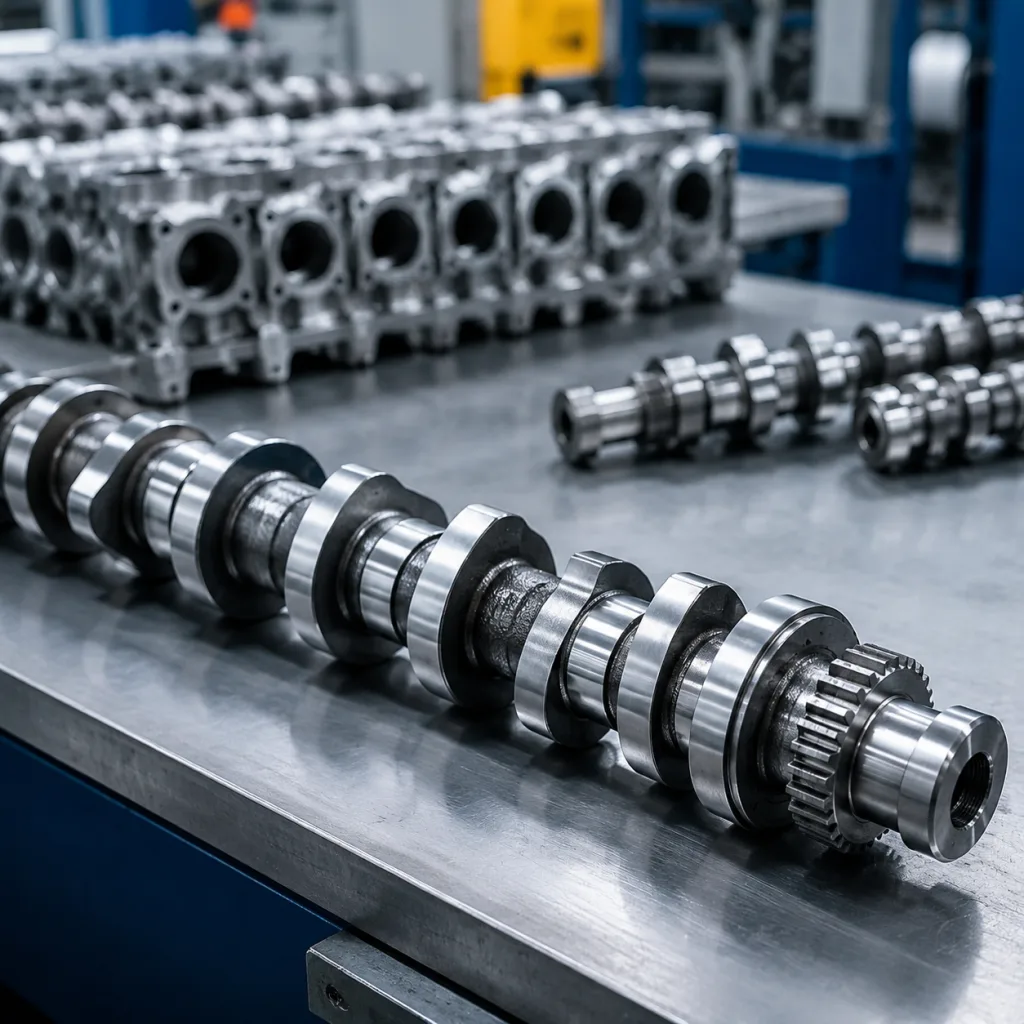
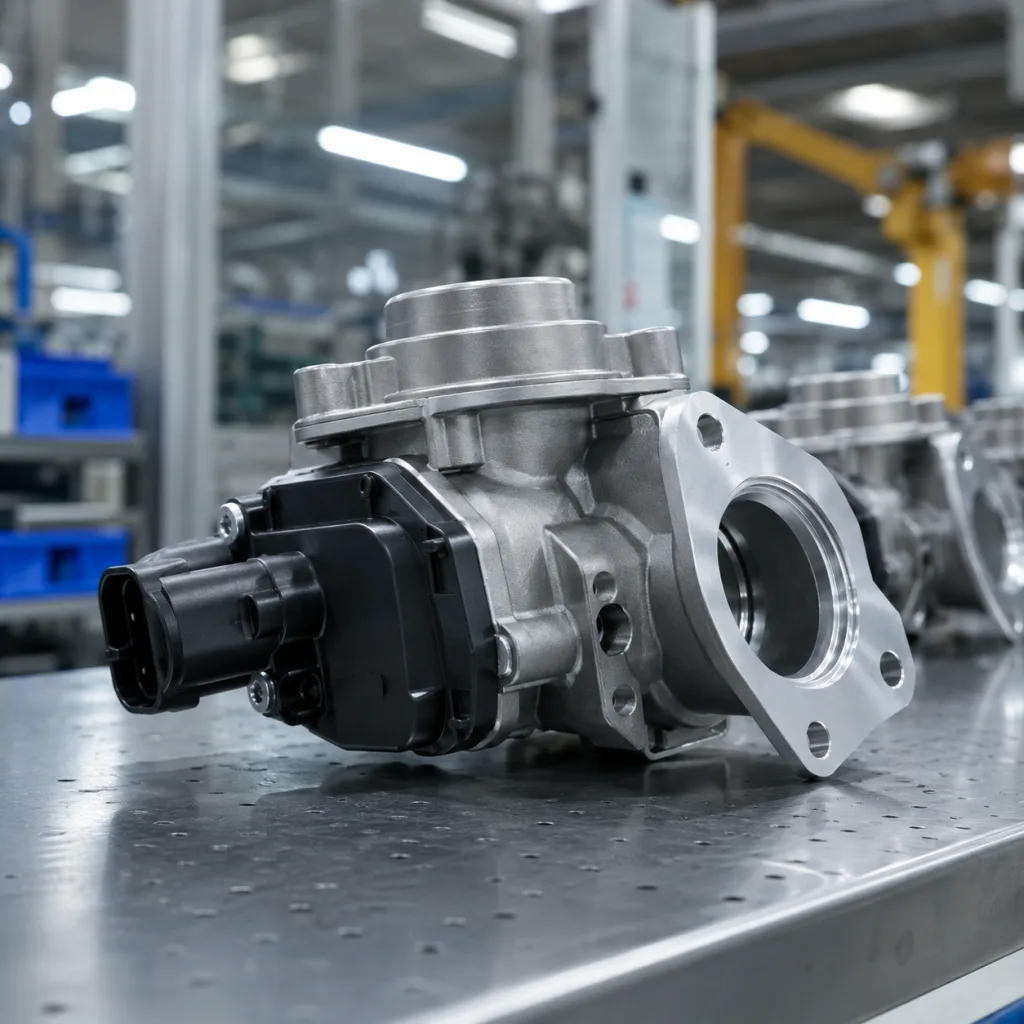
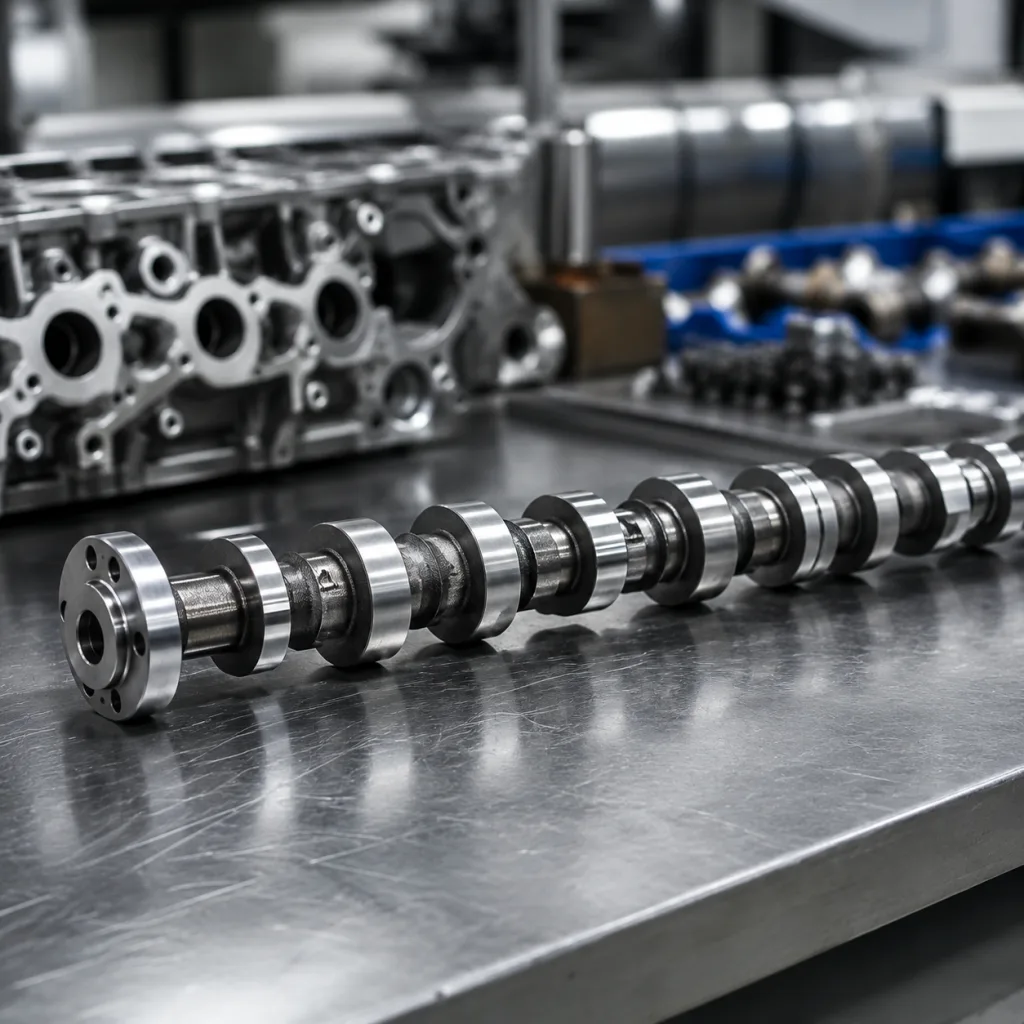
A Cadillac camshaft phaser programme fails for small reasons: one wrong bank position, a lock pin that releases late, a burr left in an oil passage, or a private-label carton that mixes two similar references. Wholesale sourcing therefore has to start with risk control, not catalogue matching. Buyers need proof of fitment, stable vane movement, clean hydraulic circuits, repeatable lock-pin action, protected packaging, and traceability that survives distributor, repair-chain, or Tier-1 review. Driventus manufactures engine and powertrain components in Taizhou, Zhejiang, and supplies B2B customers in more than 60 countries. Its camshaft phaser programmes are managed under IATF 16949:2016 and ISO 9001:2015 controls, with process inspection, functional testing, and export documentation aligned to aftermarket distribution needs. This guide shows how to qualify a camshaft phaser Cadillac wholesale source before price, volume, and launch timing are locked.
Start With the Fitment Decision, Not the SKU List
Cadillac-fit camshaft phasers are rarely clean one-line purchases. The phaser has to work with oil pressure, camshaft position control, timing-chain dynamics, ECU calibration, and the installer’s procedure. A small shift in rotor clearance, vane sealing, oil-feed geometry, or lock-pin engagement can become start-up rattle, diagnostic trouble codes, slow response, or unstable cam timing.
Before asking for a price, define the decision tree. Which engine family? Which displacement? Which model years? Intake or exhaust? Left or right bank? Which bolt pattern, trigger-wheel style, locating feature, and oil-control solenoid? Some programmes need only the phaser. Others should be planned with torque-to-yield bolts, seals, timing kits, solenoids, gaskets, or service instructions.
Driventus can support Cadillac-fit applications through standard aftermarket supply or custom manufacturing when buyers provide drawings, samples, target specifications, or OE part-number cross-reference structures such as OE 06A… or OE 11251… formats where applicable. Brand names are referenced for fitment identification only.
Build the sourcing file around decisions that remove ambiguity:
Application list by engine, displacement, year range, bank, and cam position
Buyer-supplied OE-style cross-reference table with supersession notes
Annual forecast split by reference, quarter, and destination warehouse
First order quantity, repeat order cadence, and safety-stock target
Packaging format: neutral, buyer brand, or bulk service pack
Target incoming AQL, for example 0 critical, 1.0 major, 2.5 minor
Compliance needs for the EU, UK, US, Canada, Australia, Brazil, or other destination markets
Warranty return coding, photo evidence rules, and failure-analysis expectations
Where Wholesale Programmes Usually Break
Most failed launches do not fail because the buyer chose a camshaft phaser supplier with no certificate. They fail because the commercial plan moves faster than the technical evidence. A low unit price can become expensive when returns involve start-up rattle, incorrect advance angle, oil leakage, delayed actuation, or cartons that collapse during ocean shipment.
Check capability before comparing price. Ask which tolerances are held by CNC machining, which surfaces are checked by CMM or dedicated gauges, and whether functional testing uses controlled oil temperature, oil pressure, and cycle time. Then connect those answers to MOQ and lead time.
Procurement item
Typical wholesale expectation
What buyers should verify
Trial order MOQ
100–300 pieces per reference
Whether 3–5 references can be mixed under one PO
Regular MOQ
500–1,000 pieces per reference
Price break, call-off schedule, and safety-stock terms
Volume price tiers
500 / 1,000 / 3,000 / 5,000 pieces
Whether pricing changes with packaging and inspection level
Sample lead time
15–30 days
Existing tooling, drawing status, and test fixture availability
New development lead time
45–90 days
Sample, fixture, validation, and pilot-batch timing
Production lead time
45–75 days
Capacity, raw material status, and inspection load
Urgent repeat lead time
30–45 days
Whether material and finished-goods buffer are pre-agreed
Packaging
Neutral or private-label cartons
Drop strength, label format, barcode, and pallet pattern
Documentation
Inspection report and packing list
Traceability from material lot to shipment batch
Audit support
Remote or on-site factory review
Process flow, control plan, and test records
</tr></thead><tbody> </tbody></table>Procurement teams should confirm which critical operations are controlled in-house and which are managed through approved subcontractors. Driventus is vertically integrated across key engine-component manufacturing processes and maintains supplier controls for purchased materials and specialist operations. That structure supports steadier lead times, clearer corrective-action ownership, and faster answers during quality reviews.
For a new camshaft phaser Cadillac wholesale project, use a staged launch: 3–5 sample pieces per reference, a 100–300 piece pilot batch, then scheduled releases against quarterly forecasts. This limits inventory exposure while confirming fitment, packaging performance, inspection criteria, and expected return behaviour. If demand is uncertain, negotiate a price ladder tied to release quantity instead of forcing one low MOQ price. The factory can then quote material, machining, assembly, testing, packing, and export handling more transparently.
Spec Deep-Dive: What Has to Be Controlled
A camshaft phaser cannot be approved by appearance. It needs dimensional checks and functional proof. The buyer should see how the supplier controls rotor-to-stator clearance, vane movement, spring force where applicable, lock-pin engagement and release, oil-passage cleanliness, sealing behaviour, and surface finish. Material certificates and heat-treatment records should also be available when the design includes hardened or wear-resistant features.
Ask for a control plan that names the critical dimensions, tolerance, gauge method, inspection frequency, and reaction plan. Common checkpoints include datum face flatness, mounting bore diameter, bolt-hole position, rotor/stator running clearance, vane slot width, oil-feed hole diameter, lock-pin protrusion, and axial end play. Exact limits must follow the approved drawing. What matters during supplier screening is whether those values are measured, recorded, and acted on when they drift.
Driventus operates under quality system controls aligned with IATF 16949:2016 and ISO 9001:2015. For export customers, quality documentation can be organised around production part approval needs, incoming inspection requirements, and market-specific compliance files. Where materials, coatings, or chemical substances fall within regulatory scope, buyers may request supplier declarations relevant to REACH (EC) No 1907/2006.
Critical checks should cover the full process, not only final inspection:
Incoming material verification against approved specification and material lot
CNC machining checks for datum surfaces, bores, bolt holes, and oil passages
Deburring and ultrasonic or spray cleaning checks to reduce hydraulic contamination risk
Residual chip and visual cleanliness inspection before assembly
Assembly torque, orientation, and component-mix prevention checks
Lock-pin engagement and release testing before final packing
Advance and retard movement confirmation under controlled oil pressure
Leak and sealing checks according to the internal control plan
Noise, free-rotation, and return-position checks where required by design
Final visual inspection, labelling, and batch traceability
For launch and pilot batches, require 100% functional testing unless the design and production history justify a different rule. Keep critical-to-function checks tight until real batch data supports any sampling reduction. Also review how non-conforming material is identified, isolated, and approved for disposition. One poorly segregated batch can spread through several distributor warehouses before the first claim appears.
The Data Pack That Beats Catalogue Guesswork
The best technical file is not a glossy brochure. It is a controlled pack that links application, drawing revision, sample measurements, functional test limits, packaging, and shipment traceability. Procurement teams should request it before reducing the conversation to unit price.
Recommended data request:
2D drawing or critical-dimension report for buyer-controlled references
Critical-characteristic list showing dimensions, tolerances, gauges, and sampling frequency
Material grade and heat-treatment summary where applicable
Surface treatment or coating description, if used
Oil-passage cleaning method and cleanliness acceptance rule
Functional test method summary for vane movement and lock-pin operation
Test pressure, oil temperature, cycle count, and pass/fail criteria where available
Batch inspection report format with part number, lot number, date, and inspector
Sample measurement report for at least 3–5 pieces per reference
Packaging specification with unit weight, carton dimensions, gross weight, and pallet count
Country-of-origin, HS code, incoterms, and export packing details
Warranty return procedure, claim response timing, and failure-analysis contact path
Fitment and Cross-Reference Discipline
Cross-reference discipline is where many aftermarket returns begin. A supplier should not build fitment claims from catalogue assumptions alone. The claim should be supported by samples, drawings, OE-style benchmarks, or buyer-approved data. If an RFQ uses an OE-style reference such as OE 06A107065, the sourcing file should state whether that number is for dimensional benchmarking, catalogue mapping, quotation matching, or customer search.
Freeze the cross-reference table before packaging artwork is approved. Review OE-style number, interchange number, engine code, year range, bank position, cam position, bolt count, locating dowel, oil-feed layout, and supersession notes. If two references look similar but use different lock-pin timing or internal oil routing, keep them as separate SKUs even when the exterior dimensions appear close.
Buyers can review related timing and valvetrain items in our catalog and engine products under engine components. Driventus is an independent aftermarket manufacturer; brand names are referenced for fitment identification only.
Audit the Failure Chain From Machine to Carton
A useful camshaft phaser audit follows the failure chain. Start at machining. Move through cleaning, assembly, functional testing, labelling, and packing. Certificates show that a management system exists; the floor audit shows whether the system prevents repeat defects.
Ask questions that reveal control, not just intention:
Are critical dimensions linked to a control plan, gauge method, and inspection frequency?
Are gauges calibrated and identified with valid status labels and due dates?
Is measurement system analysis available for key gauges used on bores, faces, and slots?
How are oil passages protected from chips, burrs, washing residue, and mixed parts?
Is cleaning effectiveness checked by visual inspection, residue check, or internal standard?
Is assembly poka-yoke used for orientation-sensitive components?
Are torque tools controlled with setting records and periodic verification?
Are functional test results recorded by batch, cavity, line, or individual piece?
How are private-label cartons approved before mass production?
Can the supplier trace a returned part to production date, operator, machine, and material lot?
Does the supplier keep retained samples for dispute review and how long are they stored?
For distributors, audit findings should change the buying plan. Strong traceability makes warranty claims faster and reduces disagreement over root cause. Weak packaging controls can turn logistics damage into apparent product failure. The best sourcing decision combines manufacturing evidence, logistics evidence, and aftersales response.
A practical audit scorecard can weight process control at 40%, functional testing at 25%, traceability at 15%, packaging at 10%, and corrective-action speed at 10%. If the supplier is attractive on price but cannot show functional test records or lot traceability, reflect that risk through smaller pilot quantities, tighter inspection, or delayed volume release.
Price the Programme Like a Release Plan
Commercial structure should be settled after technical risk is visible, not before. For camshaft phaser Cadillac wholesale supply, define sample costs, tooling responsibility if applicable, payment terms, inspection method, incoterms, shipment consolidation rules, and claim handling before the first purchase order.
For multi-reference programmes, Driventus can quote by SKU, annual volume tier, packaging type, and release schedule. Private-label supply is possible when artwork, label data, carton strength, barcode format, and market responsibility are agreed in writing. Repair-chain supply often prioritises technician identification, barcode scanning, and fewer picking errors. Distributor supply may place more weight on carton density, pallet stability, and container loading efficiency.
Use forecast bands, not one annual number. Ask for pricing at 500, 1,000, 3,000, and 5,000 pieces per reference when demand is uncertain. Ask the supplier to separate the effect of tooling, material cost, functional testing, private-label packing, inspection level, and shipment term. This gives procurement teams a clearer view of cost movement and helps the factory reserve capacity.
MOQ and lead time should be treated as one negotiation. A 500-piece release may cost more per unit but reduce stock risk. A 3,000-piece release may lower machining setup and packaging cost but increase forecast exposure. If buyers need mixed references, ask whether a 1,000-piece programme MOQ can be split across several SKUs, and whether slow-moving references can be consolidated into quarterly production windows.
Before issuing a blanket order, align on inspection acceptance criteria, claim response time, replacement or credit procedure, and documentation required for each shipment. A workable claim procedure usually includes photos, batch label, invoice number, installation mileage if available, failure description, and return sample rules. These details are easier to settle before production than after a container arrives.
Frequently asked questions
Send the application list, cam position, bank position, OE-style cross-references if available, annual forecast, target MOQ, packaging requirement, and destination market. Samples, drawings, or 3–5 measured benchmark parts improve quotation accuracy and reduce fitment risk.
Yes. Private-label packaging can be arranged for approved buyers after label content, carton specification, barcode format, artwork responsibility, carton strength, and pallet pattern are confirmed. Packaging approval should be completed before mass production.
Driventus operates under IATF 16949:2016 and ISO 9001:2015 quality management controls. Buyers may request audit materials, inspection formats, functional test records, and compliance declarations relevant to their market requirements.
For fitment review, MOQ options, price-tier logic, and production lead-time planning, send your application list and forecast to Driventus. You can [request a quote](/contact.html) or contact our team at /contact.html