camshaft phaser · 2026-06-09

Camshaft Phaser Buick Wholesale Sourcing Guide

Camshaft phaser Buick wholesale sourcing depends on more than finding a low unit price. Importers, distributors, Tier-1 buyers, and repair-chain procurement teams need reliable variable valve timing performance, stable batch quality, accurate catalogue data, export-ready documentation, and packaging that protects precision assemblies in transit. The main commercial risks are warranty exposure, misapplied fitment, inconsistent oil-control response, and suppliers that cannot repeat locking-pin, leakage, and dimensional results across production lots. Driventus manufactures engine and powertrain components in Taizhou, Zhejiang, and supplies B2B customers in more than 60 countries. For Buick-fit camshaft phasers, we provide independent aftermarket production supported by controlled material sourcing, machining, assembly, inspection, and shipment documentation. Driventus is an independent aftermarket manufacturer; brand names are referenced for fitment identification only. This guide explains sourcing checks, supplier audit points, validation expectations, and RFQ data so import managers can compare camshaft phaser Buick wholesale offers on technical, operational, and commercial grounds.

Wholesale sourcing requirements for Buick-fit camshaft phasers

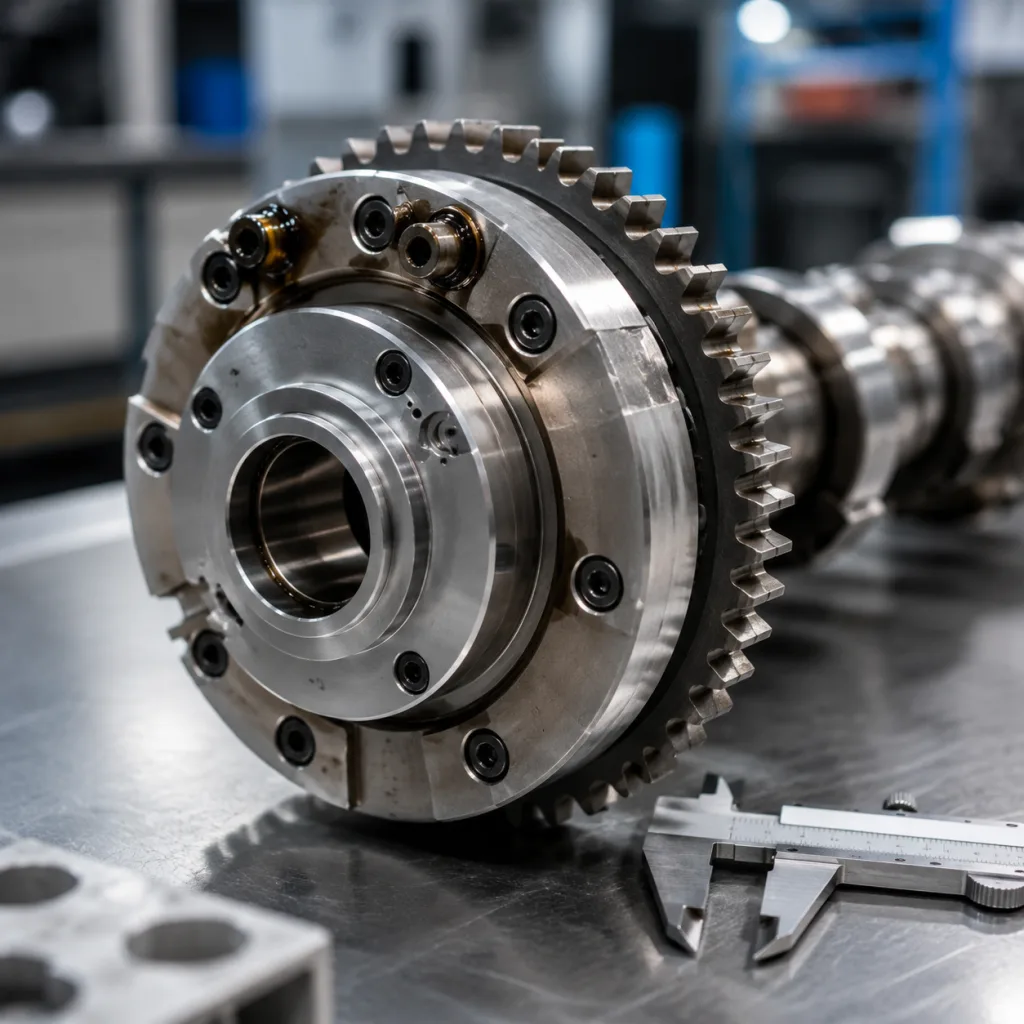
A camshaft phaser is a precision hydraulic-mechanical assembly that advances or retards camshaft timing relative to the sprocket through engine oil pressure. To perform correctly, it must maintain stable lockup, controlled internal leakage, accurate angular movement, and repeatable response under changing oil temperature and pressure. For Buick applications, procurement teams usually source by engine family, model-year range, intake or exhaust position, sprocket tooth count, rotor and stator design, and OE part-number cross-reference where reliable data is available.

Before price negotiation, wholesale buyers should confirm:

  • Vehicle and engine coverage by market, including North America, EU import channels, the Middle East, Latin America, or mixed fleet demand.
  • Intake or exhaust position, especially on engines using separate phasers for each camshaft.
  • Timing chain interface, sprocket profile, bolt pattern, and centre-bore dimensions.
  • Oil-feed port layout, sealing surface design, and internal leakage-control requirements.
  • Locking-pin engagement at rest and release behaviour under oil pressure.
  • Application data source, such as ERP interchange, catalogue platform, sample, drawing, or OE-style reference.
  • Packaging format for distributor cartons, neutral boxes, repair-chain kits, or customer labels.
  • Annual volume, first-order MOQ, release schedule, and destination market.

Driventus supports camshaft phaser programmes through catalogue supply and project-based development. Buyers can review related engine timing and valve-train items in our catalog and the engine component range at /products/engine-components.html.

Factory capability, MOQ, and lead-time points

Wholesale purchasing teams should separate sample-making ability from repeat production capability. A supplier may build one fitting sample, but import programmes need stable machining, heat treatment, assembly, functional testing, and packaging control over many batches. For a camshaft phaser Buick wholesale order, the best quotation is the one that defines what is included, how production will be controlled, and how the supplier will respond if a field issue occurs.

Key commercial and production points include:

</tr></thead><tbody> </tbody></table>For new wholesale programmes, Driventus normally recommends a staged path: drawing and fitment confirmation, sample build, pilot batch, and then scheduled releases. This sequence helps buyers avoid committing to a full container before fitment data, packaging, inspection criteria, and documentation expectations are aligned.

Buyers can also discuss private-label supply, drawing-based development, or application expansion through custom manufacturing.

Quality system and validation expectations

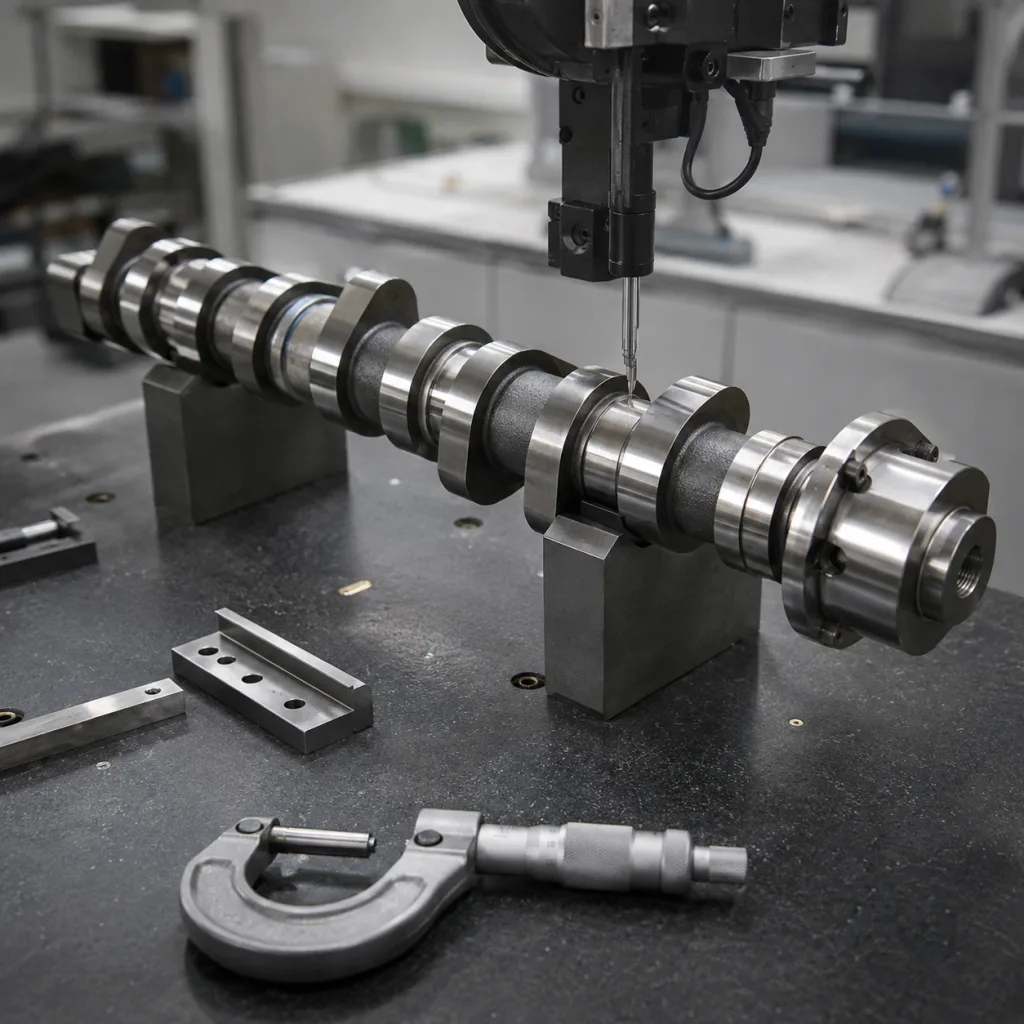
A camshaft phaser has functional requirements that cannot be judged from external appearance. Clean machining and a good finish are important, but they do not prove oil-pressure response, vane sealing, locking-pin operation, angular travel, or noise performance. Procurement teams should request evidence of process control and validation rather than relying on photos or a single sample review.

Driventus operates under IATF 16949:2016 and ISO 9001:2015 certified quality management systems. These standards do not replace part-specific testing, but they support documented processes, risk management, corrective action, traceability, calibration, and continuous improvement. Buyers can review our quality system before supplier onboarding.

For Buick-fit camshaft phaser wholesale supply, relevant checks may include:

  • Dimensional inspection of sprocket teeth, centre bore, bolt holes, oil ports, sealing surfaces, and assembly height.
  • Material verification for the sprocket, rotor, stator, vanes, springs, fasteners, and locking components.
  • Hardness checks on wear surfaces after heat treatment or surface hardening.
  • Runout, concentricity, and parallelism control for rotating interfaces.
  • Oil leakage and pressure response testing under controlled temperature and flow conditions.
  • Locking-pin release, return, and rest-position engagement confirmation.
  • Angular travel and phasing-response checks against agreed specifications.
  • Noise, backlash, and abnormal friction assessment during functional testing.
  • Salt spray or corrosion-resistance checks for exposed surfaces where specified.

Compliance documentation may also include REACH (EC) No 1907/2006 declarations where applicable for EU importers. For packaging and shipment, buyers should state carton labelling, barcode, pallet, fumigation, country-of-origin, and customs-document requirements in the purchase order so the supplier can prepare records before dispatch.

Technical data to include in an RFQ

A complete RFQ reduces back-and-forth and lowers the chance of incorrect fitment. When a buyer provides only a vehicle model name, the supplier must infer too much from incomplete application data. For camshaft phasers, that can lead to the wrong intake or exhaust position, an incorrect sprocket profile, a mismatched bolt pattern, or an oil-port configuration that does not suit the target engine.

Recommended RFQ data:

  • Target application: Buick model range, engine displacement, fuel type, engine code if available, and model years.
  • Market region: US, Canada, Mexico, EU import, Australia, Brazil, Middle East, or other fleet mix.
  • Position: intake camshaft, exhaust camshaft, bank-specific location, or both sides where applicable.
  • Cross-reference data: OE-style references, aftermarket interchange numbers, buyer SKU, and catalogue notes already used in the buyer’s system.
  • Sample requirement: quantity, inspection purpose, dimensional comparison method, and deadline.
  • Annual demand forecast, first-order quantity, and expected release schedule.
  • Packaging: neutral, distributor brand, repair-chain kit, e-commerce carton, or bulk service packaging.
  • Documentation: certificate, inspection report, material declaration, packing list, invoice, and customs documents.
  • Warranty handling: claim evidence, photo requirements, return procedure, analysis timeline, and credit policy.

For distributors managing multiple North American applications, existing interchange data from the ERP or catalogue platform is especially useful. Driventus can check dimensional and application alignment, but final catalogue responsibility should remain with the importer’s product data team, particularly when consolidating Buick-fit references across model years and engine variants.

Supplier comparison for procurement teams

Price comparison is meaningful only when the technical scope is the same. A low offer may exclude functional validation, packaging tests, batch traceability, private-label handling, or after-sales analysis. Procurement teams should compare suppliers on total programme risk, not only ex-works price, especially when a camshaft phaser Buick wholesale programme serves warranty-sensitive repair channels.

Sourcing item What buyers should verify Procurement relevance
MOQFirst-order quantity by part number, finish, and packaging typeControls landed cost and inventory exposure
Lead timeSample, pilot lot, mass production, and repeat-order schedulesSupports launch planning and distributor fill rate
CapacityMonthly output by family, machining line availability, and assembly resourcesReduces supply risk during seasonal demand peaks
TraceabilityBatch number, production date, inspection records, and shipment lot controlSupports warranty investigation and containment
PackagingAnti-corrosion protection, divider strength, carton drop resistance, and pallet stabilityReduces damage during sea freight and warehouse handling
Audit accessProcess flow, control plan, measurement equipment, calibration records, and corrective-action historyAllows supplier qualification before volume release
Change controlNotice process for material, tooling, supplier, or process changesProtects catalogue consistency and long-term service parts supply

</tr></thead><tbody> </tbody></table>For camshaft phaser Buick wholesale projects, Driventus can quote existing references or evaluate a supplied sample and drawing package. We do not claim approval or endorsement by any vehicle manufacturer. Driventus is an independent aftermarket manufacturer; brand names are referenced for fitment identification only.

Ordering, audit, and shipment workflow

A structured sourcing workflow helps importers control technical and commercial risk before the first container shipment. It also gives both sides a clear record of what was approved, which documents are required, and how repeat orders should be released.

1. Initial RFQ: buyer provides application data, expected volume, target market, packaging, and documentation requirements. 2. Technical check: Driventus reviews fitment, dimensions, reference data, sample availability, and production route. 3. Commercial quote: pricing, MOQ, payment terms, tooling or development costs, and lead-time are confirmed. 4. Sample order: buyer evaluates fit, appearance, dimensional alignment, and supporting documentation. 5. Pilot batch: limited production validates repeatability, inspection reporting, carton layout, and shipment preparation. 6. Factory audit: buyer or third party reviews process flow, inspection controls, measurement equipment, calibration status, and quality records where required. 7. Mass production: batch inspection and any agreed functional testing are completed before shipment release. 8. Export shipment: cartons, pallets, customs documents, country-of-origin details, and inspection records are prepared. 9. Post-shipment review: buyer and supplier track receiving results, field feedback, claim data, and next release quantities.

Buyers should define acceptance criteria in writing before pilot production. This may include inspection sampling level, report format, functional test requirements, acceptable cosmetic limits, packaging drop requirements, barcode rules, and timing for corrective actions. Clear requirements reduce disputes and make long-term supply more predictable.

Frequently asked questions

MOQ depends on the part number, packaging type, and whether the item is already in current production. Existing references usually have lower entry quantities than new development projects. Share annual forecast, first-order volume, destination market, and packaging format for a precise quotation.

Yes. Driventus can support neutral packaging, distributor labels, and customer carton specifications for wholesale programmes. Artwork, barcode rules, carton strength, pallet layout, corrosion protection, and country-specific labelling should be confirmed before pilot production.

Driventus supplies independent aftermarket components for replacement fitment and wholesale distribution. We do not claim vehicle manufacturer approval or endorsement. Brand names and OE-style references are used only to identify application compatibility.

For a sourcing review, send application data, forecast volume, packaging requirements, destination market, and any cross-reference list. Our team will check availability and help you [request a quote](/contact.html).

Request a Quote
Evaluation area Lower-risk supplier signal Higher-risk supplier signal
CertificationIATF 16949:2016 and ISO 9001:2015 certificates available for reviewNo current quality certification or unclear certificate scope
Fitment controlConfirms engine family, position, dimensions, and cross-reference before quotationQuotes from model name only
TestingProvides dimensional and functional inspection planProvides visual inspection only
TraceabilityUses batch records, production date coding, and shipment lot controlNo lot control after shipment
MOQ policyClear MOQ by SKU, packaging type, and development statusMOQ changes after sample approval
Lead-time controlSeparates tooling, sample, pilot, mass production, and repeat-order timingGives one general delivery promise
Claims handlingDefines evidence needed for warranty analysis and corrective actionNo written claim process
Change managementCommunicates approved changes to material, tooling, and process routeMakes silent substitutions after approval