Camshaft Phaser Audi Aftermarket Replacement Guide
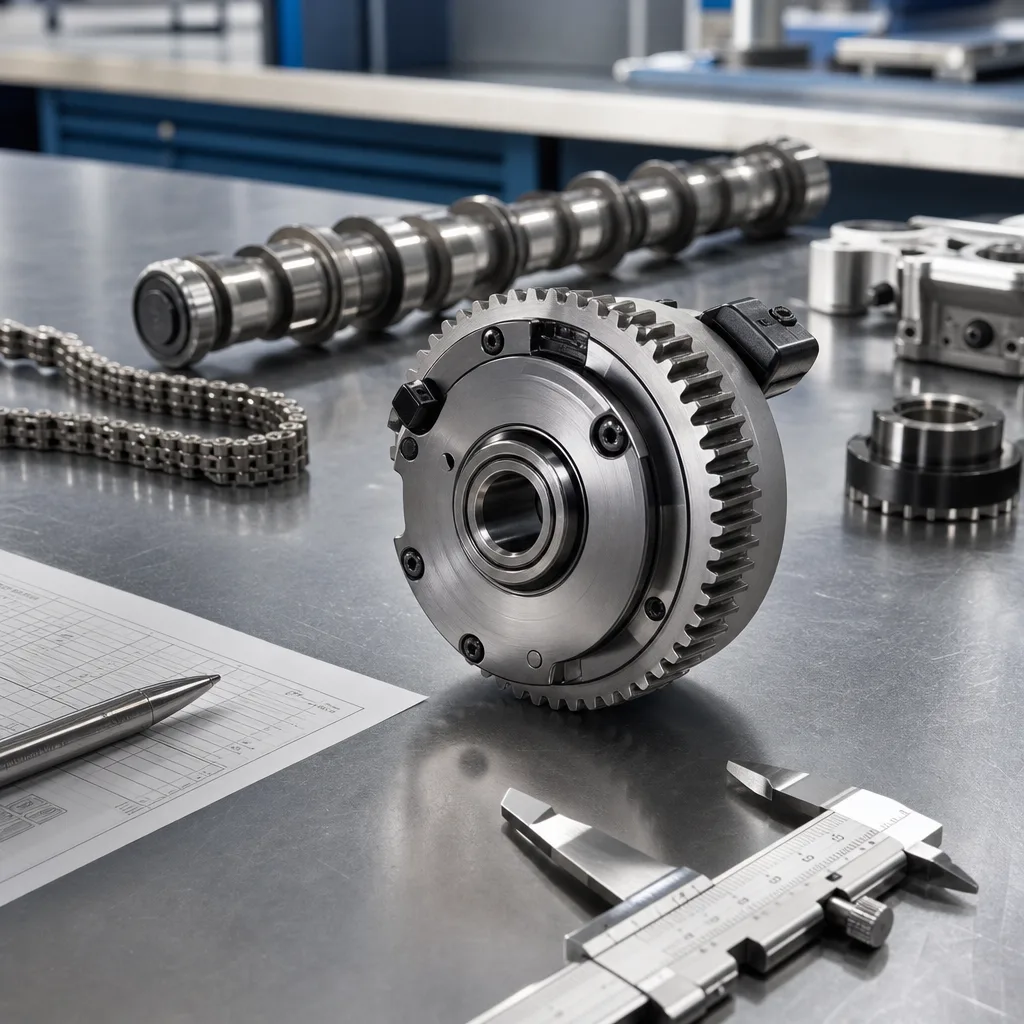
A camshaft phaser Audi aftermarket replacement must match the original part’s hydraulic response, locking behaviour, tooth count, oil passage geometry, and installation envelope. For procurement teams, the main risk is not the casting appearance; it is dimensional drift, poor vane sealing, and inconsistent phasing under hot oil conditions. Those issues can create rough idle, fault codes, and timing correlation problems after installation. Driventus supplies replacement camshaft phasers for B2B buyers who need OE-equivalent fitment across Audi engine families used in the EU, UK, US, Canada, Australia, and Brazil. We validate parts against published quality requirements and production controls aligned with IATF 16949:2016 and ISO 9001:2015. Driventus is an independent aftermarket manufacturer; brand names are referenced for fitment only. If you are sourcing for a distributor, repair network, or rebuild programme, the buying decision should be based on dimensional match, material control, and test evidence, not on price alone.
What OE-equivalent means for Audi camshaft phasers
For replacement procurement, OE-equivalent means the phaser matches the original in the features that affect engine timing and durability, not just the outside diameter.
Key checkpoints:
Tooth count and spline interface
Rotor-to-housing clearance
Oil control valve feed and drain alignment
Locking pin engagement angle
Vane geometry and stop limits
Front cover and camshaft end-fit envelope
A phaser that installs correctly but has excessive internal leakage can still trigger DTCs, unstable idle, or timing deviation under load. For that reason, buyers should ask for dimensional inspection records, material traceability, and functional test data. These controls matter across Audi applications where variable valve timing operates at low oil pressure during cold start and at high temperature during extended motorway use.
Common procurement specifications to verify
Before issuing a purchase order, confirm the following data on the item sheet and sample report.
Procurement check
What to verify
Why it matters
OE cross-reference
OE 06A107065 or the applicable engine-specific reference
Confirms fitment basis
Housing material
Aluminium alloy or specified steel components
Affects weight, wear, and thermal stability
Internal clearance
Measured to drawing requirement
Prevents oil leakage and timing noise
Locking function
Positive lock at rest, repeatable release
Supports cold-start stability
Surface treatment
Corrosion protection on exposed parts
Important for long shelf life
Packaging
VCI, sealing, label traceability
Reduces transit damage and mix-ups
</tr></thead><tbody> </tbody></table>Ask for the measurement method used on critical dimensions and whether parts are inspected with calibrated gauges. Published standards such as IATF 16949:2016, ISO 9001:2015, REACH (EC) No 1907/2006, and, where applicable to engine calibration concerns, ECE R-83 and SAE J2527 are relevant reference points for quality, materials, and performance context.
Failure modes buyers should understand
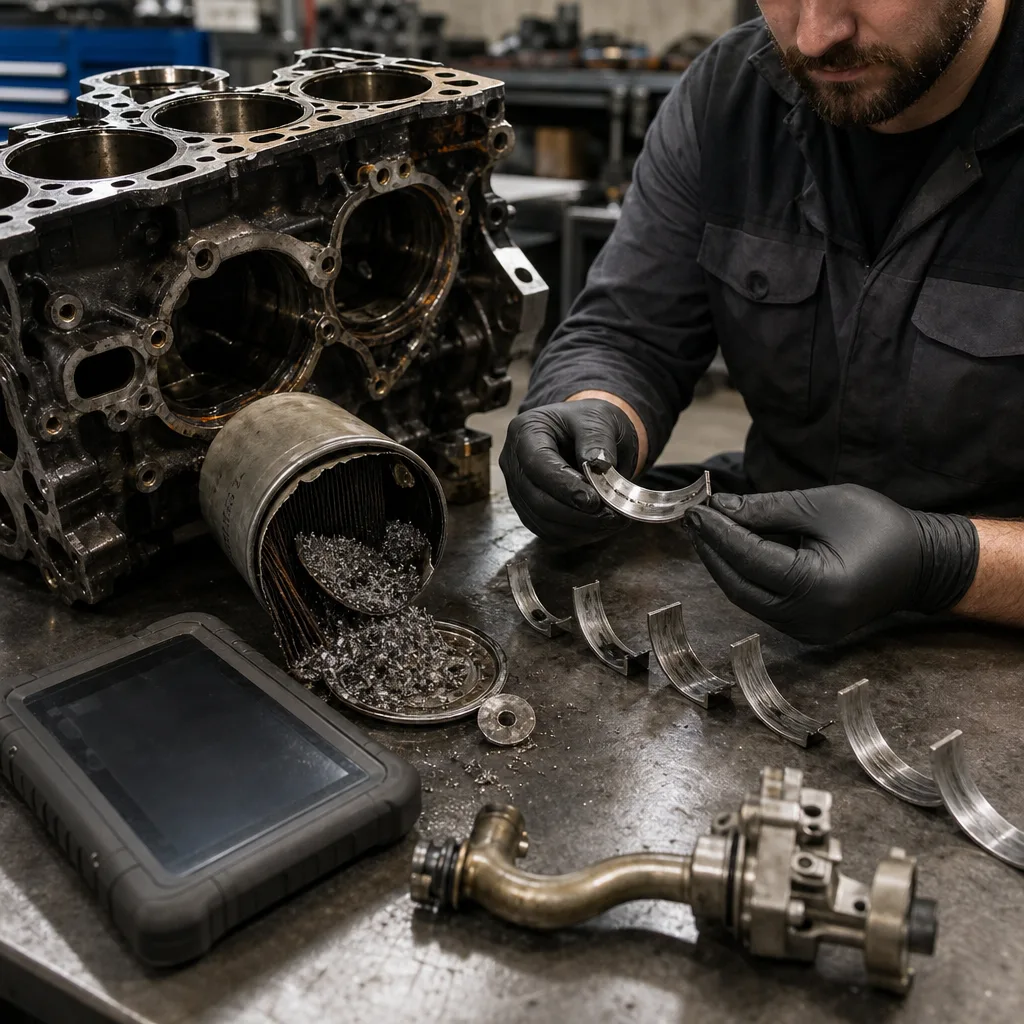
A phaser is often replaced after a symptom appears, but the root cause may be oil quality, sludge, worn timing components, or a failed oil control solenoid. Purchasing teams should understand the failure pattern because it affects return rates and warranty cost.
Typical failure modes include:
Sticking or delayed advance/retard response
Internal leakage causing phase drift
Lock pin wear leading to rattle at start-up
Contamination scoring the vane chamber
Incorrect torque retention at installation
If the camshaft chain, guides, or tensioner are also worn, replacing only the phaser may not resolve the complaint. For that reason, multi-part kits often reduce repeat labour. Buyers serving repair chains should evaluate whether the phaser is sold alone or as part of a timing set, and whether the vendor can supply related engine components through our catalog or engine components.
Validation testing for replacement parts
Replacement parts should be supported by test evidence, not just a fitment claim. For a camshaft phaser Audi aftermarket replacement programme, the most useful validation package includes functional and dimensional checks.
Recommended validation items
100% visual inspection for casting defects and contamination
Dimensional checks on bore, pitch diameter, and mounting face runout
Bench response test for advance and retard movement
Lock/unlock cycle verification at specified oil pressure
Noise check for start-up rattle and hydraulic chatter
Salt-spray or corrosion screening where storage or transport risk is high
If a supplier cannot show a control plan or inspection record, procurement should treat the part as unqualified. Buyers who need deeper process review can compare the supplier’s quality system with their own PPAP or vendor approval checklist.
How Driventus supports aftermarket sourcing
Driventus is set up for B2B replacement supply, not retail counter sales. That matters because distributors and repair groups need repeatable lots, clear labelling, and stable specifications across multiple shipments.
We support buyers with:
OE-fit replacement development based on sample and drawing review
Dimensional control matched to engine application requirements
IATF 16949:2016 and ISO 9001:2015 production discipline
Export packaging for container, pallet, and mixed-SKU orders
Customisation support through custom manufacturing for special marking or packaging needs
Where natural, we can cross-reference Audi applications using OE-format numbers such as OE 06A107065, but we do not claim OEM approval or endorsement. Driventus is an independent aftermarket manufacturer; brand names are referenced for fitment only.
Buying checklist for procurement teams
Use this checklist before placing a replenishment order:
1. Confirm engine code and OE reference against the vehicle application list. 2. Request sample dimensions and test results for the exact phaser revision. 3. Check whether the unit is supplied with seals, bolts, or timing hardware. 4. Verify packaging and anti-corrosion protection for the destination climate. 5. Confirm MOQ, lead time, and batch traceability requirements. 6. Align warranty terms with your own downstream service policy.
For buyers managing multiple regions, it is also useful to confirm whether the same phaser specification is being supplied into EU, UK, North American, and Brazilian channels, or whether local emissions and calibration differences require separate SKUs. If you are at the quotation stage, you can request a quote with your OE number, engine code, and annual volume.
Frequently asked questions
Match the engine code, OE reference, tooth count, mounting geometry, and locking behaviour. Ask for dimensional data and a sample comparison before purchase.
Yes. Internal leakage, slow hydraulic response, or lock pin wear can create phase deviation and trigger correlation or cam timing faults.
No. Driventus is an independent aftermarket manufacturer; brand names are referenced for fitment only.
If you need a validated replacement source for Audi timing components, share your OE number, engine code, and target volume, and our team will review fitment and supply options at /contact.html