camshaft · 2026-06-18

Camshaft for Peugeot 308 Aftermarket Replacement Guide

A camshaft for Peugeot 308 aftermarket replacement has to match the engine, valve timing strategy, bearing geometry, drive-end interface, and cam sensor trigger design used by the original part. That sounds obvious, but procurement failures usually come from one small miss: a 0.05–0.20 mm dimensional mismatch, the wrong intake/exhaust position, an incorrect phaser interface, or a sensor pattern error that turns into poor idle, P0016/P0017 correlation faults, no-start conditions, or accelerated follower and journal wear. Driventus manufactures engine components in China for B2B buyers that need repeatable OE-equivalent fitment across recurring orders. We support aftermarket distributors, repair chains, OEM, and Tier-1 programmes under IATF 16949:2016 and ISO 9001:2015. Typical orders are defined by engine code, OE cross-reference, drawing or sample, target annual volume, documentation level, and packaging requirement. Driventus is an independent aftermarket manufacturer; brand names are referenced for fitment only. This article walks through the fitment decisions, failure modes, validation points, and sourcing options that matter before you place an order.

Start with the fitment decision, not the vehicle badge

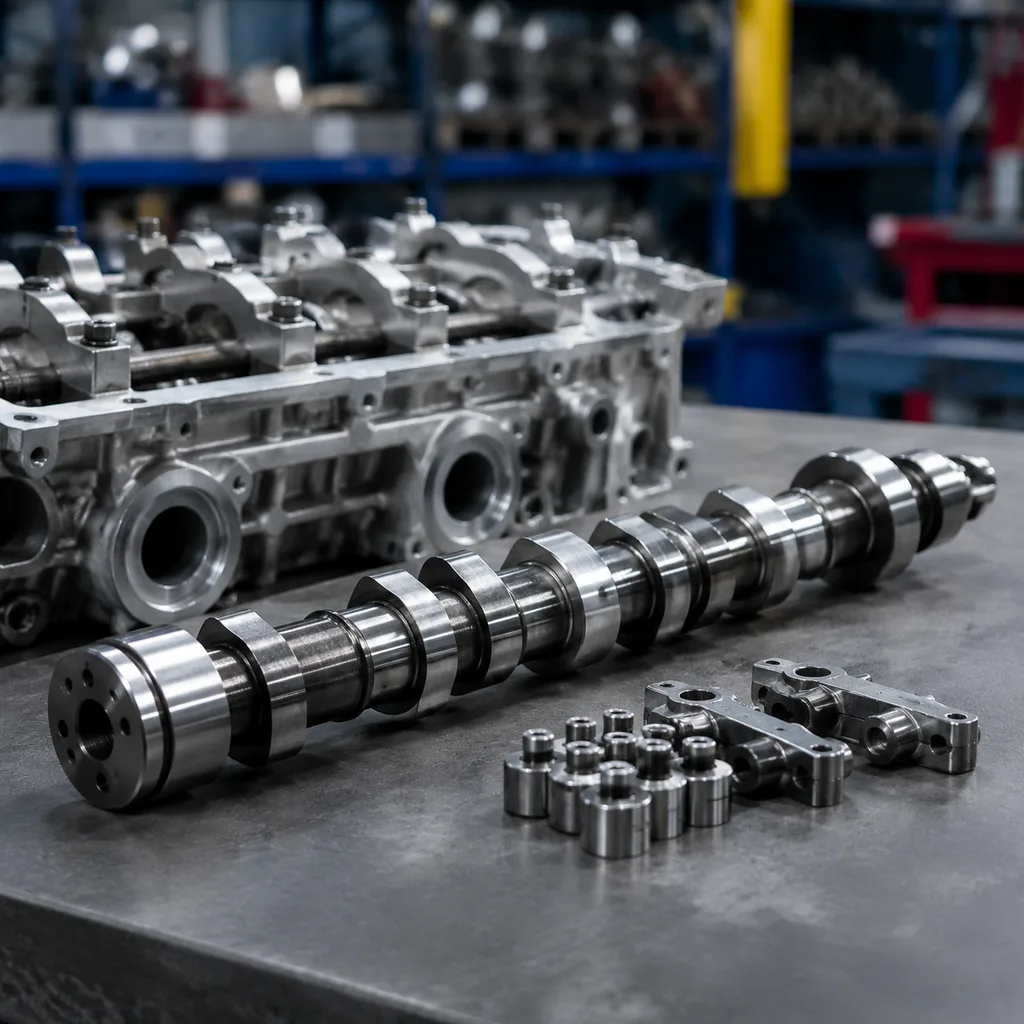
A replacement camshaft has to do more than fit the cylinder head. The buyer should confirm the engine code, number of valves, intake or exhaust position, cam lobe profile, bearing journal diameter, overall length, drive-end design, oil-feed holes, keyway or slot position, and any reluctor or encoder feature used by the cam sensor.

For the Peugeot 308, the same model name can cover multiple petrol and diesel engines across different model years and markets. That means the sourcing spec should be built around the engine family and OE reference, not the badge. On many applications, intake and exhaust shafts are not interchangeable even when the length and journal count look similar.

Decision checks

  • Engine code, displacement, fuel type, and model year range
  • Intake vs. exhaust position and VVT/phaser compatibility
  • Journal count, spacing, diameter, oil-hole position, and bearing width
  • Timing drive interface: belt, chain, gear-side feature, slot, pin, or keyway
  • Sensor window, trigger wheel, tone ring, or machined reference pattern
  • Lobe base circle, lift, opening ramp, closing ramp, and phase angle
  • Surface hardness on lobes and journals after heat treatment
  • Straightness, runout, and end-float limits before shipment

As a sourcing rule, critical dimensions belong in the drawing, not in a visual comparison note. Common control bands for OE-equivalent replacement programmes include journal diameter tolerance around ±0.010–0.020 mm, total indicated runout below 0.03–0.05 mm depending on shaft length, lobe lift tolerance around ±0.03 mm, and trigger feature angular position controlled within roughly ±0.5° when the ECU is sensitive. Final limits should always follow the OE sample, drawing, or buyer spec.

Driventus supplies camshafts as dimensional replacements for B2B customers that need stable fitment across batch orders, with inspection plans set to the part risk level and order volume.

Where replacement jobs fail in the field

Most camshaft complaints are not caused by the rough casting. They come from small mismatches that pass a casual check and fail once the engine runs. A shaft can look right, measure close overall, and still be wrong for the application.

Common failure modes include:

  • Wrong intake/exhaust pairing, which changes valve timing and can prevent start-up
  • Incorrect phaser interface, which creates correlation faults and unstable idle
  • Sensor pattern error, which can trigger P0016/P0017 and other sync codes
  • Journal spacing drift, which loads the bearing edges and reduces oil-film stability
  • Lift or lobe-centre error, which changes airflow and torque delivery
  • Surface hardness shortfall, which accelerates lobe and follower wear
  • Runout above spec, which raises noise, vibration, and premature seal wear
  • Oil-hole mismatch, which blocks lubrication paths or starves critical surfaces

That is why buyers should treat the camshaft as a controlled engine part, not a generic machined shaft. A part that is close on dimensions but wrong on timing geometry can create warranty cost that is far higher than the purchase price difference.

For procurement teams, the fastest way to reduce risk is to compare the replacement against a sample part, not just a catalogue description. If the application is uncertain, insist on the engine code, OE cross-reference, and measured critical dimensions before purchase.

Use this data pack before you issue the PO

The most reliable purchase record includes the engine code, OE cross-reference, and the measured critical dimensions from the sample or drawing. If the buyer only has a registration number or model name, the risk of incorrect supply increases, especially where a Peugeot 308 range includes different cylinder heads, emission stages, timing systems, or cam sensor layouts.

</tr></thead><tbody> </tbody></table>For procurement teams, the data pack matters more than a short vehicle-fit list. A practical RFQ set includes the target OE number, vehicle/engine application, intake or exhaust position, six-side sample photos, measured overall length, all journal diameters, lobe count, drive-end detail, sensor-end detail, annual forecast, first-order quantity, required inspection report, and destination port.

MOQ and price logic should be agreed early. For an existing catalogue part, trial orders can often be quoted at lower batch quantities because tooling and process routes already exist. For a new camshaft developed from a sample or drawing, MOQ is driven by casting/forging batch size, machining fixture setup, heat-treatment lot size, and inspection workload. As a planning guide, buyers should expect sample development to take longer than repeat production, and unit price to fall when order quantities move from a pilot lot to container or scheduled blanket orders. Driventus can work from drawings, samples, or existing OE-equivalent references through our custom manufacturing process.

Use this data pack before you issue the PO

What Driventus checks before release

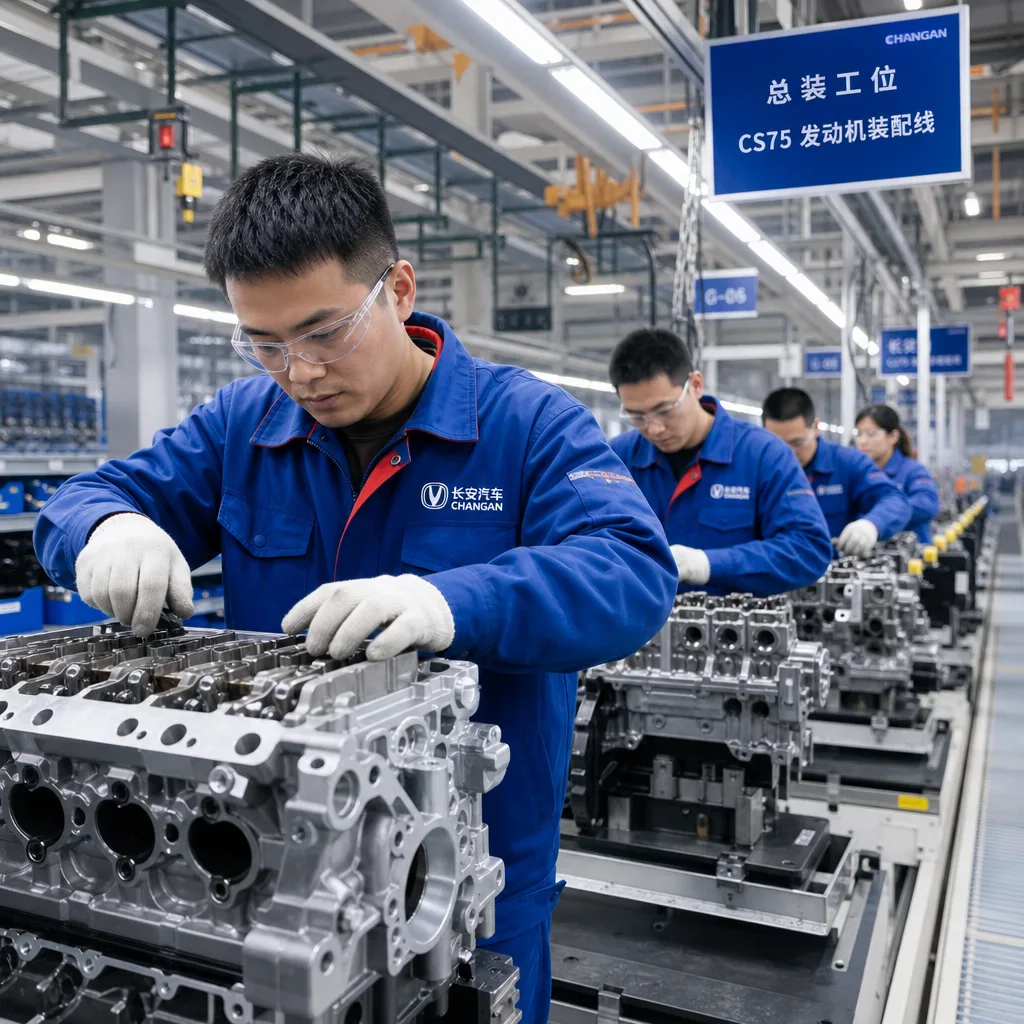
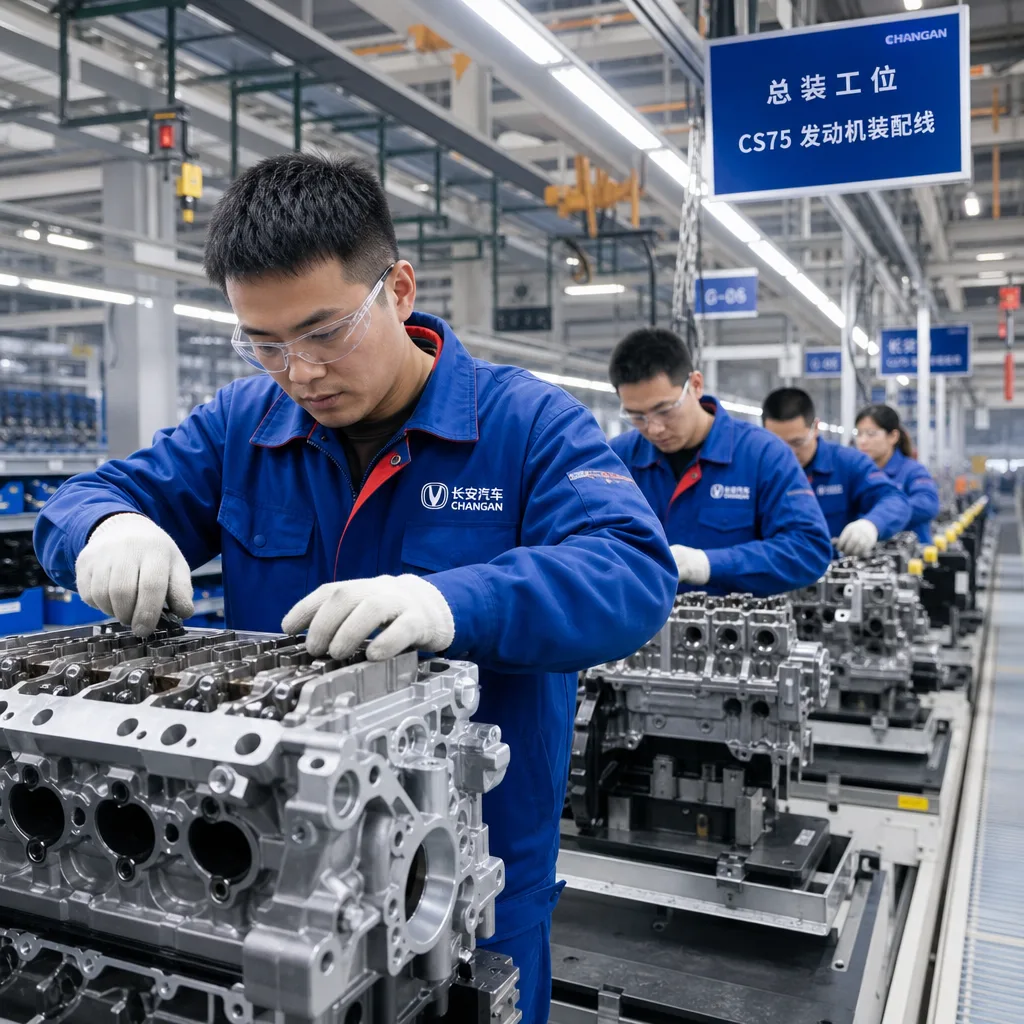
Our replacement programme uses inspection and verification steps built for repeat supply. Incoming material is checked before machining, and finished parts are verified for geometry, surface condition, and packaging protection. The control plan changes with the order type: catalogue repeat, private-label programme, or new development from sample.

Validation typically includes:

  • Material confirmation by supplier certificate and, where required, spectrometer or chemical composition check
  • Rough casting or forging inspection for porosity, cracks, shrinkage, warpage, and machining allowance
  • CNC turning and grinding control of journals, thrust faces, drive-end features, and sensor-end geometry
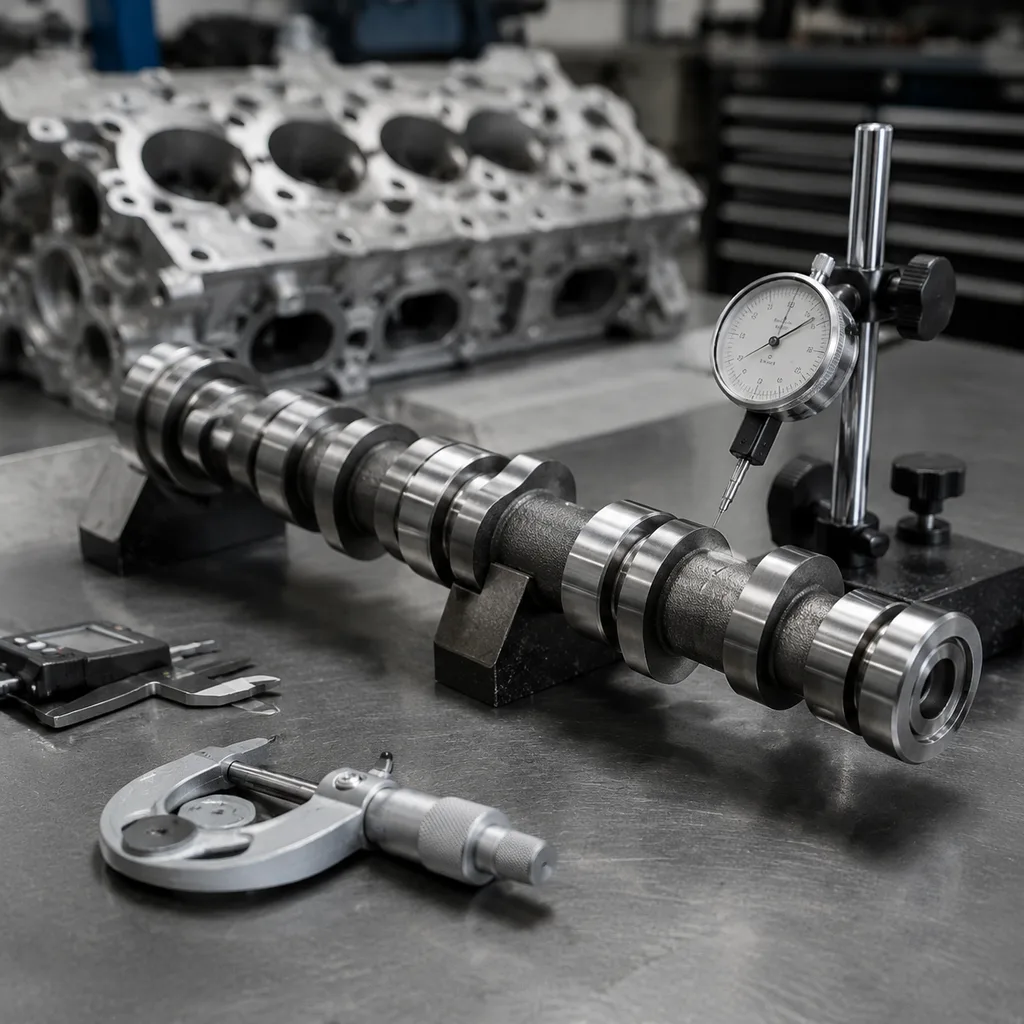
  • Coordinate measurement of journal positions, lobe geometry, critical lengths, and datum relationships
  • Runout inspection to confirm straightness, commonly controlled below 0.03–0.05 mm depending on part design
  • Surface roughness checks on journals and lobes, with journal finishes typically controlled in the low Ra range for oil-film stability
  • Surface hardness testing on lobes and journals after chilled casting, induction hardening, or another specified process
  • Visual checks for burrs, dents, rust, oil-hole blockage, and handling damage
  • Functional fit review against the reference engine family, mating phaser, sprocket, follower, or bearing layout when available
  • Packaging controls using rust-preventive oil or VCI protection, individual sleeves or trays, and export cartons sized to avoid shaft-to-shaft contact

For new development, the usual sequence is technical review, sample or drawing confirmation, feasibility quotation, tooling or fixture planning, first-article machining, dimensional report, buyer approval, pilot lot, then mass production. Lead time depends on whether the part is already in the range. Catalogue repeat parts can usually move faster; new-tooled or sample-developed parts need extra time for pattern or fixture work, heat-treatment validation, and first-article inspection. Where customers want tighter launch control, we can support sample approval, dimensional reports, batch traceability, material and heat-treatment records, and production control plans. Published quality controls are described in our quality system, and our component range is listed in our catalog.

Material choice changes wear life, not just price

Camshafts are commonly produced from chilled cast iron, ductile iron, forged steel, billet steel, or other engine-specific alloys, depending on valve-train load, target cost, lobe contact stress, production volume, and OEM architecture. The material choice affects lobe wear, machinability, heat treatment, mass, and finished part price.

For many aftermarket replacement camshafts, chilled cast iron is used because the chilled lobe surface offers good wear resistance at a competitive cost. Steel camshafts may be selected for higher load, assembled designs, or specific OEM architecture. A buyer should not approve a material substitution on price alone; the follower type, lubrication condition, spring load, and surface hardness requirement must also be checked.

Common procurement references include:

  • `IATF 16949:2016` for automotive quality management and traceable process control
  • `ISO 9001:2015` for controlled manufacturing systems and document management
  • `REACH (EC) No 1907/2006` for regulated chemical compliance in the EU
  • `RoHS` where customer policy requires restricted-substance declarations for supplied components or packaging
  • `ECE R-83` where emissions-related fitment context is relevant
  • `SAE J2527` as a recognised durability test reference for component validation programmes

Useful drawing requirements include material grade, hardness range, hardened depth where applicable, journal diameter tolerance, lobe lift tolerance, surface roughness, datum scheme, runout limit, oil-hole diameter and deburring requirement, chamfer radius, corrosion protection, and marking position. Typical buyer documentation may include a dimensional inspection report, material certificate, hardness report, process flow, control plan, packaging specification, and certificate of conformity.

For international buyers, the material and heat-treatment record should be kept with the purchase order. That supports internal audit, warranty review, and supplier comparison across batches. It also helps separate true manufacturing issues from installation-related failures such as blocked oil feed, incorrect timing belt or chain installation, reused worn followers, or inadequate break-in lubrication.

Which sourcing route fits your buying scenario?

Aftermarket distributors and multi-location repair groups usually want two things: stable availability and consistent interchange data. OEM and Tier-1 buyers usually add PPAP-style documentation, sample control, engineering change control, and tighter dimensional sign-off. The right route depends on whether the Peugeot 308 camshaft is already a catalogue item, a private-label range extension, or a new part that needs development.

Driventus supports three common sourcing paths:

1. Standard replacement supply for catalogue-driven orders with established OE equivalence. This is suitable when the buyer already knows the OE number, engine code, and intake or exhaust position. Pricing is mainly driven by order quantity, material route, machining time, and packing method. 2. Private programme support for regional distributors needing packaging, label, barcode, cross-reference alignment, carton strength, pallet configuration, or mixed-SKU shipment planning. This route is useful where buyers need consistent aftermarket interchange data across branches. 3. Custom manufacturing for customers working from sample parts, drawings, or a target specification. This route requires more up-front validation and normally includes sample approval before volume ordering.

For MOQ planning, buyers should separate `trial order`, `repeat stock order`, and `annual programme`. A trial order can verify fitment and market demand. A repeat stock order should align with machining and heat-treatment lot efficiency. An annual programme or blanket order can improve price stability because raw material, casting or forging capacity, packaging, and inspection resources can be scheduled in advance. Unit price is affected by shaft length, lobe count, material, heat treatment, grinding tolerance, documentation level, packing requirement, and whether tooling or gauges must be developed.

Lead-time planning should include technical confirmation, sample approval if required, production, inspection, packing, and freight. Buyers importing by sea should also consider port cutoff dates and customs documentation; buyers using air freight for urgent replenishment should protect precision surfaces with stronger individual packaging to avoid transit claims. For buyers expanding a Peugeot 308 range, it is often efficient to bundle camshafts with related engine parts from our engine components page. This can reduce supplier count, improve container utilisation, and simplify inbound inspection.

Frequently asked questions

Match the engine code, intake or exhaust position, and OE reference first. Then compare journal diameters, journal spacing, lobe count, lobe lift, drive-end design, oil holes, and sensor trigger features against a sample or drawing before purchase.

Yes. Driventus supplies camshafts for aftermarket replacement based on dimensional match, material and heat-treatment control, and validation checks. Driventus is an independent aftermarket manufacturer; brand names are referenced for fitment only.

Yes. We support custom manufacturing from a sample part, technical drawing, or target OE cross-reference, with dimensional verification, sample approval, material and hardness checks, and production control aligned to automotive sourcing needs.

If you need a camshaft for Peugeot 308 aftermarket replacement, send the engine code, OE reference, intake/exhaust position, sample or drawing, target quantity, documentation needs, and destination through our [request a quote](/contact.html) page.

Request a Quote
Verification item What to confirm Practical buying target
Engine codeExact engine family and fuel typeDo not buy on “Peugeot 308” alone
OE cross-referenceOriginal or recognised interchange numberRecord all supersessions and regional variants
Intake/exhaust positionShaft side and VVT/phaser usePrevents wrong lobe phasing or drive-end mismatch
Journal diameterMeasured against sample or drawingTypical tolerance band: ±0.010–0.020 mm unless otherwise specified
Journal spacing and widthPosition of all bearing seatsPrevents oil-pressure loss and bearing edge loading
Lobe lift and base circleIntake and exhaust profileTypical lift check tolerance: about ±0.03 mm for replacement control
Angular timingLobe centreline and trigger referenceCritical for idle quality, torque, and ECU synchronisation
Sensor featuresTrigger wheel, pickup slot, or encoder patternAvoids fault codes and no-start conditions
Material and heat treatmentAlloy, chilled layer, induction hardening, or nitriding where applicableInfluences wear resistance and warranty risk
PackagingAnti-rust film, sleeve, tray, or export cartonProtects lobes and journals during sea or air freight