Camshaft Opel Replacement: OE-Equivalent Sourcing Guide
A camshaft Opel replacement should be specified by engine code, valve train layout, cam position, and measured dimensions rather than vehicle badge alone. Within the same model line, Opel engines may use different cam profiles, sensor targets, journal diameters, thrust arrangements, and VVT or phaser interfaces. Procurement teams therefore need more than an application listing: the replacement camshaft should match the removed sample, the engine drawing, and the intended intake or exhaust position before it is released to stock or workshop channels. Driventus is an independent aftermarket manufacturer; brand names are used only to identify fitment. For distributors, repair chains, and OEM/Tier-1 buyers, the sourcing process should confirm OE-equivalent geometry, material, hardness, surface finish, inspection records, and export packaging. That approach reduces returns, avoids installation delays, and keeps replacement supply aligned with the engine family being serviced.
Fitment starts with the engine variant
Correct fitment begins with the engine variant, not the model badge. Opel engines can share a family name while using different lift curves, lobe separation angles, bearing journal diameters, trigger wheel geometry, thrust control, or VVT hardware. For a reliable camshaft Opel replacement, match the removed part against the engine code, cam position, number of lobes, bearing count, phaser drive, sprocket interface, and cam sensor target pattern.
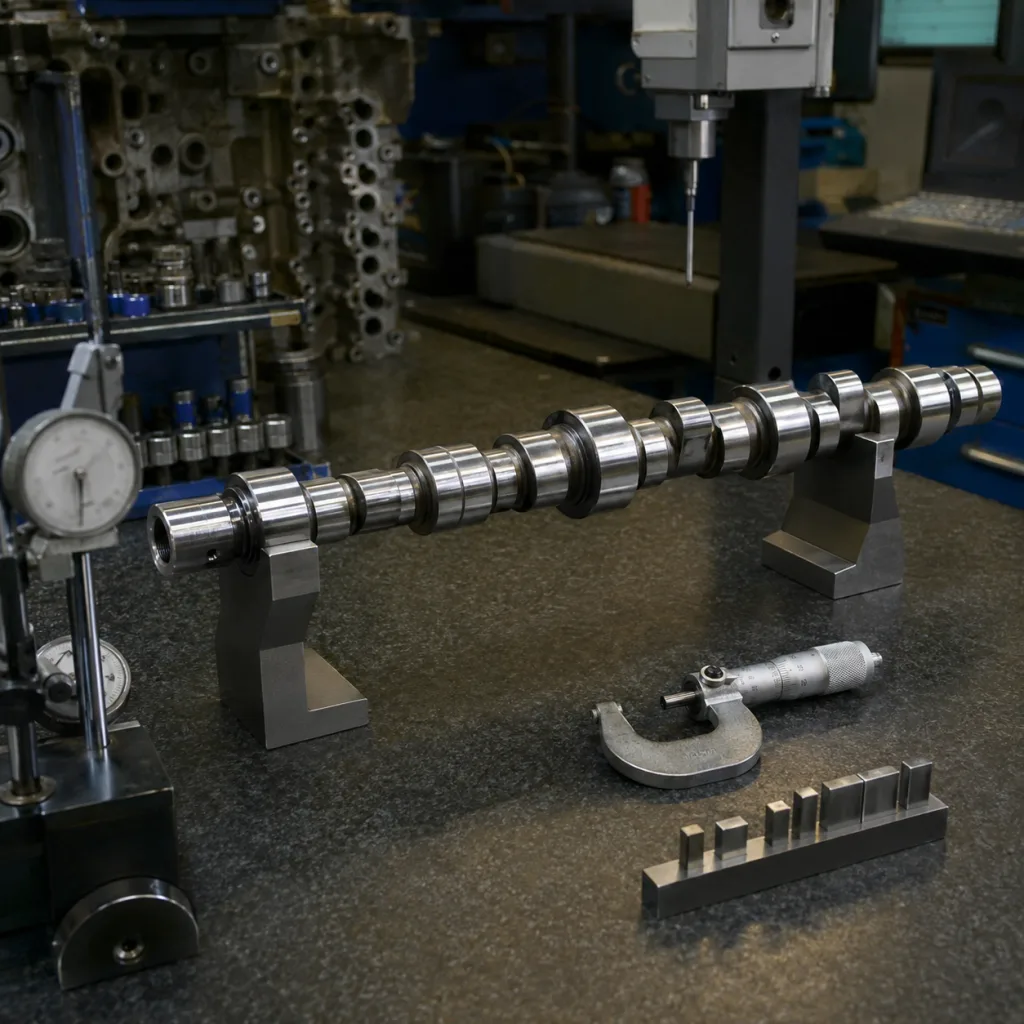
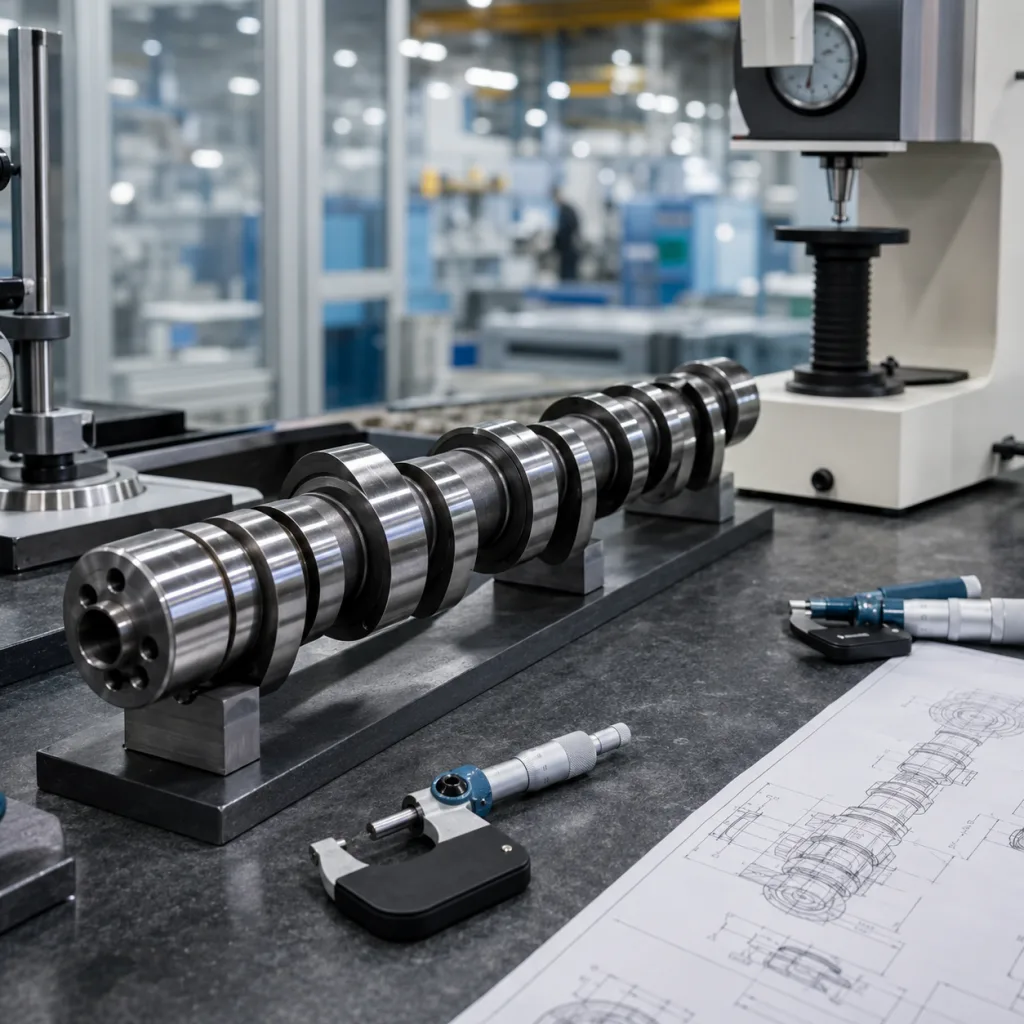
When the original part is worn, take measurements before ordering. Compare lobe nose height, base circle, journal diameter, overall length, oil-hole position, and visible thrust-face wear. A camshaft that looks similar but is not profile-matched can alter valve timing, idle stability, manifold vacuum, emissions behaviour, and drivability after installation. We supply OE-equivalent parts for distributor stock, repair networks, importers, and remanufacturing lines. See our catalog and the broader engine components range.
What to verify before you place an order
Before purchasing, verify the complete technical set rather than relying only on the vehicle application:
- Engine code, displacement, fuel type, and production range
- Intake or exhaust position, including whether the engine uses one or two camshafts
- Timing drive type, sprocket offset, keyway orientation, and end-drive design
- VVT or phaser interface, including oil control passages and locking features
- Cam sensor window, reluctor style, trigger count, and end-of-shaft features
- Bearing journal diameter, bearing count, overall length, and thrust control method
- Lobe lift, base circle, lobe width, surface finish, and hardness on lobes and journals
- Packaging label, cross-reference, and batch traceability for stock control
If the failure followed chain stretch, oil starvation, follower wear, or sludge build-up, inspect the wider valve train before fitting a new camshaft. Check followers, lifters, rocker arms, sprockets, oil feed passages, timing components, and lubrication history. A new camshaft will not correct an underlying oiling or timing fault, and repeated failure can occur if the root cause remains in the engine. For fleet, workshop, or distributor procurement, request a measurement report and packing label that tie the part to the correct engine family and batch.
Material and machining options for replacement supply
Material choice affects wear life, cost, machinability, and the inspection plan. For Opel replacement programmes, common options include chilled cast iron, ductile iron, and forged steel. The right specification depends on engine load, follower type, surface-hardening method, production volume, and whether the part must follow an existing OE-style profile or a customer drawing.
| Material | Typical use | Strengths | Trade-offs |
|---|---|---|---|
| Chilled cast iron | High-volume OE-style replacement production | Good lobe wear resistance and stable unit cost | Less flexible for custom profiles and design changes |
| Ductile iron | General replacement and mixed-duty engines | Balanced strength, damping, and machinability | Requires controlled heat treatment and hardness control |
| Forged steel | Higher-load, diesel, or performance-oriented applications | High fatigue margin and strong core properties | Higher material cost and more machining time |