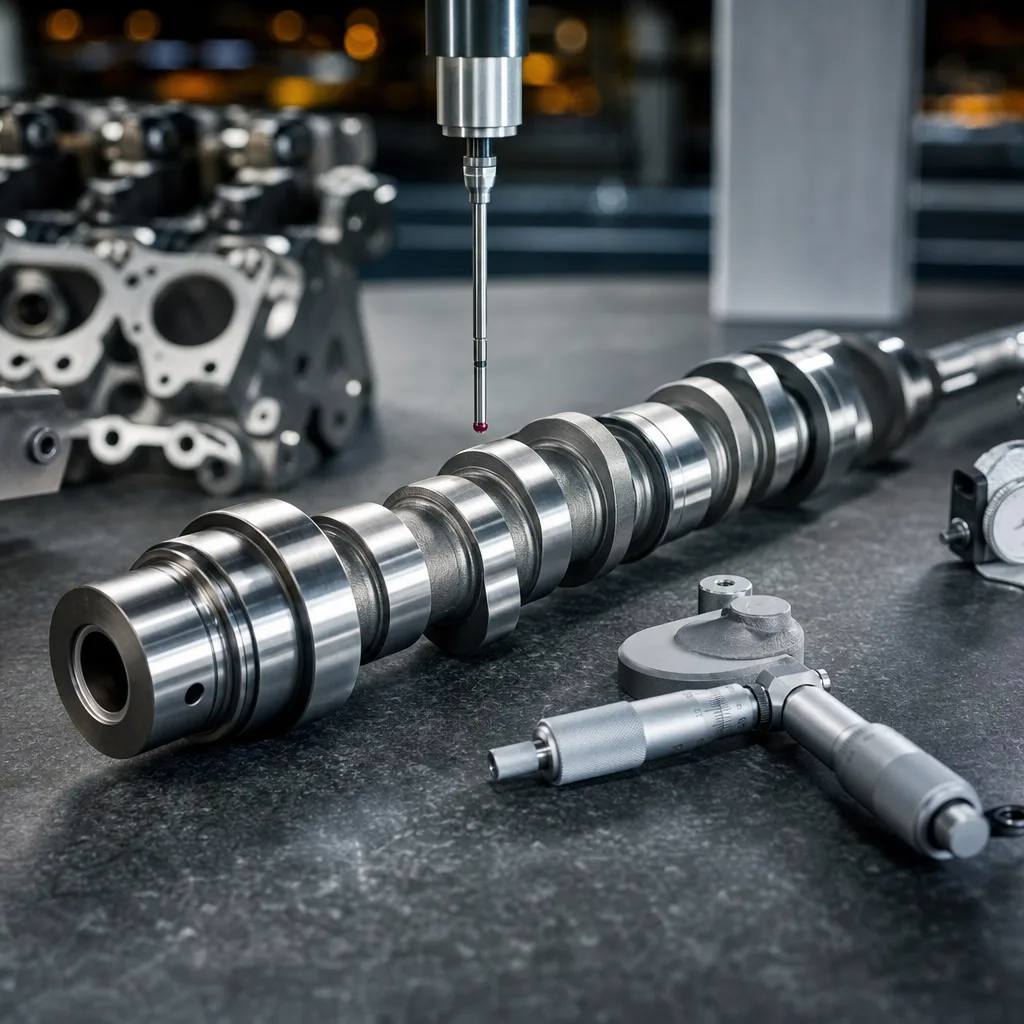
Camshaft for Opel Corsa Aftermarket Replacement
A camshaft for Opel Corsa aftermarket replacement should be specified from engine data and functional geometry, not from the Corsa name alone. Across Opel Corsa generations, applications can change by engine code, displacement, fuel type, valve count, camshaft position, timing-belt or timing-chain drive, cam sensor target design, cylinder-head casting, and follower type. Two vehicles with the same badge may still need different journal spacing, lobe phasing, thrust control, nose geometry, or ECU synchronisation features.
Driventus is an independent aftermarket manufacturer; Opel and Corsa names are used only for fitment identification. For distributors, wholesalers, engine rebuilders, and repair-network buyers, the sourcing question is practical: will the replacement camshaft match OE functional dimensions every time? That means checking whether journal diameter, lobe lift, base circle, runout, and trigger indexing are measured against an approved reference, and whether hardness, surface finish, corrosion protection, batch traceability, and packaging identification are documented before shipment.
This page explains how to specify an OE-equivalent replacement camshaft, which dimensional and material checks to review before release, how production is controlled under IATF 16949:2016 and ISO 9001:2015, and what validation records procurement teams should request before committing to a lot. See our catalog for related timing parts and engine components for the broader range.
What to confirm before you order
Order a replacement camshaft from verified application data, not from the vehicle nameplate or a brief catalogue note. Opel Corsa fitment can vary by engine code, displacement, fuel system, emission calibration, cylinder count, valve-train layout, and follower design, including hydraulic tappets, mechanical followers, rocker arms, roller followers, or direct-acting buckets. Buyers should also confirm whether the part is an intake camshaft, exhaust camshaft, or combined single overhead camshaft, and whether the engine uses SOHC or DOHC architecture.
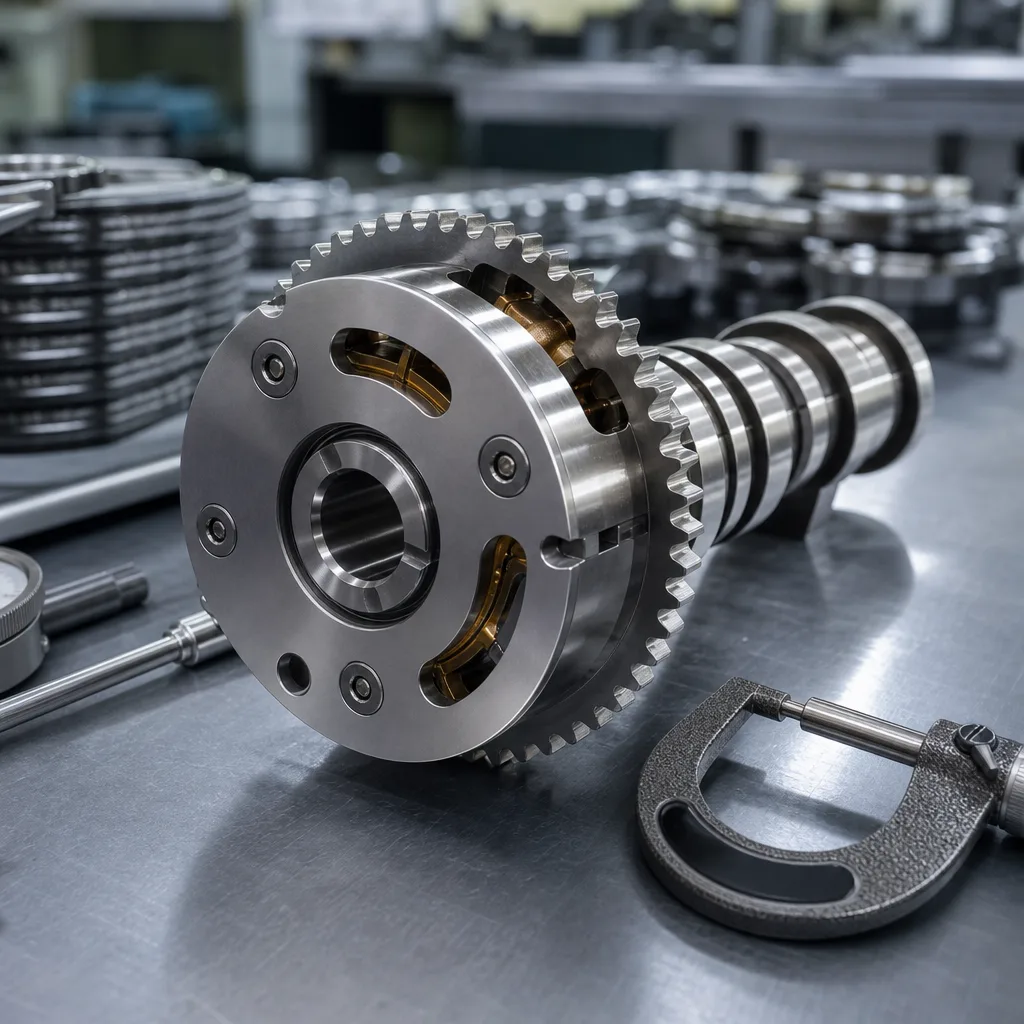
The basic fitment check should cover engine code, production year range, camshaft position, bearing journal count, journal order, drive method, thrust-control location, and any sensor or phasing features machined into the shaft. For timing-drive compatibility, confirm whether the camshaft uses a sprocket, pulley, gear, or chain-drive interface. Then verify the fastening pattern, locating dowel, keyway, taper, bolt thread, nose length, and sprocket seating face. For ECU compatibility, identify the reluctor, vane, slot, drilled trigger, pressed ring, or machined timing target read by the camshaft position sensor.
The target is OE-equivalent installation with no extra machining, shimming, spacing, or adaptation. To get there, the cam profile, overall length, journal locations, thrust face, nose geometry, rear-end feature, oil-feed details, and sensor target must match the intended cylinder head and engine management system. Even a small lobe-indexing or trigger-position error can move valve timing or synchronisation far enough to cause hard starting, cam/crank correlation fault codes, unstable idle, emissions failure, misfire detection, or a no-start condition.
Treat packaging and catalogue identification as part of the specification, not an afterthought. Each box should identify the application clearly enough for distributors, warehouse teams, and workshops to separate similar Corsa engine families. For resale stock, include part number, batch number, engine-code coverage, camshaft position where relevant, barcode or QR code, cross-reference control, and orientation photos where similar shafts are stocked together. Good identification reduces mixed-stock errors and allows any field issue to be traced back to a defined production lot.
Dimensional checks that prevent returns
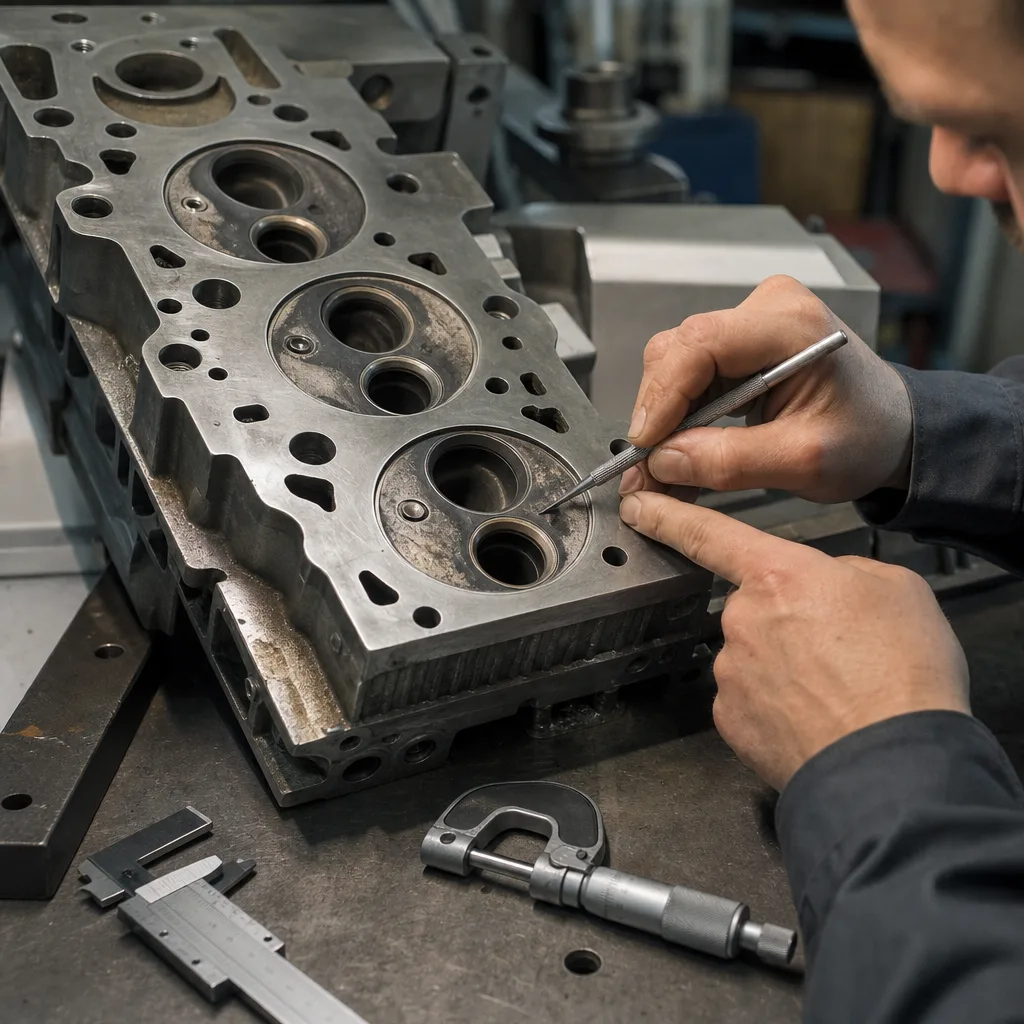
The most reliable way to avoid a mismatch is to compare the finished camshaft with a verified OE sample, approved drawing, or customer-supplied technical file. Catalogue cross-reference alone is not enough for a camshaft for Opel Corsa aftermarket replacement, because many critical features are hidden once the part is boxed and are difficult to verify at the workshop counter. Buyers should ask for measurement data before release, especially when launching a new SKU, changing supplier, or consolidating several references into one programme.
| Check | What to verify | Why it matters |
|---|---|---|
| Journal diameter | Each bearing journal size against the drawing or approved sample, typically recorded with micrometer or air-gauge data | Controls oil clearance and helps prevent low oil-film support, bearing wear, seizure, and binding |
| Journal spacing | Centre-to-centre distance between journals and alignment to the cylinder-head supports | Ensures the shaft seats correctly without side loading or cap interference |
| Overall length | End-to-end length, nose projection, rear feature length, seal land, and thrust location | Controls end float, cover clearance, seal fit, and timing alignment |
| Lobe lift | Intake and exhaust lift measured from base circle to nose | Affects cylinder filling, power, idle quality, emissions behaviour, and valve-to-piston clearance margin |
| Lobe profile | Opening and closing ramps, flank shape, nose radius, duration, and symmetry where specified | Controls valve motion, follower loading, valvetrain noise, and durability |
| Lobe phasing | Angular position of each lobe relative to the drive datum or specified reference feature | Keeps valve timing matched to the engine calibration |
| Base circle | Diameter and consistency across all relevant lobes | Impacts valve lash, hydraulic lifter preload, rocker geometry, and follower contact pattern |
| Drive interface | Keyway, dowel, bolt hole, sprocket seat, pulley seat, taper, thread, or gear interface | Prevents timing error, loose sprocket conditions, and assembly incompatibility |
| Sensor trigger features | Reluctor, vane, slot, drilled trigger, pressed ring, or machined target geometry and angular index | Required for correct cam/crank synchronisation and fault-free ECU operation |
| Oil-feed features | Oil holes, grooves, chamfers, plugs, and lubrication paths where present | Protects journals, lobes, followers, and hydraulic elements during start-up and operation |
| Surface finish | Journal finish, lobe finish, seal land finish, chamfers, and edge condition | Reduces friction, break-in wear, seal wear, and surface fatigue |
| Runout | Total indicated runout after grinding and final straightening, measured on the specified datum journals | Prevents vibration, uneven valve action, oil-clearance variation, and accelerated bearing wear |
| End features | Thread, plug, seal surface, cam sensor end, vacuum-pump drive, fuel-pump lobe, or auxiliary drive where used | Ensures accessory, cover, sensor, and sealing compatibility |