camshaft · 2026-05-28

Camshaft Nissan OEM Supplier: Sourcing Guide for Buyers

Procurement teams sourcing a camshaft Nissan OEM supplier usually need three things at the same time: dimensional consistency, controlled lead time, and evidence that the plant can support repeat orders without drifting from print. For engine programmes, the camshaft is not a generic machined shaft. Base circle, lobe lift, journal runout, surface hardness, and heat-treatment stability all affect valve timing and durability. Driventus manufactures engine and powertrain components in Taizhou, Zhejiang, and supplies B2B buyers in aftermarket, OEM, and repair-chain channels. We export to 60+ countries and operate under IATF 16949:2016 and ISO 9001:2015. Driventus is an independent aftermarket manufacturer; brand names are referenced for fitment only. This article explains how sourcing teams can evaluate a supplier, what specifications to verify, and which documents should be requested before a trial order or annual contract.

What procurement teams should verify first

When reviewing a camshaft Nissan OEM supplier, start with fitment data and process control, not price. A low unit cost is irrelevant if the camshaft fails runout, lobe profile, or hardness checks.

Minimum procurement checks

  • OE cross-reference coverage: confirm the part family and the applicable OE 06A… or similar reference only when the buyer already uses that code
  • Material declaration: forged or cast blank specification, alloy grade, and heat-treatment route
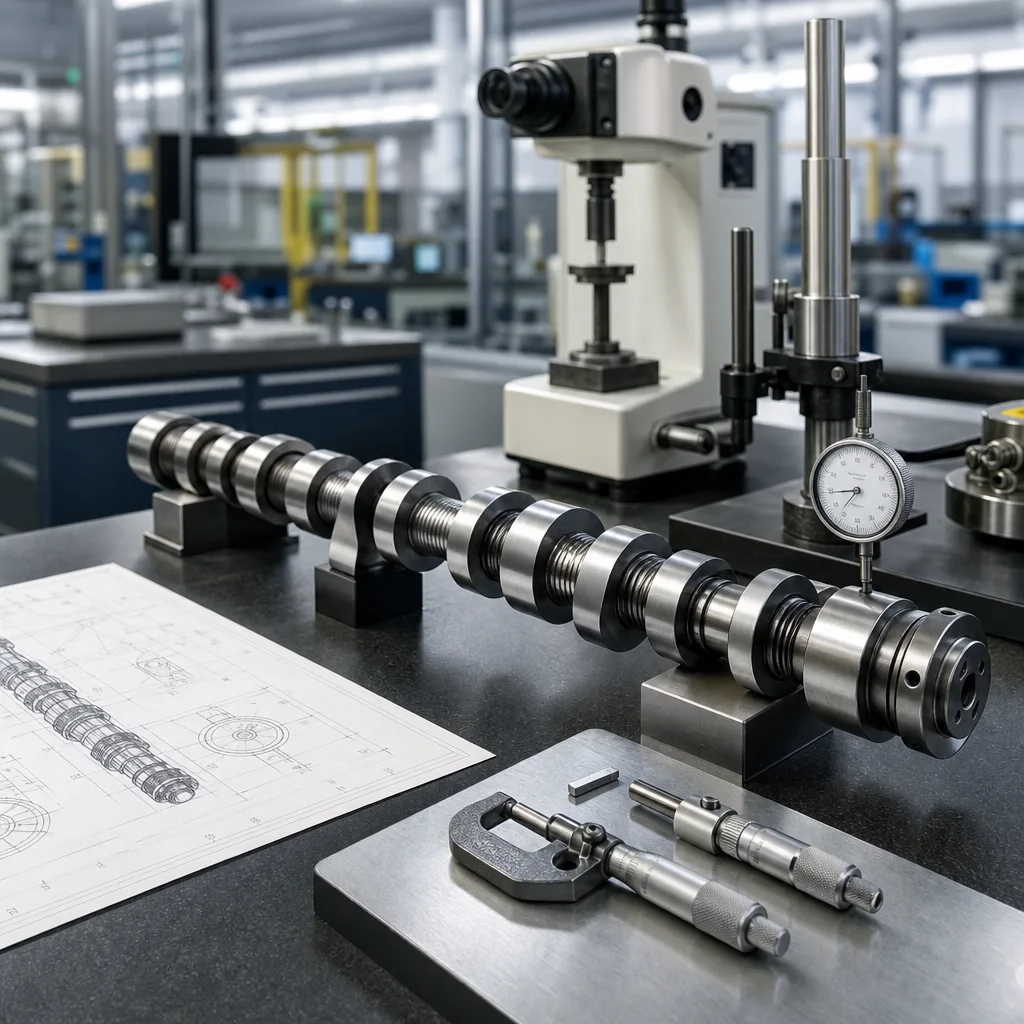
  • Dimensional control: journal diameter, lobe lift, base circle, and overall length
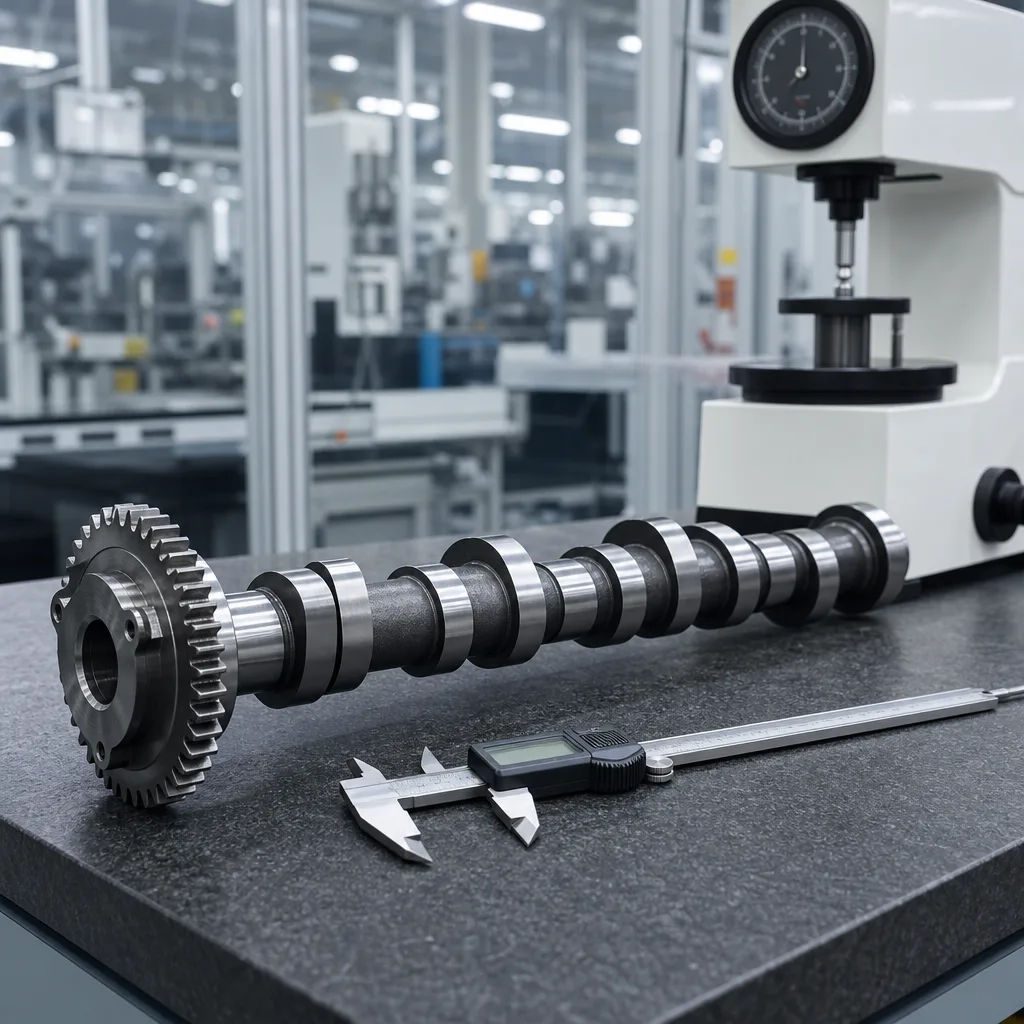
  • Hardness and case depth: request test method and acceptance range
  • Surface finish and runout: ask for measured values, not only pass/fail
  • Packaging and traceability: batch number, date code, and carton count

For buyers handling multiple vehicle lines, a supplier should also be able to separate catalogue items from build-to-print parts. Driventus can support standard catalogue supply through our catalog and application-specific work through custom manufacturing.

Production capability and manufacturing controls

A camshaft is a precision rotating component. The process chain usually includes blank preparation, rough machining, journal and lobe grinding, heat treatment, final inspection, corrosion protection, and packaging. If any step is unstable, repeatability drops across batches.

Typical control points

</tr></thead><tbody> </tbody></table>For supply continuity, ask whether the plant works to IATF 16949:2016 or ISO 9001:2015 at the site level, and whether critical inspection equipment is calibrated to an internal schedule. A supplier should be able to share inspection records, control plans, and lot traceability on request. Buyers in regulated markets should also check whether the material and finishing process are compatible with REACH (EC) No 1907/2006 requirements.

Commercial terms that matter for repeat orders

For procurement, the commercial model is as important as the physical part. Many sourcing problems appear after the first shipment, when replenishment timing slips or the supplier cannot hold the same revision.

Points to define before award

  • MOQ by part number and by mixed carton
  • Standard lead time for sample, trial, and mass production
  • Revision control for drawings and packaging
  • Incoterms and export documentation
  • Warranty response process for dimensional nonconformance
  • Spare capacity for peak demand or emergency replenishment

If you are evaluating a new programme, request an initial production plan that shows batch size, inspection gate, and packing date. For importers, this is also the point to confirm pallet height, carton labelling, and barcode format. A supplier serving aftermarket distributors, OEM / Tier-1, and repair-chain networks should be able to separate commercial terms by channel without changing the part specification.

Validation testing buyers should request

A supplier can quote a camshaft quickly, but sourcing teams should still request validation evidence before volume release. The exact test plan depends on the engine family, duty cycle, and lubricant environment.

Common validation requests include:

  • Dimensional inspection report for pilot lot
  • Hardness mapping across lobes and journals
  • Metallographic review if the programme is new
  • Fatigue or endurance test summary where applicable
  • Corrosion or salt-spray data for coated surfaces
  • Packaging drop test for export shipments

If the application is sensitive to wear or emissions performance, ask whether the validation method references published standards such as SAE J2527 for corrosion exposure where relevant to coated parts, or whether the customer uses an internal endurance protocol. Do not accept generic “tested” claims without method, duration, sample count, and acceptance criteria. For fitment-sensitive programmes, confirm that the cam profile matches the intended engine revision and does not rely on visual similarity alone. Driventus can support programme review through our quality system and technical coordination before launch.

How Driventus supports sourcing teams

Driventus is set up for B2B supply, not retail transactions. That matters for buyers who need stable replenishment, documented inspection, and export-ready packing.

What sourcing teams can expect

  • Factory-level traceability by batch and inspection lot
  • Export experience across 60+ countries
  • IATF 16949:2016 and ISO 9001:2015 quality management
  • Support for catalogue supply and build-to-print programmes
  • Technical review for drawings, samples, and packaging requirements

We work with aftermarket distributors and wholesalers, OEM / Tier-1 suppliers, and multi-location repair chains. For projects that require non-standard geometry, coating, or packaging, our engineering team can review custom manufacturing options and align the specification to the intended application. If you want to compare related engine parts, see our engine components page for adjacent product families.

Driventus is an independent aftermarket manufacturer; brand names are referenced for fitment only.

Frequently asked questions

Ask for the drawing or cross-reference, material certificate, heat-treatment report, dimensional inspection record, and packing specification. For repeat orders, also request traceability by batch and revision control confirmation.

Yes. Driventus supplies B2B customers across aftermarket, OEM / Tier-1, and repair-chain channels. We can support catalogue supply, sample runs, and build-to-print programmes with defined inspection points.

Send the OE reference, engine code, target annual volume, packaging needs, and destination market. Our team will confirm feasibility, lead time, and sampling steps before you place an order.

If you are evaluating a camshaft supply programme, send your OE reference and target volume for review. Start a discussion with our team here: /contact.html

Request a Quote
Control item What buyers should ask for Why it matters
MaterialAlloy specification, heat number, mill certConfirms metallurgy and traceability
Heat treatmentFurnace type, quench method, hardness reportImpacts wear resistance and fatigue life
GrindingJournal and lobe dimensional recordsAffects valve timing and engine smoothness
RunoutMeasured total indicated runoutPrevents vibration and bearing wear
Surface finishRa value or equivalentHelps reduce follower wear
Final inspectionSampling plan and CMM recordsSupports lot acceptance