Camshaft GMC OEM Supplier: Sourcing Guide for Buyers
Procurement teams sourcing a camshaft for GMC applications need consistent geometry, stable metallurgy, and documented process control. For aftermarket distribution, repair chains, and OE-linked programs, the main risks are dimensional drift, incorrect lobe timing, and poor surface finish after heat treatment or grinding. Driventus supplies camshafts from Taizhou, Zhejiang, with in-house manufacturing control across machining, heat treatment, and inspection. We work to IATF 16949:2016 and ISO 9001:2015 systems, and we support buyers who need repeatable quality, traceable lots, and export-ready packaging. Driventus is an independent aftermarket manufacturer; brand names are referenced for fitment only. This article outlines what buyers should verify before placing volume orders, how to compare supply options, and what documentation to request during factory qualification. If your team is building a sourcing file for GMC engine programs, the sections below will help you evaluate fitment, validation, and commercial terms with less risk.
What buyers should verify before sourcing a GMC camshaft
A camshaft purchase should be based on engineering data, not just vehicle nameplate references. For GMC applications, buyers should confirm base circle, journal diameter, lobe lift, lobe separation, overall length, thrust control, and drive-end configuration. A mismatch in any of these areas can affect valve timing and engine durability.
Minimum data to request from a supplier
- OE or application reference, such as OE 06A107065 when relevant to the inquiry format
- Material specification and heat-treatment method
- Hardness range after treatment
- Critical dimensions and runout limits
- Surface finish on journals and lobes
- Packaging and corrosion protection
- Lot traceability and inspection records
For volume programmes, ask whether the part is made from chilled cast iron or alloy steel, and whether the final profile is ground after hardening. Buyers also need to confirm whether the part is for naturally aspirated, turbocharged, or heavy-duty duty cycles. The same part family may require different lobe profiles and timing events depending on engine calibration and emissions package.
Why certification and process control matter in procurement
For B2B sourcing, certification is not a substitute for engineering review, but it is a useful control point. Driventus operates under IATF 16949:2016 and ISO 9001:2015, which means production records, nonconformance handling, and corrective action are managed in a structured system. Buyers in the EU and UK often also request REACH (EC) No 1907/2006 declarations for materials and coatings.
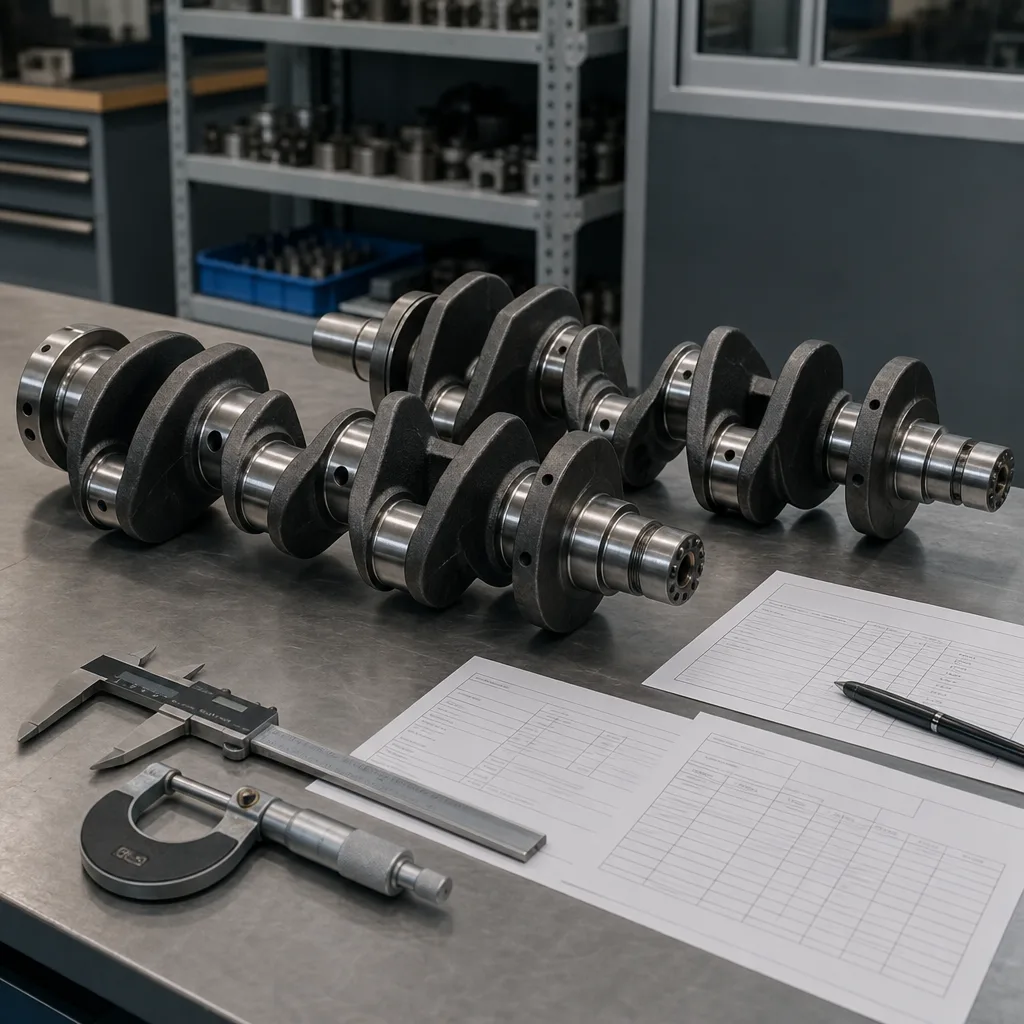
Our quality system supports incoming verification, in-process checks, and final inspection for engine components. For camshafts, that typically includes:
- Journal diameter measurement
- Lobe lift and indexing verification
- Concentricity and straightness checks
- Hardness testing after heat treatment
- Surface defect inspection
Where export markets require it, documentation can also include packing specifications, lot coding, and material declarations. For procurement teams, this reduces receiving risk and shortens the time needed for supplier approval.
Comparison of supply options for OEM-linked and aftermarket buyers
Camshaft buyers usually compare three supply paths: off-the-shelf aftermarket stock, OE-cross-referenced production, and custom manufacturing. Each option has different lead-time and engineering effort.
| Supply option | Best for | Engineering input | Typical sourcing risk | Notes |
|---|---|---|---|---|
| Stock aftermarket camshaft | Fast replacement programs | Low | Medium | Suitable when fitment is already validated |
| OE-cross-referenced production | Distributor and repair-chain programmes | Medium | Lower | Requires stable dimensional control |
| Custom manufacturing | OEM / Tier-1 or private label | High | Lowest when qualified | Needs drawings, samples, and PPAP-style review |