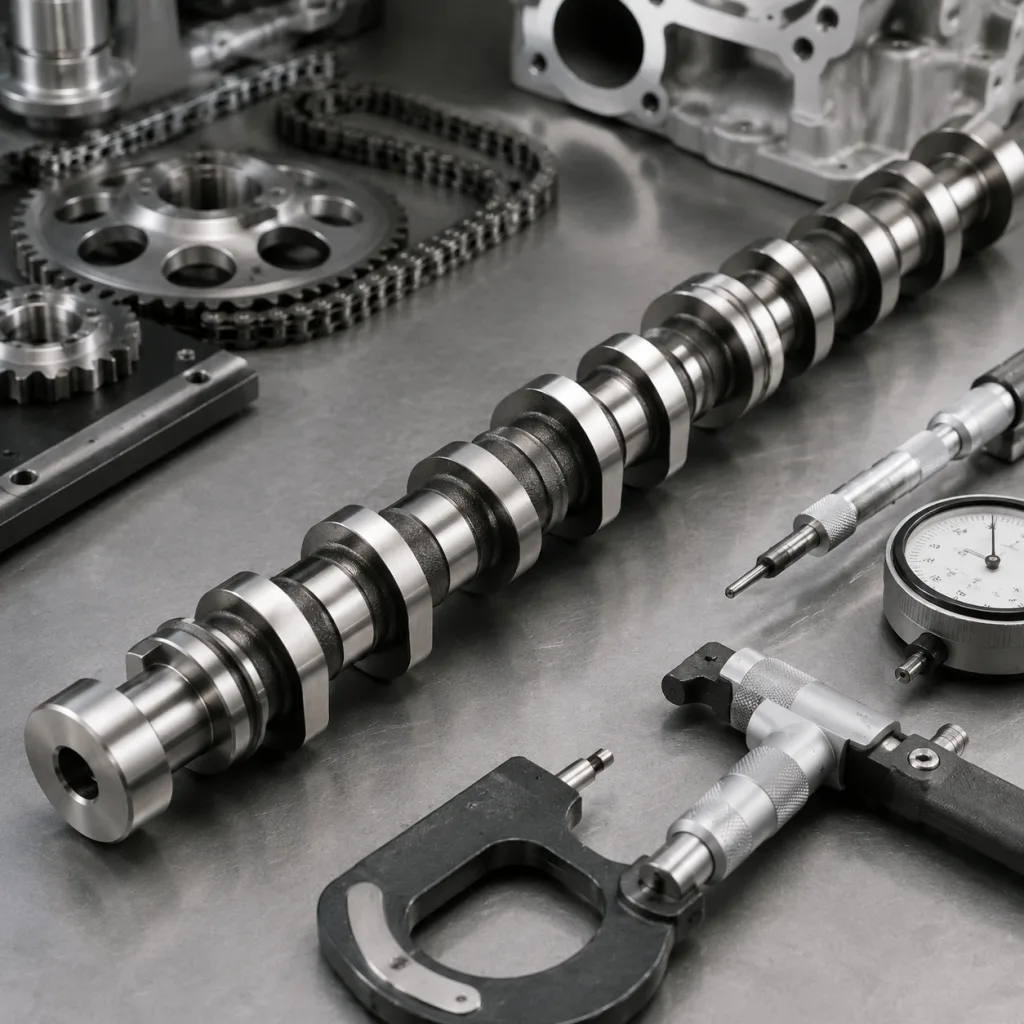
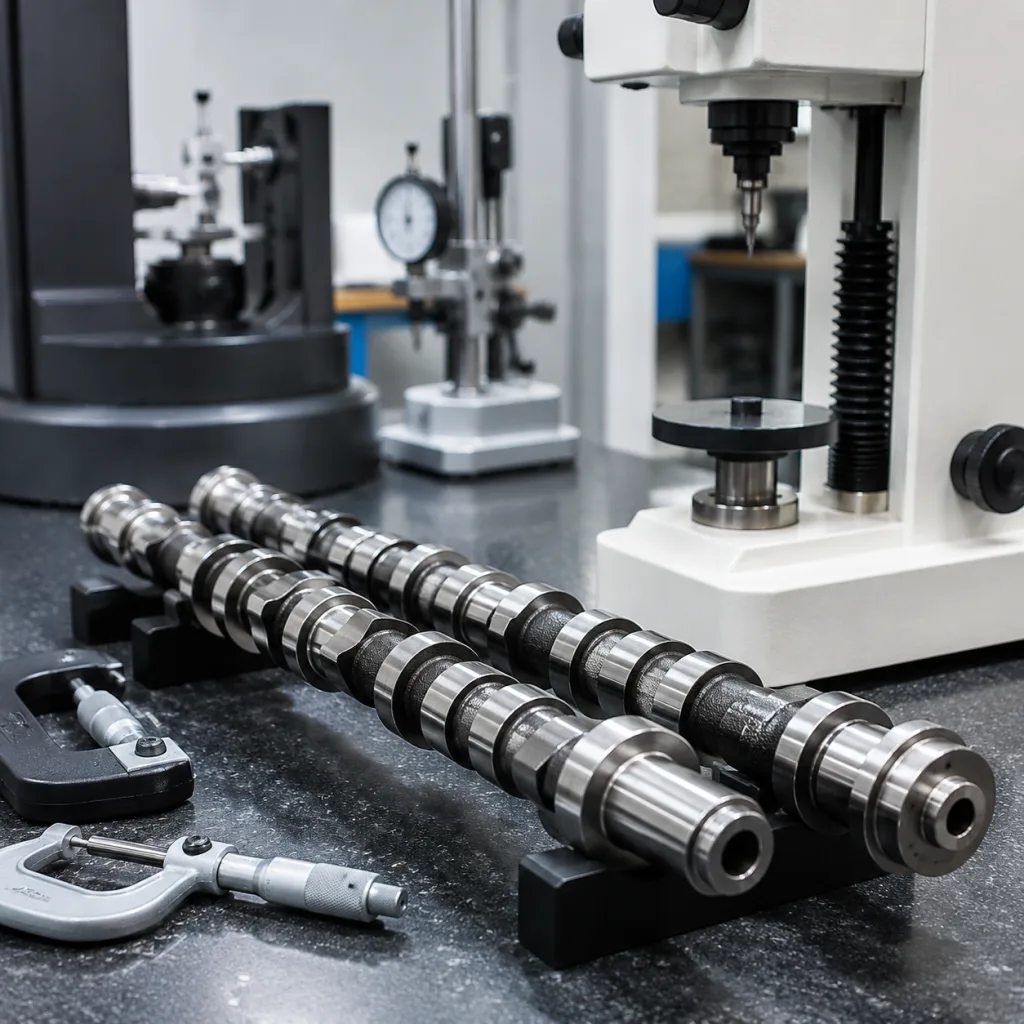
Camshaft for Mazda CX-5 Aftermarket Replacement
A camshaft for Mazda CX-5 aftermarket replacement has to match the original valve timing geometry, bearing journal dimensions, lobe profile, and surface hardness closely enough to restore engine performance without introducing noise, oil-pressure loss, or abnormal valvetrain wear. For procurement teams, the real issue is not only whether a part fits the application. It is whether the supplier can hold metallurgy, machining, heat treatment, traceability, and inspection controls across repeat production lots. Mazda CX-5 applications can vary by engine family, model year, and market, so importers should validate fitment by engine code, VIN-derived data, and OE part-number cross-reference format before release. Driventus manufactures engine and powertrain components in Taizhou, Zhejiang for B2B customers in more than 60 countries, including aftermarket distributors, OEM, and Tier-1 supply channels, as well as repair-chain programmes.
OE-Equivalent Fitment Requirements
For CX-5 replacement demand, buyers should treat the camshaft as a precision timing component rather than a simple rotating shaft. A small deviation in lobe lift, base circle, journal roundness, or thrust face width can alter valve opening events, oil-film stability, and timing-chain alignment.
Before placing an order, confirm the following data against the application list and sample approval file:
- Engine family, displacement, and fuel type
- Intake or exhaust camshaft position
- Model-year coverage by destination market
- Timing actuator interface and dowel position
- Sensor trigger profile where applicable
- Journal diameter, journal width, and oil-feed geometry
- Lobe lift, base circle, and phase relationship
- Thrust face thickness and end-float control surface
- Packaging label fields for distributor inventory systems
OE part-number cross-references should be used only for identification and interchange management. A typical procurement file may reference formats such as OE 06A... or OE 11251... only when supplied by the customer or existing catalogue data. Driventus is an independent aftermarket manufacturer; brand names are referenced for fitment only.
Material, Machining and Surface Control
Camshaft durability depends on material choice, hardness profile, and finish consistency. Depending on the programme specification, Driventus can produce chilled cast iron or forged steel camshafts, with process routes selected according to engine load, lobe contact stress, annual volume, and target price.
| Control point | Typical procurement requirement | Why it matters |
|---|---|---|
| Journal diameter | Drawing-controlled tolerance | Maintains oil film and bearing clearance |
| Lobe lift | Profile inspection against master data | Controls valve opening and engine breathing |
| Surface hardness | Batch-tested after heat treatment | Reduces lobe and follower wear |
| Runout | Checked on precision fixtures | Limits vibration and timing variation |
| Surface roughness | Measured on journals and lobes | Supports lubrication and bedding-in |
| Timing feature position | Verified by coordinate or fixture inspection | Prevents phase error after installation |