Camshaft for Jeep Grand Cherokee Replacement Sourcing
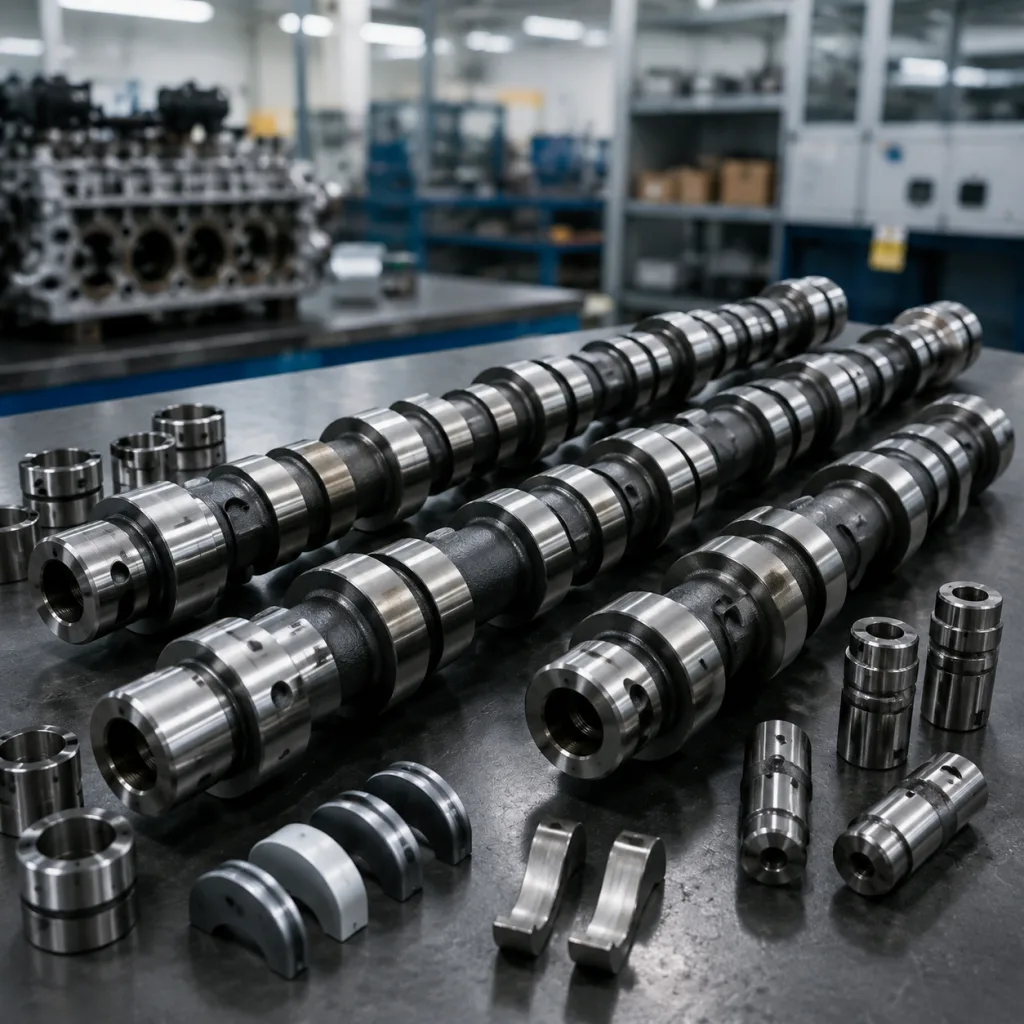
Choosing a camshaft for Jeep Grand Cherokee replacement programs starts with a simple rule: match the engine, not the badge. The same nameplate can hide different shaft lengths, lobe profiles, trigger features, oil-feed layouts and sensor indexing. Miss one of those details and the part may install, yet still cause timing faults, noise, wear or returns.
For distributors, repair chains and importers, the real job is deciding whether a candidate shaft is genuinely interchangeable. That means checking engine code, timing architecture, material route, surface finish, validation data and packaging control before the first order is placed. This guide focuses on the decision points that matter in B2B sourcing, including failure modes, spec checks, validation and commercial documentation. Driventus supplies engine components for aftermarket and service networks, including camshafts developed from controlled drawings and sample validation. Driventus is an independent aftermarket manufacturer; brand names are referenced for fitment only.
Start With Engine Code, Not Vehicle Name
Grand Cherokee fitment looks simple on the catalogue page and messy in the warehouse. One nameplate can cover multiple engine families, regional calibrations and valvetrain layouts. A 3.6 L petrol V6, a 5.7 L petrol V8 and diesel variants may share the same vehicle badge but still require different shaft geometry, journal count, sensor indexing or oil-feed drilling.
Before quoting, collect a data set that narrows the application fast:
- Vehicle model, generation and year range
- Engine displacement and engine code
- Intake, exhaust or combined camshaft position
- Cylinder bank, if the shaft is bank-specific
- Variable valve timing type and phaser interface
- OE cross-reference and revision level, if available
- Sample, drawing or 3D scan for verification
- Annual forecast, release quantity and target service-life expectation
- Packaging format, label language and pallet requirement
For any camshaft for Jeep Grand Cherokee replacement program, verify the part against a physical sample or controlled drawing before mass production. Catalogue data is useful for screening, but it is not enough when one wrong detail can affect an entire service network. Buyers can review related engine parts through our catalog and the engine component range at [/products/engine-components.html].
Where Replacement Programs Fail
Most camshaft sourcing problems are not obvious at the quote stage. The price looks fine. The sample looks close. Then the field issues start.
Typical failure modes include mismatched lobe profiles, poor journal finish, incorrect trigger features, shallow hardening, wrong base-circle diameter and packaging that leaves machined surfaces exposed during ocean freight. Any one of those can create noise, low oil pressure, correlation faults or accelerated wear. More often, the damage comes from combinations: a slightly off sensor feature plus a marginal finish plus inconsistent heat treatment.
That is why buyers should treat interchangeability as a controlled decision, not a visual judgment. A shaft that looks similar on the bench can still differ in the dimensions that matter most under load. If the application is spread across branches or export markets, the risk multiplies because one approved mistake can repeat across many orders.
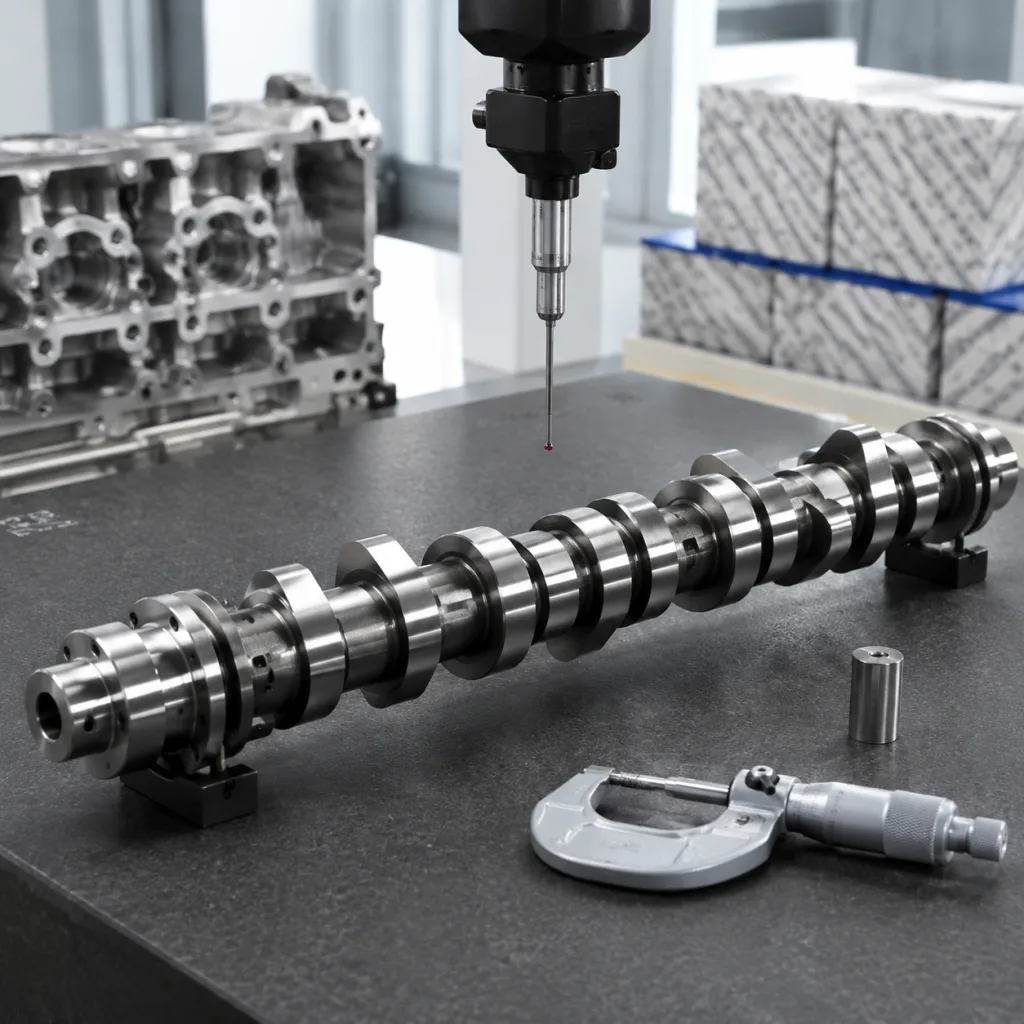
Driventus inspection programs are built to reduce that risk through incoming material checks, rough-machining verification, heat-treatment confirmation, finish-grinding inspection, surface roughness measurement and final packing review. The aim is stable interchangeability in service, not just a close-looking part.
Compare the Specs That Actually Control Fit
A camshaft is timing-critical, so small dimensional drift can create large operating problems. Buyers should compare the features that govern fit and function, not just the headline part number.
| Feature | Typical control point | Procurement risk if uncontrolled |
|---|---|---|
| Overall length | Matched to approved sample or drawing within ±0.20 mm | End-play error, timing cover interference |
| Journal diameter | Controlled to drawing tolerance, often within ±0.01 to ±0.02 mm depending on design | Low oil pressure or bearing seizure |
| Lobe lift | Matched by intake/exhaust position within the agreed tolerance band, often ±0.03 mm | Power loss, misfire, valvetrain noise |
| Base-circle runout | Checked on precision centres, typically limited to ≤0.03 mm TIR unless otherwise specified | Uneven valve actuation |
| Thrust-face width | Matched to head design and axial-control requirement | Excessive axial movement |
| Sensor trigger feature | Position, tooth count and profile verified against sample | Cam/crank correlation fault codes |
| Oil-feed holes | Diameter, angle and location inspected against the control plan | Lobe and journal lubrication failure |
| Lobe-to-lobe phasing | Verified between companion lobes on multi-function shafts | Timing imbalance across cylinders |