cylinder head · 2026-06-16

Cylinder Head Citroen Wholesale Sourcing Guide

Cylinder head Citroen wholesale sourcing is a technical procurement task, not a simple price comparison. Import buyers need dimensional interchange, stable metallurgy, repeatable machining, export documentation, and batch-level traceability before placing container or mixed-pallet orders. For distributors and repair-chain suppliers, the main risks are porosity, valve-seat recession, gasket-face distortion, and incorrect fitment coverage across petrol and diesel engine families. For OEM and Tier-1 programmes, the review extends to process control, PPAP-style evidence, supplier capacity, and corrective-action discipline. Driventus manufactures aftermarket engine and powertrain components in Taizhou, Zhejiang, including cylinder heads, pistons, crankshafts, gaskets, water pumps and turbochargers. The company exports to 60+ countries and operates under IATF 16949:2016 and ISO 9001:2015 systems. Driventus is an independent aftermarket manufacturer; brand names are referenced for fitment only.

Start with the engine code, not the photo

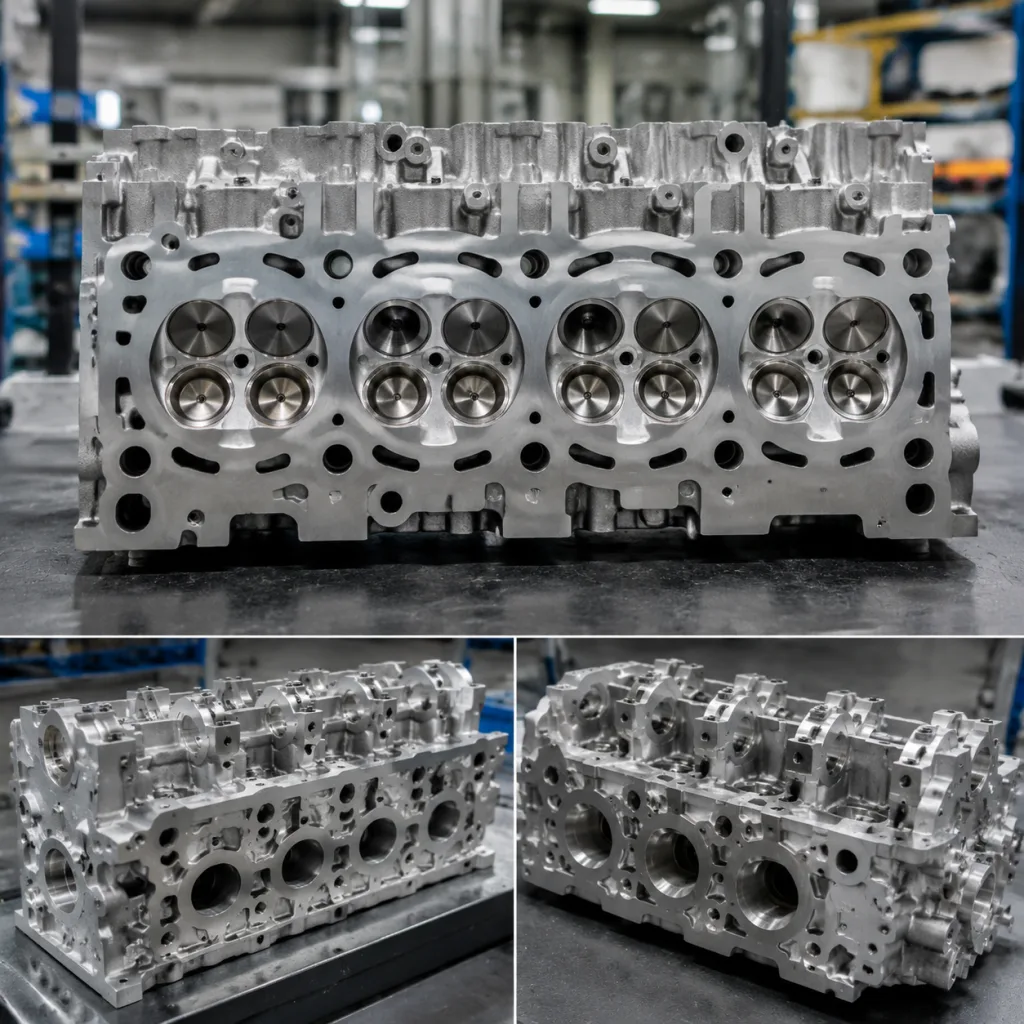
Cylinder head Citroen wholesale sourcing should begin with application data, not product images. Citroen-fit engines can differ by engine code, fuel type, emission level, injector layout, camshaft arrangement, water jacket design, and gasket strategy. A head that looks close can still fail at installation or leak after assembly.

Before requesting a quote, define:

  • Target engine families and model years
  • OE reference, engine code, and displacement
  • Annual forecast, first order quantity, and replenishment cadence
  • Bare head, semi-assembled, or fully assembled configuration
  • Required valves, guides, seats, springs, cam carriers, plugs, and studs
  • Packaging format: neutral box, distributor label, or bulk pallet
  • Destination market documentation requirements
  • Required inspection report format and AQL level
  • Warranty return handling process

The critical fitment dimensions should be fixed early. For a cylinder head, the supplier should confirm gasket-face flatness, cam-bore alignment, valve-seat concentricity, valve-guide clearance, and threaded-hole integrity before quotation finalisation. A realistic buyer spec may require gasket-face flatness within 0.05 mm across the sealing surface, valve-seat runout within 0.03 mm TIR, and guide-to-stem clearance matched to the target valve set. If the supplier cannot meet the exact limits, the quotation should state the measured production tolerance and approval basis.

Wholesale distributors usually prioritise broad coverage, stable supply, and carton-level labelling. Repair chains often need fewer SKUs but tighter consistency, because one incorrect machining feature can affect multiple branches. OEM and Tier-1 sourcing teams usually request deeper process documentation, including control plans, material certificates, capability data, and change-control records.

Buyers can review related engine parts through our catalog and engine-component scope at /products/engine-components.html.

Where the supply chain usually breaks

Most sourcing problems do not start with the quotation. They show up later, when the part reaches the machine shop, the warehouse, or the installer.

Common failure modes include:

  • Porosity hidden in casting walls
  • Valve-seat recession after short service intervals
  • Gasket-face distortion after machining or transport
  • Coolant or oil gallery leakage during pressure test
  • Incorrect cam-bore alignment across production lots
  • Thread damage on shipment or during handling
  • Missing plugs, studs, or assembly parts
  • Unclear fitment coverage across similar Citroen engine families

These failures are expensive because they often look like isolated claims at first. In practice, they are usually process-control problems. A supplier can have a competitive ex-works price and still be the wrong choice if its machining offsets drift, its cleaning process leaves debris in the galleries, or its inspection records do not match actual batch output.

Buyers should ask for the failure containment method, not only the final inspection claim. How are nonconforming heads identified? How are suspect lots quarantined? How quickly can the factory isolate a single machining batch? If the answer is vague, the sourcing risk is high.

A useful rule is simple: if the supplier cannot explain why a part failed, it probably cannot prevent the same failure from recurring.

Compare sourcing routes before you quote

Not every Citroen cylinder head programme should be handled the same way. The right sourcing route depends on volume, variation, and how much risk the buyer can absorb.

</tr></thead><tbody> </tbody></table>For cylinder head Citroen wholesale orders, the best comparison is not just the unit price. It is the combination of price, batch stability, packaging quality, lead time, documentation, and warranty exposure. A lower quote can become a higher total cost if it creates returns, air freight, rework, or branch-level downtime.

A practical comparison sheet should separate trial pricing, regular wholesale pricing, and 500+ piece pricing. It should also distinguish bare heads from assembled heads. A supplier may appear cheaper until valves, guides, seats, pressure testing, or carton preparation are added back into the total.

Driventus can also discuss custom manufacturing where buyers need a defined casting, machining feature, or assembly configuration for a private programme.

Match the quote to the real buying model

Wholesale purchasing works best when the sourcing model matches demand stability. Cylinder heads require casting, heat treatment where specified, CNC machining, pressure testing, cleaning, assembly where applicable, and final inspection. That is why lead time matters more here than for many fast-moving service parts.

Typical planning points for cylinder head Citroen wholesale orders are shown below. Final values depend on engine family, configuration, packaging, order mix, and tooling status.

Sourcing route Best fit Main trade-off
Trial MOQNew references, uncertain demandHigher unit price, faster validation
Regular wholesaleStable distributors and repair chainsNeeds forecast discipline
Mixed-SKU palletBroad coverage with moderate volumeRequires tighter packing and picking control
Private labelBrand-led programmesMore packaging and compliance coordination
OEM-style programmeLong-run or controlled releasesMore documentation and approval time

</tr></thead><tbody> </tbody></table>For low-volume references, mixed-SKU pallet programmes are often better than forcing every item into a high MOQ. A 120-piece order can sometimes be split across three or four Citroen-fit references if the factory holds compatible castings and packaging slots. For high-runner references, a rolling forecast and safety stock agreement reduce air-freight risk. A practical stocking rule is to hold 1.5 to 2.0 months of cover for stable sellers and 0.5 to 1.0 month of cover for slower-moving references, then replenish against an agreed forecast trigger.

Price should also be discussed in tiers. Trial prices are usually higher because setup, sample validation, and lower batch efficiency are absorbed into a small quantity. Regular wholesale pricing normally improves once the buyer commits to a 100-300 piece run, and most suppliers will quote another reduction at 500+ pieces or full mixed-container volumes.

Check the part, not just the certification

Cylinder heads are sensitive to small deviations in casting integrity and machining geometry. A procurement audit should therefore check both system certification and part-specific controls.

Driventus operates under IATF 16949:2016 and ISO 9001:2015. These standards do not replace part validation, but they provide a framework for document control, traceability, corrective action, supplier management, and process monitoring. Buyers can review the company quality system before arranging a supplier audit.

Key quality controls normally include:

  • Incoming alloy and component verification
  • Casting visual inspection and controlled fettling
  • Heat-treatment or stress-relief control where applicable
  • CNC datum control for gasket face, cam bore, bolt holes and manifolds
  • Valve-seat and guide concentricity inspection
  • Pressure testing of oil and coolant galleries
  • Surface roughness and flatness checks on gasket contact areas
  • Cleaning process verification to limit residual chips and abrasive media
  • Batch traceability by casting lot, machining lot and inspection record

A practical audit should sample production records from completed batches, not only prepared demonstration files. Buyers should ask how nonconforming heads are segregated, how machining offsets are controlled, and how inspection gauges are calibrated. Calibration should be traceable and scheduled; uncontrolled gauges are a common source of repeated fitment disputes.

For buy-off, the supplier should be ready to show measurement records for at least 3 consecutive production lots, along with pressure-test results, rework logs, and final release sign-off. A simple but effective control target is: zero coolant leakage at the approved pressure test, zero visible cracks on dye or visual inspection, and no more than the agreed scrap/rework percentage per batch. If the buyer expects field returns below 0.5%, the factory should be able to explain its containment response within 24 hours and issue a corrective-action report within 5 working days.

Write the RFQ so the factory can price it correctly

An RFQ for a cylinder head should make acceptance criteria explicit. This reduces disagreement after shipment and helps the factory price the correct configuration.

Recommended RFQ specification list:

  • Application: Citroen-fit engine family, displacement, fuel type and model-year range
  • Cross-reference: OE-style reference if available, for example OE 06A… only when supplied by the buyer
  • Configuration: bare, with valves, or fully assembled
  • Material: aluminium alloy or cast iron as required by original design
  • Machining: gasket face, camshaft bores, valve seats, guides, threaded holes and ports
  • Pressure test: coolant and oil gallery test requirement and acceptance pressure
  • Flatness: buyer-defined gasket-face tolerance and measurement method
  • Surface finish: roughness target for the head-gasket interface
  • Thread protection: plugs, caps or inserts required for export handling
  • Marking: batch code, reference code and carton label format
  • Compliance: REACH (EC) No 1907/2006 declarations where applicable for EU importers

A usable RFQ should also specify numbers, not just descriptions. For example, the buyer can request gasket-face flatness no worse than 0.05 mm across the full sealing plane, cam-bore centerline deviation within 0.02 mm over the approved datum length, and a pressure hold test at the supplier’s standard production pressure for a defined duration, such as 3 to 5 minutes, with zero visible leakage. If the head is assembled, the RFQ should state valve spring installed height, seat width target, and the approved valve stem protrusion range.

Do not rely only on sample matching. A sample can confirm geometry, but production control needs drawings, inspection standards, and a frozen bill of materials. If the buyer cannot provide a drawing, the supplier and buyer should agree a master sample, critical-to-quality dimensions, and an inspection report template before mass production.

For markets affected by emissions regulations, the cylinder head itself is not certified under vehicle emission rules such as ECE R-83, but incorrect combustion chamber, valve, injector or EGR-related geometry can affect engine operation. This is why fitment validation remains necessary even when the product is sold for the independent aftermarket.

Write the RFQ so the factory can price it correctly

Use the documentation pack to avoid customs and warranty delays

Import managers should align commercial documents with technical records. Missing or inconsistent documentation can delay customs clearance, customer onboarding, and warranty decisions.

For cylinder head wholesale programmes, the documentation pack may include:

  • Commercial invoice and packing list
  • HS code confirmation by importer review
  • Certificate of origin where required
  • Material declaration or REACH (EC) No 1907/2006 statement where applicable
  • Dimensional inspection report by batch
  • Pressure-test record by batch or sampling plan
  • Assembly component list for complete heads
  • Carton label and pallet label approval file
  • Corrective action report format for field returns

A factory audit should also cover export packaging. Cylinder heads are heavy, machined components with exposed gasket faces and threaded holes. Packaging should prevent impact damage, corrosion, contamination and carton collapse during sea freight. Buyers should specify pallet dimensions, stacking limits, moisture protection and barcode requirements before production.

Practical packaging guidance helps reduce claims: use VCI or equivalent corrosion protection for machined surfaces, fit thread protectors on all exposed openings, place foam or molded separators between heads, and define carton compression limits for the planned stacking height. If the destination uses mixed pallets, the buyer should confirm gross weight per pallet, corner protection, and whether a 1.2 m x 1.0 m or 1.2 m x 0.8 m footprint is required for warehouse handling.

For distributors selling across the EU, UK, US, Canada, Australia and Brazil, the supplier should be able to separate market-specific labelling and documentation. This is particularly important when one purchase order covers several warehouse destinations.

Read quotations on total landed risk

A low unit price is not useful if it excludes assembly parts, testing, packaging, or documentation. Buyers should normalise quotations before ranking suppliers.

Procurement item Typical range or requirement Buyer note
Trial order MOQ20–50 pieces per referenceUsed to validate fitment, packaging and market acceptance
Regular wholesale MOQ100–300 pieces per referenceBetter for casting batch control and freight efficiency
Sample approval lead time15–30 daysCovers drawing review, sample machining and dimensional sign-off
New reference development60–120 daysDepends on sample availability, drawing review and tooling
Repeat production lead time35–60 daysVaries by casting queue, machining capacity and assembly level
Mass production tolerance windowFixed per approved drawingBuyer should lock the dimensional acceptance sheet before PO
Mixed container loadingAvailable by agreementSuitable for distributors covering several engine families
Private label packagingAvailable by specificationArtwork, carton strength and barcode data must be frozen before production

</tr></thead><tbody> </tbody></table>For a cylinder head Citroen wholesale programme, the best comparison method is total landed risk. Include scrap, returns, inspection labour, delayed launches, urgent replenishment, and customer penalties. A supplier with better batch control and stable documentation may reduce total cost even when the ex-works price is not the lowest.

Buyers should also calculate landed price in bands rather than a single figure. A practical sourcing sheet can compare trial MOQ, regular MOQ, and 500+ piece pricing side by side, then add freight, duty, inland delivery, and expected claims reserve. That approach often reveals that a supplier with a slightly higher ex-works price is cheaper after fewer shortages and lower rework.

Driventus can support distributors, wholesalers, OEM/Tier-1 buyers and repair-chain sourcing teams with application review, sampling, audit documentation and export planning. To start a sourcing discussion, request a quote with target references, forecast volume and destination market.

Frequently asked questions

Provide engine family, model-year range, fuel type, required configuration, annual volume, first-order quantity, packaging needs and destination market. If available, include drawings, sample photos, critical dimensions or buyer-supplied OE-style references. To improve quotation accuracy, add your target flatness, pressure-test requirement, and whether you need bare, semi-assembled, or complete heads.

Yes, private label packaging can be discussed for wholesale programmes. Buyers should confirm carton artwork, barcode rules, pallet format, label language and any market-specific documentation before mass production. If the buyer has a launch date, share it together with target MOQ and monthly forecast so the packing schedule can be locked earlier.

No. Driventus is an independent aftermarket manufacturer; brand names are referenced for fitment only. Products are supplied for aftermarket replacement or agreed B2B programmes according to buyer specifications.

Send target references, forecast volume and packaging requirements for a practical sourcing review. You can contact the Driventus team at /contact.html

Request a Quote
Quotation factor Low-risk clarification Why it matters
Part configurationBare, semi-assembled or complete head stated clearlyPrevents price mismatch between suppliers
Casting sourceIn-house or controlled external casting processAffects traceability and defect containment
Machining controlCNC process, datum plan and inspection frequency definedReduces gasket sealing and alignment failures
Pressure testingTest method and acceptance criteria documentedScreens internal leakage risks before shipment
PackagingCarton, foam, pallet and moisture protection specifiedPrevents freight damage claims
Warranty handlingEvidence required and response time agreedReduces dispute time after field returns
Lead timeTooling, trial and repeat-order timing separatedHelps inventory planning