Camshaft for Iveco Eurocargo Replacement: OE Match Checks
A camshaft for Iveco Eurocargo replacement has to do more than fit the cylinder head. Buyers need the correct base circle, journal size, lobe timing, lift, thrust control, and surface finish so the engine runs within spec after assembly. For fleet repairs and rebuild programmes, the practical question is whether the part is interchangeable in geometry, metallurgy, and validation evidence, not whether it looks similar on a shelf. Driventus supplies independent aftermarket camshafts for commercial diesel applications with dimensional verification, controlled heat treatment, and traceable inspection records. Driventus is an independent aftermarket manufacturer; brand names are referenced for fitment only. If you are comparing samples, the fastest route is to check engine code, casting marks, bearing journal measurements, and the old camshaft's wear pattern before placing volume orders.
What makes a replacement camshaft acceptable
For this application, acceptable means OE-equivalent geometry and stable material properties. The cam profile must deliver the same valve events after accounting for lash, rocker ratio, and timing set condition. A part that is dimensionally close but differs in lobe centreline or journal finish can change idle quality, torque curve, and emissions behaviour.
A practical procurement check is below:
Item
What to confirm
Why it matters
Journal diameter
Matches housing bore and oil clearance
Prevents seizure or low oil pressure
Overall length
Matches head and thrust layout
Avoids end play issues
Lobe lift and profile
Matches valve event timing
Protects power output and durability
Surface hardness
Within agreed specification
Reduces wear on followers and lobes
Runout
Within inspection limit
Prevents vibration and timing variation
Oil drillings / grooves
Same routing and location
Maintains lubrication to bearings and lobes
</tr></thead><tbody> </tbody></table>For buyers comparing suppliers, our catalog and engine components provide a faster starting point than cross-referencing photos alone.
Fitment checks before you order
Start with the engine code, build year, and cylinder head variant. On Eurocargo platforms, visual similarity is not enough because multiple diesel variants can share external dimensions while using different valve timing or bearing layouts.
Use this sequence before issuing a purchase order:
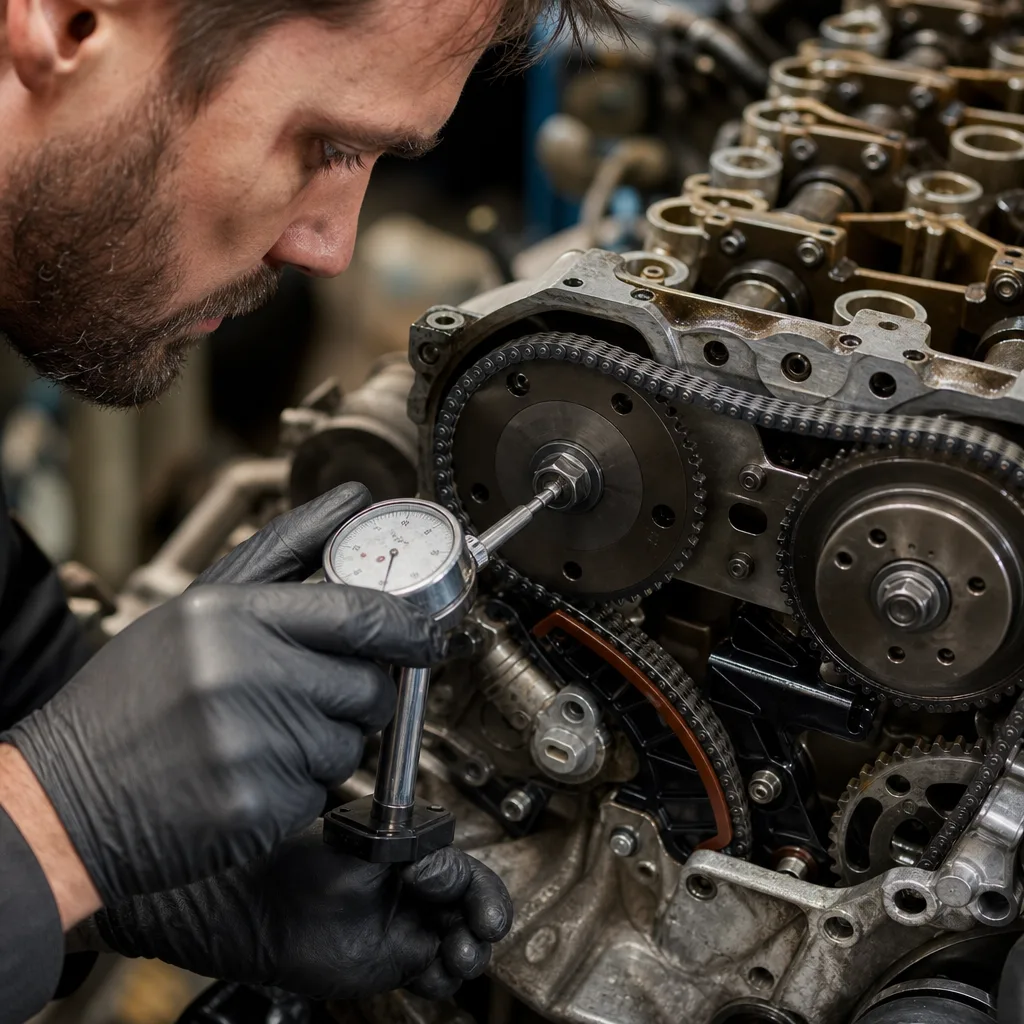
1. Confirm the engine family from the data plate and service paperwork. 2. Measure the old camshaft journals, overall length, and thrust face condition. 3. Inspect the follower wear pattern and any pitting on the lobes. 4. Compare the timing gear or sprocket interface, keyway, and retaining method. 5. Check whether the replacement must suit a rebuild, a repair, or a fleet standardisation programme.
If the original part is worn beyond measurement, send the old sample for comparison. That is usually more reliable than relying on a catalogue image or a partial description.
Materials, heat treatment, and surface finish
A commercial diesel camshaft sees repeated Hertzian contact loading, so metallurgy matters. The base material, hardening method, and final grind all affect fatigue life. For replacement work, ask for the following data rather than a generic quality statement:
Material grade or casting/forging route
Case depth or through-hardness range
Journal and lobe surface finish
Profile inspection method
Residual runout after grinding
Anti-corrosion packaging for export storage
Driventus works under quality system controls aligned with IATF 16949:2016 and ISO 9001:2015. Where customer programmes require it, material declarations can be prepared to support REACH (EC) No 1907/2006 documentation requests. For special builds, custom manufacturing is available when a buyer needs a revised profile, modified coating, or dedicated packaging for rebuild lines.
Validation data buyers should request
A usable replacement part should come with inspection evidence, not just a part number. At minimum, ask for dimensional reports and a traceable lot record. For larger programmes, request PPAP-style support, sample approval, or agreed durability testing.
Common validation items include:
First article dimensions for journals, lift, and overall length
Surface hardness readings at agreed points
Runout and concentricity checks
Visual inspection for scoring, porosity, and grinding marks
Packaging drop and corrosion checks for export transit
If your team needs a test plan, it can be aligned with buyer requirements and with published methods such as SAE J2527 where relevant to durability exposure. For emissions-sensitive vehicle systems, procurement teams often also ask for evidence that supports conformity with applicable regional requirements, including ECE R-83 where the full powertrain package is under evaluation. The camshaft itself is not a manufacturer-approved item; it is supplied as an independent aftermarket component.
Sourcing approach for fleets, distributors, and rebuilders
Different buyers need different supply models. A distributor usually wants stable SKU coverage and repeatable cartons. A rebuild shop wants reliable fitment and short lead time. A fleet buyer wants predictable life and traceable batches.
Buyer type
Main priority
Recommended supply approach
Distributor
Stock depth
Standardised SKU, carton labelling, repeat order control
</tr></thead><tbody> </tbody></table>Use request a quote when you need price breaks, target annual volume, or a cross-check against a worn sample. If the requested configuration is not standard, our manufacturing team can review it through custom manufacturing.
Frequently asked questions
Use the engine code, the old camshaft measurements, and the head casting details. Journal diameter, overall length, lobe lift, and thrust layout must all match. If the original part is worn, send a sample for comparison.
Yes. Typical documentation includes dimensional inspection records, lot traceability, and material or compliance declarations where required. Production controls align with IATF 16949:2016 and ISO 9001:2015.
Yes. If the standard part does not fit your programme, we can review a revised profile, packaging spec, or export requirement through a custom manufacturing process. Fitment must still be validated against the engine data.
If you need a camshaft for Iveco Eurocargo replacement, send the engine code, sample photos, or a worn part summary through [request a quote](/contact.html) and we will confirm the best-fit option.