Camshaft Infiniti replacement demand is often linked to timing-system repairs, cylinder-head rebuilds, oil-starvation damage, high-mileage lobe wear, or workshop diagnosis after cam correlation faults. For importers, repair chains, and aftermarket distributors, the sourcing decision goes beyond application coverage. A replacement camshaft must match the OE geometry, heat treatment, surface finish, oil-feed layout, timing-reference features, and valvetrain interface used by the target engine family. A small mismatch in cam profile, journal diameter, sensor trigger design, or phaser interface can lead to rough idle, fault codes, accelerated wear, noisy operation, or fitment rejection during installation. Driventus manufactures engine and powertrain components in Taizhou, Zhejiang, for B2B customers in more than 60 countries. Production is managed under IATF 16949:2016 and ISO 9001:2015 controls, with batch inspection records available where agreed. Driventus is an independent aftermarket manufacturer; vehicle brand names are referenced for fitment identification only.
Replacement Fitment Priorities for Infiniti Applications
Infiniti applications use several engine families and valvetrain configurations, including dual overhead camshaft layouts, variable valve timing interfaces, bank-specific parts on V engines, and application-specific lubrication passages. A camshaft should be sourced by engine code, production year range, cylinder bank, intake or exhaust position, and timing-control design rather than by model name alone.
The main procurement risk is assuming that similar-looking engine families are interchangeable. Castings may appear close while the functional features differ enough to affect installation or engine operation. Key checks include:
Intake versus exhaust camshaft position
Left-bank versus right-bank orientation on V engines
Camshaft position sensor trigger pattern
Cam phaser mounting face and dowel location
Oil-feed groove and drilling layout
Journal count and journal diameter
Lobe lift, base circle, and duration profile
Thrust-control surface design
Driventus supports cross-reference review from customer drawings, physical samples, approved OE references, or existing aftermarket data. For range extensions, the safest approach is to validate the part against measured samples and application data rather than relying on visual comparison. Buyers can review related engine parts in our catalog and the engine component range at /products/engine-components.html.
Dimensional and Material Criteria Buyers Should Specify
A camshaft is a precision wear component, so sourcing specifications should distinguish critical-to-function features from general machining dimensions. Minor deviations in lobe profile, journal concentricity, surface hardness, or oil-feed geometry can affect valve timing, lubrication-film stability, and service life.
Specification item
Typical buyer requirement
Why it matters
Journal diameter
Controlled to drawing tolerance
Maintains oil clearance and bearing support
Lobe lift
Matched to OE profile
Preserves valve opening and engine output
Base circle
Matched to valvetrain design
Prevents lash or follower preload errors
Runout
Verified across journals
Reduces vibration and uneven bearing load
Surface finish
Ground and polished functional surfaces
Supports oil film and wear resistance
Hardness depth
Process-specific validation
Reduces risk of premature lobe and journal wear
Sensor trigger feature
Visual and dimensional confirmation
Helps prevent misfire or cam correlation faults
</tr></thead><tbody> </tbody></table>Material selection depends on the OE design, engine duty cycle, and target price segment. Common routes include chilled cast iron, ductile iron, or forged steel, followed by induction hardening, nitriding, or another specified surface treatment. When a drawing or approved sample defines the requirement, Driventus does not change the material route or heat-treatment process without customer approval.
For replacement programmes, buyers should request a control plan that covers incoming material inspection, heat-treatment verification, grinding inspection, surface-finish checks, dimensional confirmation, and final packaging audit. This makes the agreed standard clear for both factory production and the buyer’s incoming inspection team.
Validation Testing for OE-Equivalent Performance
OE-equivalence should be supported by measured evidence, not interchange claims alone. A camshaft Infiniti replacement programme normally combines dimensional inspection, metallurgical checks, and functional assembly review before commercial release.
A practical validation package may include:
First article inspection against drawing or approved sample
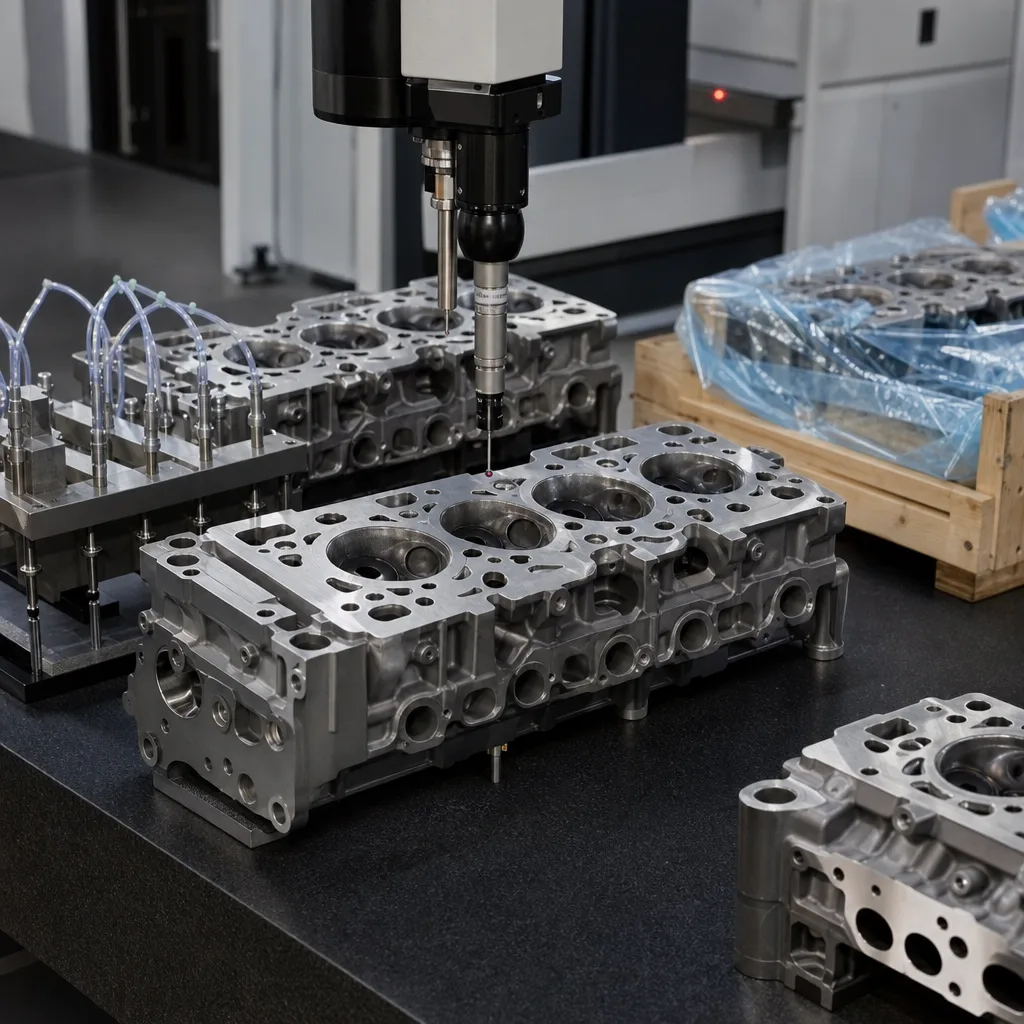
Coordinate measurement for journals, lobes, thrust faces, and dowel features
Surface roughness readings on journals and lobes
Hardness testing on functional surfaces and core material, where applicable
Microstructure review after casting or heat treatment
Magnetic particle inspection or another crack-detection method, where specified
Trial installation on a reference cylinder head or fixture
Packaging drop and corrosion-resistance checks for export shipments
Driventus manages camshaft development and production under a documented quality system, aligned with IATF 16949:2016 and ISO 9001:2015. These standards do not replace part-specific validation, but they provide the operating framework for process control, traceability, corrective action, supplier management, and repeat-order consistency.
For markets with chemical-compliance requirements, buyers may request documentation aligned with REACH (EC) No 1907/2006. Camshafts are not emissions-certification components in the same way complete vehicle systems are assessed under ECE R-83, but dimensional and functional accuracy still influences combustion stability once the valvetrain is assembled.
Procurement Checklist for Importers and Repair Chains
Distributors and multi-location repair chains need repeatable quality across shipments, not only one successful sample order. A camshaft that fits correctly in the first delivery but varies in later production can create warranty exposure, stock returns, technician downtime, and catalogue distrust. The purchase specification should be clear enough for factory production control and warehouse incoming inspection.
Recommended RFQ checklist:
Vehicle application list, engine codes, and production year range
Intake or exhaust position and cylinder bank, if applicable
OE part-number cross-reference format, where available and supported by buyer data
Target annual volume and first-order quantity
Required material and heat-treatment route
Critical tolerances and inspection method
Sample approval process and retention-sample policy
Marking, labelling, and country-specific packaging needs
Incoterms, delivery schedule, and spare parts warranty terms
For repair chains, standardised installation notes are also useful. Camshafts often fail because of oil starvation, blocked oil galleries, worn followers, contaminated lubricant, or timing-system defects. Replacing the camshaft without correcting the root cause can lead to repeat failure that is incorrectly attributed to the new part.
Driventus can support range development through custom manufacturing, including sample reverse engineering, drawing confirmation, material review, and controlled pilot batches for distributor evaluation.
Common Causes of Camshaft Replacement Demand
Understanding field failure patterns helps buyers forecast demand, improve catalogue data, and screen warranty claims more accurately. Camshaft wear is rarely isolated from the lubrication, follower, and timing systems. In Infiniti-related service applications, replacement demand may follow several conditions.
Field symptom
Possible cause
Procurement relevance
Ticking noise from cylinder head
Lobe or follower wear
Confirm lobe hardness and finish specification
Cam correlation fault code
Sensor trigger or timing interface issue
Verify trigger pattern and phaser mounting geometry
Low power or rough idle
Incorrect cam profile or timing deviation
Validate lift, duration, and dowel position
Rapid post-install wear
Oil starvation or poor surface treatment
Review installation guidance and hardness checks
Workshop fitment rejection
Wrong bank or intake/exhaust position
Improve application data and label clarity
</tr></thead><tbody> </tbody></table>For aftermarket programmes, packaging accuracy is part of product quality. Labels should clearly state position, bank, engine application, and any installation warnings. Mixed intake and exhaust stock, or unclear bank identification, can produce avoidable returns even when the parts are manufactured correctly.
A useful warranty review compares returned parts with batch inspection records, installation context, oil condition, follower condition, and timing components. This approach reduces false defect attribution and gives buyers practical feedback for cataloguing, packaging, and installer guidance.
Supply Programme Considerations with Driventus
Driventus supplies aftermarket distributors, wholesalers, OEM and Tier-1 customers, and repair-chain procurement teams. For camshaft programmes, we can work from drawings, customer-approved samples, or existing range data, subject to fitment verification and feasibility review.
Typical programme elements include:
Feasibility review before quotation
Sample production and dimensional report
Pilot order before volume release
Batch traceability by production lot
Export packaging with corrosion protection
Neutral packaging or customer-defined packaging, where agreed
Ongoing inspection reports for repeat orders
MOQ and lead time depend on the material route, tooling status, machining complexity, inspection scope, and whether the part is already in production. Existing camshaft references can move faster than new development items that require pattern work, fixtures, machining trials, or extended validation. Buyers should allow additional time for first article approval, packaging checks, and shipment testing when opening a new part family.
Driventus is an independent aftermarket manufacturer; vehicle brand names are referenced for fitment identification only. We do not claim approval, sponsorship, or endorsement by any vehicle manufacturer. For application review, sample submission, or pricing, procurement teams can request a quote.
Frequently asked questions
Send the engine code, model year range, intake or exhaust position, cylinder bank if applicable, annual volume, target packaging, and any drawing, physical sample, or approved cross-reference. Photos can help with screening but are not enough for final confirmation.
Yes. Driventus can assess a sample, measure critical geometry, review material and hardness requirements, and produce pilot samples. Final approval should be based on dimensional reports, buyer review, and fitment validation.
No. Driventus is an independent aftermarket manufacturer; vehicle brand names are referenced for fitment identification only. Replacement parts are supplied for aftermarket or customer-defined programmes without vehicle manufacturer endorsement.
If you are building or reviewing a camshaft Infiniti replacement sourcing programme, send your application list, target volumes, and available reference data for a practical feasibility review: /contact.html