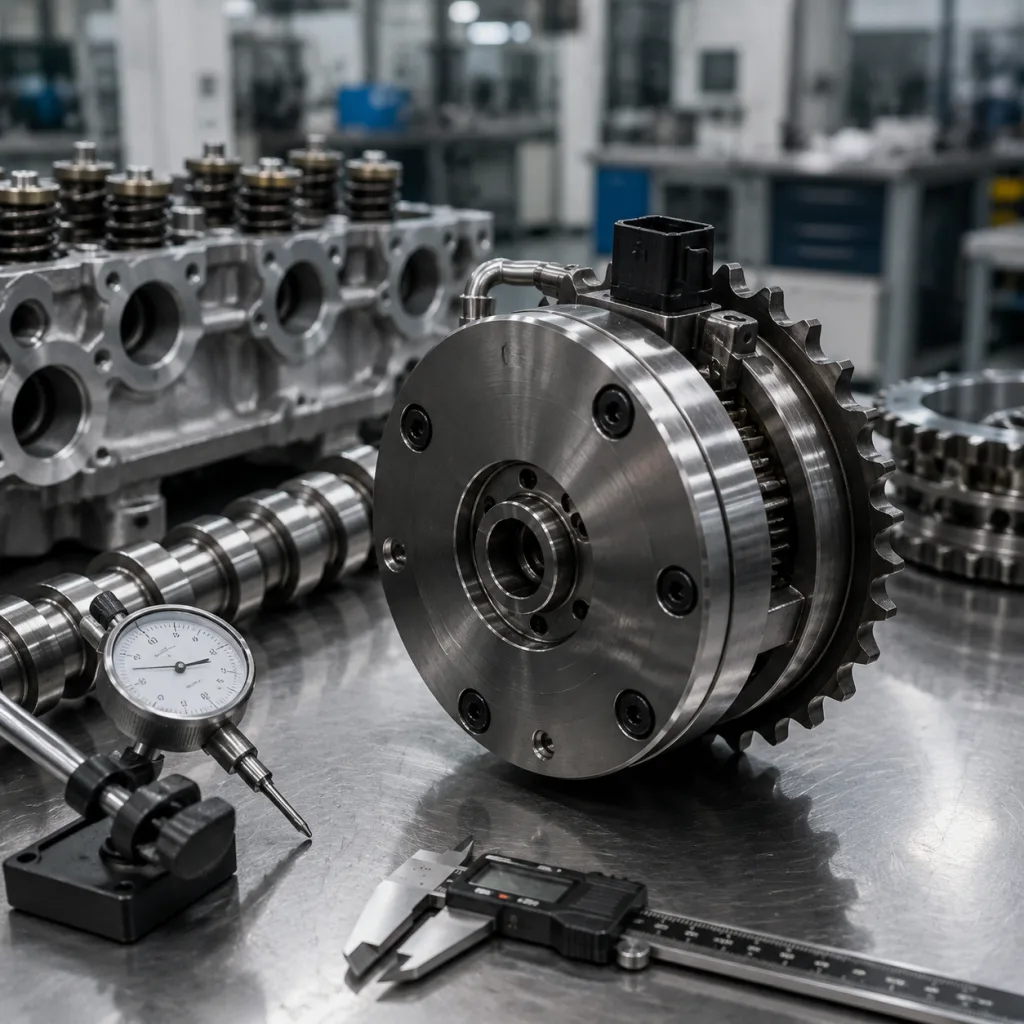
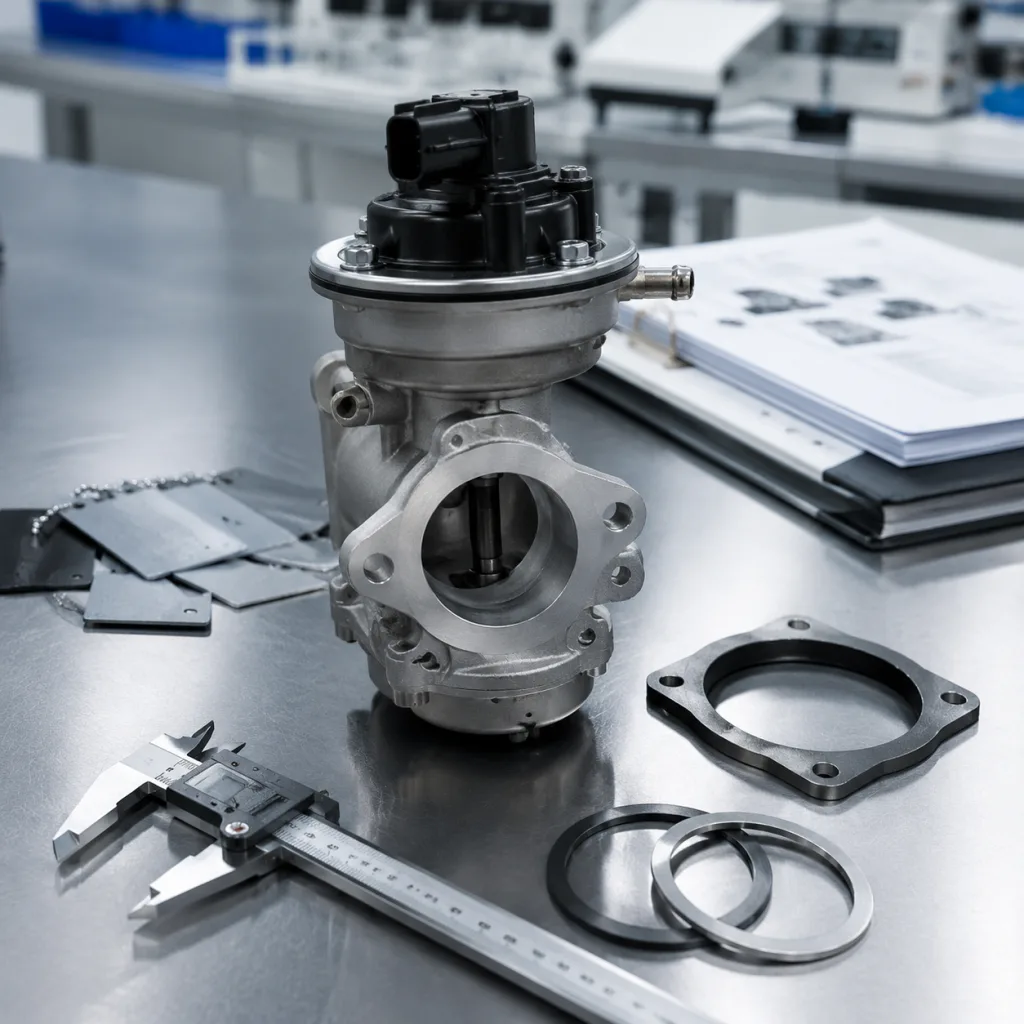
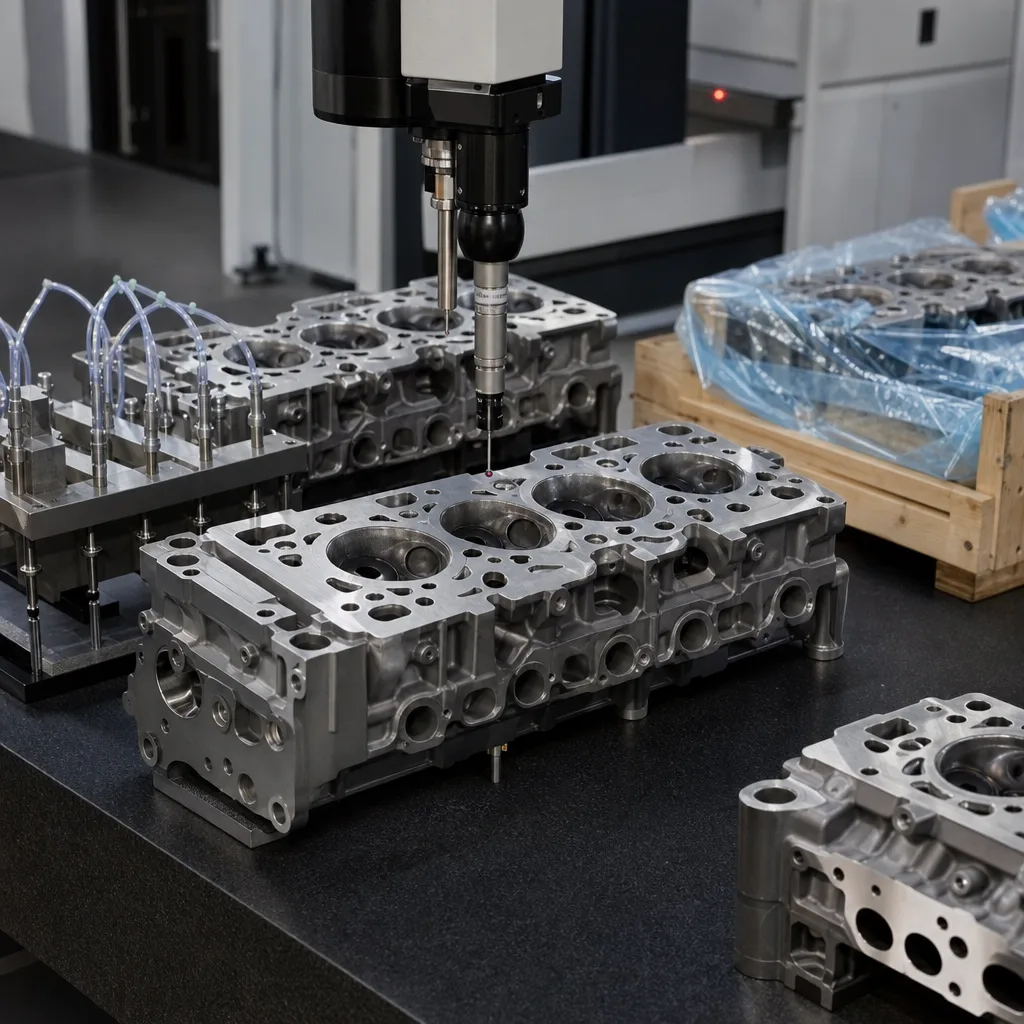
Choosing an oil pump assembly supplier is a technical sourcing decision, not just a price comparison. The pump controls engine lubrication pressure, oil-flow stability and protection for crankshaft, camshaft, bearing and turbocharger surfaces. If fitment, clearance, cleanliness or relief-valve performance is wrong, distributors and fleet operators can face low-pressure complaints, warranty claims and premature engine damage.
Procurement teams should assess manufacturing discipline, dimensional capability, functional validation, traceability, documentation and export support before awarding volume. This guide gives import managers, category buyers and sourcing engineers a practical framework for comparing oil pump assembly factories for aftermarket, OEM service and private-label programmes.
Driventus manufactures engine and powertrain components in Taizhou, Zhejiang, under IATF 16949:2016 and ISO 9001:2015 systems, with export supply to more than 60 countries. Driventus is an independent aftermarket manufacturer; brand names are referenced for fitment only.
Step 1: Define the Application Range Before Asking for Price
Start with fitment and technical scope. An oil pump assembly for a compact petrol engine, diesel pickup, turbocharged SUV or commercial fleet platform may look similar in a spreadsheet, but the operating risk is different. Buyers should define the engine family, model years, oil-pan interface, drive type, relief-valve specification and supply format: bare pump, pump with pickup tube, pump with chain-drive components, or complete module.
For aftermarket distribution, give the supplier an application list and an OE-style part-number cross-reference format where available, such as OE 06A… or OE 11251…. Do not rely on vehicle names alone. For OEM service or private-label development, request 2D drawings, 3D data, sample approval records and critical-to-quality characteristics before confirming commercial terms.
Useful starting data includes:
Engine family, displacement and fuel type
Pump type: gear, gerotor, vane or integrated module
Housing material and surface treatment
Pressure relief valve opening range
Drive interface and rotation direction
Mounting-face flatness and bolt pattern
Oil pickup configuration
Target annual volume and regional market requirements
Relevant product families can be reviewed in our catalog before creating a sourcing shortlist.
Step 2: Audit Manufacturing Capability, Not Only Certification
Certification is a useful entry point, but it does not prove that every pump line is controlled in daily production. Ask whether the plant operates under IATF 16949:2016 and ISO 9001:2015, then verify how those systems are applied to oil pump assembly manufacturing. A credible supplier should be able to show control plans, process flow charts, PFMEA records, inspection instructions and traceability from casting or machining batch to final packed goods.
For oil pump assemblies, common manufacturing risks include housing porosity, gear or rotor clearance variation, cover-plate flatness, burrs in oil passages, spring-force drift and contamination after machining. Final visual inspection cannot control these risks by itself. They require stable machining, washing, assembly torque control, cleanliness discipline and functional testing.
Audit item
What to verify
Procurement relevance
Quality certification
IATF 16949:2016 and ISO 9001:2015 scope
Confirms formal automotive quality management
Machining controls
CNC capability, gauges, tool-life control
Reduces clearance and sealing variation
Cleanliness control
Washing process, particle checks, covered storage
Protects engine lubrication circuits
Functional testing
Flow, pressure and relief-valve checks
Reduces low-pressure warranty risk
Traceability
Batch codes, inspection records, operator logs
Supports containment and corrective action
</tr></thead><tbody> </tbody></table>A supplier that can explain its quality system in process terms is usually easier to manage than one that only provides certificates.
Step 3: Confirm Technical Validation and Inspection Data
A strong answer to how to choose a oil pump assembly supplier is simple: ask for evidence before asking for a discount. The supplier should provide validation reports that match the application, material set and pump architecture. For aftermarket production, buyers usually need proof of dimensional inspection, material checks, leak or pressure testing, oil-flow performance and durability assessment. For OEM or Tier-1 related programmes, requirements may also include PPAP-style documentation, run-at-rate evidence and special-characteristic control.
Avoid broad claims such as “tested before shipment” unless the supplier can show the method, sample size and acceptance criteria. Testing should reflect working oil viscosity, temperature range and expected operating speed where applicable. Relief-valve performance is especially important because an incorrect opening point can cause insufficient lubrication, delayed pressure build-up or excessive system pressure.
A practical validation package should include:
First article inspection report with critical dimensions
Material certificate for housing, gears, rotors, springs and fasteners
Hardness or surface treatment checks where specified
Flow and pressure test results at defined speed and temperature
Relief valve opening pressure data
Shaft or drive interface inspection
Endurance or bench test summary
Salt spray or corrosion assessment when required by the market
For emissions-related engine systems, buyers should understand applicable vehicle regulations, such as ECE R-83, without implying that an individual replacement pump is endorsed by a vehicle manufacturer.
Step 4: Compare Commercial Terms Against Total Landed Risk
Unit price is only one part of the sourcing decision. Oil pump assembly programmes often fail when the quotation looks attractive but supply-chain controls are weak. Compare MOQ, lead time, spare capacity, packaging, export documentation, private-label support and after-sales response time. A low quote with unstable delivery or poor claim handling can cost more than a higher but controlled price.
Ask the supplier to separate sample lead time, tooling lead time, pilot-order lead time and repeat-order lead time. For established references, samples may be available quickly; for new development, the project can require drawing confirmation, prototype machining, tooling, testing and approval. If the part will be sold under a distributor’s own brand, confirm packaging artwork control, label accuracy, barcode requirements and carton drop-test expectations.
Commercial factor
Good sourcing question
Why it matters
MOQ
Is MOQ per part number or per order mix?
Affects slow-moving application coverage
Lead time
What is the confirmed repeat-order lead time?
Protects inventory planning
Packaging
Can packaging meet distributor label rules?
Reduces receiving and channel errors
Warranty handling
What data is needed for claim analysis?
Speeds technical resolution
Export support
Are invoices, packing lists and certificates consistent?
Reduces customs delays
</tr></thead><tbody> </tbody></table>For non-standard materials, altered housings or application extensions, custom manufacturing may be more appropriate than catalog sourcing.
Step 5: Check Compliance, Documentation and Market Fit
Compliance requirements vary by destination market, so procurement teams should confirm them before volume purchase. Oil pump assemblies are not regulated in the same way as brake friction parts or emissions control devices, yet suppliers should understand material declarations, restricted substances and import documentation. For EU and UK channels, awareness of REACH (EC) No 1907/2006 is relevant for materials and substances used in components, coatings and packaging.
For North America, buyers often focus on traceability, warranty documentation, private-label accuracy and consistency with distributor cataloguing. For Brazil, Canada and Australia, import paperwork and packaging durability are frequent operational concerns. Multi-location repair chains may also require stable carton labelling, visible batch codes and fast technical answers when field complaints arise.
Documents to request before approval
Business licence and export qualification
IATF 16949:2016 and ISO 9001:2015 certificates with valid scope
Control plan and process flow summary
Dimensional inspection report for approved samples
Functional test report for flow and pressure
Material declaration where required
Packaging specification and carton label sample
Corrective action procedure for warranty returns
The supplier should also state its role clearly. Driventus is an independent aftermarket manufacturer; brand names are referenced for fitment only.
Step 6: Use Samples and Pilot Orders to Control Launch Risk
The final step is to approve the supplier through samples and controlled orders, not paperwork alone. Request samples from normal production equipment where possible, rather than hand-finished parts made only for approval. Inspect fit, casting quality, machining finish, gasket interface, pickup connection, drive engagement and packaging. For higher-risk references, test the pump on a bench or with a qualified engine remanufacturing partner before releasing broad distribution.
A staged launch reduces exposure. Start with sample approval, move to a pilot order, then release the first production shipment under defined checks. Agree in advance what happens if the shipment has mixed labels, dimensional drift, abnormal test data or field complaints. A capable supplier should have a practical containment process and be willing to review failed parts using photos, measurements, batch codes and returned samples.
A buyer’s decision checklist should include:
Fitment confirmed by application data and OE-style cross-reference
Critical dimensions verified against drawings or approved samples
Flow, pressure and relief-valve data reviewed
Packaging and labelling approved for the destination market
MOQ and lead time aligned with inventory plan
Traceability visible on product, carton or shipment records
Warranty and corrective action process agreed
When these points are documented, the sourcing decision becomes measurable, repeatable and easier to defend across procurement, quality and sales teams.
Frequently asked questions
Verify that the supplier can match the exact engine application and pump configuration. Fitment data, OE-style cross-references, mounting dimensions, drive type and pressure requirements should be confirmed before price comparison.
They are important but not sufficient alone. Buyers should also review process controls, inspection records, functional test data, cleanliness procedures, traceability and corrective action performance for the specific oil pump assembly line.
Catalog sourcing is suitable for established aftermarket references with stable demand. Custom development is better when the buyer needs a modified housing, private specification, new application coverage, special packaging or OEM service documentation.
Driventus can support oil pump assembly sourcing with catalog references, sample review and technical documentation for distributor, repair chain and OEM service programmes. To discuss fitment data, MOQ and lead time, [request a quote](/contact.html).