Camshaft for BMW 5 Series Replacement: Sourcing Guide
A camshaft for BMW 5 Series replacement has to match the original profile, journal dimensions, drive arrangement, and valve timing requirements before it is approved for installation. For procurement teams, the issue is not just whether the part fits a given engine family, but whether dimensional control, surface finish, and heat treatment stay consistent from one production lot to the next. Driventus supplies engine components for aftermarket and OEM channels from Taizhou, Zhejiang, with manufacturing controls aligned to IATF 16949:2016 and ISO 9001:2015. Driventus is an independent aftermarket manufacturer; brand names are referenced for fitment only. For 5 Series applications, the correct camshaft selection usually depends on engine code, cylinder head variant, emissions version, and whether the engine uses intake, exhaust, or twin camshafts. This article explains what to verify before purchase, how replacement parts are validated, and which documents buyers should request from suppliers.
What matters in a BMW 5 Series camshaft replacement
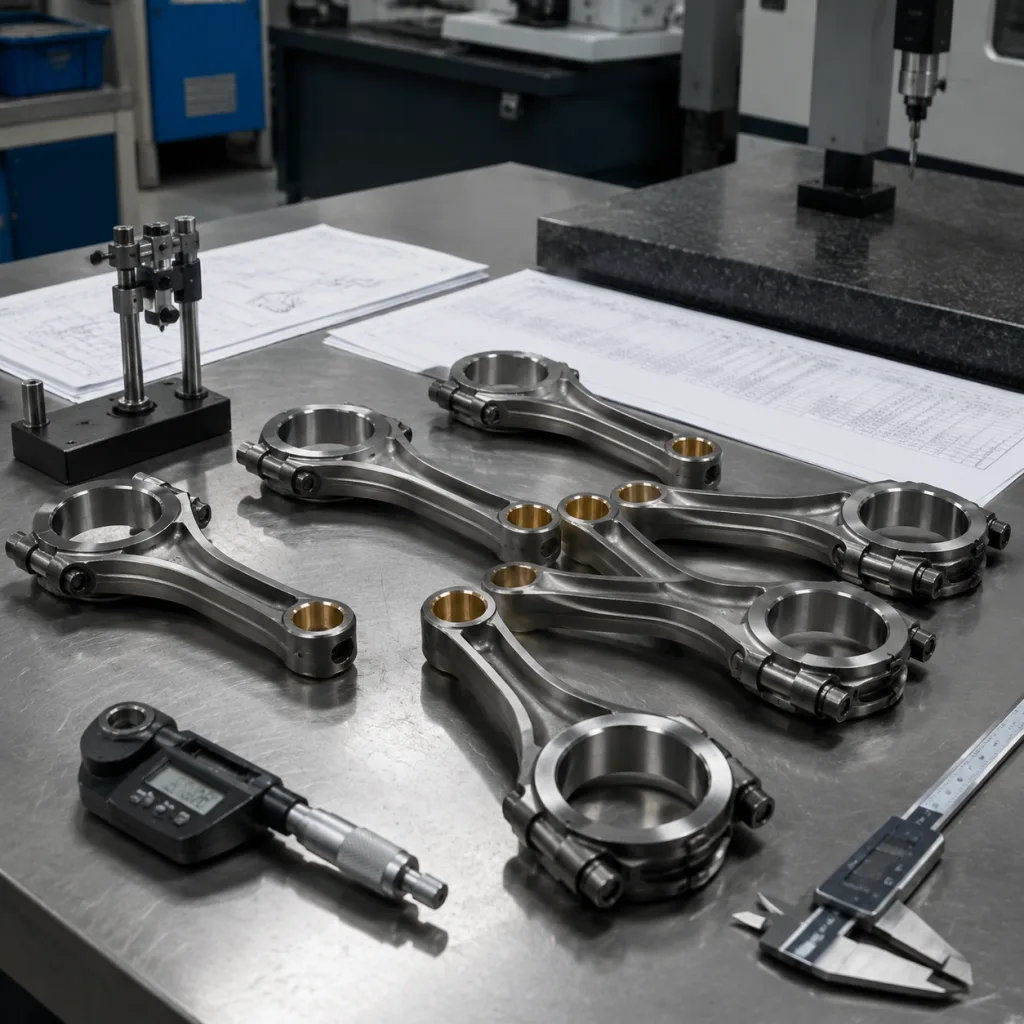
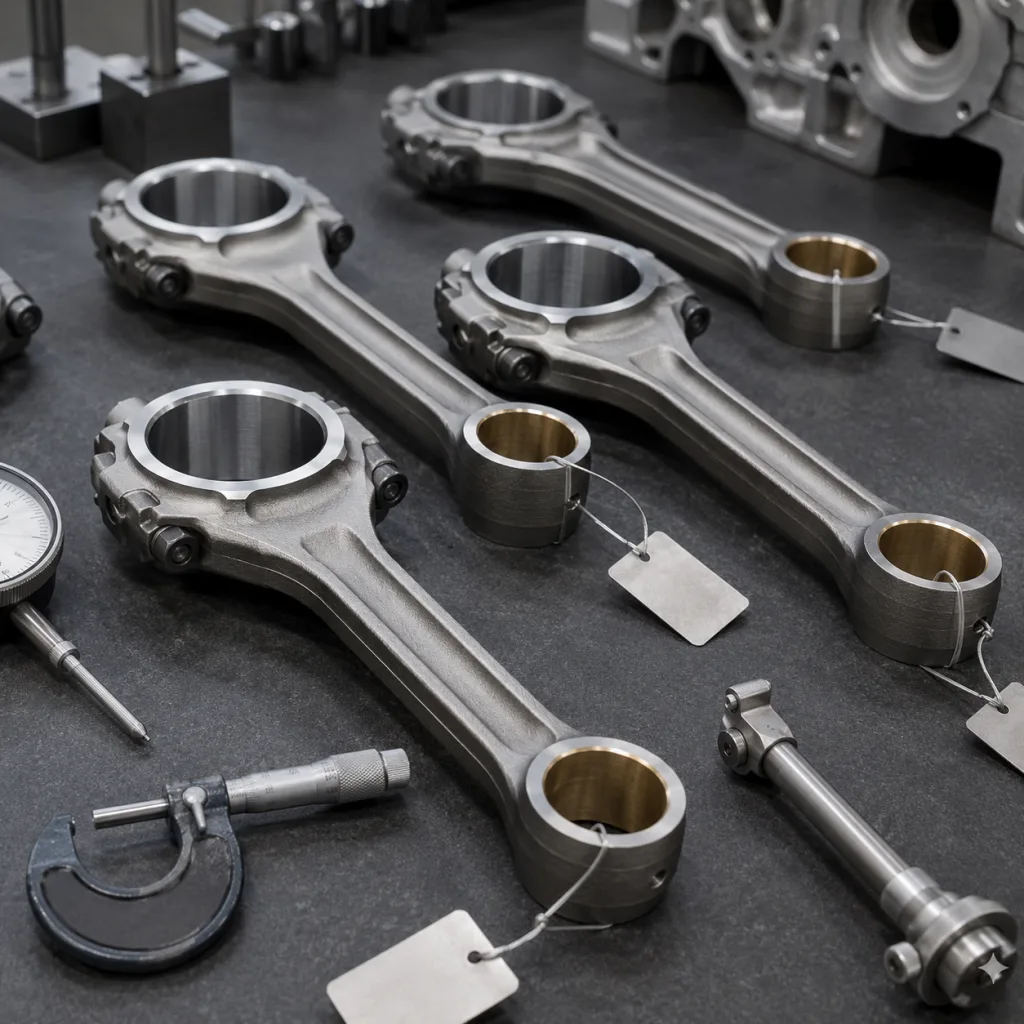
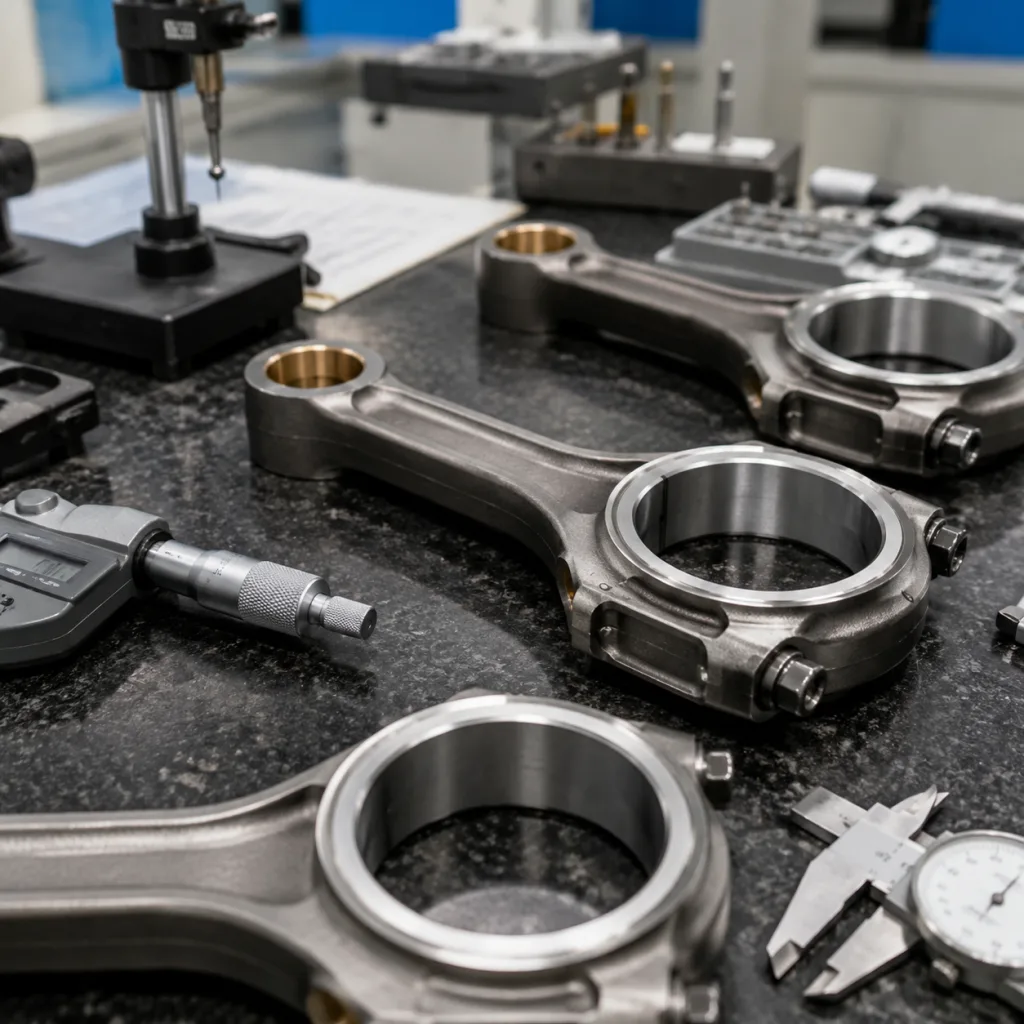
For replacement sourcing, the camshaft should be treated as a precision rotating component, not a generic casting. The main checks are:
Base circle diameter and lobe height
Journal diameter, roundness, and runout
Overall length and thrust face location
Drive feature: chain sprocket, gear, or sensor trigger geometry
Surface hardness and lobe finish
Compatibility with hydraulic lifters or bucket tappets
A mismatch of only a few tenths of a millimetre can alter valve lift, idle quality, emissions behaviour, and wear patterns. Buyers should verify the engine code first, then confirm the OE 06A… / 11251…-type reference only when the catalogue already provides it. For mixed fleets and repair chains, it is also important to separate intake and exhaust camshafts, because the profiles and timing references are not interchangeable on many engines.
If the order is being built around a known vehicle application, cross-check the fitment against our catalog and the broader engine components range.
Replacement part checks before purchase
Procurement teams should request the following before placing a volume order:
Check
What to confirm
Why it matters
Dimensional report
Journal size, lobe lift, total length, runout
Confirms OE-equivalent fit
Material report
Alloy specification and heat treatment route
Supports wear resistance
Surface data
Hardness and finish condition
Reduces scuffing and pitting
Balancing record
Dynamic balance result, if applicable
Helps prevent vibration
Packaging control
Rust prevention and part traceability
Protects transit quality
</tr></thead><tbody> </tbody></table>A capable supplier should also provide lot traceability, inspection records, and sample approval documents. For export programmes, ask whether the part is produced under IATF 16949:2016 and ISO 9001:2015 controls, and whether the material and surface process support REACH (EC) No 1907/2006 requirements for the target market. If the engine family is subject to emissions-related validation, request application data aligned to the relevant vehicle programme rather than relying on visual similarity alone.
OE-equivalence and validation testing
Replacement camshafts should be validated against the original part geometry and performance envelope. For a BMW 5 Series application, that usually means checking valve timing relationship, lift curve consistency, and any trigger wheel or phasing feature used by the engine management system.
Typical validation methods include:
1. Coordinate measurement of critical dimensions 2. Hardness testing on lobes and journals 3. Surface roughness inspection 4. Trial assembly in the matched cylinder head 5. Engine test or rig test for noise, wear, and oiling stability
Where suppliers provide tribology or endurance data, buyers should look for recognised test references such as SAE J2527 for wear-related durability context, even though that standard is more commonly used for elastomer and material ageing programmes. For emissions-related fitment, request any available references to ECE R-83 when the application or regional compliance review requires it. Do not accept statements of “approved” or “genuine” unless they are supported by the governing documentation.
Materials, machining, and manufacturing control
Most replacement camshafts are produced from chilled cast iron, forged steel, or billet steel depending on engine load, cost target, and production volume. The material choice affects machinability, lobe durability, and shipment cost.
Common manufacturing points to inspect
Casting or forging integrity: no porosity, laps, or cracks
Journal grinding accuracy: stable diameter and concentricity
Lobe profiling: correct ramp geometry and valve event control
Heat treatment consistency: uniform hardness across all lobes
Anti-corrosion protection: oiling, phosphating, or rust inhibitor finish
For buyers managing long-term supply, the process control record matters as much as the final sample. Driventus can support custom manufacturing where application-specific geometry, packaging, or traceability requirements are needed for an aftermarket programme or private label line. Technical documents should always describe the control plan, inspection frequency, and acceptance criteria used at the factory.
Driventus quality controls are described in the quality system, including inspection workflow and traceability practices used for export orders.
Buying strategy for distributors and repair networks
For distributors and multi-location repair chains, the main risk is catalogue confusion across engine variants. A single 5 Series nameplate can cover multiple engines, model years, and emissions setups. To reduce returns, structure the purchase file around these points:
Engine code and displacement
Intake or exhaust camshaft position
OE reference already verified by the catalogue team
Required documentation package
Stock rotation and packaging labelling rules
If the programme includes multiple markets, align the reference data by region rather than by model name alone. This is especially important for vehicles sold in the EU, UK, US, Canada, Australia, and Brazil, where local emissions and service configurations can differ. Driventus supplies export programmes with lot-level traceability and inspection support for B2B buyers who need repeatable replacement quality.
For pricing, lead time, and catalogue confirmation, use request a quote once the exact application data is confirmed.
Frequently asked questions
Match the engine code, intake or exhaust position, drive feature, and OE reference. Do not buy by model name alone, because the 5 Series includes multiple engines and cam profiles.
Ask for dimensional inspection data, material traceability, hardness results, lot numbers, and packaging controls. For export programmes, certification to IATF 16949:2016 and ISO 9001:2015 is relevant.
Yes, if the geometry, surface condition, heat treatment, and validation results match the original requirement. Driventus is an independent aftermarket manufacturer; brand names are referenced for fitment only.
If you need a verified replacement specification, share the engine code and target market, and we will review the fitment data with you at /contact.html.