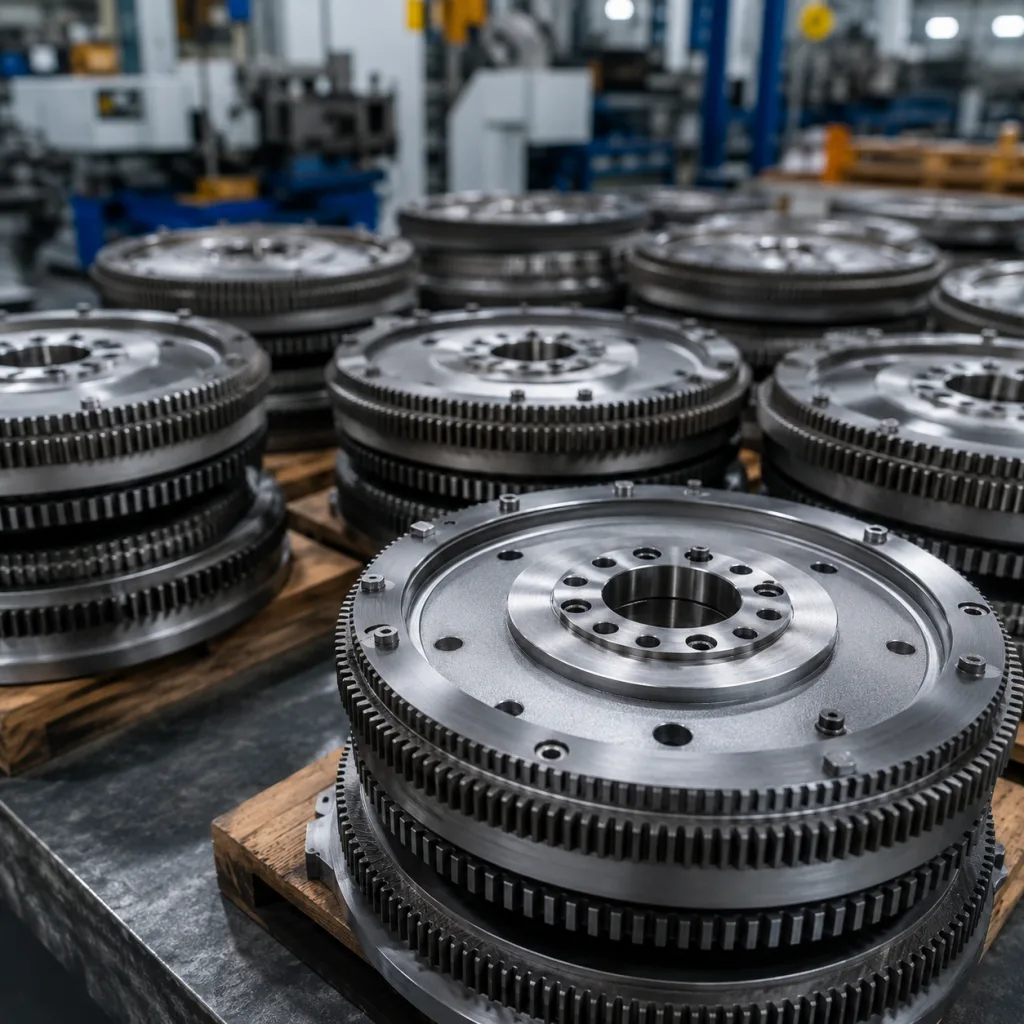
A camshaft Honda OE equivalent is not just a camshaft that fits into the head. It must restore the original valve events, journal support, oil delivery, sensor signal and wear behavior without changing engine calibration or workshop practice. For distributors, wholesalers and repair networks, small deviations scale quickly: a 0.02 mm journal error, 1° lobe-phasing shift, oil-hole burr or incorrect trigger edge can become start-up noise, low power, fault codes, repeat repairs and warranty claims across many branches. This article uses a buyer-side structure: what to decide first, where failures usually start, which specifications deserve deeper review, how to validate launch lots, how to compare sourcing routes and which documents to require before stock is released. Driventus manufactures engine components in Taizhou, Zhejiang under IATF 16949:2016 and ISO 9001:2015 quality management systems for export markets. Driventus is an independent aftermarket manufacturer; brand names are referenced for fitment identification only.
Decision point: does “OE-equivalent” mean fit, function or evidence?
For procurement teams, OE-equivalent should mean functional interchangeability with the original camshaft design. Visual similarity is not enough. The part must fit the cylinder head, work with the specified followers or rocker arms, maintain valve events inside the agreed tolerance window and preserve the original lubrication path.
Start by separating three questions:
Fit: does the shaft physically match the cylinder-head layout, bearing positions, timing-end configuration and cam position?
Function: do lift, base circle, phasing, thrust control, oil feed and sensor trigger geometry reproduce the intended engine behavior?
Evidence: can the supplier prove the answer with drawings, master-sample comparison, inspection reports and controlled production records?
For Honda-family applications, sourcing files usually include application data, engine-code coverage, casting or forging identification, timing-end configuration, cam position, sensor trigger details and packaging references. Check this information against the internal fitment database before catalogue release, especially where one engine family has multiple emissions, market or model-year variants.
A practical specification should define measurable acceptance limits, for example:
Camshaft type: intake, exhaust, single overhead cam or dual overhead cam application, with left/right or front/rear position stated where relevant
Base material: chilled cast iron, ductile iron, forged steel or billet steel, matched to the original valvetrain design
Journal diameter tolerance: commonly controlled within ±0.005 to ±0.015 mm against an approved drawing or master sample, with roundness often held within 0.005 mm for critical journals
Lobe lift and base circle: measured on a cam profiler, CMM or equivalent inspection equipment, with lift typically controlled within ±0.02 mm unless the drawing specifies tighter limits
Lobe phasing: angular position checked against agreed datum features, commonly within ±0.5° to ±1.0° camshaft angle for OE-equivalent replacement programmes
Surface hardness: verified after induction hardening, chill hardening, nitriding or the specified route, with the target expressed as HRC, HV or HSD rather than a generic “hardened” claim
Runout and straightness: commonly limited to 0.02 to 0.05 mm total indicator reading, depending on shaft length and bearing layout
Oil-hole position and deburring: confirmed with pin gauges, visual magnification and airflow or flushing where the design uses drilled oil passages
OE part-number cross-references should be used only for identification and fitment mapping. They do not indicate vehicle manufacturer approval, sponsorship or endorsement.
Failure modes hidden behind a camshaft that “looks correct”
Many camshaft returns start with features that are easy to miss during visual inspection. A replacement can look clean, be packed well and still fail in service if the thrust surface, reluctor profile, oil feed or journal finish falls outside the acceptable window. Convert “match OE” language into a critical-characteristic list with inspection frequency, gauge method and acceptance limits.
Control point
Typical target for sourcing discussion
Recommended inspection method
Journal diameter and roundness
Diameter ±0.005–0.015 mm; roundness ≤0.005 mm
Air gauge, micrometer, roundness tester
Lobe lift and base circle
Lift ±0.02 mm; base-circle deviation recorded by lobe
Cam profile measuring machine
Lobe phasing angle
±0.5°–1.0° from datum, unless drawing states otherwise
Rotary fixture with datum reference
Thrust face width and axial control
Width ±0.03–0.05 mm; thrust-face parallelism recorded
Vernier, CMM or fixture gauge
Sensor trigger geometry
Tooth width, gap and edge position checked to drawing or master
Optical comparator or CMM
Oil feed hole location
Hole position typically ±0.10 mm; no burrs or blocked passages
Pin gauge, borescope, burr inspection
Surface roughness
Journals commonly Ra 0.2–0.4 µm; lobes commonly Ra 0.4–0.8 µm
Profilometer, Ra/Rz record
Straightness and runout
0.02–0.05 mm TIR depending on length and support points
V-block and dial indicator or CMM
</tr></thead><tbody> </tbody></table>The costly claims are often simple mechanically. A tight journal can create hot running and seizure risk. Excessive runout can add noise or unstable bearing contact. A burr in an oil passage can delay lubrication at first start. A shifted sensor edge can trigger diagnostic faults even when the engine starts.
For a camshaft Honda OE equivalent, Driventus recommends keeping a controlled master sample, approved drawing or critical-characteristic list, and inspection record for each engine family. A buyer can set 100% checks for sensor trigger geometry, oil-hole blockage and runout during launch, then move stable dimensions to AQL sampling after several conforming lots. A common production control model is 5-piece first-off inspection per machine setup, hourly in-process checks for journal diameter and lobe lift, and final batch records covering hardness, runout, roughness and traceability.
For buyers supplying multiple repair-chain locations, the packaging label should show application, engine code, camshaft position, batch number, production date and traceability code. Clear labelling reduces installation errors and gives warranty teams enough information to isolate suspect lots within hours rather than reviewing all inventory.
Spec deep-dive: material route, hardness depth and mating parts
Camshafts operate under high contact stress at the lobe and follower interface. Material and heat-treatment choices must match the valvetrain design and lubrication environment. If the surface treatment, hardness depth or base material is wrong for the mating follower, the result can be pitting, spalling, adhesive wear, abnormal noise or rapid lobe loss.
Common manufacturing routes include chilled cast iron for many high-volume overhead-cam applications, ductile iron where toughness is important, and forged or billet steel for selected high-load designs. The correct route depends on the original engine architecture, valve-spring load, follower type, oil specification and production design. Do not approve a material substitution only because dimensions match; chilled iron, carburized steel and nitrided steel can behave differently during break-in and with different follower materials.
Procurement specifications should request evidence for:
Chemical composition by heat, melt or batch, with carbon, silicon, manganese, chromium and alloying elements reported where relevant
Microstructure assessment after casting, forging or heat treatment, including chill depth, graphite form or carbide distribution where applicable
Surface hardness and effective hardened depth, for example 50–60 HRC or equivalent for many hardened steel lobe surfaces, or a drawing-specific HV profile for nitrided layers
Core hardness where toughness and shaft strength are relevant, often reported separately from lobe surface hardness
Surface finish on journals, lobes, thrust faces and sealing areas, with Ra/Rz values recorded rather than visual-only approval
Crack detection by magnetic particle inspection or another suitable method after heat treatment and straightening
Cleanliness and burr control at oil passages, keyways and machined edges, including washing and rust-prevention method before packing
Quality management standards such as IATF 16949:2016 and ISO 9001:2015 do not define camshaft dimensions or guarantee interchangeability. They define how manufacturing processes, traceability, corrective action, internal audits and change control are managed. Environmental and chemical compliance may also matter for importers, including REACH (EC) No 1907/2006 for substances in articles and packaging materials sold into the European market.
Where the camshaft is supplied as part of a repair kit, confirm compatibility of followers, seals, timing components and assembly lubricant. Mixed-source kits create warranty disputes when one component is not compatible with the cam lobe surface treatment or break-in requirements. For launch lots, require a kit-level fit check, oil-passage cleanliness check and installation note that specifies assembly lubricant, first-start procedure and oil-change guidance where the application requires it.
Step-by-step release gate before catalogue launch
Do not move from sample approval to catalogue launch on dimensional inspection alone. Functional validation confirms wear behaviour, noise risk, timing stability and production consistency before stock reaches distributors or repair branches.
Use a staged release gate:
1. Confirm application scope, engine codes, camshaft position and excluded variants. 2. Approve drawings, master samples or a critical-characteristic list. 3. Inspect first samples for dimensions, profile, phasing, hardness, roughness and runout. 4. Run pilot production with tighter inspection on sensor trigger geometry, oil passages and critical journals. 5. Complete controlled installation or bench validation where programme risk justifies it. 6. Release commercial stock only after labels, traceability and warranty records are connected.
Typical validation for an OE-equivalent camshaft includes:
First-article dimensional inspection against controlled drawings or approved master samples, normally 3 to 10 samples per new part number depending on programme risk
Cam profile comparison for lift curve, base circle, opening ramp, nose radius and flank geometry, with overlay charts retained in the approval file
Hardness mapping across lobes, journals and thrust faces, including surface hardness and depth profile where the heat-treatment route requires it
Metallographic verification of microstructure and hardened layer on representative sections or process coupons
Magnetic particle or equivalent crack inspection after heat treatment, straightening and final grinding
Runout checks after machining and after heat treatment where relevant, because straightening can change residual stress and final stability
Torque and timing fixture confirmation with the mating sprocket, actuator, dowel, keyway or locating feature
Bench wear testing with representative follower material where required, especially for new material routes or private-label programmes
Engine fitment trial or controlled installation audit for new part families, including oil feed, axial movement, sensor signal and start-up noise checks
For a new camshaft Honda OE equivalent, buyers often approve 3–5 first samples, then request a 50–200 piece pilot lot with 100% inspection on critical dimensions before moving to normal production. If field exposure is high, retain two samples from each launch batch for 12–24 months so warranty teams can compare failed parts against retained production evidence.
For regulated emissions markets, the camshaft should not alter valve timing in a way that changes original emissions behaviour. Regulations such as ECE R-83 define light-vehicle emissions requirements in applicable jurisdictions. An aftermarket component supplier should avoid statements that imply vehicle certification unless formal evidence exists.
Driventus keeps batch traceability and inspection records within its quality system. For sourcing teams, the most useful documents are control plans, inspection reports, material certificates, heat-treatment records and change-notification procedures. Supplier audits should examine how the factory prevents unapproved changes to casting source, heat-treatment recipe, grinding wheel specification, machining datum, washing process or sensor trigger process.
Comparison: catalogue part, private label or engineered programme?
Different buyers need different levels of engineering involvement. A distributor may need a catalogue-ready part number with stable packaging and fitment data. A Tier-1 or programme buyer may require drawings, APQP documentation, validation milestones and formal change control.
Sourcing route
Typical buyer
Main advantage
Key risk to control
Catalogue replacement
Aftermarket distributor
Faster launch and lower engineering workload
Fitment data accuracy and batch consistency
Private-label supply
Wholesaler or repair chain
Consistent brand presentation and packaging
Label traceability and warranty handling
Drawing-based manufacture
OEM or Tier-1 supplier
Direct control of technical specification
Longer approval cycle and audit requirements
Reverse-engineered equivalent
Low-volume aftermarket programme
Useful where drawings are unavailable
Requires careful validation against master samples
</tr></thead><tbody> </tbody></table>The route changes the commercial logic. Existing catalogue items may have MOQ driven mainly by carton quantity, packaging print method and warehouse allocation. A private-label camshaft usually raises MOQ because printed boxes, inserts, barcodes and batch labels must be produced together. A new casting, forging or sensor-trigger variant pushes the economic MOQ higher because tooling, fixture design and validation cost are added.
As a working RFQ model, separate three cost buckets: unit price, one-time development or tooling cost, and logistics or packaging cost. Unit price is usually affected by material route, heat treatment, grinding time, inspection level and annual volume. Lead time is affected by whether the part is existing, needs sample reverse engineering, requires new tooling, or requires PPAP-style documentation. Existing repeat orders may be planned in weeks; new custom programmes typically need sample review, drawing confirmation, tooling or fixture preparation, sample production, validation and pilot approval before mass production scheduling.
Buyers can review related engine components in our catalog and the engine component range at /products/engine-components.html. Where an existing part number does not meet the required application coverage, Driventus can support custom manufacturing based on drawings, samples and agreed validation plans.
For RFQs, include annual volume, target markets, engine codes, camshaft position, packaging requirements, inspection level, documentation requirements, target launch date and applicable compliance expectations. Complete RFQ data allows the supplier to quote realistic tooling, MOQ, sampling schedule and production lead time instead of issuing a low headline price that changes after technical review.
Q&A for the supplier file before purchase order release
A technically sound camshaft programme depends on records that procurement, quality and warranty teams can use. Agree the document package before purchase order release, not after a field issue.
Ask the supplier these questions:
Which application, engine-code and model-year limits are confirmed, and which variants are excluded?
What drawing, master sample or critical-characteristic specification controls production?
Which material route and heat-treatment process are used, and what records connect them to each batch?
Which features are checked 100%, which are sampled and what inspection method is used?
How do carton labels, part markings and inspection records connect to batch traceability?
What change-control process prevents unapproved material, tooling, heat-treatment, machining-datum or sub-supplier changes?
Recommended RFQ document list:
Application and cross-reference sheet with clear fitment limitations, including engine code, market and model-year notes
Controlled drawing, approved sample record or critical-characteristic specification, with datum scheme and revision level
Material certificate and chemical composition record, linked to heat, melt or batch number
Heat-treatment and hardness report, including test points, target range and actual readings
Full dimensional inspection report for first samples, with cam profile, lobe phasing, journals, thrust faces, sensor trigger and oil holes included
Production control plan and in-process inspection frequency, including which features are 100% checked and which are sampled
Batch traceability format and label sample, showing how carton, part and inspection record connect
Packaging drop or transport protection method, where relevant, including anti-rust oil, VCI bag, end protection and carton strength
REACH (EC) No 1907/2006 statement for applicable markets and packaging material declarations where required
Define record-retention time. A practical aftermarket requirement is to keep inspection and traceability records for at least 3–5 years, or longer where local law, customer contracts or warranty exposure require it. For private-label programmes, the supplier and buyer should agree who controls artwork revision, barcode format, country-of-origin marking, claim investigation timing and disposition of nonconforming inventory.
A camshaft Honda OE equivalent should be sourced with the same discipline applied to other critical powertrain components. Even when the part is not a braking or steering item, an incorrect camshaft can cause engine damage, vehicle downtime, repeat labour and high-value claims.
Driventus is an independent aftermarket manufacturer; brand names are referenced for fitment identification only. No reference to a brand, engine family or OE-style number should be read as approval, sponsorship or endorsement by a vehicle manufacturer.
Frequently asked questions
It must match the original fitment, journal geometry, lobe lift, lobe phasing, thrust control, sensor trigger features, material performance and lubrication design within the agreed specification. Buyers should define numeric tolerances for journals, lift, phasing, runout, roughness and hardness rather than relying on visual similarity.
Yes. Driventus can support private-label packaging, batch traceability and agreed inspection documentation for distributors and repair-chain programmes, subject to application scope, MOQ, artwork requirements, inspection level and compliance expectations.
Send engine codes, camshaft position, samples or drawings, annual volume, target markets, packaging requirements, inspection level, target price logic, launch timing and required documents. Fitment references should be used for identification only, not as approval claims.
For application review, sampling requirements, MOQ, lead-time planning or programme pricing, please [request a quote](/contact.html).