Camshaft for Honda HR-V OE Equivalent: Sourcing Guide
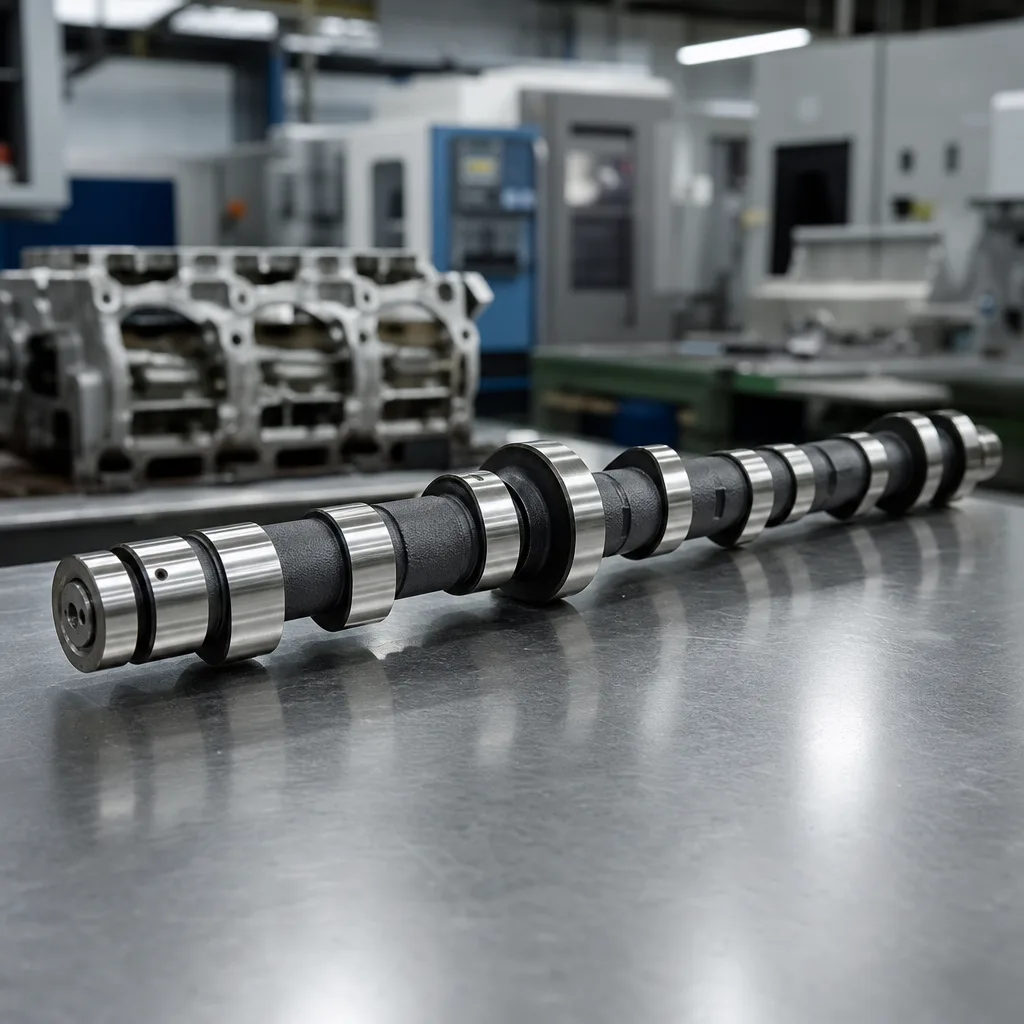
Sourcing a camshaft for Honda HR-V OE equivalent replacement programmes takes more than matching a vehicle name or engine code. The part has to mirror the original functional geometry: lobe lift, base-circle diameter, valve-event phasing, journal diameter, thrust control, runout, oil-feed alignment, sensor trigger features, and the valve-train layout used in the target engine family. A correct replacement should install without cylinder-head machining, maintain hydrodynamic oil film at the journals, and pass dimensional, surface-finish, and metallurgical checks before it is released to stock or workshop channels.
Driventus supplies camshafts for aftermarket replacement programmes with controlled manufacturing, inspection records, and batch traceability. Driventus is an independent aftermarket manufacturer; Honda and HR-V names are referenced only for fitment identification. For buyers in the EU, UK, US, Canada, Australia, and Brazil, the real question is whether the component is a true OE-equivalent camshaft, not simply a casting that looks similar. This guide covers the checks that matter in sourcing, receiving inspection, and cross-reference validation.
What OE-equivalent means for Honda HR-V camshafts
An OE-equivalent camshaft for Honda HR-V applications should replicate the original part’s functional geometry, material performance, installation interfaces, and operating durability for the stated engine variant. In purchasing terms, it must do more than look right. It has to preserve the same valve-event behaviour, lubrication path, cam sensor signal, and mechanical relationship with followers, rocker arms, lash adjusters, timing chain or belt components, and variable valve timing hardware where fitted.
For B2B buyers, OE-equivalent should be treated as a measurable specification, not a catalogue claim. A reliable supplier should be able to confirm the intended engine code, intake or exhaust position, OE reference or interchange number, camshaft overall length, journal count, journal diameters, journal widths, lobe lift, base-circle diameter, lobe phasing, thrust-face details, end-feature geometry, keyway or timing-slot location, and any trigger wheel, reluctor, or sensor reference features. Small deviations can still have large effects: shifted valve timing, higher follower contact stress, cam/crank correlation faults, or delays during installation.
Published quality references commonly used in procurement include IATF 16949:2016 and ISO 9001:2015 for process control. These standards do not prove that a specific camshaft fits a specific Honda HR-V engine, but they do show whether the manufacturer operates documented procedures for purchasing, production, inspection, traceability, corrective action, and continual improvement. For material and finish expectations, buyers should also request heat-treatment records, hardness checks on lobes and journals, and roughness data for bearing journals and thrust faces.
The strongest sourcing approach is to define OE equivalence as fit, function, and verification. Fit means the camshaft installs in the cylinder head without modification and has correct end play. Function means it supports correct valve opening and closing, oil delivery, sensor feedback, and timing control. Verification means the supplier can demonstrate conformity by drawing, sample measurement, retained master sample, batch inspection report, or a mutually agreed control plan.
Key specifications to verify before purchase
Before placing an order for a camshaft for Honda HR-V OE equivalent supply, procurement teams should request a structured specification sheet instead of relying on a catalogue image or broad vehicle description. Honda HR-V applications vary by market, production year, engine family, emissions configuration, and intake or exhaust camshaft position. A part listed simply for “HR-V” should not be approved until the supplier confirms the exact OE reference, engine code, model-year range, and camshaft position being replaced.
Start with dimensional compatibility. Confirm overall length, journal count, journal diameter, journal width, thrust-face width, end-play control surface, timing-end configuration, rear-end features, and oil-hole or oil-groove position. For precision surfaces, buyers commonly specify journal diameter tolerances in the micron range according to the approved drawing, with runout and straightness limits recorded during inspection. The camshaft must rotate freely in the cylinder head with correct oil clearance and without binding. Too much clearance can weaken oil-film stability and lower pressure at the journals; too little can lead to seizure, noise, or rapid wear.
Next, check valve-event geometry. Ask for confirmation of lobe lift, base-circle diameter, lobe width, lobe separation angle, and intake or exhaust timing relationship. These values determine when and how far the valves open. A visually similar camshaft with the wrong lobe geometry can cause low compression, misfire, unstable idle, reduced power, emissions failure, or piston-to-valve clearance risk. For approval samples, buyers can request lobe-height readings, profile comparison against a master sample, and angular position checks referenced from the timing datum.
Material and surface condition deserve the same attention. Depending on the design, camshafts may be cast, forged, or machined from suitable alloy material, with hardened lobes and journals. Buyers should define the acceptable hardness range, case depth where applicable, surface roughness on bearing journals, and visual limits for nicks, burrs, porosity, cracks, rust, bruised lobes, and handling damage. Common receiving-inspection tools include micrometers, V-block runout checks, surface roughness testers, hardness testers where agreed, magnetic particle or dye penetrant inspection for selected programmes, and visual inspection under controlled lighting.
If the camshaft is used with variable valve timing hardware, confirm actuator mounting features and oil-passage alignment. Mismatched oil routing can create a no-start condition, fault codes, poor idle quality, slow phaser response, or incorrect cam/crank correlation. Also verify locating pins, dowel holes, bolt patterns, reluctor or trigger features, and any oil-control grooves. For bulk orders, the purchase specification should include the OE number, engine code, application range, intake or exhaust designation, approved drawing revision, inspection method, AQL or sampling plan, packaging requirement, and marking standard.
How Driventus validates replacement camshafts
Driventus validates replacement camshafts through application review, dimensional control, material verification, production checks, and batch traceability. The aim is to supply a component that can be used in aftermarket replacement programmes without rework, machining changes, or avoidable fitment disputes for distributors, engine rebuilders, or workshops.
Validation begins with fitment confirmation. Driventus reviews the supplied OE reference, engine code, model-year range, market destination, and camshaft position. Where required, the team compares samples, drawings, or measured benchmarks to confirm critical-to-fit and critical-to-function characteristics. This helps prevent intake and exhaust camshaft mix-ups, regional engine-variant errors, or supply of a part that suits one HR-V application but not another.
Dimensional inspection concentrates on the features that affect installation and engine operation: journal diameters, journal widths, runout, straightness, lobe height, base circle, lobe angular position, thrust surfaces, end features, timing interfaces, oil passages, and sensor-related geometry. Depending on order terms and programme requirements, inspection can be performed at defined sampling levels, with records retained by batch, production date, and inspection lot.
Material and processing controls are equally important. Cam lobes and journals must resist wear under boundary lubrication during cold start and maintain surface integrity under repeated contact loading. Buyers may request hardness values, heat-treatment confirmation, microstructure review, case-depth checks where applicable, or surface-finish measurements for agreed inspection points. Where applicable, non-destructive checks and visual inspections help identify cracks, casting defects, sharp edges, burrs, or transport damage before release.
Driventus operates under a documented quality system aligned with IATF 16949:2016 and ISO 9001:2015. For international trade, buyers should also check compliance requirements such as REACH (EC) No 1907/2006 where applicable to the market and finished-part scope. For ongoing supply, Driventus can support batch identification, packing control, carton and label requirements, inspection documentation, and corrective-action communication if incoming inspection or field feedback identifies a nonconformance.
Fitment risks by engine variant and model year
Fitment risk is one of the main reasons buyers should avoid sourcing a Honda HR-V camshaft by model name alone. HR-V vehicles are sold across different regions with different engines, emissions systems, production dates, and calibration requirements. A camshaft that is correct for one engine family or market may be wrong for another, even when the vehicle name and body generation appear similar.
Common risks include confusing intake and exhaust camshafts, selecting a part for the wrong engine code, overlooking a mid-year production change, or missing a difference in variable valve timing configuration. Some variants may use different cam sensor trigger patterns, phaser mounting details, oil passages, dowel locations, thrust-control arrangements, or rear-end features. These differences may not be obvious in catalogue photos, but they can prevent installation or cause drivability and diagnostic problems after assembly.
Model-year changes matter, especially for distributors serving mixed fleets. A buyer should confirm whether the order applies to a specific production date range, VIN range, engine code, or defined OE reference. Where the sales programme covers several countries, confirm regional engine availability before consolidating stock under one internal part number. This is particularly relevant for buyers supplying the EU, UK, US, Canada, Australia, and Brazil, where vehicle naming may overlap while engine specifications differ.
For vehicle-fleet validation, buyers often request a sample fit check with measured camshaft end play, free-rotation confirmation, oil-pressure verification, and a controlled run test. During this test, workshops should monitor start-up noise, oil leakage at the timing end, cam/crank correlation data where available, idle quality, fault-code history, and abnormal valve-train noise after warm-up. Where VVT is fitted, scan-tool data for commanded versus actual cam angle can help confirm that the actuator and oil passages are working as intended.
A practical fitment approval file should include the OE number, aftermarket reference, engine code, vehicle model-year range, intake or exhaust position, photos of end features, key measured dimensions, installation feedback, test vehicle or engine details, and any known exclusions. Keeping this file current helps sales teams avoid incorrect cross-references and gives procurement a clearer basis for repeat orders.
Commercial terms buyers should ask for
Commercial terms for camshaft sourcing should cover more than unit price. A low-cost camshaft that creates returns, labour claims, engine noise complaints, fault-code disputes, or installation uncertainty can become more expensive than a controlled OE-equivalent programme. Before the first purchase order, buyers should agree on technical, quality, logistics, documentation, and aftersales terms.
Begin with the technical scope. The quotation should identify the OE reference or interchange number, engine code, vehicle application range, camshaft position, material or manufacturing route where relevant, and drawing or specification revision. If samples are required, define whether the sample is for dimensional review, bench comparison, engine fitment, durability testing, or full validation. For private-label or distributor programmes, confirm marking, packaging, barcode format, label language, carton strength, and country-specific requirements.
Quality terms should spell out acceptance criteria for critical dimensions, surface finish, hardness, visual defects, runout, end features, and packaging damage. For large accounts, it is useful to agree on these criteria in writing before the first shipment. The agreement should cover dimensional tolerances, inspection frequency, retained records, gauge method, batch identification, and nonconformance handling. Buyers should also specify how disputes will be managed if incoming inspection finds a deviation: containment, replacement, credit, root-cause analysis, corrective action, revised inspection method, or updated drawing control.
Logistics terms should define minimum order quantity, lead time, production batch size, shipping method, export packing, corrosion protection, palletisation, and document requirements such as commercial invoice, packing list, certificate of origin, material declaration, or compliance declaration where applicable. For long-distance shipments, packaging is especially important because camshaft journals and lobes are precision surfaces. Protective sleeves, neutral oil or approved rust preventive, VCI bags, end caps, and rigid dividers can prevent avoidable impact and corrosion damage.
Finally, ask how the supplier maintains repeatability over time. A good sourcing programme should deliver consistent parts from batch to batch, not just an acceptable initial sample. Driventus can support buyers that need a camshaft for Honda HR-V OE equivalent replacement programme with fitment review, specification confirmation, controlled production, batch-level traceability, and documented support for ongoing aftermarket supply.
Frequently asked questions
No. OE-equivalent means the part is designed to match the required fit, function, and durability for the listed application. It does not mean manufacturer approval, endorsement, or supply through the vehicle maker’s OE channel.
Start with the OE reference, engine code, intake or exhaust position, journal dimensions, lobe profile, timing datum, and sensor trigger features. A verified OE cross-reference is more reliable than the vehicle model name alone.
Yes, after technical review. Custom manufacturing is available for approved programmes where the customer provides drawings, samples, master profile data, or validated dimensional targets.
If you need a verified replacement programme for this application, send your OE reference and engine details to our team via /contact.html.
Request a Quote