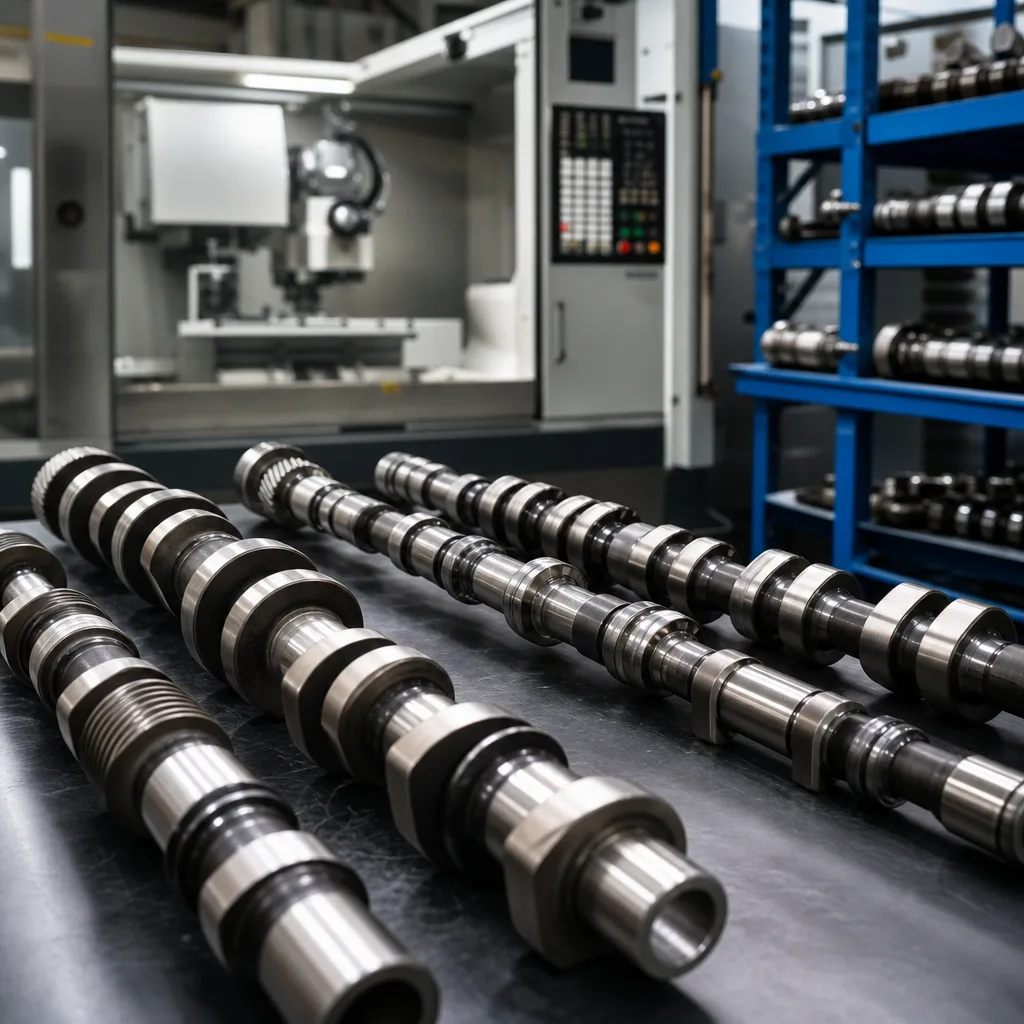
Camshaft for Honda Civic OE Equivalent: Buying Guide
A camshaft for Honda Civic OE equivalent replacement has to do more than appear in a catalogue listing. Before it is released for production, wholesale distribution, or repair-chain use, it should match the original application’s cam profile, base circle, journal diameters, lobe phasing, thrust location, sensor interface, lubrication features, and wear-surface finish. For procurement teams, the real question is not whether a part “fits Civic,” but whether it can pass controlled dimensional checks, material controls, heat-treatment requirements, and durability expectations across repeat shipments.
Even small deviations matter. A change in valve lift, journal runout, surface hardness, case depth, or cam/crank trigger geometry can lead to valvetrain noise, unstable idle, cam/crank correlation DTCs, accelerated lobe wear, emissions failures, or avoidable warranty claims.
Driventus supplies engine components from Taizhou, Zhejiang, and exports to more than 60 countries. We manufacture under IATF 16949:2016 and ISO 9001:2015, with traceable processes for buyers who need stable supply rather than one-off samples. Driventus is an independent aftermarket manufacturer; Honda, Civic, VTEC, and other brand names are referenced only to identify fitment and compatibility. This guide explains what OE-equivalent means in practical purchasing terms, which technical data to request, how to manage Honda Civic fitment risks, and how to compare suppliers before placing a purchase order.
What OE-equivalent means for Honda Civic camshafts
For a camshaft for Honda Civic OE equivalent programme, “OE-equivalent” should mean the replacement part is engineered to match the required form, fit, and function of the original application. It does not mean the part is made by the vehicle manufacturer, and it does not imply OEM approval. In purchasing terms, OE-equivalence has to be supported by measurable criteria: lobe geometry, journal dimensions, material grade, heat treatment, surface finish, timing features, oiling features, and batch-to-batch repeatability.
A camshaft controls when the valves open and close, so overall length is only one part of the picture. Buyers should confirm base circle, lobe lift, lobe separation angle where applicable, intake/exhaust phasing, journal diameters, thrust surfaces, oil feed holes, sprocket or gear interface, dowel/keyway position, and any camshaft position sensor trigger details. On Honda Civic applications, the exact specification can change by engine code, market, year range, cylinder head design, VTEC or non-VTEC configuration, and SOHC or DOHC layout.
Verification item
Typical procurement check
Why it matters
Journal diameter
Outside micrometre / CMM; report to 0.001 mm where specified
Determines valve opening, engine breathing, output, and ECU calibration compatibility
Lobe timing / phase
Cam profile analysis or timing fixture
Maintains correct opening and closing events for idle quality, emissions, torque, and drivability
Runout / straightness
Dial gauge on V-blocks or between centres
Reduces noise, uneven bearing load, seal wear, and timing instability
Overall length and thrust face
Vernier, micrometre, CMM
Ensures correct axial location and prevents end-play or thrust-wear problems
Dowel, keyway, sprocket interface
CMM / go-no-go gauge
Prevents incorrect cam timing after installation
Sensor trigger feature
Visual, angular, and dimensional check
Prevents no-start conditions and cam/crank correlation DTCs
Surface roughness
Roughness tester, typically Ra reported by feature
Supports oil-film retention and reduces accelerated lobe and journal wear
Surface hardness / case depth
Rockwell, Vickers, or microhardness traverse as specified
Provides wear resistance under repeated valve spring loading
Material traceability
Heat number / mill certificate / batch record
Supports batch consistency, replenishment control, and claim investigation
</tr></thead><tbody> </tbody></table>A credible OE-equivalent claim should connect to a controlled drawing, approved master sample, reverse-engineered profile data, or buyer-approved specification. If a supplier only says “fits Honda Civic” without engine-code detail, dimensional reports, profile data, or batch traceability, treat the part as an unvalidated aftermarket sample rather than a production-ready camshaft.
Dimensional and material controls buyers should request
Procurement teams should ask for measurable evidence, not broad phrases such as “standard quality” or “OE type.” For a camshaft replacement programme, the supplier should provide inspection reports tied to the batch or lot number, and those records should match the exact part number being shipped. This is especially important when the camshaft will be stocked by distributors, supplied under a private-label programme, or installed by repair chains that need predictable workshop results.
Start with the features that affect engine assembly and valvetrain performance. Journal diameters and roundness influence oil clearance. Lobe profile and lift determine valve events. Runout affects rotation stability and bearing loading. Length, thrust surfaces, keyways, dowel holes, sprocket interfaces, oil holes, and trigger features all influence installation, lubrication, and timing. Buyers should also confirm which critical characteristics receive 100% inspection and which are managed through a sampling plan, such as ISO 2859-1 AQL or a buyer-defined control plan.
Minimum data pack
Material specification, heat number, and available mill certificate where applicable
Casting, forging, or billet route if relevant to the part design
Heat treatment record, including hardness range, induction-hardened area, nitriding/carburising details, or case depth requirement if used
First article inspection report for new or revised part numbers
Critical dimensions with nominal values, tolerances, gauge method, and actual measured results
Cam lobe lift and profile measurement at agreed angular points, not only maximum lift
Journal diameter, roundness, cylindricity, and straightness or runout record
Surface roughness record for lobes, journals, thrust faces, and seal areas where specified
Visual inspection criteria for burrs, cracks, nicks, blocked oil holes, chamfers, and machined edges
Magnetic particle inspection, dye penetrant, or other crack-detection record when specified by the programme
Cleanliness and rust-prevention requirement, including oiling, VCI bag, caps, or protective sleeves
Packaging specification for corrosion protection during sea, air, or multimodal export
Country of origin, batch number, carton label format, barcode, and traceability documents
For export buyers in the EU, UK, US, Canada, Australia, and Brazil, documentation should also support compliance with REACH (EC) No 1907/2006 where applicable to the finished goods package and associated substances. Clarify whether the requirement applies to the part, coating, preservative oil, VCI material, plastic bag, label, carton ink, desiccant, or other packaging material. If the project also needs private label, custom cartons, barcode labels, or special corrosion-prevention packaging, our custom manufacturing page outlines the available development path.
A stable camshaft supply programme depends on controlled machining, repeatable grinding, verified surface treatment, and lot-level traceability. If the supplier cannot show how lobe geometry is inspected, how hardness is monitored, how nonconforming parts are segregated, or how lot traceability is maintained, the part should remain in sample status rather than move to production release. Buyers should also define acceptance rules before shipment, including AQL level, reporting format, retention sample policy, critical-characteristic reaction plan, and what happens when any dimension falls outside tolerance.
How Driventus validates OE-equivalent camshafts
Our validation process is built for buyers who need repeatable fitment and controlled variation across multiple shipments. We do not present products as OEM-approved. Instead, we verify that the replacement part meets the agreed specification for the target application through controlled inspection, production records, and buyer-approved requirements.
The process normally begins with application confirmation. A Honda Civic nameplate alone is not enough because engine families, valvetrain layouts, cylinder head castings, sensor arrangements, and regional emissions packages can vary by model year and market. Driventus reviews engine code, cylinder head type, camshaft position, OE cross-reference, sample part, drawing, CAD data, or buyer specification before confirming the most suitable sourcing or production path.
Validation steps commonly used:
1. Confirm engine code, displacement, cylinder head type, fuel system, market, model year range, and OE cross-reference. 2. Identify whether the part is intake, exhaust, single SOHC camshaft, or paired DOHC application. 3. Confirm VTEC, non-VTEC, i-VTEC, or other rocker/valvetrain-specific requirements where applicable. 4. Compare sample geometry against master data, drawing, or approved reference part. 5. Measure key dimensions, including journals, base circle, lift, overall length, thrust surfaces, oil holes, and interface features. 6. Check lobe profile points, angular phasing, dowel/keyway position, and timing-related features against agreed tolerances. 7. Verify hardness after heat treatment and confirm wear-critical surfaces meet the specified method and range. 8. Review runout, surface finish, chamfering, burr control, cleanliness, and anti-rust treatment. 9. Confirm compatibility with relevant mating components such as sprockets, seals, cam caps, bearings, followers, rocker arms, lash adjusters, and cylinder head location features. 10. Carry out durability, bench, spin, or application-specific testing when required by the buyer or programme risk level. 11. Release inspection documentation, packaging specification, carton labelling, and batch traceability records for mass shipment.
For fleets, wholesalers, e-commerce distributors, and repair-chain programmes, this level of checking matters because small profile differences can affect idle quality, emissions behaviour, diagnostic fault frequency, oil-film stability, and long-term wear. A camshaft may look correct at first glance and still fail in service if lobe taper, journal finish, hardening depth, dowel angle, or sensor feature is not controlled. Our quality system page explains the controls used under IATF 16949:2016 and ISO 9001:2015.
When a buyer is launching a new part number, Driventus can support a staged process: application review, sample inspection, first article inspection, pilot order, buyer approval, and then mass production. This separates fitment validation from commercial replenishment and lowers the risk of discovering profile, timing, or packaging problems after the camshaft has already entered the distribution channel.
Applications, variants, and fitment risks
Honda Civic camshaft fitment depends on engine family, market, and model year. Two vehicles that share the Civic nameplate can use different cam profiles, valvetrain layouts, sprocket interfaces, oil-feed arrangements, or camshaft position sensor trigger patterns. Buyers should not source by vehicle badge alone, and distributor listings should not rely only on a broad year range without engine-code and OE-reference confirmation.
A controlled fitment file is essential for any camshaft for Honda Civic OE equivalent sourcing project. The file should identify the engine code, displacement, fuel type, valvetrain configuration, intake or exhaust position, OE reference, market notes, and exclusions. If the camshaft is intended for multiple Civic generations or related applications, verify each fitment separately rather than assuming interchangeability from visual similarity.
Common fitment risks:
Mixed engine codes within the same chassis generation or production year
VTEC, non-VTEC, and i-VTEC differences that affect lobe design, rocker operation, and oil-control strategy
SOHC and DOHC differences, including separate intake and exhaust camshafts on DOHC engines
Intake and exhaust cam confusion during ordering, picking, packing, or installation
Different cam cap, bearing journal, thrust, seal, or end-plug arrangements
Sensor trigger wheel, reluctor, or cam position signal variation that can create DTCs or no-start complaints
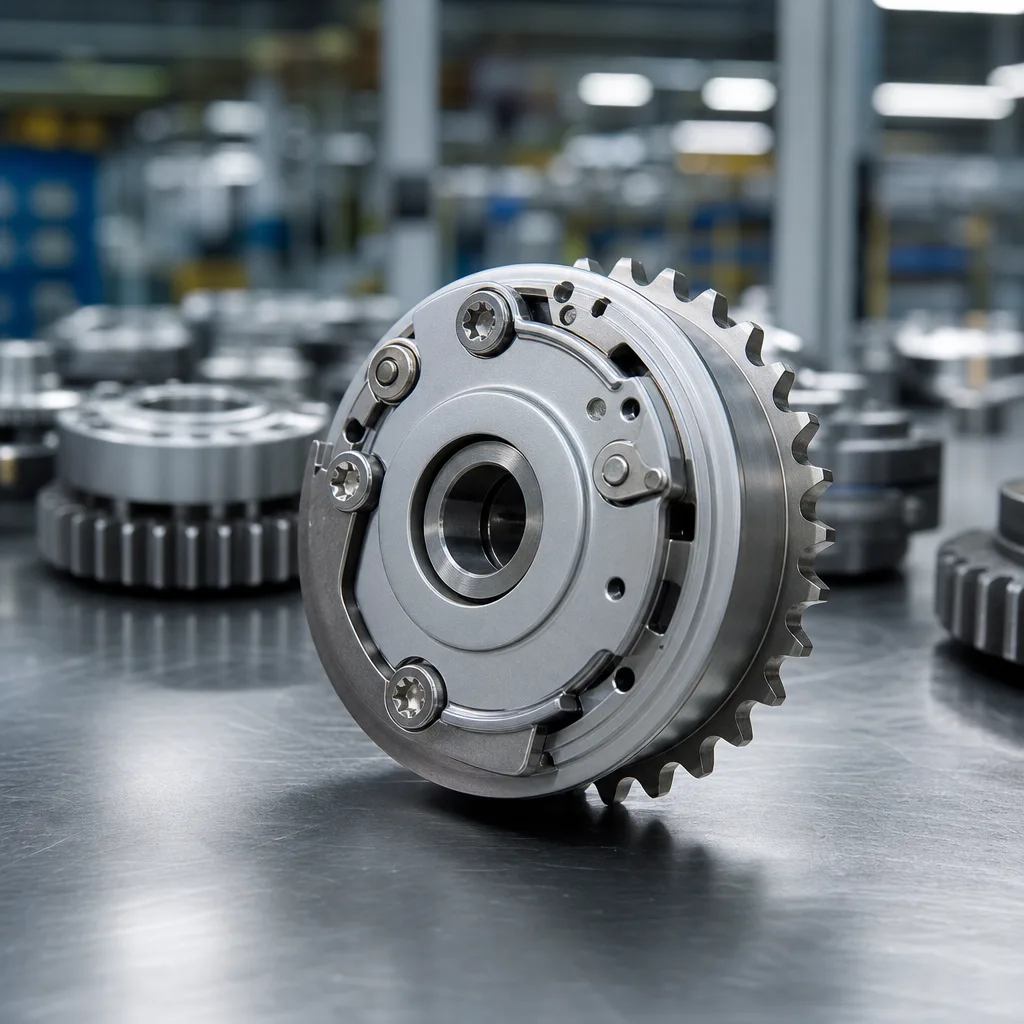
Different sprocket, dowel, keyway, or end-feature requirements that change installed timing
Regional market differences between North America, Europe, Asia, Latin America, and other export markets
Superseded OE references that require cross-checking before order release
Catalogue returns caused by incomplete application notes rather than part defects
When ordering at scale, create a controlled fitment list that includes engine code, OE reference, part position, and critical notes from the service catalogue or buyer’s internal application database. For private-label distributors, the same notes should carry through ERP records, carton labels, catalogue data, e-commerce listings, and customer service scripts. If the application needs a broader range of engine components, our catalog and engine components pages can help your team build a matched source list.
For legacy programmes, it is often more efficient to standardise by engine family rather than by vehicle generation. That can reduce purchasing errors and lower returns caused by incorrect fitment. Standardisation, however, should only follow confirmation that the cam profile, base circle, trigger feature, journal arrangement, oiling features, and installation interface are identical or formally interchangeable. Where uncertainty remains, buyers should request drawings, samples, or measured comparison reports before approving a bulk order.
Specification checklist for purchase orders
Use a written specification on every RFQ or PO. It reduces ambiguity between sample approval and mass production and gives both buyer and supplier a common reference if a fitment, inspection, or claim discussion comes up later. The purchase order should identify the camshaft clearly enough that the supplier does not have to interpret the application from a short description such as “Honda Civic camshaft.”
A strong RFQ combines commercial and technical information. Commercial fields include annual volume, order quantity, destination market, Incoterms, packaging requirement, MOQ, and target lead time. Technical fields include OE reference, engine code, drawing or approved sample, critical dimensions, test requirements, inspection level, and labelling rules. If the buyer has incoming inspection criteria, share them before production rather than applying them only after arrival.
PO field
Recommended content
Part name
Camshaft, OE equivalent replacement
Application
Honda Civic, engine code, displacement, model year range, and destination market
Camshaft position
Intake, exhaust, SOHC, DOHC pair, or single camshaft as applicable
OE reference
Verified OE reference or approved equivalent; confirm supersessions before release
Reference data
Drawing, approved sample, CAD data, profile report, or buyer specification where available
Material
As agreed by drawing, sample, or technical standard; include material grade if specified
Heat treatment
Required hardness range, case depth if applicable, treated zones, and inspection method
Critical tolerances
Journal diameter, roundness, runout, lift, base circle, lobe phase, length, thrust face, oil holes, and interface features
Surface finish
Defined Ra or equivalent requirement for lobes, journals, thrust areas, and seal surfaces
Testing
Hardness, dimensional, profile, runout, visual, crack detection, durability, and packaging validation as required
Compliance
IATF 16949:2016, ISO 9001:2015, REACH where applicable, and buyer-specific requirements
Packaging
Anti-corrosion protection, individual wrapping, VCI/desiccant if required, carton strength, label, barcode, and lot traceability
Documentation
Inspection report, batch number, country of origin, packing list, certificate requirements, and traceability records
Approval process
Sample approval, first article approval, pilot order, PPAP-style submission if required, or mass production release method
</tr></thead><tbody> </tbody></table>If your buyer needs a dedicated part revision, non-standard pack spec, laser marking, special carton artwork, or application-specific inspection criteria, use custom manufacturing to align the drawing, inspection plan, packaging method, and shipment marking before mass order release. This reduces dispute risk and improves incoming inspection acceptance rates.
The PO should also define change control. If material source, heat-treatment method, grinding process, tooling, coating, packaging, sub-supplier, or inspection plan changes after approval, the buyer should receive notification before shipment. In B2B sourcing, this discipline is often the difference between a stable aftermarket programme and recurring returns caused by unnoticed specification drift.
Why supply stability matters for distributors and repair chains
Replacement camshafts are not only a fitment issue. They also affect service levels and warranty cost. Distributors and repair networks need predictable availability, low nonconformance rates, clear catalogue data, and packaging that protects machined lobes and journals during long-distance export. A technically correct camshaft can still create business problems if cartons arrive crushed, VCI protection is insufficient, labels are inconsistent, batch records are missing, or replenishment lead times change without warning.
For procurement teams, the main supply questions are:
Can the supplier repeat the same lobe profile, journal dimensions, hardness, and runout in later batches?
Are batch records available for traceability and claim analysis?
Is packaging suitable for machined and hardened surfaces during sea freight, humidity exposure, container movement, and warehouse handling?
Can the supplier support mixed-market carton labels, private-label requirements, EAN/UPC or customer barcodes, and customer part numbers?
Is lead time stable across peak demand periods and Chinese holiday shutdown planning?
Are minimum order quantities realistic for slow-moving and fast-moving Honda Civic variants?
Can the supplier support consolidated shipments with related engine components, gaskets, seals, followers, or timing parts where required?
Is there a defined response process for technical questions, warranty claims, incoming inspection findings, or catalogue corrections?
Driventus manufactures in Taizhou, Zhejiang, with export experience across 60+ countries. Buyers can review our manufacturing scope through our catalog and open a sourcing discussion through request a quote. For projects that require a controlled development path, we can also support drawing-based production, application-specific revisions, custom inspection plans, private-label packaging, and export packing aligned with distributor requirements.
A camshaft for Honda Civic OE equivalent sourcing programme should be treated as a technical supply decision, not a commodity purchase. The more precise the specification, the lower the total cost of returns, claims, catalogue corrections, inspection holds, and workshop rework. Buyers who define fitment, inspection, packaging, documentation, and change-control requirements before ordering are better positioned to maintain availability, protect margins, and build confidence with repair customers.
Frequently asked questions
No. OE-equivalent means the part is designed to match the required fitment and function, but it is not claimed as OEM-approved or endorsed. Buyers should verify dimensions, material, heat treatment, lobe profile data, runout, surface finish, and batch records before release.
Request dimensional inspection reports, material or heat-treatment data, hardness results, runout values, cam profile or lift data, surface finish information, batch traceability, and packaging details. For regulated markets, also confirm REACH-related compliance where relevant.
Yes. If your programme needs special labelling, drawing-based changes, private-label cartons, barcode rules, or application-specific inspection criteria, use the custom manufacturing route so the specification is fixed before production.
If you need a verified camshaft for Honda Civic OE equivalent sourcing plan, send your fitment details, OE reference, target market, inspection requirements, and forecast volume to compare options and lead times at /contact.html