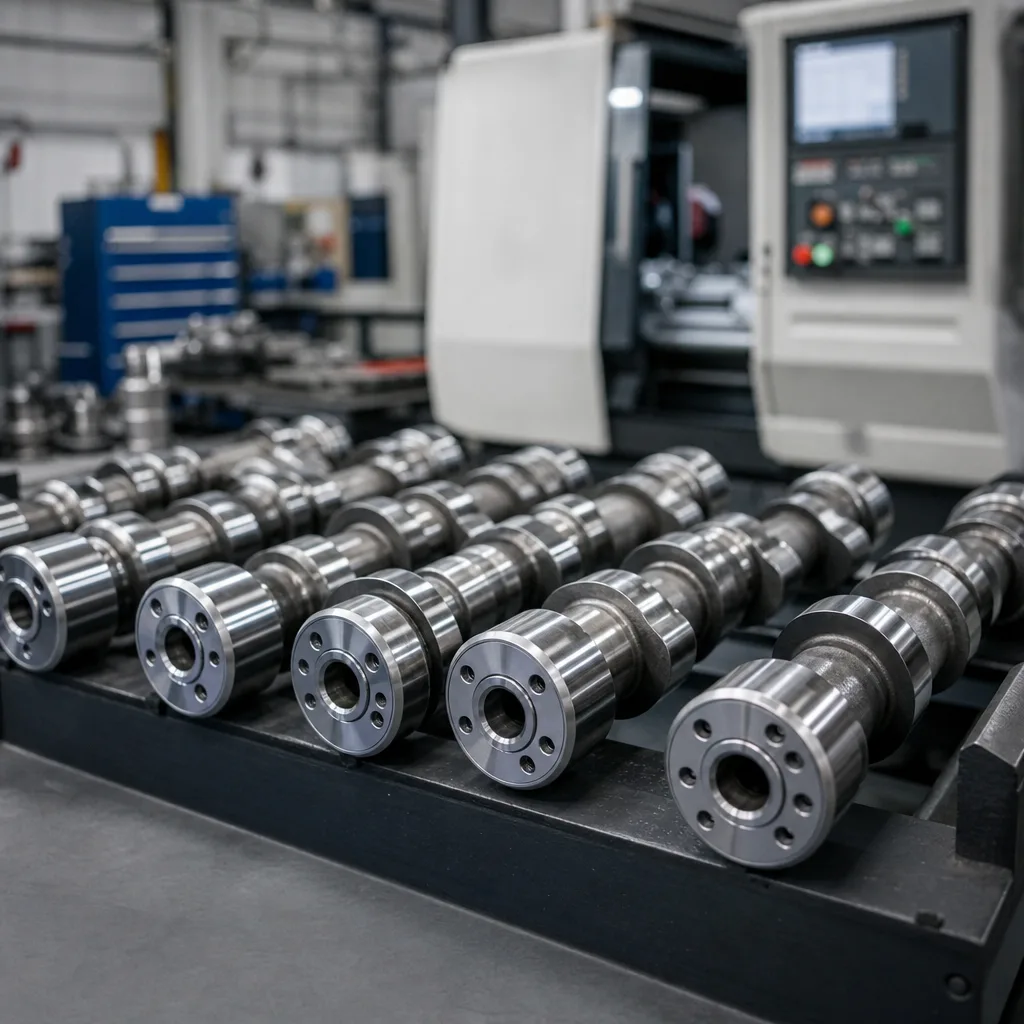
Camshaft for Honda CR-V Aftermarket Replacement
A camshaft for Honda CR-V aftermarket replacement has to do more than sit neatly in the cylinder head. It has to match the exact engine family, intake or exhaust position, lobe lift curve, journal spacing, thrust control, oil-feed detail, cam sensor trigger pattern, and any VTC or VTEC-related interfaces fitted to the application. Small changes in lobe phasing, base circle, journal finish, or trigger geometry can show up as poor idle stability, valve timing errors, diagnostic faults, weak oil film retention, or noise after installation. For B2B buyers, the real commercial test is not whether one sample looks right. It is whether every production lot installs without machining, holds repeatable critical dimensions, and survives cold starts, heat cycling, mixed oil quality, and normal replacement intervals. Driventus supplies engine components for B2B aftermarket programmes, with manufacturing controls aligned to IATF 16949:2016 and ISO 9001:2015. Driventus is an independent aftermarket manufacturer; brand names are referenced for fitment only. For programme-level sourcing, the same camshaft family can be cross-referenced with related engine components, validated against target applications, and documented against agreed inspection and service requirements before launch.
What the replacement camshaft must match
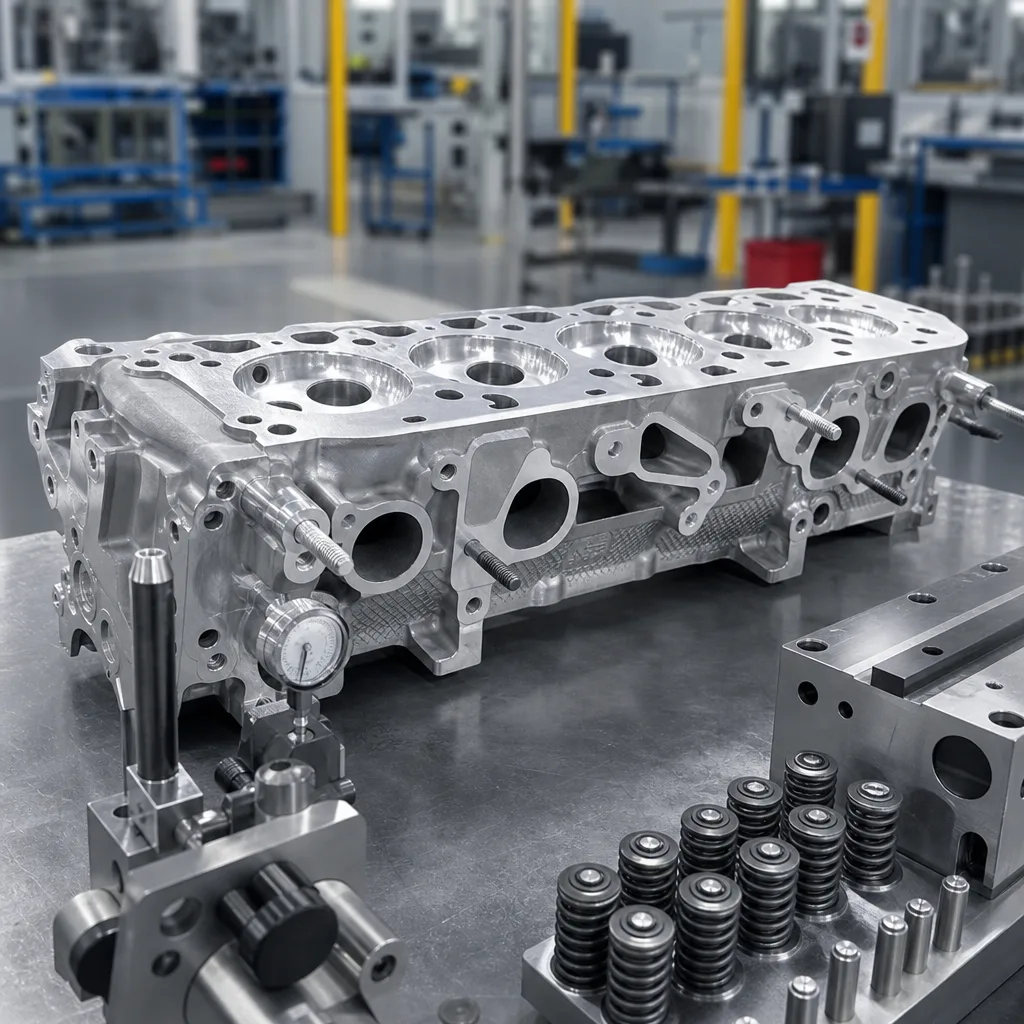
For Honda CR-V applications, fitment starts with the engine code, not a broad model description. Different CR-V versions may use different four-cylinder engine families, regional emissions packages, intake and exhaust camshaft layouts, cam position sensing arrangements, and variable valve timing interfaces. The replacement camshaft must match the cylinder head casting, bearing journal layout, timing drive, valve train geometry, lubrication path, thrust location, and any integrated trigger, reluctor, sprocket, phaser, or VTC interface used on the target application.
One visible dimension is never enough to define the part. Two shafts may share a similar overall length but differ in lobe phasing by a few degrees, base circle by several hundredths of a millimetre, journal runout beyond the oil-film tolerance, or trigger-to-lobe clocking enough to cause cam/crank correlation faults, valve train noise, low oil pressure at the head, or accelerated journal wear.
A practical replacement specification should confirm:
- Engine code, model year range, regional specification, and intake or exhaust position
- Overall length, bearing journal count, journal spacing, and thrust face location
- Journal diameter, roundness, cylindricity, taper, and concentricity to the datum journals
- Lobe lift, base circle, opening and closing ramp geometry, nose radius, and lobe separation angle
- Cam-to-trigger clocking, reluctor pattern, dowel location, keyway position, and sprocket or phaser mounting dimensions
- Oil feed grooves, oil holes, chamfers, cross-drilling, and lubrication passage cleanliness
- End-play allowance, thrust surface width, and thrust face surface finish
- Surface roughness on journals, lobes, thrust faces, and machined ends, typically controlled in micrometres Ra
- Hardness range and test locations on lobes and journals after heat treatment or induction hardening
- Packaging method, corrosion inhibitor, journal protection, and export carton strength
The replacement part should also be checked against the service pattern in your market. Some buyers source a single position, such as an intake camshaft. Others need paired intake and exhaust coverage, or a repair kit with seals, fasteners, camshaft caps where applicable, or related valve train components. If the application changes by model year, engine code, emissions specification, or production date, procurement should lock the SKU to exact build data and OE cross references rather than a generic Honda CR-V label. That is how a replacement programme avoids catalog errors, high return rates, and avoidable workshop downtime.
Where fitment is uncertain, start with a controlled comparison between a validated reference part and the proposed aftermarket camshaft. The comparison should cover datum-based dimensional measurement, lobe profile scanning, trigger clocking, thrust location, oil-hole orientation, and mounting interfaces. Where needed, our custom manufacturing service can align a production run to measured samples, drawing data, or validated reference parts.
Materials and production control
A camshaft is a high-cycle contact component. It works under repeated Hertzian stress at the lobe-to-follower interface, faces intermittent boundary lubrication during cold starts, and runs through constant temperature change around the cylinder head. Material selection, blank quality, machining sequence, hardening method, and final grinding all decide whether the shaft keeps its lobe form, journal geometry, and surface durability over its service life.
For aftermarket supply, common production routes include chilled cast iron, ductile iron, forged steel, or billet steel, depending on the original design, contact system, target cost, and warranty expectation. Cast camshafts need control of graphite structure, chill depth, porosity, and casting straightness. Steel camshafts need control of chemistry, forging flow, normalising or quenching process, and hardening depth. In both routes, final performance depends on controlled machining after heat treatment, not only on the material name.
Typical controls include:
- Chemical composition verification for incoming bar, forging, or casting stock
- Blank supplier approval, including casting integrity, forging consistency, and nonconformance history
- Heat-treatment control for surface hardness, effective case depth where applicable, and core toughness
- Induction-hardening pattern control on lobes and journals where the design requires local hardening
- Rough machining allowance sufficient for final grinding after heat-treatment movement
- Cam lobe and journal grinding with datum control for profile, spacing, and alignment
- Verification of lobe profile symmetry, flank transition, ramp shape, and nose radius
- Runout control between datum journals, lobes, and trigger features to reduce timing scatter and uneven wear
- Deburring and edge control around oil holes, keyways, dowel holes, cross-drilling, and machined faces
- Washing, magnetic cleaning, or equivalent process to remove chips, abrasive residue, and grinding media before packing
- Anti-rust oil, VCI protection, individual sleeves, end protection, and stable export packaging
When comparing sources, ask for the material grade, heat-treatment method, hardness range, hardness test location, and case-depth requirement where applicable. In many aftermarket programmes, lobe and journal hardness is reported using HRC or HV scales, with readings tied to defined test points rather than unspecified areas. Surface finish should also be reported by feature; journals and lobes normally need a controlled Ra value and must be free from grinding burn, scoring, chatter, or raised burrs at oil holes.
One correct sample does not prove production readiness. Batch consistency is what protects warranty exposure when a distributor supplies multiple repair chains or regional warehouses from the same shipment. Process control should connect each production lot to material certificates, heat-treatment records, in-process measurements, final dimensional reports, and release approval. That traceability makes it easier to investigate claims, isolate affected stock, and avoid broad recalls when a problem is limited to one heat-treatment lot or grinding batch.
Published standards often relevant to the supply chain include IATF 16949:2016, ISO 9001:2015, REACH (EC) No 1907/2006, and, where emissions-related fitment is being reviewed, ECE R-83. For surface durability, wear, corrosion, and coating-related validation, buyers should define the exact method in the purchase specification instead of relying on a general reference to quality testing.
Validation checks before you release purchase orders
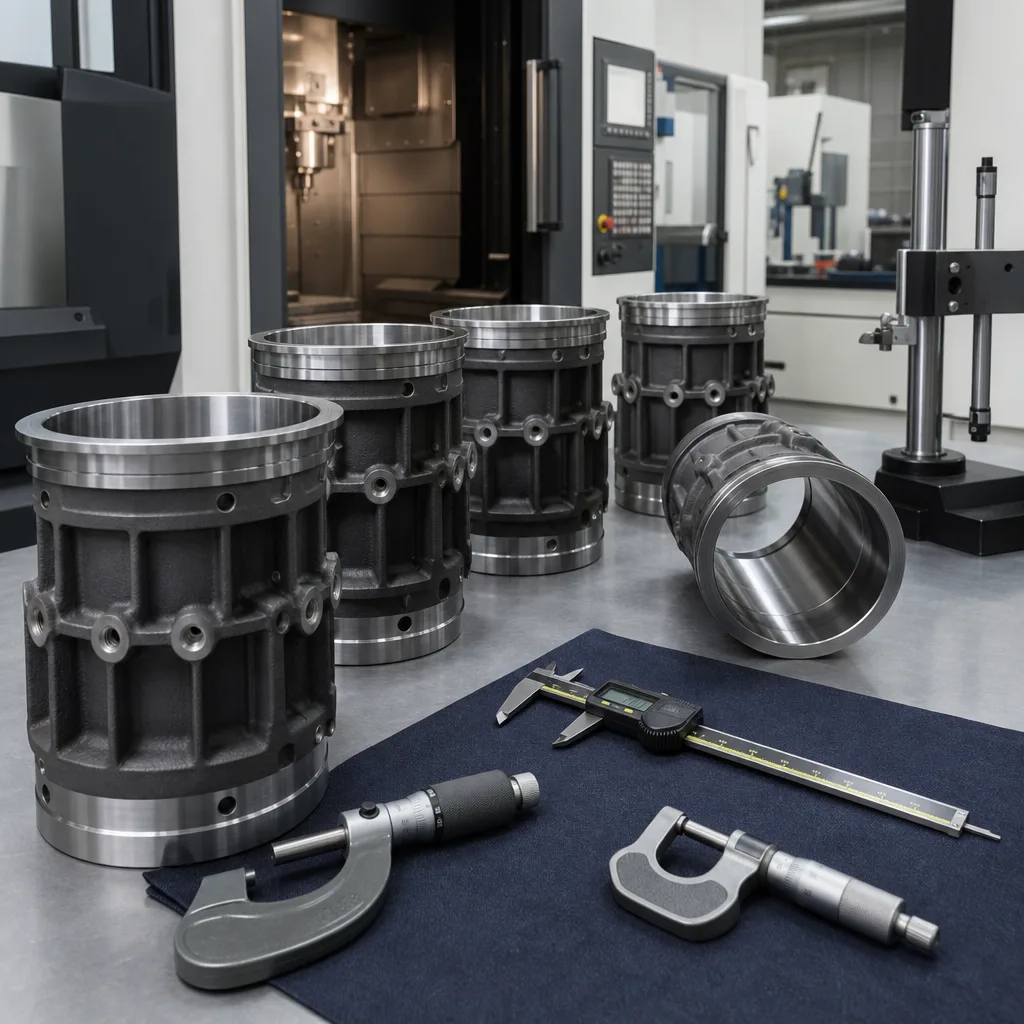
Replacement sourcing should be backed by measurable acceptance criteria before volume purchase orders are released. For camshafts, that means dimensional inspection, lobe profile verification, runout checks, hardness confirmation, surface finish measurement, and controlled fit validation in the relevant cylinder head, gauge, or fixture. The aim is to confirm that the pilot sample matches the target Honda CR-V application and that the supplier can repeat the result at production scale.
| Check point | Typical purpose | Buyer value |
|---|---|---|
| Engine code and position confirmation | Confirms exact intake or exhaust application | Prevents catalog and installation errors |
| Journal diameter and spacing | Confirms bearing fit and oil clearance relationship | Reduces seizure, noise, and assembly failure risk |
| Journal roundness, taper, and cylindricity | Confirms stable oil film and rotation | Lowers hot idle noise and premature wear risk |
| Lobe lift and base circle | Confirms valve lift and lash relationship | Protects power, emissions, and idle quality |
| Lobe profile and ramp geometry | Confirms follower contact behaviour | Reduces ticking, scuffing, and abnormal wear |
| Lobe phasing and separation angle | Confirms timing relationship between events | Reduces misfire, cam/crank correlation, and drivability risk |
| Trigger, dowel, keyway, and phaser clocking | Confirms timing signal and assembly orientation | Prevents diagnostic faults and no-start complaints |
| Runout and straightness | Confirms shaft stability through bearing supports | Lowers noise, binding, and uneven bearing load risk |
| Thrust face position and finish | Confirms end-play control | Prevents axial movement and timing instability |
| Surface roughness | Supports oil film retention and contact durability | Extends service life and reduces bedding-in wear |
| Hardness and case-depth verification | Confirms heat-treatment result | Reduces lobe pitting and journal wear claims |
| Oil hole, groove, and passage inspection | Confirms lubrication path and cleanliness | Protects journals, lobes, and followers |
| Crack detection or magnetic particle inspection | Finds subsurface or surface defects | Prevents early field failures |
| Packaging drop and corrosion review | Confirms transit protection | Reduces rust, dent, and arrival damage claims |