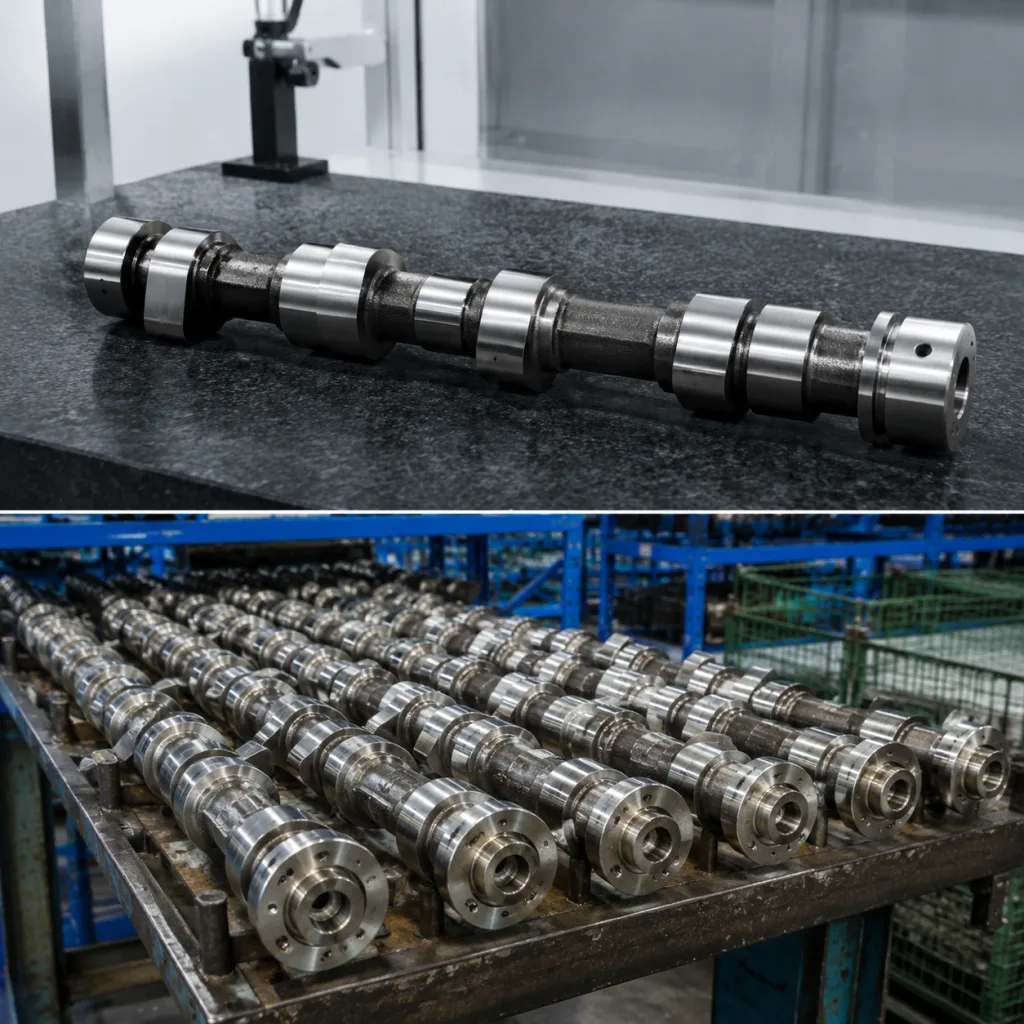
Camshaft for Ford Transit OE Equivalent Sourcing
A camshaft for Ford Transit OE equivalent programme should start with risk, not a catalogue match. Transit vans work in delivery, fleet, utility and shuttle service, so a wrong lobe profile, rough journal, shifted trigger feature or poorly protected shaft can create towing cost, repeat labour, downtime and warranty arguments. The buying question is simple: will the camshaft install without rework, hold valve timing, maintain oil film and wear predictably in commercial-duty use?
Driventus specifies aftermarket Transit camshafts through measurable controls: lobe profile, journal geometry, timing-feature position, hardness, roughness, oil-feed detail, traceability, corrosion protection and batch repeatability. This guide explains how sourcing teams can define an OE-equivalent replacement programme, compare manufacturing routes, validate first articles, prevent fitment errors and align MOQ, lead time, packaging and documentation before bulk orders. Driventus is an independent aftermarket manufacturer; brand names are referenced for fitment only.
Decision Framework: What “OE-Equivalent” Must Prove
OE-equivalent does not mean vehicle manufacturer approval. It means the replacement camshaft matches the original part family’s functional geometry, installation interfaces and service requirements closely enough to perform as a dependable service replacement. For a Transit application, that proof must connect to the engine code, cylinder head layout, timing drive, sensor targets, bearing journals, thrust faces, oil-feed locations and valve train interface.
Use this decision test before treating a part as suitable for a camshaft for ford transit oe equivalent programme:
- Can it install without machining, timing adaptation, non-standard hardware or field rework?
- Are lobe lift, base circle, flank profile and angular phasing checked against approved master data?
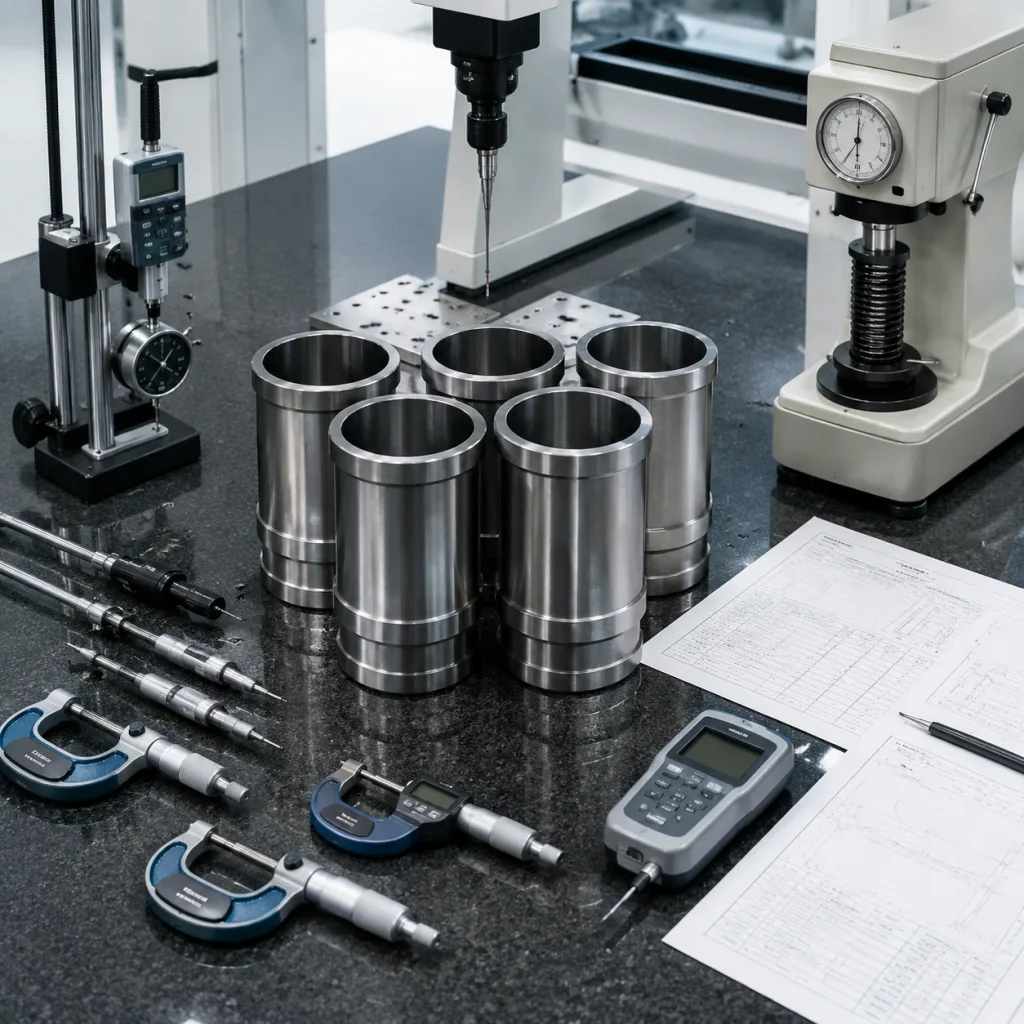
- Are journal size, roundness, cylindricity, finish and runout controlled for stable oil-film formation?
- Are thrust faces, end features, sensor targets, pump drives and oil holes verified against the actual Transit variant?
- Is hardness, hardened depth or material route documented by batch rather than assumed from appearance?
- Is packaging strong enough to protect lobes and journals during sea freight, warehouse handling and mixed-carton distribution?
Procurement teams should define OE equivalence on the drawing, control plan or approved sample report. Common targets include journal diameter within ±0.010 mm where bearing clearance is tight, roundness and cylindricity around 0.005-0.010 mm depending on design, total indicated runout below 0.030 mm after final grinding unless otherwise specified, lobe lift deviation within ±0.020 mm on released profiles and timing-critical angular features within ±0.5° from a defined datum.
Surface requirements matter just as much as dimensions. Chilled-cast lobe surfaces are often specified around HRC 50-58 or to the customer drawing. Oil holes need correct position, clean chamfers and complete deburring so they do not restrict oil flow or score bearings during installation.
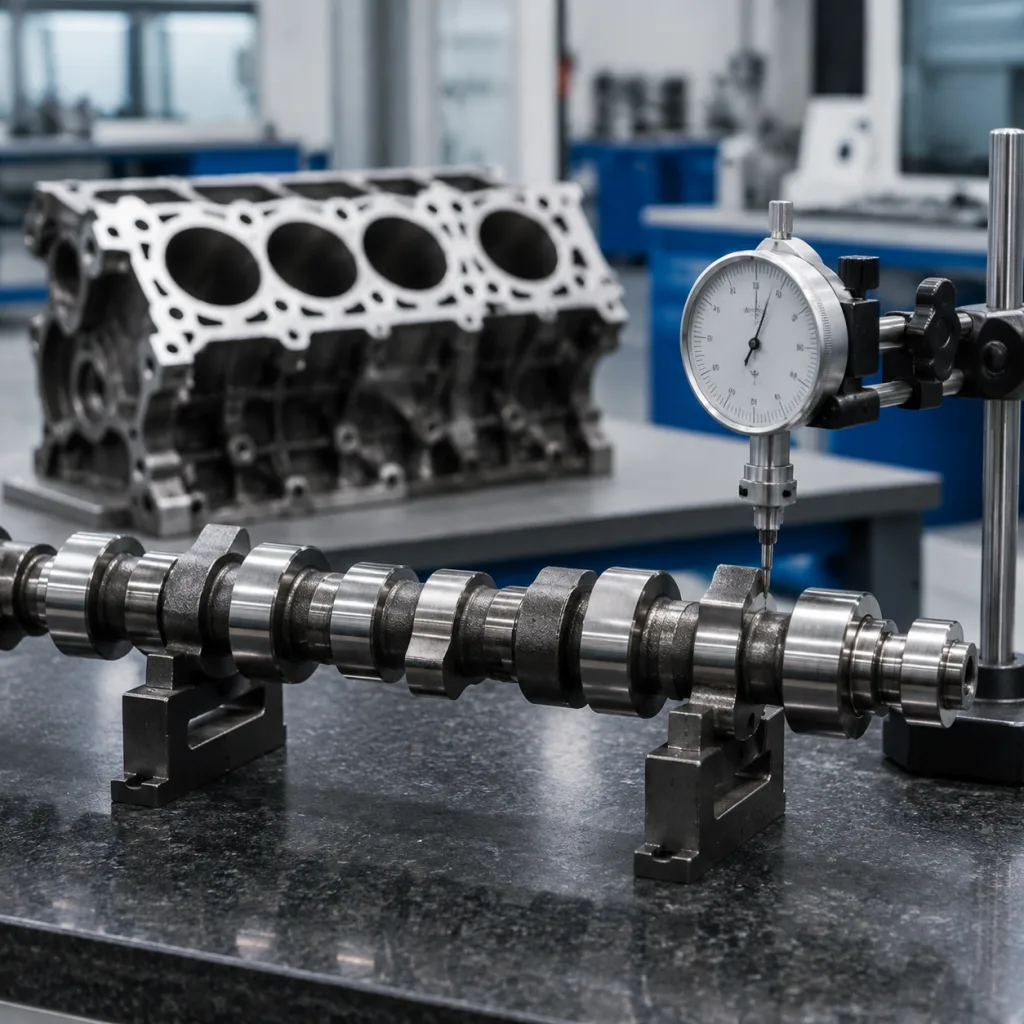
Transit engine variants differ by market, year, emissions package and service layout. Before issuing a bulk order, confirm engine code, model year range, camshaft position, valve train type, timing interface and any sensor, vacuum pump or auxiliary-drive feature. That discipline prevents catalogue overlap, returns and mixed-application inventory.
Spec Deep-Dive: Dimensions, Materials and Finish
Start with controlled data. A catalogue description is not enough for camshaft sourcing because it rarely defines datum structure, lobe curve, trigger angle, journal tolerance or inspection method. Driventus development normally moves through sample receipt, cleaning and visual review, 3D scanning or CMM datum capture, lobe-profile measurement, material and hardness verification, drawing release, fixture design, first-article build and production control-plan approval.
Manufacturing route changes the risk profile. Chill-cast iron is often selected where the OE architecture uses compatible followers and cost efficiency is important. Forged steel or machined billet may be better where contact stress, section strength, low-volume development or specific hardening requirements justify the higher cost. The right route depends on follower type, lubrication conditions, lobe stress, hardening method, annual volume and target landed cost.
The highest-risk characteristics for commercial van service are not exotic. They are repeatable wear resistance, straightness, journal finish, lobe phasing and profile consistency.
| Parameter | Typical procurement check | Practical target for quotation |
|---|---|---|
| Cam lobe lift | Profile measurement against master data | Usually ±0.020 mm or customer drawing |
| Base circle | Batch sampling by CMM, profile machine or dedicated gauge | Usually ±0.015-0.025 mm |
| Journal diameter | Micrometre and roundness checks | Commonly ±0.010 mm for bearing journals |
| Journal roughness | Profilometer check after final grinding | Ra 0.20-0.40 µm typical unless specified |
| Lobe surface roughness | Profilometer check on nose and flank | Ra 0.40-0.80 µm typical after finish grinding |
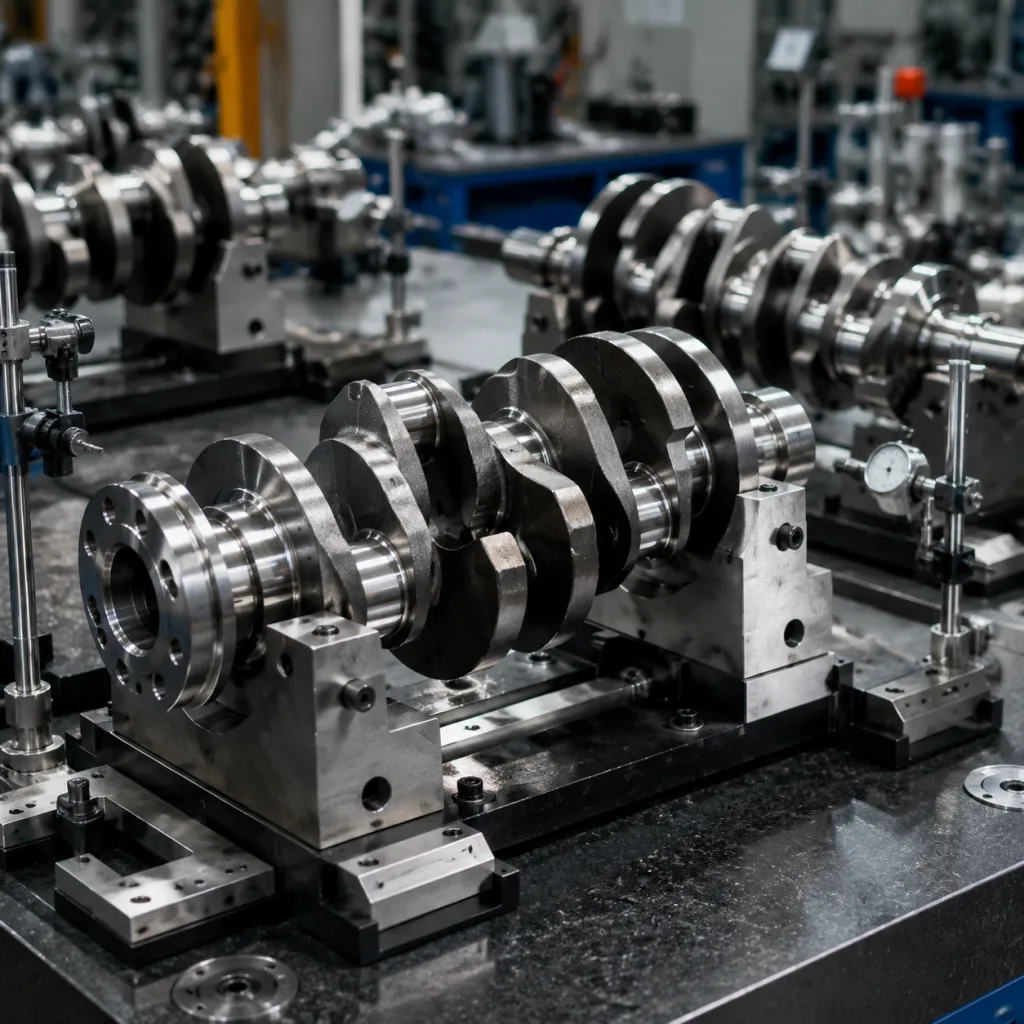
| Straightness/runout | V-block, centre-based or dedicated fixture inspection | Often ≤0.030 mm TIR for finished shafts |
| Surface hardness | Rockwell or equivalent method as specified | HRC 50-58 typical for chilled-cast lobes; steel parts by specification |
| Timing feature position | Datum-based angular measurement | Typically ±0.5° for timing-critical datum features |
| Oil hole and chamfer | Visual, pin gauge and burr inspection | 100% visual on oil-feed and edge-break areas |
| Buying stage | What it proves | What it does not prove |
|---|---|---|
| Visual sample review | General similarity, end features and obvious fitment clues | Lobe curve, phasing, hardness, material or batch stability |
| First article inspection | Conformance of selected samples to drawing or master data | Long-run process control unless linked to a control plan |
| Pilot run | Fixture, grinding and inspection method repeatability | Full replenishment stability if volume is too small |
| Mass production control | Batch traceability, inspection frequency and escalation rules | Future design changes unless revision control is maintained |
| Export packing approval | Protection during planned transport route | Mishandling outside agreed logistics assumptions |