Camshaft for Subaru Outback Replacement: B2B Sourcing Checklist
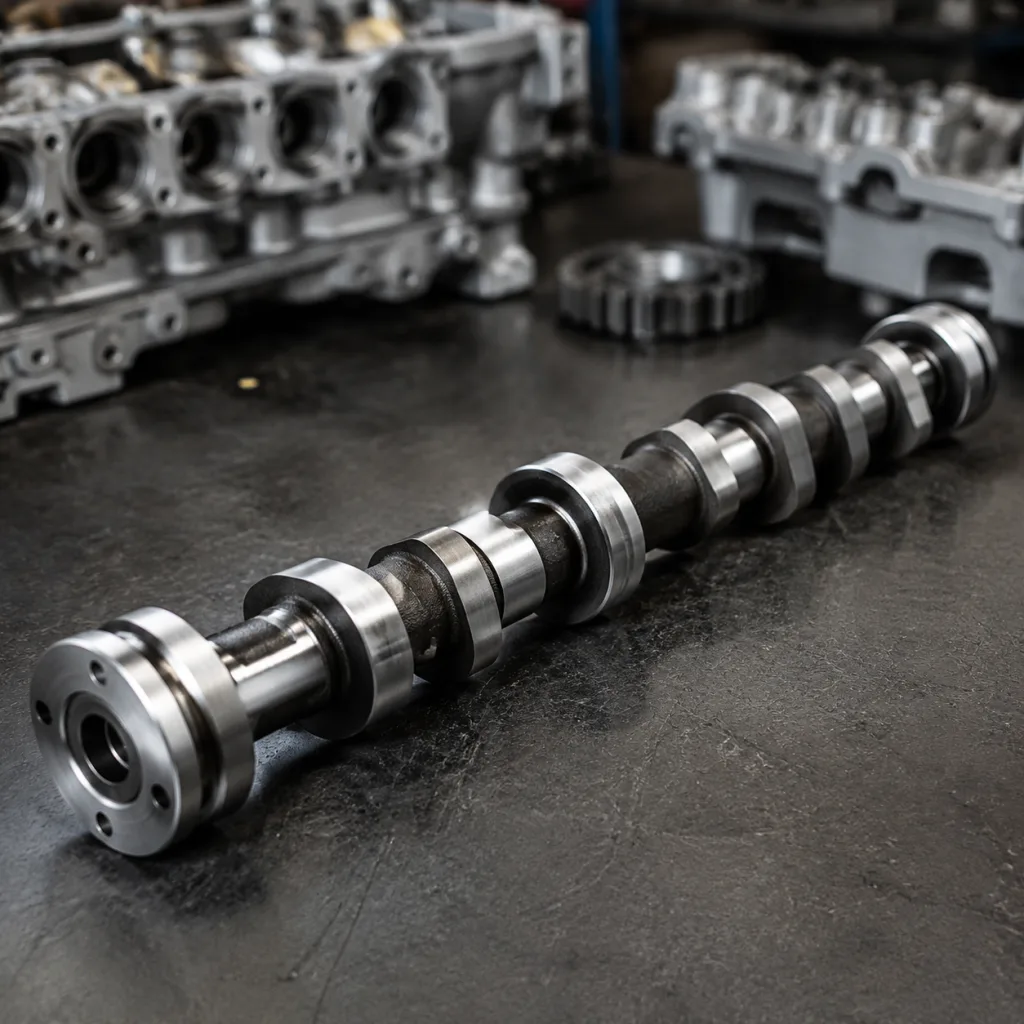
Sourcing a camshaft for Subaru Outback replacement is best treated as a controlled fitment program, not a routine engine-parts purchase. The Outback spans several engine families and regional variants, including naturally aspirated and turbocharged boxer engines with different intake and exhaust lobe profiles, journal dimensions, cam sensor trigger geometry, oil-feed drilling, and variable valve timing interfaces. Two shafts can look nearly identical and still cause cam/crank correlation faults, timing deviation, unstable idle, valvetrain noise, weak AVCS response, or accelerated journal and follower wear if profile, indexing, or phaser-interface geometry is even slightly off.
For procurement teams, the target is straightforward: OE-equivalent function backed by repeatable batch quality. In practice, that means confirming the exact application, setting measurable acceptance criteria, reviewing inspection evidence, and requiring export-ready traceability. Those controls matter to aftermarket distributors, engine rebuilders, importers, and service chains that need consistent installation results across multiple model years and engine codes. The sections below outline how to assess a camshaft for Subaru Outback replacement before nomination, what technical data to request from suppliers, and how to structure supply conditions that help reduce warranty exposure on serial orders.
Lock the Application Before You RFQ
Outback fitment is rarely a one-part-fits-all exercise. Before requesting pricing for any camshaft for Subaru Outback replacement, buyers should lock down the engine family, production range, and exact valvetrain position. Intake and exhaust camshafts can differ in lobe lift curve, lobe centerline, trigger pattern, oil-feed drilling, phaser mounting detail, and left/right bank orientation. On Subaru boxer engines, mirror-image parts are particularly easy to mix up when an RFQ is built from a photo or a short marketplace listing.
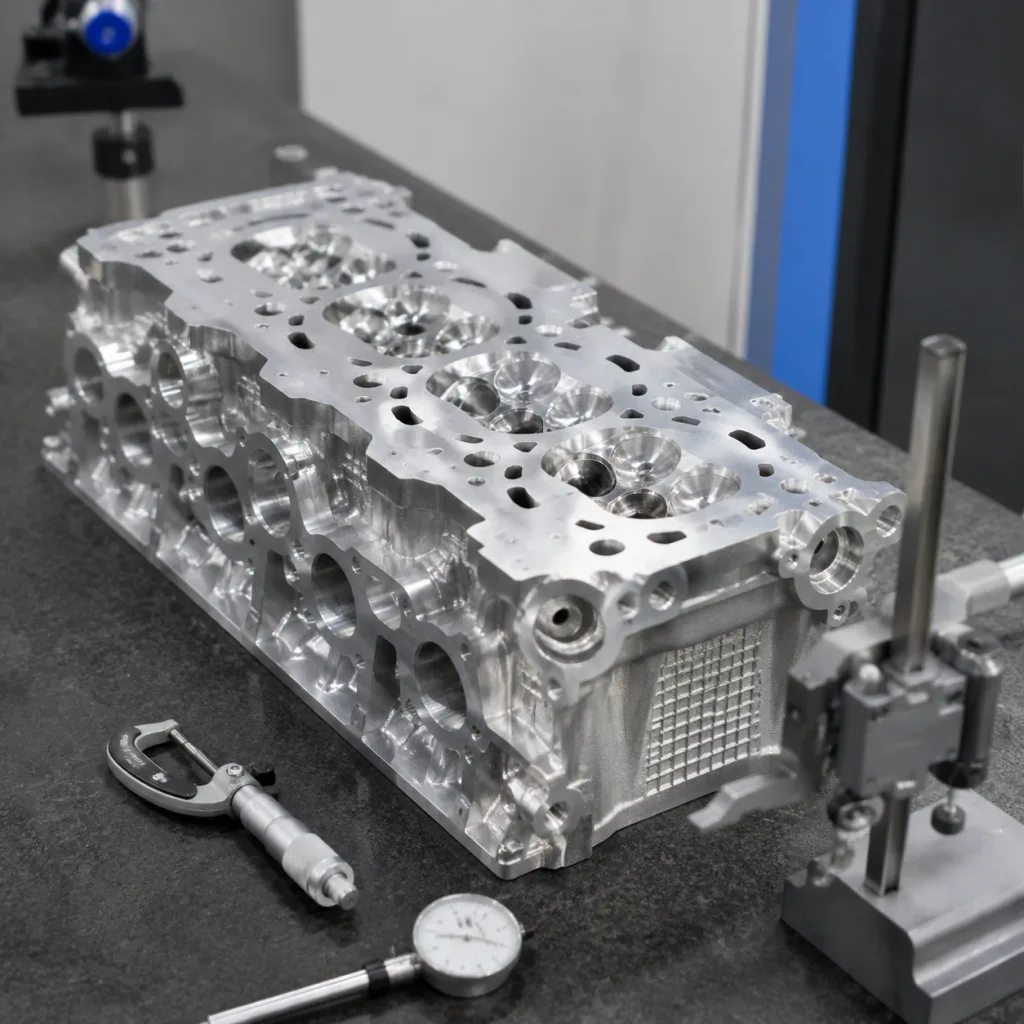
A disciplined RFQ gives the supplier enough detail to verify the application against a drawing, OE cross-reference, or approved sample. That becomes especially important in mixed catalogs covering older EJ-series engines, later FB-series engines, EZ six-cylinder applications, and turbo variants with different timing-control strategies. Even within the same displacement, changes in sensor targets, dowel locations, thrust arrangement, or AVCS interface can split fitment by model year or market.
Minimum RFQ data
- Vehicle year range and destination market
- VIN pattern or VIN-derived fitment where available
- Engine code, displacement, aspiration, and fuel system
- Intake or exhaust position
- Left or right bank where applicable
- Variable valve timing configuration, including whether the camshaft mates with Subaru AVCS phaser hardware
- OE part number, supersession history, old supplier number, or internal ERP cross-reference
- Whether the order is for shaft only or includes related hardware such as sprocket, reluctor, bolt kit, or seal
- Photos, sample, or teardown notes if the program involves field-return analysis
For buyers managing broad distributor ranges, it also helps to separate high-runner applications from low-volume variants before comparing quotations. That makes MOQ planning clearer, stocking safer, and mix-ups between left/right or intake/exhaust part numbers less likely. A low unit price on an unverified shaft rarely saves money if it leads to installation failures or return loops across several warehouses.
If a source cannot confirm the application against a drawing revision, approved sample, or validated interchange record, the quote should not move forward as an apples-to-apples comparison. Related engine parts can be reviewed in our catalog and the wider engine components range.
Define OE-Equivalent Criteria in Measurable Terms
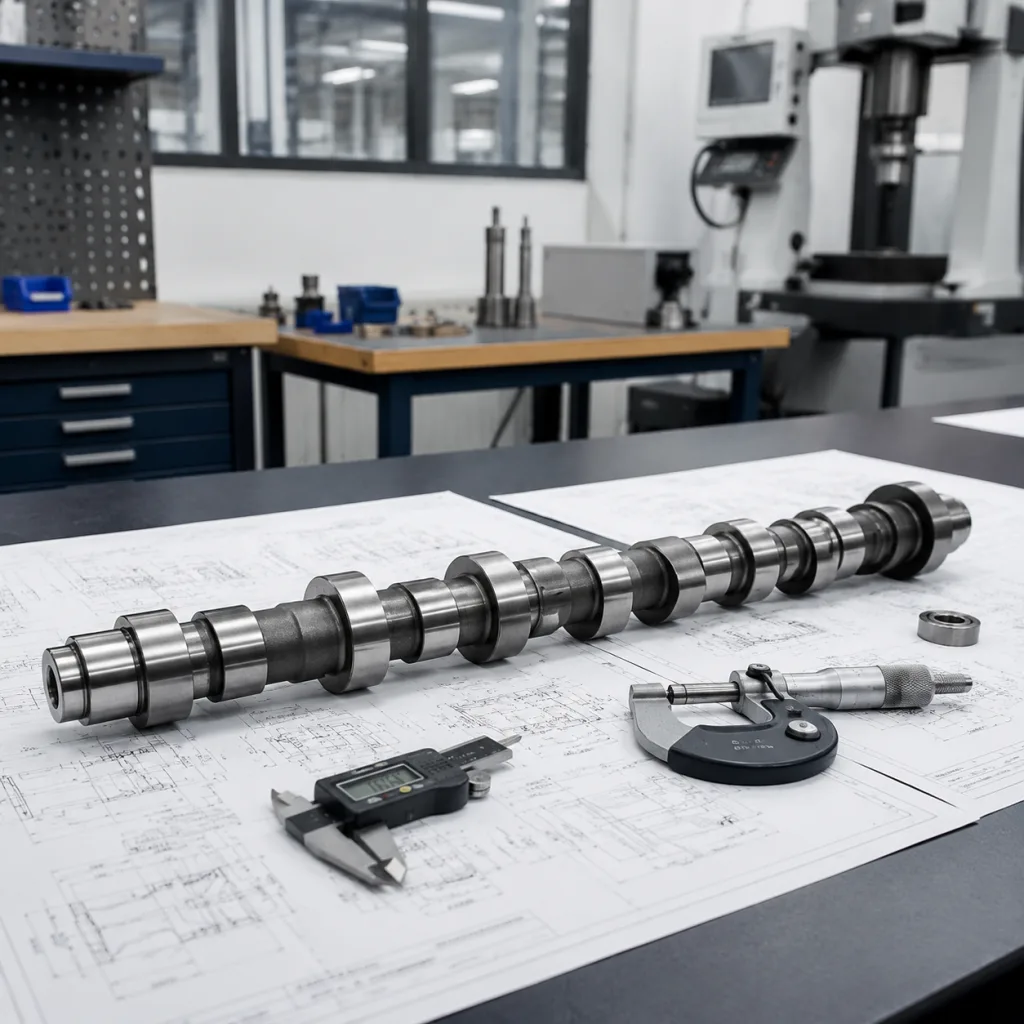
OE-equivalent should be defined in functional, measurable terms, not left at the level of marketing language. For a camshaft for Subaru Outback replacement, the part must do more than fit into the cylinder head assembly. It also needs to deliver the correct valve-event timing, bearing oil-film behavior, and sensor relationship once torqued and timed. Buyers should ask suppliers to connect their control plan directly to the drawing features that influence real service performance.
Values vary by engine code, metallurgy, and manufacturing route, but the table below shows the kind of controls procurement teams should review before approving a source.
| Control point | What buyers should verify |
|---|---|
| Overall runout | Checked between centers or on precision V-blocks; many programs target total indicated runout at or below 0.02-0.03 mm to protect journal loading and timing stability |
| Journal diameter | Measured by micrometer or air gauge per control plan; commonly controlled within ±0.005 to ±0.010 mm of nominal to maintain designed oil clearance |
| Journal roundness/cylindricity | Confirmed on critical bearing surfaces; often expected within 0.003-0.008 mm depending on print requirement |
| Lobe profile deviation | Checked by CMM or dedicated cam profile measuring machine; profile error is commonly held within 0.01-0.02 mm to preserve lift curve, duration, and ramp rate |
| Lobe indexing / angular phasing | Verified in degrees relative to datum journals or key features; for many aftermarket approval programs, angular error above about ±0.25° to ±0.50° is already a concern for timing and correlation behavior |
| Base circle and lift | Measured against print values so lash, effective valve lift, and cylinder-to-cylinder timing remain consistent |
| Journal surface finish | Measured to ISO 4287 parameters; typical target for bearing journals is around Ra 0.2-0.4 um, while functional lobe surfaces are often controlled near Ra 0.2-0.8 um depending on follower design and finishing route |
| Functional surface hardness | Confirmed per print and process route; many chilled-cast or induction-hardened cam lobes and journals are controlled in roughly the 55-62 HRC range, checked to ISO 6508-1 |
| Effective case depth / hardened layer | Required where induction hardening or equivalent treatment is used; depth should be documented at specified test locations to prevent premature spalling or lobe wear |
| Trigger, dowel, and key features | Angular position, concentricity, and feature size matched to the sensor and timing system to avoid cam/crank correlation faults |
| End faces and thrust surfaces | Flatness, perpendicularity, and finish controlled to prevent abnormal end play or poor phaser seating |
| Oil feed holes and internal passages | Burr-free machining, passage diameter, and cleanliness verified to protect AVCS oil control response and lubrication reliability |