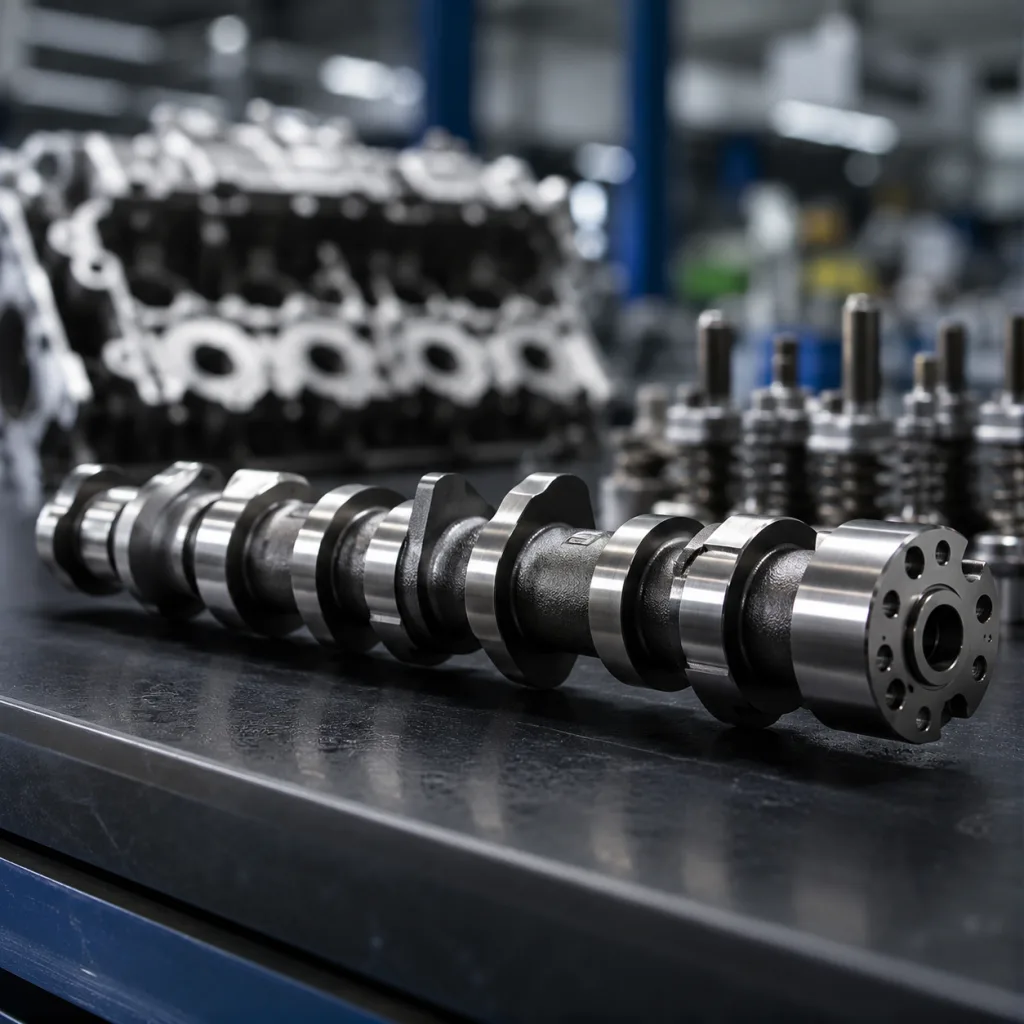
Camshaft for Lexus NX OE Equivalent: Replacement Guide
When buyers search for a camshaft for Lexus NX OE equivalent, they usually need a replacement that matches the original profile, fitment, and durability without adding installation or calibration risk. That means checking journal diameters, lobe lift, lobe centerline, phasing range, actuator compatibility, surface hardness, and runout, not just the part name. For procurement teams, the right choice is the one that installs correctly, works with the engine control strategy, and stays consistent from batch to batch. Driventus is an independent aftermarket manufacturer; brand names are referenced for fitment only. This article explains what OE-equivalent means in practice, which measurements matter, and how to qualify a supplier for repeatable supply. If you are sourcing for a warehouse, repair network, or regional distributor, the aim is a stable replacement part with documented validation and traceability.
What OE-equivalent means for Lexus NX applications
OE-equivalent is a technical claim, not a marketing label. For a camshaft replacement, it should mean the finished part matches the original installation envelope, valve timing intent, and material performance closely enough that the engine does not need adaptation. In practice, the replacement has to behave like the original part under cold-start oil pressure, normal operating temperature, and commanded VVT movement, not just fit the cylinder head on a bench.
For Lexus NX applications, confirm:
Journal diameter and bearing surface finish
Base circle, lobe lift, and lobe width
Cam timing index and phasing window
Variable valve timing actuator interface, if fitted
Thrust face geometry and axial control
Heat-treatment depth and surface hardness
Also confirm which side the camshaft applies to. Intake and exhaust profiles are often different even when the engine family is shared across trims. If the part is sold as OE-equivalent, ask for dimensional reports against the target drawing or a controlled master sample. A credible supplier should be able to show repeatability across production lots, not just a one-off inspection result, and explain any intentional dimensional offsets used to achieve the same functional target. In automotive sourcing terms, OE-equivalent means matching function and interface, not simply matching the outer shape.
Key dimensions buyers should confirm before ordering
One of the easiest sourcing mistakes is assuming the same engine family uses the same camshaft across every trim, market, and model year. That is rarely true. Before you place a purchase order, confirm the engine code, intake or exhaust position, and whether the unit uses VVT-i, dual VVT-i, or another cam phasing arrangement. You should also verify whether the replacement is a complete assembled camshaft or a bare shaft that requires transfer of sprockets, phasers, and sensors from the original unit.
Check item
Why it matters
Typical buyer risk
Journal diameter
Controls bearing clearance and oil film thickness
Noise, seizure, premature wear
Lobe lift and duration
Controls valve opening behavior
Power loss, rough idle, drivability faults
Timing sprocket/actuator interface
Ensures synchronization with the control system
DTCs, no-start, rough running
Axial thrust surface
Controls end play
Sensor errors, cam walk
Hardness and case depth
Drives wear resistance over service life
Fast lobe wear or scoring
Runout and straightness
Affects stability at speed
Vibration and timing drift
</tr></thead><tbody> </tbody></table>Do not rely on a catalogue picture or a partial cross-reference. A visually similar camshaft can still differ in thrust width, trigger geometry, or phase indexing. For structured sourcing, compare the part against our catalog and, if the job needs a broader engine bill of materials, review engine components. If your team is approving multiple replacements at once, keep the same engine-code and position check process for every line item so variants do not get mixed within the same vehicle family. For high-volume programs, ask for the OEM reference number, original markings, and a dimensional delta report against the incumbent part.
Validation tests that matter to procurement teams
A credible replacement program should include both dimensional inspection and functional validation. For camshafts, the minimum useful test set is not complicated, but it must be controlled and repeatable. The point is to show that the part can be installed, rotated, and loaded within the same envelope as the original component while maintaining consistent surface condition and geometry across batches.
Recommended verification set
Coordinate-measuring inspection of journals, lobes, key locations, and actuator features
Hardness testing after heat treatment, with values reported at the lobe and core where applicable
Runout and concentricity measurement on the finished shaft
Surface roughness verification on bearing and thrust surfaces, often specified in Ra
Magnetic particle or crack inspection where applicable
Dynamic balance check for the finished assembly, if supplied as a built unit
Relevant frameworks and references include IATF 16949:2016, ISO 9001:2015, REACH (EC) No 1907/2006 for material compliance, and internal durability validation aligned to engine duty-cycle expectations. For coating or corrosion programs, buyers may also ask whether test methods reflect realistic service exposure rather than only pass-fail visual checks. If a supplier cannot explain sample size, acceptance limits, and the revision level used for testing, the inspection report has limited procurement value. For many programs, a useful nonconformance threshold is explicit: total indicated runout at the critical datum, hardness range, case depth, and surface roughness should all be measured and recorded, not inferred.
For high-volume orders, ask whether the supplier can provide lot traceability back to heat number, machining run, and final inspection record. That information is especially useful when a field return has to be isolated to a specific batch. If you need to audit the manufacturing controls behind the part, review our quality system.
Material, heat treatment, and wear control
A camshaft lives or dies on metallurgical control. The base material, hardening profile, and post-machining finish all affect long-term wear, especially in engines with variable valve timing, stop-start driving, and frequent cold starts. If the metallurgy is inconsistent, the part may pass initial fitment but lose lobe profile integrity long before the expected service interval.
Driventus commonly aligns production control around:
Chilled cast iron or alloy steel, depending on application duty
Controlled quench-and-temper or induction-hardening route
Target case depth matched to lobe loading and contact stress
Finish grinding after heat treatment to control geometry and profile error
Cleaning standards to reduce abrasive residue before packaging
Treat surface finish and cleanliness as functional requirements, not packaging details. Oil contamination, residual abrasive, or poor deburring can accelerate wear in the first hours of operation and create avoidable warranty exposure. The practical question is simple: can the supplier hold the same hardness, lobe profile, and surface finish across repeated lots while keeping the process stable enough for volume replenishment? If the answer is unclear, the replacement part may fit on day one but fail early in service. That risk is higher on direct-ship imports where no lot-level inspection data is available and no change-control process is visible to the buyer. For OE-equivalent sourcing, ask for the material grade, hardening method, measured hardness range, and the recorded case-depth method used on production samples.
Sourcing model, lead time, and supply continuity
Procurement teams usually need one of three supply models: stock replacement, private label, or engineered cross-reference support. Each has different implications for lead time, MOQ, document control, and how much engineering input is needed before release. The right model depends on whether you are filling routine warehouse demand, building a branded program, or solving a fitment gap that does not have a clean catalogue equivalent.
Sourcing model
Best for
Buyer focus
Stock replacement
Fast replenishment
Availability, packaging, lot traceability
Private label
Distributor programs
Branding, carton control, forecast stability
Custom manufacturing
Hard-to-source applications
Drawing control, validation, change management
</tr></thead><tbody> </tbody></table>If your team needs non-catalog coverage, custom manufacturing is the right route when the existing cross-reference is incomplete or when you need controlled packaging, labeling, or regional compliance support. For a standard enquiry, use request a quote and specify engine code, position, quantity, and target market. Include your expected replenishment cadence as well, because that affects whether the supplier should quote a spot run, a stock-holding arrangement, or a scheduled production plan.
Driventus supports B2B supply to aftermarket distributors, OEM and Tier-1 buyers, and repair networks. Documentation is most useful when it includes batch traceability, inspection records, and revision control for any design changes. Where lead time is critical, ask for the actual production path: raw material intake, machining capacity, heat-treatment queue, finishing, inspection, and packing. That gives a more accurate delivery estimate than a simple factory-available date. A supplier that can state the bottleneck step, not just the ship date, is usually the one worth qualifying.
What to specify on a purchase order
A clear PO reduces dispute risk and speeds approval. For a camshaft replacement, the order should tell the supplier exactly which engine variant is being served, which side of the engine is required, and what validation evidence is needed before shipment. The more ambiguous the purchase order, the more likely you are to receive a part that is technically similar but not correct for the intended application.
Include the following minimum data:
Vehicle model and model-year range
Engine code and intake or exhaust position
OE cross-reference if available
Required packaging format and label language
Sample approval or first-article requirement
Inspection certificate level and traceability needs
Target annual volume and forecast window
If you are replacing an existing supplier, ask for a controlled comparison against the incumbent part and a documented delta report. That is more reliable than relying on a catalogue photo or a generic fitment note. It also helps avoid returns caused by variant engines within the same Lexus NX badge line. When the application is uncertain, specify the original camshaft markings, sensor trigger design, and any actuator carrier details so the supplier can check against the correct reference set before committing inventory.
For longer-term programs, it is also sensible to specify change-notification rules. If a supplier updates a coating, hardening cycle, packaging format, or source of raw material, the buyer should receive advance notice and a revised document pack before the next shipment is released. That protects both warranty risk and warehouse continuity.
Frequently asked questions
Not necessarily. OE-equivalent means it should match the required fit, function, and durability targets for the application. Buyers should still verify dimensions, hardness, actuator compatibility, and any position-specific geometry before ordering. The safest approval is based on drawing match, test data, and the correct engine code rather than the badge on the vehicle.
Ask for dimensional inspection data, hardness results, batch traceability, and the applicable quality certification set. IATF 16949:2016 and ISO 9001:2015 are useful starting points for automotive supply control. For higher-risk programs, request first-article samples, revision control, lot-level traceability back to the production run, and the material or heat-treatment record used for the part.
Model name alone is not enough. Confirm engine code, cam position, and any VVT configuration. That is the safest way to avoid a mismatch on installation. If possible, provide the OEM number, original part markings, and the vehicle's model-year range so the supplier can narrow the match correctly. Lexus NX vehicles have used multiple engine and timing configurations, so model-only sourcing is too broad for release.
If you need a verified replacement or a controlled cross-reference program, contact us for technical support and quotation details at /contact.html.