Camshaft for Jeep Compass Replacement: OE-Equivalent Supply
When sourcing a **camshaft for Jeep Compass replacement**, the biggest risk is usually not availability but fitment accuracy. The new shaft has to match the original lobe profile, journal diameters, bearing spacing, thrust control, timing-end interface, and valve-train compatibility. If it does not, the engine may leave the workshop with valvetrain noise, correlation faults, unstable idle, low manifold vacuum, misfire, or accelerated wear. On later applications, variable valve timing (VVT) hardware, cam sensor trigger geometry, and ECU correlation windows must also align with the original engine design. Driventus is an independent aftermarket manufacturer; any brand names are mentioned for fitment identification only. We support B2B buyers who need OE-equivalent dimensions, batch traceability, and repeatable inspection for aftermarket, wholesale, and service-channel programmes. The goal is simple: replace the failed camshaft with a part that matches the original engine architecture, is backed by inspection records, and installs without rework.
For distributors, importers, engine rebuilders, and service networks, speed alone is not enough. A camshaft for Jeep Compass replacement also needs a stable part definition across batches, with consistent machining, heat treatment, and inspection results that help workshops install the part without modification and reduce downstream warranty claims. That starts with identifying the exact engine variant, then validating the replacement against the removed shaft's geometry, timing interface, and operating conditions. A disciplined sourcing process protects engine performance, labour efficiency, warranty cost, and customer satisfaction across the supply chain.
What the replacement must match
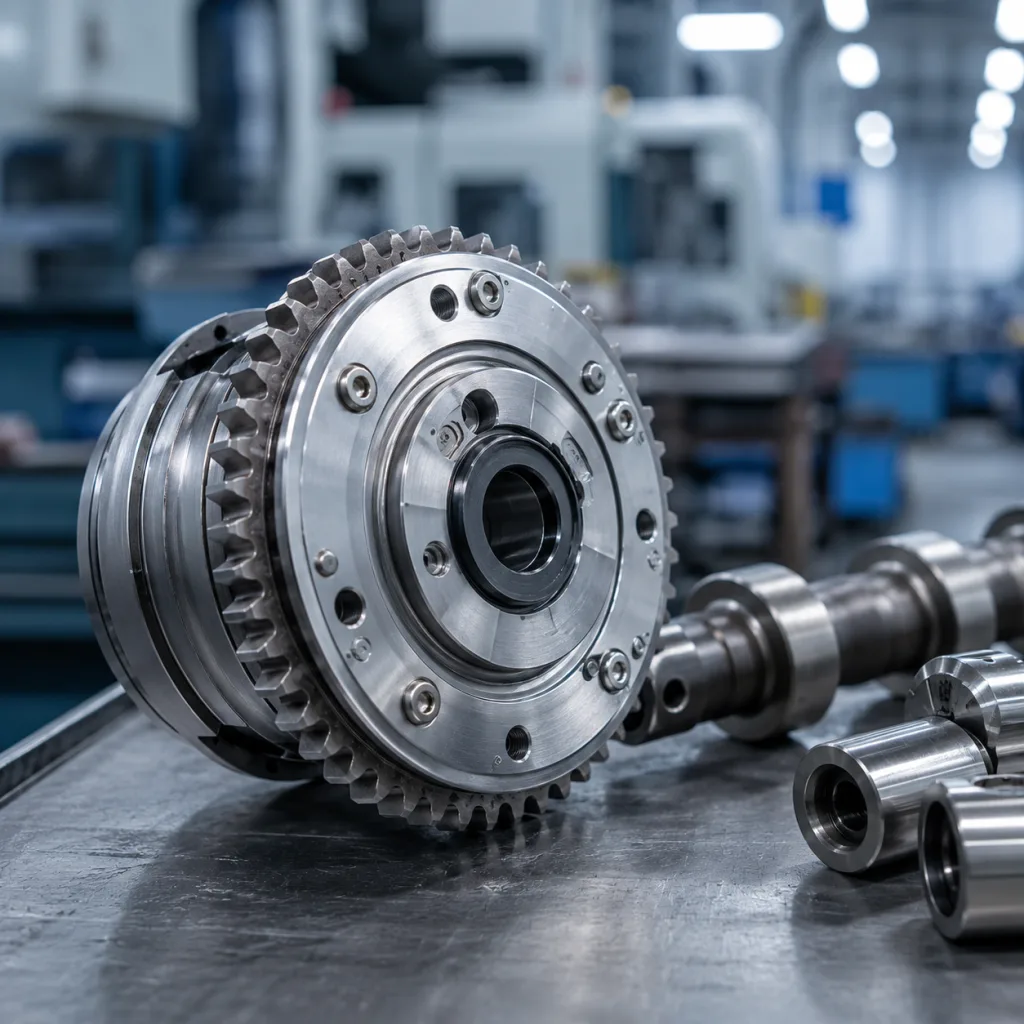
A camshaft is not defined by overall length alone. For a camshaft for Jeep Compass replacement, buyers should confirm the full geometry set: base circle, lobe lift, opening and closing ramps, lobe separation, journal diameters, journal spacing, thrust surfaces, oil-feed indexing, and every machined feature that interfaces with the phaser, sprocket, gear, bolt, dowel, or seal. If the engine uses VVT, the part also needs to preserve the correct phase relationship between the camshaft body, trigger feature, and timing-end interface.
This is where broad catalog descriptions can cause trouble. Two shafts may look similar on a shelf yet behave very differently once installed. Small deviations in lobe profile, indexing angle, or trigger-window machining can affect idle stability, emissions behaviour, cold-start quality, cam/crank correlation values, or high-rpm cylinder filling. In practice, that can create symptoms that appear electrical or fuel-related even though the underlying problem is mechanical timing error.
For replacement programmes, the safest approach is to confirm the engine code, displacement, valve count, cylinder-head revision, and timing-drive layout before purchase. That matters even more on global Jeep Compass applications, where petrol and diesel engine families, emissions packages, and head revisions can vary by market and production year.
The replacement should also match the original installation envelope, including hardness range, surface finish, straightness, concentricity, and end-play control. Journal concentricity affects hydrodynamic oil-film stability. Lobe surface quality has a direct impact on follower, rocker, or hydraulic lash adjuster life. Thrust control also matters, because excessive axial float can alter timing stability, create drive-end noise, or reduce phaser performance.
In practical terms, the replacement must match these critical areas:
Valve event geometry: lobe lift, duration at specified tappet lift, base circle, and lobe centreline must align with the intended engine calibration.
Bearing and support surfaces: journal diameters, spacing, oil-feed relationships, and surface finish must fit the cylinder head and cam caps without line-bore stress.
Timing-end interface: keyways, threads, bolt patterns, pilot diameters, dowel locations, and phaser or sprocket seating faces must be identical.
Sensor-related features: reluctor profiles, trigger windows, slots, flats, or machined target surfaces must generate the correct ECU signal.
Axial control: thrust faces, shoulders, and end machining must maintain specified end play under operating load.
That is the difference between a part that merely installs and one that consistently reproduces original engine behaviour across repeated repairs and repeated shipments.
Fitment checks before ordering
The quickest way to reduce returns is to gather the same information a competent workshop would capture during strip-down. On Jeep Compass applications, the exact engine variant matters more than the model badge. Use the VIN, engine code, model year, fuel type, and any OE reference visible on the removed shaft, timing cover label, or parts database.
A camshaft for Jeep Compass replacement should never be selected by vehicle name alone. The Compass platform has been sold with different engine families, cylinder-head designs, emission calibrations, and timing systems across regions. A change in cylinder-head revision, VVT arrangement, or sensor trigger design can make one shaft unusable in another engine, even if the external length looks similar.
Check
Why it matters
What to verify
Engine code
Confirms head layout, valve-train design, and timing hardware
VIN decode, engine plate, service records
Intake vs exhaust position
Prevents side-to-side interchange errors on DOHC engines
Removed-part marking, EPC data, head layout
VVT interface
Determines phaser compatibility and oil-control routing
Bolt pattern, pilot diameter, lock-pin features, oil feed holes
Roller follower or bucket type, lash control, spring load
</tr></thead><tbody> </tbody></table>Beyond the table, sourcing teams should standardise a pre-order checklist with workshop input. Useful confirmation points include:
1. VIN decode and engine code capture to identify the correct engine family and production variant. 2. Photos of both ends of the removed camshaft to confirm machining details, trigger features, bolt style, and phaser/sprocket interface. 3. Cylinder-head or cam-box photos to verify journal count, cap layout, and support architecture. 4. Removed-part measurements where practical, especially overall length, journal diameters, thrust width, and timing-end feature dimensions. 5. OE number cross-reference from the removed part, service literature, or dealer parts data.
If the application data is incomplete, ask for photos of the old part, the cam box, and the timing end before committing to volume. This is particularly useful for international buyers managing mixed fleets, CKD vehicles, engine swaps, or grey-market imports, where one model designation may cover more than one engine specification.
That is also where sourcing teams can use our catalog and, where relevant, engine components to narrow the variant set before issuing a purchase order. A careful fitment review at the ordering stage is usually far less expensive than field returns, workshop labour claims, or slow-moving incorrect inventory.
Materials and validation
A replacement camshaft should be produced from a material and heat-treatment route suited to cyclic contact stress, boundary lubrication at start-up, and long-term dimensional stability. In automotive camshaft programmes, common control points include hardness, effective case depth where applicable, core toughness, lobe-profile accuracy, journal concentricity, and post-grind finish. These characteristics need to be measured and recorded, not assumed from appearance.
For a camshaft for Jeep Compass replacement, material selection matters because the part operates under repeated Hertzian contact stress at the lobe/follower interface while also carrying torsional load from the timing drive and, on VVT engines, dynamic phase-control input from the phaser. If hardness is too low, lobe and journal wear can accelerate quickly. If surface hardening or case depth is inconsistent, the shaft may become vulnerable to scuffing, micro-pitting, spalling, or premature wear of the mating follower.
Typical aftermarket production routes include chilled cast iron or alloy steel, depending on engine design and mating valvetrain. Final suitability depends on matching the OE architecture, not simply choosing the harder material. For B2B buyers, the key question is whether the supplier controls the process well enough to reproduce the approved part specification from batch to batch.
Core measurements
Journal diameter and runout: typically checked with micrometers and dial indicators/CMM to support stable oil clearance and rotation.
Lobe lift and lobe-to-lobe repeatability: measured by profile equipment or CMM to preserve valve timing and cylinder balance.
Straightness after heat treatment and grinding: important to avoid localized bearing load and installation stress.
Surface roughness on journals and lobes: relevant to oil-film formation and follower life.
Phasing and trigger geometry: critical on engines using cam sensors or VVT hardware.
Validation areas that matter in supply programmes
Hardness verification: by Rockwell or equivalent method to confirm wear resistance at the specified surface and core condition.
Metallurgical review: to check material consistency, microstructure, heat-treatment response, and case/core transition where applicable.
Profile inspection: to verify each lobe reproduces the intended opening ramp, nose radius, and closing characteristics.
Concentricity and alignment checks: to ensure the shaft rotates correctly in the head without abnormal support loading.
Functional interface checks: to confirm fit with phasers, sprockets, fasteners, seals, and sensor-related components.
In B2B sourcing, validation is not only about approving a single sample. It is about repeatability from lot to lot. A capable supplier should be able to show how raw material control, turning, milling, heat treatment, grinding, cleaning, rust prevention, and final inspection are managed so the approved geometry stays stable over time.
For compliance and process control, our production system is structured around quality system practices aligned with IATF 16949:2016 and ISO 9001:2015. Where export documentation requires it, material and chemical restrictions are managed against REACH (EC) No 1907/2006. For corrosion or coating durability on protected surfaces and packed components, SAE J2527 may be used as a reference point in broader validation planning, although camshaft functional acceptance remains primarily dimensional, metallurgical, and interface-based. In emissions-regulated markets, the repair should remain within the vehicle's original certified engine configuration.
For buyers managing warranty exposure, asking for dimensional records, hardness results, traceability details, and confirmation of validation checkpoints is a practical way to separate true OE-equivalent sourcing from generic visual substitution.
How Driventus supports procurement
Driventus operates as a B2B supplier, so the buying process is built around repeatable specification control rather than one-off retail fitment. That matters for distributors, repair chains, importers, and engine rebuilders who need the same part to arrive with the same geometry, protection, and identification across multiple shipments.
When sourcing a camshaft for Jeep Compass replacement, procurement teams usually need more than an item code and a unit price. They need confidence that the approved part will remain consistent in lobe geometry, journal finish, material condition, packaging protection, and traceability across reorders. This becomes especially important when the product is supplied into workshop networks that expect low return rates, predictable installation, and stable warranty performance.
Our custom manufacturing path supports customer drawings, sample matching, and packaging requirements for private-label or neutral-label programmes. For standard replacement demand, we can support catalog-based sourcing, inspection records, and export packing suitable for warehouse handling.
Typical procurement controls include:
Dimensional inspection against an approved master sample or controlled drawing.
Batch traceability from raw material lot to finished pack.
Protective packaging for journals, lobes, and timing-end features during transit.
Documentation for incoming inspection, warehouse release, and claim review.
Variant control for engine family, intake/exhaust position, timing end, and sensor layout.
We also structure support around the way B2B buyers actually purchase:
For distributors: stable cross-reference management, barcode and label control, and repeat ordering against an approved fitment definition.
For importers: export documentation, anti-corrosion packing, and clear product identification for customs and receiving teams.
For service groups and repair chains: reduced fitment ambiguity, batch consistency, and support for workshop-facing technical verification.
For private-label programmes: brand-neutral packaging, custom pack specifications, and controlled product presentation.
For teams buying across multiple regions, this approach helps reduce returns and keeps the approved part definition stable as volumes scale. It also gives procurement, quality, and technical departments a shared reference point instead of leaving each stage of the purchase cycle to interpret fitment differently.
Installation and ordering checklist
A camshaft replacement should not be installed in isolation if the engine has been run with wear debris, damaged followers, low oil pressure, or oil starvation. Standard companion checks include lifters, rockers or followers, timing chain or belt components, seals, oil filter condition, and lubrication passages in the cylinder head. If the removed shaft shows scoring, pitting, bluing, or edge chipping, the root cause should be investigated before the replacement is put into service.
For any camshaft for Jeep Compass replacement, installation success depends on both the part and the surrounding engine condition. Even a correctly matched shaft can fail early if contaminated oil, damaged followers, restricted lubrication passages, collapsed lash elements, or worn timing hardware are left in service. That is why experienced buyers often align procurement with a broader repair-kit logic rather than treating the camshaft as a standalone line item.
Before placing an order, confirm:
Engine code, model year, and fuel type.
Intake or exhaust cam position where relevant.
Timing drive type and sprocket or phaser interface.
Sensor trigger arrangement at the drive or rear end.
Whether the engine uses VVT or a fixed cam arrangement.
Packaging format required for your warehouse or workshop network.
Before installation, workshops should also review:
Lubrication condition: inspect oil passages, pressure history, filter debris, sludge, and signs of restricted feed to the cam journals.
Mating components: replace or inspect lifters, followers, rockers, lash adjusters, and related wear surfaces.
Timing components: check chain or belt condition, guides, tensioners, phaser function, and fastener condition.
Cylinder-head condition: verify journal saddles, caps, bore alignment, and scoring at the cam support surfaces.
Installation procedure: use the correct torque values, tightening sequence, assembly lubricant, timing setup method, and ECU relearn/adaptation steps where required.
For B2B buyers, the ordering checklist should include both commercial and technical data:
1. Vehicle identification data: VIN, model year, engine code. 2. Removed-part evidence: photos, markings, and any OE numbers. 3. Application details: intake or exhaust position, VVT status, and timing-end design. 4. Quantity planning: sample order, monthly demand, or annual forecast. 5. Packaging and branding needs: neutral, private label, barcode format, or distributor-specific handling requirements.
For buyers building a longer-term supply plan, use request a quote with the VIN, engine code, sample photos, and target annual volume. That is the fastest way to determine whether the part can be supplied as a direct replacement or as a controlled custom build under custom manufacturing. A complete RFQ package reduces technical back-and-forth, speeds approval, and improves first-order accuracy.
Frequently asked questions
Use the VIN, engine code, intake/exhaust position, valve-train type, and timing-drive layout. If possible, compare the removed part against photos, OE reference data, and timing-end machining details before ordering. For a camshaft for Jeep Compass replacement, engine-specific verification is far more reliable than selecting by vehicle badge alone.
Yes. We can support batch-controlled supply with inspection records, traceability, export packing, and repeatable dimensional checks for wholesale and service-channel programmes. This helps distributors maintain a stable approved part definition across repeat orders and multiple warehouse locations.
Our quality controls align with IATF 16949:2016 and ISO 9001:2015. Where required, chemical compliance and documentation can also be supported against REACH (EC) No 1907/2006, with inspection and traceability practices structured for B2B sourcing requirements.
If you need fitment confirmation, a sample comparison, or programme pricing for a camshaft for Jeep Compass replacement, send your engine code, VIN details, sample photos, and volume target through /contact.html.