Connecting Rod Toyota Wholesale: Supplier Sourcing Guide
Buyers sourcing a connecting rod Toyota wholesale programme need more than a part number and a price. For engine rebuilders, distributors, and importers, the key issues are dimensional match, material grade, batch traceability, and supply stability. A connecting rod must hold correct centre-to-centre length, big-end and small-end bore, beam alignment, and cap fastener performance under repeated load. If those controls are weak, the result is noise, bearing wear, or repeat failure after installation. Driventus supplies engine and powertrain parts from Taizhou, Zhejiang, with IATF 16949:2016 and ISO 9001:2015 systems in place. We support wholesale buyers with OE cross-reference review, inspection records, and export packing for multi-country distribution. Driventus is an independent aftermarket manufacturer; brand names are referenced for fitment only. Use this guide to compare supplier capability before you place an order or request samples.
What wholesale buyers should verify first
For a Toyota connecting rod programme, procurement should confirm fitment data before negotiating volume. The part must match the engine family, pin diameter, crank journal size, centre distance, beam offset, and fastener specification. If the OE reference is known, record it in the format used by your ERP, for example OE 06A107065 when the keyword or catalogue record already provides it.
A supplier quote should include the following:
Material specification, usually forged steel or powder metal depending on application
Finished dimensional tolerances for big-end bore, small-end bore, and centre-to-centre length
Rod weight and matched-weight range by lot
Surface treatment, shot peening, and cap fastener details
Test documents, inspection plan, and traceability method
Minimum order quantity, packing method, and lead time
If these points are missing, the lowest unit price is rarely the lowest landed cost.
Comparison of supply options for Toyota programmes
Wholesale buyers usually choose between stock replacement parts, OE-equivalent aftermarket parts, and custom production. The right path depends on volume, part coverage, and validation effort.
Supply option
Best for
Typical control point
Buyer risk
Stock replacement
Fast moving SKUs
Existing tooling and inventory
Limited engine coverage
OE-equivalent aftermarket
Distributor programmes
Dimensional and metallurgical match
Needs validation testing
Custom manufacturing
Private label or niche engines
New tooling and PPAP-style approval
Longer lead time and higher setup cost
</tr></thead><tbody> </tbody></table>Driventus supports all three models. Our catalog is organised for catalogue cross-reference and export distribution; see our catalog and the engine family overview at /products/engine-components.html. For buyers comparing suppliers, the important question is not only whether the rod fits, but whether the supplier can repeat that fit across multiple batches.
Technical controls that protect engine durability
A connecting rod is a load-bearing component, so technical control matters more than appearance. For wholesale supply, the minimum checks should cover geometry, material verification, and fatigue risk.
Core inspection points
Centre-to-centre length within the specified tolerance for the engine family
Big-end and small-end bore roundness and taper within drawing limits
Beam twist and bend within accepted limits
Cap mating accuracy and fastener torque retention
Surface finish on bearing seat and pin bore areas
Mass variation control for matched sets
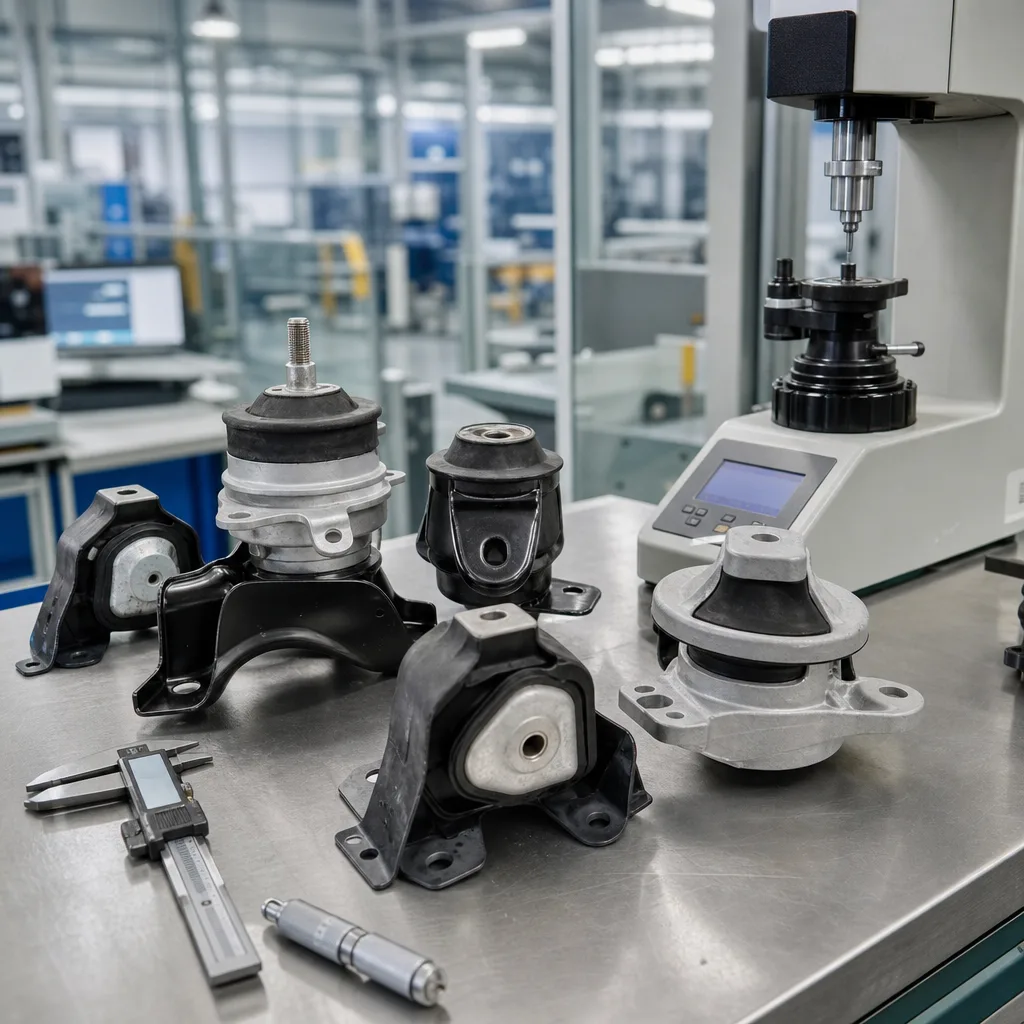
Typical validation work may include hardness testing, metallographic review, dimensional inspection with CMM or dedicated gauges, and batch-level load or fatigue testing where the programme requires it. For export markets, buyers may also request compliance support for REACH (EC) No 1907/2006 and material declarations.
If the rod is part of a rebuild package, the buyer should also confirm bearing clearance targets and crankshaft condition. A correct rod cannot compensate for incorrect journal size or oil contamination.
MOQ, lead time, and export planning
Wholesale sourcing is usually decided by service level, not only by unit price. Buyers should ask for MOQ by part number, standard lead time, and container loading assumptions before issuing a purchase order.
Driventus supports export supply to more than 60 countries and works with procurement teams that need predictable replenishment. Typical commercial points to clarify are:
MOQ per SKU and whether mixed-SKU cartons are allowed
Sample lead time versus mass-production lead time
Tooling ownership if the part is custom produced
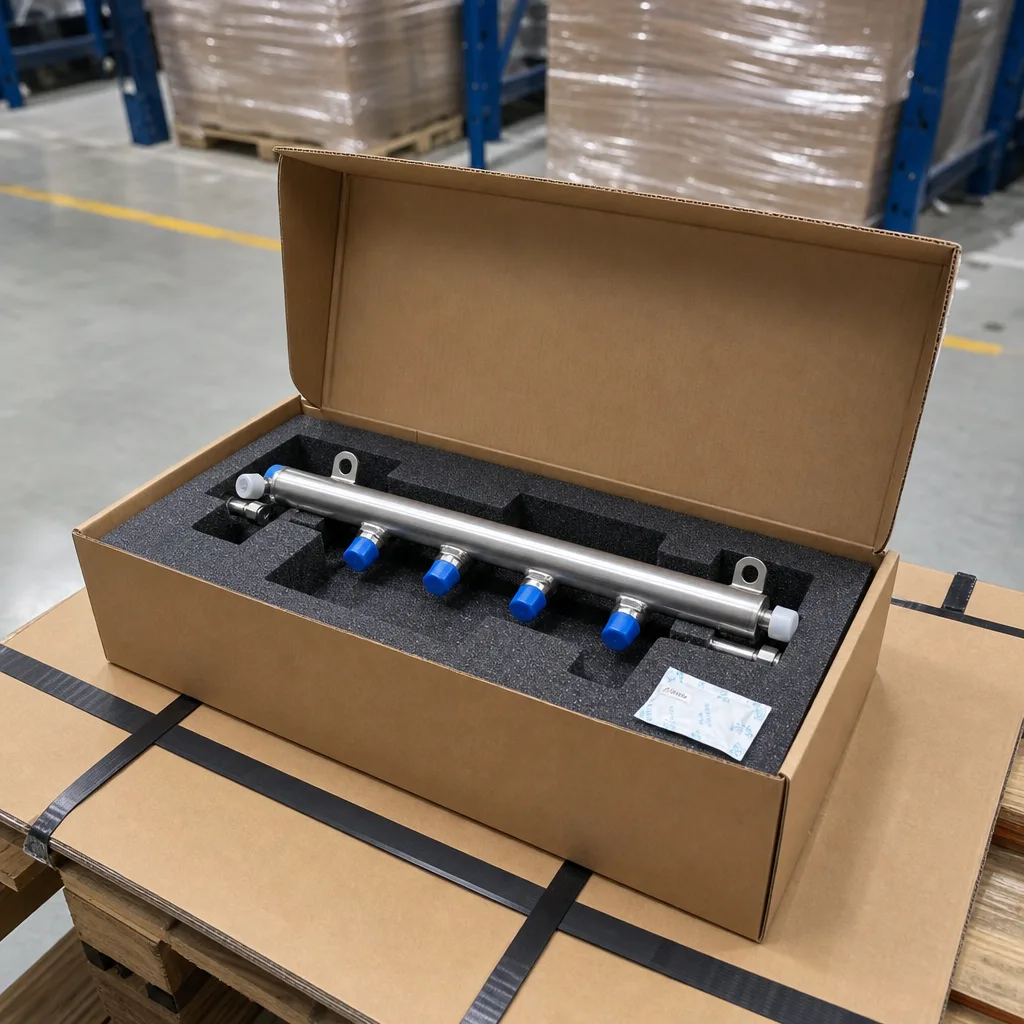
Carton count, pallet pattern, and moisture protection
Incoterms and destination port requirements
For national or regional distributors, this matters because a small mismatch in packaging or lead time can disrupt warehouse planning. If your programme requires private label packaging, barcode labelling, or engineered changes, our custom manufacturing page explains the available process.
Quality system and audit readiness
Procurement teams increasingly ask for evidence, not claims. A credible supplier should provide certificates, control plans, and traceable inspection records. Driventus operates under IATF 16949:2016 and ISO 9001:2015, which helps buyers structure supplier audits and document reviews.
See our quality system for certification details and process controls. A practical audit checklist for connecting rods should include:
1. Incoming material verification 2. Forging or machining process control 3. In-process dimensional checks 4. Final inspection and lot traceability 5. Packaging release and shipping record retention
For buyers in the EU, UK, US, Canada, Australia, and Brazil, documentation should be clear enough for internal QA, customs review, and downstream distributor support. If a supplier cannot show batch traceability from material to finished lot, the risk profile increases quickly.
How to request a quote for a Toyota rod programme
A complete RFQ speeds up pricing and avoids back-and-forth. Include the engine code, OE reference if available, annual volume, target market, and whether you need stock replacement or private label production. If the part is linked to a known OE reference, keep the format consistent in your system, such as OE 06A107065 when applicable.
For a faster response, attach:
Part drawing or sample photo with dimensions
Required material, finish, and fastener preference
Forecast volume by month or quarter
Destination country and preferred Incoterms
Any mandatory testing or document format
If you are building a broader engine programme, Driventus can also align rods with pistons, gaskets, water pumps, and other engine components. Start with a structured request through request a quote so the sourcing team can review fitment, packaging, and lead time together.
Frequently asked questions
Yes. We support wholesale orders for distributors, rebuilders, and importers, including stock and custom programmes. MOQ, lead time, and packaging depend on the specific engine family and order structure.
Yes, if the OE reference is provided by the customer or already present in the keyword or catalogue record. We use the number only for fitment reference and do not claim vehicle-maker endorsement.
Typical documents include dimensional records, material information, inspection reports, and certification evidence for IATF 16949:2016 and ISO 9001:2015. Additional compliance support can be discussed during RFQ review.
If you need pricing, fitment review, or a programme quote for Toyota connecting rods, send your requirements through /contact.html and our team will respond with next-step details.