Camshaft for Isuzu D-Max OE Equivalent: Sourcing Guide
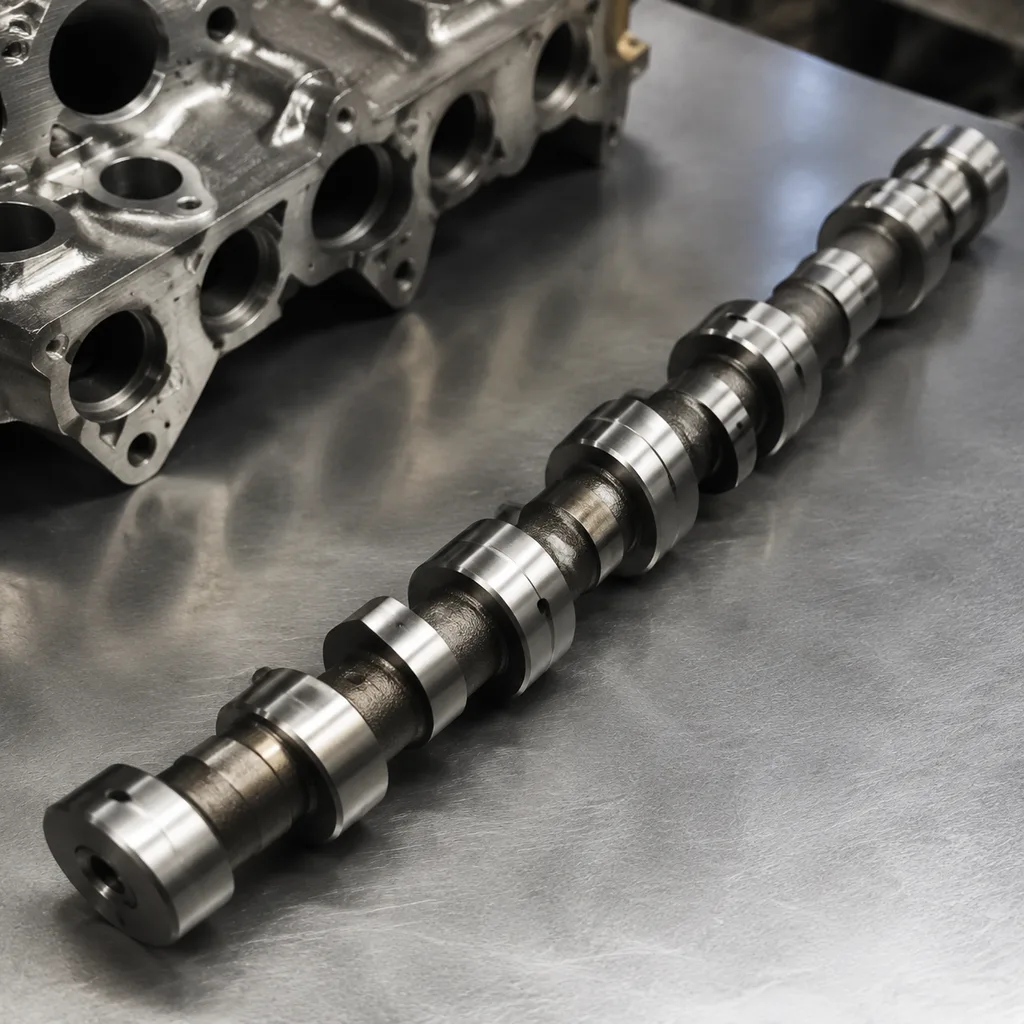
For buyers sourcing a camshaft for Isuzu D-Max OE equivalent, the real issue is fitment that survives production, service, and replenishment. The part has to match the OE profile, bearing journal diameters, lobe lift, base circle, timing events, and drive features before anyone signs off on it for stock or installation.
That makes this less of a generic replacement buy and more of a decision on risk. Driventus supplies engine components for B2B customers who need dimensional consistency, documented quality controls, and repeatable packaging for export programmes. Driventus is an independent aftermarket manufacturer; brand names are referenced for fitment only. The sections below focus on the failure modes, spec checks, validation gates, and commercial trade-offs that matter before a replenishment order goes live.
Where OE equivalent succeeds—and where it fails
An OE-equivalent camshaft is only useful if it reproduces the functional envelope of the original part. If the profile is right but the journals, phase, or hardness are off, the engine may still assemble cleanly and fail later under load. That is why buyers should treat this as a fitment-and-risk decision, not a visual comparison.
Common failure modes include:
Journal diameter drift that tightens bearing clearance or creates excess oil gap
Lobe lift variation that changes valve opening and closing events
Incorrect base circle that throws lash out of range
Drive-interface mismatch at the keyway, gear, or chain trigger
Finish or hardness problems that shorten service life even when dimensions look acceptable
A part can pass a quick bench check and still be wrong for the engine family. Confirm the exact engine code, model year, valve-train layout, and OE cross-reference before release. For first buys, request a golden sample approved against the OE sample, the inspection record, and the packing standard so the same decision can be repeated on every reorder.
What the spec sheet must prove
Procurement teams usually get into trouble when they compare only the headline dimensions. A proper spec sheet should prove the shaft is right at the points that control rotation, timing, and wear. If those controls are weak, the part may still be saleable but not stable.
Check item
Buyer expectation
Why it matters
Journal diameter
Match OE drawing; often controlled within ±0.01-0.03 mm depending on bearing design
Holds bearing clearance
Lobe lift
Match OE value within the approved tolerance band
Preserves valve events
Base circle
Match OE value across all lobes
Prevents lash error
Lobe phasing
Match OE angular position
Keeps timing consistent
Straightness
Controlled to the drawing limit, often ≤0.03-0.05 mm TIR
Reduces run variation
Runout
Checked on critical journals and thrust faces
Supports smooth rotation
Surface hardness
Verified by test report with the agreed hardness and case depth
Improves wear resistance
Surface finish
Measured on journals and lobes, often to a low Ra target
Reduces friction and scuffing
Traceability
Heat number, shift, date code, and batch ID
Speeds claims handling
Packaging
Oil-protected, corrosion-resistant, and lot-coded
Protects export inventory
</tr></thead><tbody> </tbody></table>Ask for inspection reports, material certificates, and first-article data, not just a brochure. If your quality team needs a purchase-order appendix, define the CTQs, the measurement method, the sample size, and the rejection rule for any out-of-tolerance characteristic. Driventus builds under IATF 16949:2016 and ISO 9001:2015 controls, which helps standardise dimensional checks and lot traceability across export orders.
How to validate the first lot
The first shipment should be treated like a controlled release, not a routine restock. Replacement camshafts need to be validated against the engine duty cycle, not just against a visual sample. That is especially important when the application is emissions-sensitive or the fleet sees long idle time, towing, or repeated cold starts.
A practical validation plan usually includes:
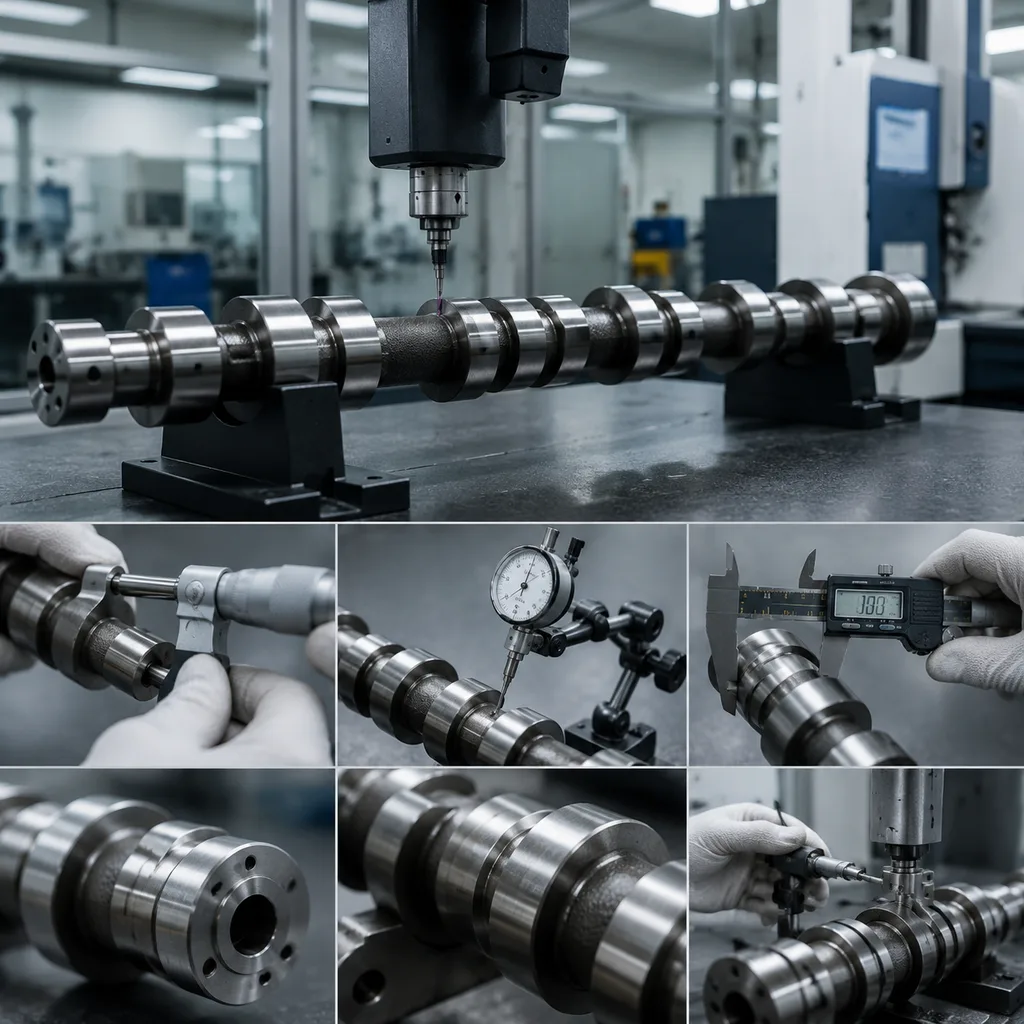
Incoming CMM or manual inspection of a statistically relevant sample, often 5-13 pieces for a pilot lot and a larger AQL-based sample for production lots
Surface roughness measurement on lobes and journals with the method stated on the report
Hardness testing at the lobe surface and core area to verify the heat-treatment profile
Visual and magnetic particle inspection for cracks, scoring, burrs, or grinding burns where required
Trial fitment in the correct cylinder head family with endplay, lash, and rotational smoothness recorded
Packaging drop and transit review for export orders, especially where cartons are palletised for sea freight
Relevant standards and methods may include:
IATF 16949:2016 for automotive quality management
ISO 9001:2015 for process control
REACH (EC) No 1907/2006 for substance compliance in the EU
SAE J2527 where corrosion or finish testing is part of the programme
ECE R-83 when the engine package must support emissions-related compliance in vehicle use
Buyers should also request batch traceability and retention samples for incoming quality review. If the order is for repeated replenishment, lock the approval gate into the PO and supplier quality agreement so the same gate applies to every reorder.
Buying for stock, service, or export
The commercial answer changes with the channel. A distributor stocking the part for fast moving service work needs repeatable supply and clean packaging. An export buyer needs pallet efficiency and stable lead times. A repair network needs confidence that the next carton matches the last one.
A workable MOQ framework is often:
5-20 pieces for prototype or approval orders
25-50 pieces for small distributor buys
100-300 pieces for pallet-optimised export orders, depending on packing density and SKU mix
Lead time should be defined by order type, not guessed after the PO lands. Stocked items may ship in 3-7 business days after confirmation, while non-stock or newly tooled supply can require 30-45 days for manufacture and inspection, plus 7-21 days for ocean freight depending on destination. If the programme is urgent, ask whether partial shipment, air freight on the first lot, or a rolling build schedule is available.
When comparing quotes, separate the unit price from the costs that move landed cost:
MOQ-based unit price with volume breaks
Private-label or barcode packaging surcharge
Tooling amortisation for a new profile or finish
Extra inspection fee for 100% sorting or third-party testing
Incoterm choice such as EXW, FOB, or CIF
If your organisation consolidates multiple engine families, Driventus can support our catalog alongside related powertrain items in engine components. When the OE part is no longer readily available, buyers often use a validated replacement strategy with documented fitment, controlled packaging, and clear cross-reference mapping. For a special finish, private label pack, or revised logistics terms, custom manufacturing can align the supply plan with warehouse and brand requirements.
What service fleets notice first
In service, the wrong camshaft does not always fail loudly. Often it starts as a slow drift in noise, idle quality, or wear. By the time the issue is obvious, the cost of a bad replacement is already higher than the cost of a stricter incoming check.
Typical symptoms of a poor match include cold-start noise, rough idle, low compression, premature follower wear, or oiling issues after a short service interval. That is why the incoming policy matters as much as the part itself.
Procurement teams should require:
Inspection against a controlled drawing using the same datum points as the supplier
Photo records of journals, lobes, thrust faces, and drive features
Material and hardness confirmation for each lot with a clear pass/fail rule
Sample fitting on the target cylinder head family with endplay, lash, and rotation torque recorded
A defined claim process for nonconforming parts, including containment, replacement timing, and root-cause feedback
If a field failure is reported, freeze the lot, check the lot code against retention samples, and compare the failed part to the approved master sample before releasing replacement stock. Driventus supports export programmes for aftermarket distributors, OEM and Tier-1 supply chains, and multi-location repair networks. If your team is building a re-order list for an Isuzu D-Max programme, start with a technical enquiry and cross-reference review through request a quote.
Frequently asked questions
Not exactly. It is a replacement part designed to match the OE functional and dimensional requirements. Buyers should confirm geometry, hardness, fitment, and packaging before approval, and should reject any part that falls outside the agreed tolerance band.
Ask for dimensional inspection reports, material certificates, hardness data, lot traceability, packaging specifications, and sample approval records. For EU programmes, also confirm REACH compliance where applicable, and request the quotation to state MOQ, lead time, and Incoterms.
Yes. Driventus supports custom manufacturing for defined fitment targets, packaging, and export requirements. Share the engine code, OE cross-reference, required annual volume, target MOQ, and preferred lead time so the quote can be matched to your programme.
If you are qualifying a replacement camshaft programme for the Isuzu D-Max, send your drawing, OE cross-reference, volume target, target MOQ, and required lead time to start review at /contact.html.