Camshaft for Buick Encore Replacement: OE Match Guide
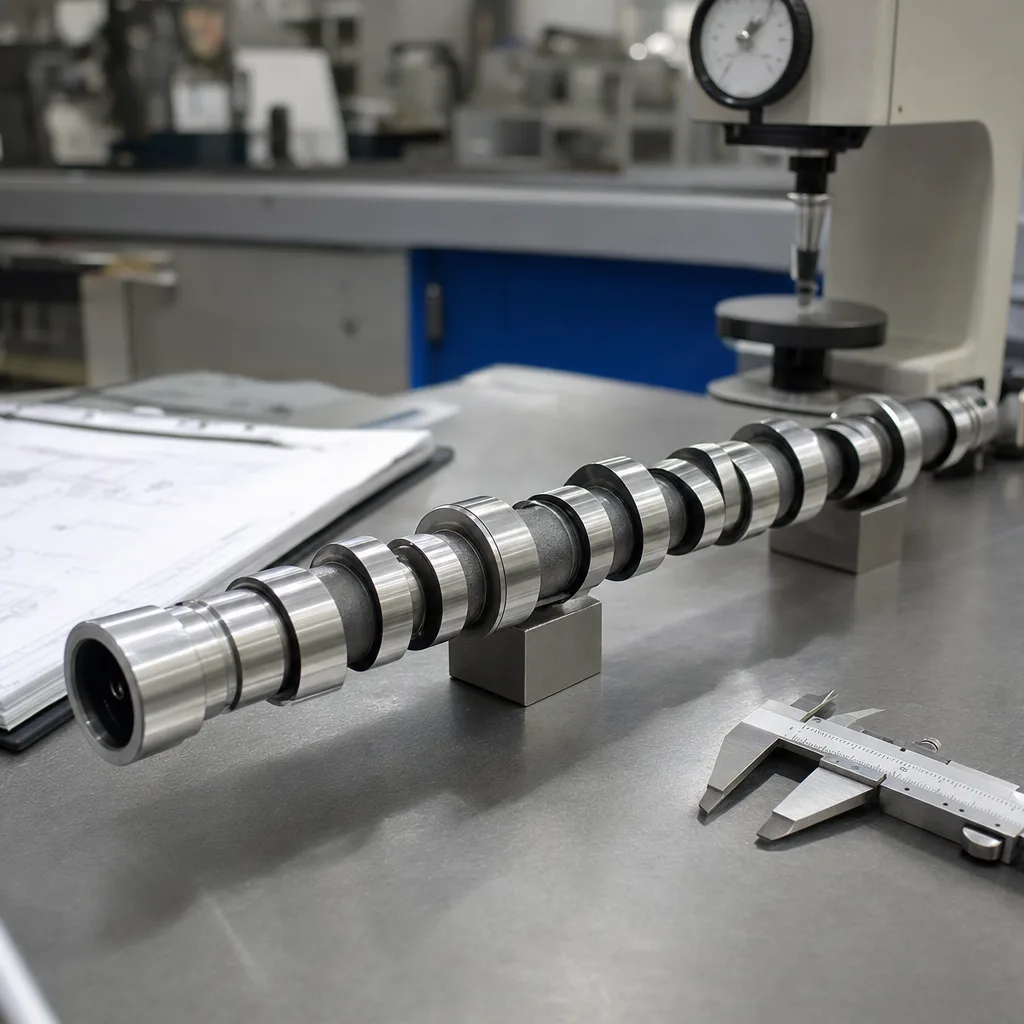
A camshaft for Buick Encore replacement must match the original geometry, timing events, and surface condition closely enough to restore engine performance without introducing valvetrain noise, misfire, or accelerated wear. For procurement teams, the key question is not only whether the part fits, but whether it is dimensionally stable, heat-treated correctly, and validated against the same functional requirements as the OE design. Driventus supplies engine and powertrain components for aftermarket and B2B programs, with production controlled under IATF 16949:2016 and ISO 9001:2015. Driventus is an independent aftermarket manufacturer; brand names are referenced for fitment only. For Buick Encore applications, replacement sourcing should confirm engine code, cam lobe profile, journal diameter, thrust surface condition, and any associated sensor trigger features before release. This article outlines the points buyers should verify before placing a purchase order or approving a sample.
What a Buick Encore camshaft replacement must match
For a replacement camshaft, dimensional equivalence matters more than catalogue description. The buyer should confirm:
Overall length and bearing journal locations
Journal diameter and roundness
Lobe lift, base circle, and lobe separation
Thrust face geometry
Cam sensor trigger features, if used on the engine variant
Heat treatment depth and surface hardness
A suitable replacement should install without modification and preserve original valve timing events within the required tolerance band. For mixed-source programmes, insist on written dimensional inspection records and first-article approval. If the application uses OE 06A107065-style cross-reference data or similar part-number mapping, verify the engine family and build range before release.
Driventus supports replacement programmes through our catalog and engine component supply for B2B buyers who need controlled fitment data.
Key technical checks before purchase
Procurement teams should request a specification sheet and compare it with the removed part or OE reference. A practical checklist is below.
Check item
What to verify
Why it matters
Journal diameter
Match within drawing tolerance
Prevents oil clearance issues
Lobe profile
Lift, duration, and phasing
Preserves valve timing
Material
Typically chilled cast iron or billet steel, per application
Affects wear and fatigue resistance
Hardness
Verify surface and core values
Reduces scuffing and lobe wear
Finish
No scoring, porosity, or burrs
Improves assembly quality
Trigger wheel features
Count and location, if fitted
Supports sensor timing
</tr></thead><tbody> </tbody></table>For engines with emissions-related calibration sensitivity, the replacement must not alter the timing strategy in a way that could affect compliance with the vehicle platform's intended design. Reference standards such as ECE R-83 where applicable to the vehicle system, and request material declarations for REACH (EC) No 1907/2006 when required by your market.
Validation testing expected from a serious supplier
A camshaft programme for aftermarket or remanufacturing supply should include objective validation, not only dimensional inspection. Buyers should ask for the test plan used for the exact part family.
Common validation items include:
Runout measurement on journals and total assembly
Surface hardness and case depth verification
Magnetic particle or crack detection for ferrous parts
Profile measurement against master data
Salt spray or corrosion protection checks for packaged inventory
Functional engine test or rig test, where applicable
For programmes sold into North America or other markets with specific durability expectations, buyers may also ask whether testing aligns with recognised methods such as SAE J2527 for corrosion-related evaluation, when relevant to the component finish and packaging system.
Driventus operates under a documented quality system aligned with IATF 16949:2016 and ISO 9001:2015, which supports repeatability across production lots.
Replacement use cases by buyer type
Different buying channels need different levels of documentation.
Aftermarket distributors and wholesalers
These buyers usually need stable part numbering, carton consistency, and low return rates. They should require label traceability, batch coding, and confirm whether the camshaft is supplied with matched installation notes or related components.
OEM and Tier-1 suppliers
These programmes normally need stricter PPAP-style documentation, tighter dimensional control, and change notification discipline. If the part is part of a broader assembly family, Driventus can support custom manufacturing for controlled variants and drawing-based production.
Repair chains
Multi-location repair operators need predictable fitment and low labour risk. The replacement should arrive ready for installation, with no field grinding, no rework, and no mismatch between box label and part geometry.
Common failure points when the wrong camshaft is fitted
A mismatch often shows up quickly after installation. Typical symptoms include rough idle, misfire codes, ticking noise, low power, and abnormal wear on followers or rocker interfaces. Root causes usually trace back to one of four problems:
1. Incorrect lobe profile or timing event 2. Journal size outside tolerance 3. Damaged shipping protection leading to scoring 4. Missing or incorrect sensor trigger geometry
Before closing a claim, inspect the camshaft against the purchase specification, confirm packaging integrity, and compare the removed component with the replacement. For a replacement programme, the supplier should be able to explain the dimensional controls used at incoming inspection, machining, heat treatment, and final audit.
When buyers need documentation, quotations, or a sample review, they can request a quote for the relevant Buick Encore application.
What procurement teams should request from Driventus
To reduce sourcing risk, ask for the following before approval:
Cross-reference confirmation by engine code and model year range
Drawing or dimension report for critical features
Material and heat-treatment summary
Lot traceability and inspection records
Packaging standard for export handling
Change-control statement for future revisions
Driventus is an independent aftermarket manufacturer; brand names are referenced for fitment only. The company manufactures engine and powertrain parts in Taizhou, Zhejiang, and exports to 60+ countries. For buyers consolidating multiple SKUs, the broader product range is available in our catalog, including adjacent engine components that may be bundled into supply programmes.
Frequently asked questions
Match the engine code, OE cross-reference, journal sizes, lobe profile, and any sensor trigger features. Do not rely on model name alone, because Buick Encore variants can use different engine families and timing hardware.
Request a dimension report, material and heat-treatment summary, lot traceability, packaging details, and a change-control statement. For regulated markets, ask for REACH documentation where applicable.
Yes. Driventus supports aftermarket and OEM-style programmes with drawing-based production, inspection records, and export packaging. Use the contact form to discuss volume, target market, and technical requirements.
If you need a replacement camshaft programme for Buick Encore applications, send the engine code and target market for technical review and quotation via /contact.html.