Camshaft for Audi A4 Aftermarket Replacement: Fitment Guide
Choosing a camshaft for Audi A4 aftermarket replacement is a fitment exercise, not a branding exercise. Buyers need the correct base circle, journal diameter, lobe profile, sensor trigger arrangement, and surface hardening profile for the exact engine code. A mismatch of even a few tenths of a millimetre can change valve timing, idle quality, and wear life. Driventus is an independent aftermarket manufacturer; brand names are referenced for fitment only. Where the application uses an OE cross-reference such as OE 06A107065, verify engine code, bearing width, and trigger wheel geometry before release. This article outlines the checks procurement teams should request from suppliers, including dimensional control, material data, and validation evidence. It also shows how to compare catalog listings with the documents needed for a controlled replacement program.
Fitment checks before purchase
For a replacement camshaft, the first risk is not material quality. It is the wrong application mapping. Audi A4 engines across different model years can share a family name while using different valve timing, sensor pattern, or bearing layout. Buyers should confirm the engine code, the cylinder head variant, the number of lobes, and whether the cam drives intake, exhaust, or both shafts.
A practical sourcing file should include:
- Engine code and model year range
- OE cross-reference and revision suffix
- Intake or exhaust designation
- Trigger wheel count and phasing
- Bearing journal count and width
- Hydraulic or mechanical lifter compatibility
If the supplier cannot explain those points in writing, the part is not ready for procurement release.
Dimensional match and functional equivalence
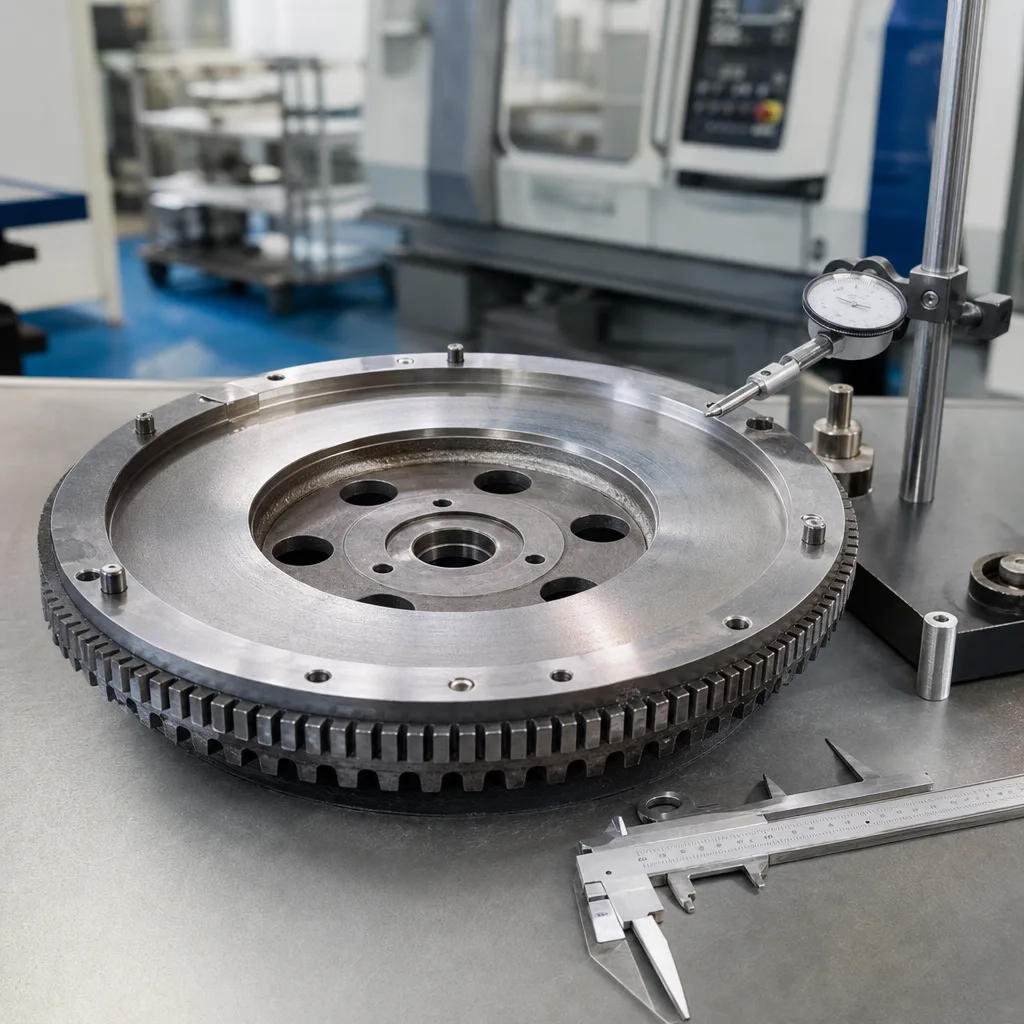
For an OE-equivalent replacement, dimensional control matters more than catalog language. Ask for a drawing or inspection report that shows the critical features against the target application. If the camshaft is marketed as a direct replacement, the supplier should be able to prove journal size, lobe lift, overall length, nose geometry, and trigger feature position.
| Check point | What to verify | Why it matters |
|---|---|---|
| Journal diameter | Measured against the drawing tolerance | Controls oil clearance and bearing life |
| Lobe lift and duration | Matched to the application profile | Preserves airflow, torque curve, and idle stability |
| Sensor trigger features | Tooth count, phasing, and keyway position | Prevents ECU sync errors |
| Overall length and thrust faces | End float and axial location | Avoids chain alignment issues |
| Surface finish | Ra target on critical running surfaces | Reduces scuffing during break-in |