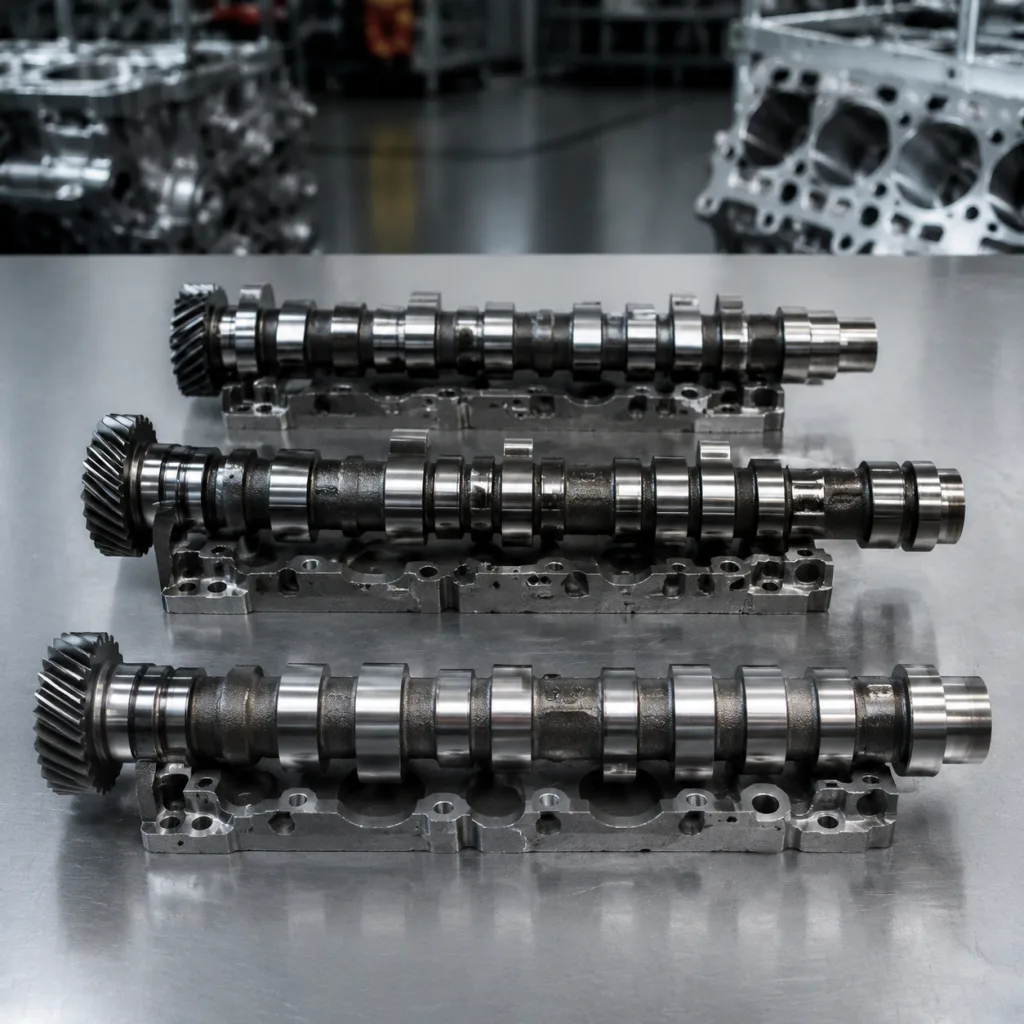
Camshaft Chevrolet OE Equivalent Sourcing Guide
A camshaft Chevrolet OE equivalent should restore OE-style valve timing, lift, lubrication control, durability, and installation fit without suggesting vehicle-maker approval. That sounds simple until a shipment reaches incoming inspection: one supplier quotes from a catalogue photo, another from a reverse-engineered sample, and a third from a controlled drawing with profile data, hardness records, and packaging controls. Those are not the same risk.
For B2B buyers, the real question is not “Can you supply this Chevrolet camshaft?” It is “Can this supplier repeatedly hold the lift curve, journal geometry, thrust location, timing interface, sensor or drive features, material condition, cleanliness, and export protection that our market expects?” Practical targets often include journal diameter held within drawing limits such as ±0.010–0.020 mm where applicable, lobe lift checked against the approved master profile, runout commonly below 0.03–0.05 mm depending on length, and corrosion protection suitable for 6–12 months of storage.
Those controls matter for distributors serving mixed Chevrolet repair demand across North America, Latin America, Europe, Australia, and other export markets. Driventus manufactures engine components in Taizhou, Zhejiang under IATF 16949:2016 and ISO 9001:2015 systems, with inspection records aligned to B2B sourcing requirements. This guide gives buyers a sharper way to evaluate OE-equivalent camshafts through drawings, samples, validation data, MOQ and lead-time logic, and supplier process controls. Driventus is an independent aftermarket manufacturer; brand names are referenced for fitment only.
Start With the Decision: What Must Match, and What Only Looks Similar?
OE equivalence is a functional engineering claim, not a branding claim. It means the replacement camshaft is designed to match the geometry, material behaviour, fit, and durability required by the original application. It does not mean approval, endorsement, or supply status with the vehicle manufacturer.
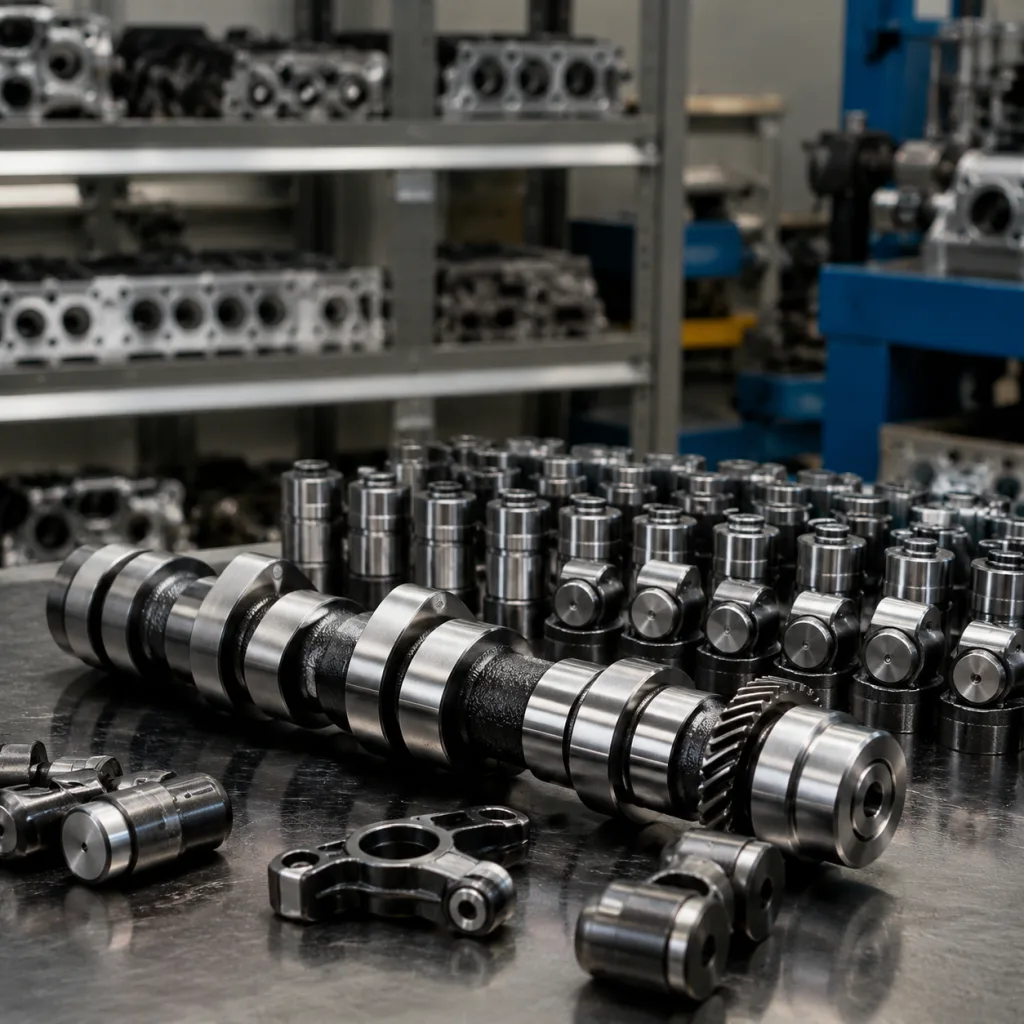
A useful sourcing decision starts by separating appearance from function. Gross length, number of lobes, and a familiar casting shape are not enough. A camshaft Chevrolet OE equivalent should be compared across the requested reference, physical sample, approved drawing, inspection plan, packaging specification, and traceability file.
Use this decision frame before accepting a quotation:
- Lobe profile: Does the supplier confirm valve lift, opening and closing events, base circle, flank acceleration, nose radius, and lobe separation angle? Ask for profile overlay data, not only maximum lift.
- Journal geometry: Are diameter, width, oil groove location, roundness, cylindricity, and surface finish controlled for the bearing system? Purchasing specs often target journal diameter around ±0.010–0.020 mm, but the approved drawing must govern.
- End features: Are distributor drive, timing gear or sprocket interface, reluctor or sensor details, threaded holes, dowel position, fuel-pump eccentric features, and thrust faces verified rather than assumed?
- Material route: Is the camshaft chilled cast iron, ductile iron, forged steel, or billet steel for a technical reason tied to follower type, spring load, and lubrication conditions?
- Oil and cleanliness control: Are oil holes, grooves, chamfers, edge breaks, washing, and deburring specified to reduce early wear and contamination risk?
When a buyer provides a generic OE-style reference, application list, existing supplier number, drawing, or sample, Driventus validates the match against customer-approved technical data. The RFQ should state whether the programme is catalogue replacement, private label, fleet service, or PPAP-controlled supply. That single choice affects tooling cost, validation depth, MOQ, price, and lead time. We do not publish or invent brand-owned part numbers. Buyers can review related engine parts in our catalog and the engine component range at /products/engine-components.html.
Where Camshaft Programmes Fail: Dimensional Risks to Control First
Most camshaft sourcing failures are not dramatic at first. The engine may start, but idle quality changes. Oil pressure behaves oddly. Noise appears after installation. Warranty returns arrive weeks later. Small geometry errors can affect emissions performance, valvetrain durability, and installer confidence.
The fastest way to reduce risk is to separate critical-to-function characteristics from general machining dimensions. That makes supplier quotations easier to compare and gives incoming inspection a real acceptance standard. The values below are sourcing targets only; final limits should come from the approved drawing, reference sample, or customer standard.
| Failure mode to prevent | Inspection item | Typical verification method | Actionable sourcing target |
|---|---|---|---|
| Low oil pressure, bearing noise, seizure risk | Journal diameter and roundness | Micrometer, air gauge, roundness tester | Diameter commonly controlled around ±0.010–0.020 mm; roundness often ≤0.005–0.010 mm for precision journals |
| Poor idle, power loss, valvetrain noise | Cam lift and base circle | Cam profile measuring machine | Check every lobe; lift deviation commonly targeted within ±0.02–0.05 mm against master data |
| Incorrect valve timing | Lobe phase angle | Rotary encoder profile check | Confirm intake/exhaust event timing; deviations above about 0.5–1.0 crank degree can be commercially risky |
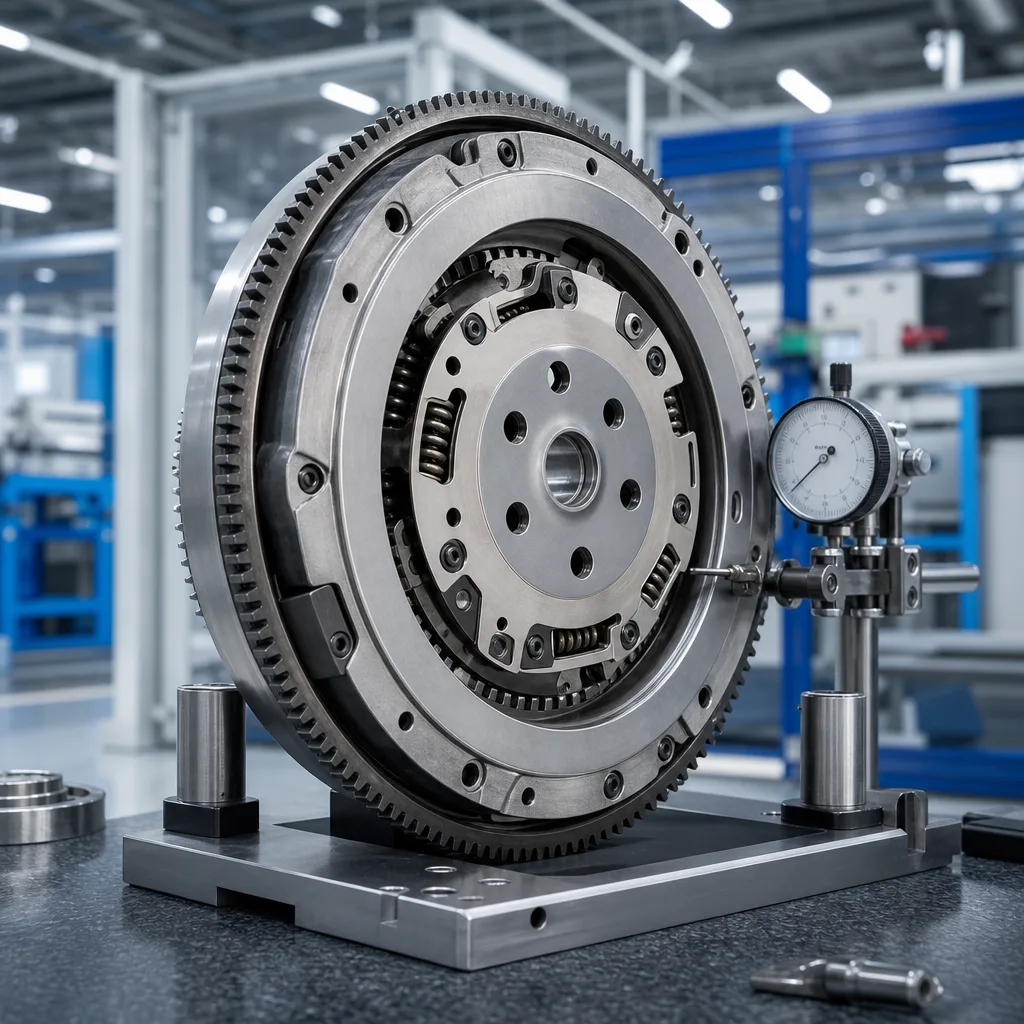
| Axial movement, thrust wear, timing instability | Thrust face width and runout | Dial indicator, CMM | Control axial movement; runout targets are often ≤0.03–0.05 mm depending on cam length |
| Blocked lubrication or burr-related wear | Oil hole location and chamfer | Visual inspection, pin gauge, CMM | Specify hole position, burr-free edge break, and 100% visual check for blocked passages |
| Accelerated lobe or journal wear | Surface roughness | Profilometer | Define by surface: journals often Ra 0.2–0.4 µm, lobes often Ra 0.4–0.8 µm unless drawing states otherwise |
| Premature wear from weak surface condition | Hardness depth or chilled layer | Rockwell testing, microstructure section | Lot validation may require destructive sample testing and section photos |
| Installation difficulty or rotation drag | Straightness after final grind | V-blocks, centers, dial gauge | Typical target ≤0.03–0.06 mm total indicator reading, adjusted by shaft length |
| Supplier question | Why it matters | Strong answer |
|---|---|---|
| Are IATF 16949:2016 and ISO 9001:2015 certificates valid for the production site? | Certificates outside the actual site or scope add little control | Supplier provides current certificate copies, issuing body, site address, and scope |
| What technical file supports the quote? | Catalogue images do not control geometry | Drawing, sample review, control plan, gauge list, and inspection method are identified |
| Is PPAP-style documentation available if required? | Private-label, fleet, and Tier-1 programmes often need evidence beyond samples | PSW, dimensional results, material records, process flow, control plan, FMEA, and capability data can be supplied where applicable |
| What drives MOQ? | MOQ may depend on blanks, tooling, setup, packaging, or consolidation | Supplier separates existing catalogue MOQ from new tooling or low-volume Chevrolet references |
| What is the real lead time? | Sample, tooling, and mass production timing are often mixed together | Typical planning ranges are stated: 15–30 days for available-sample review, 30–60 days for tooling or fixtures, and 45–75 days for first mass production after approval, depending on complexity and capacity |
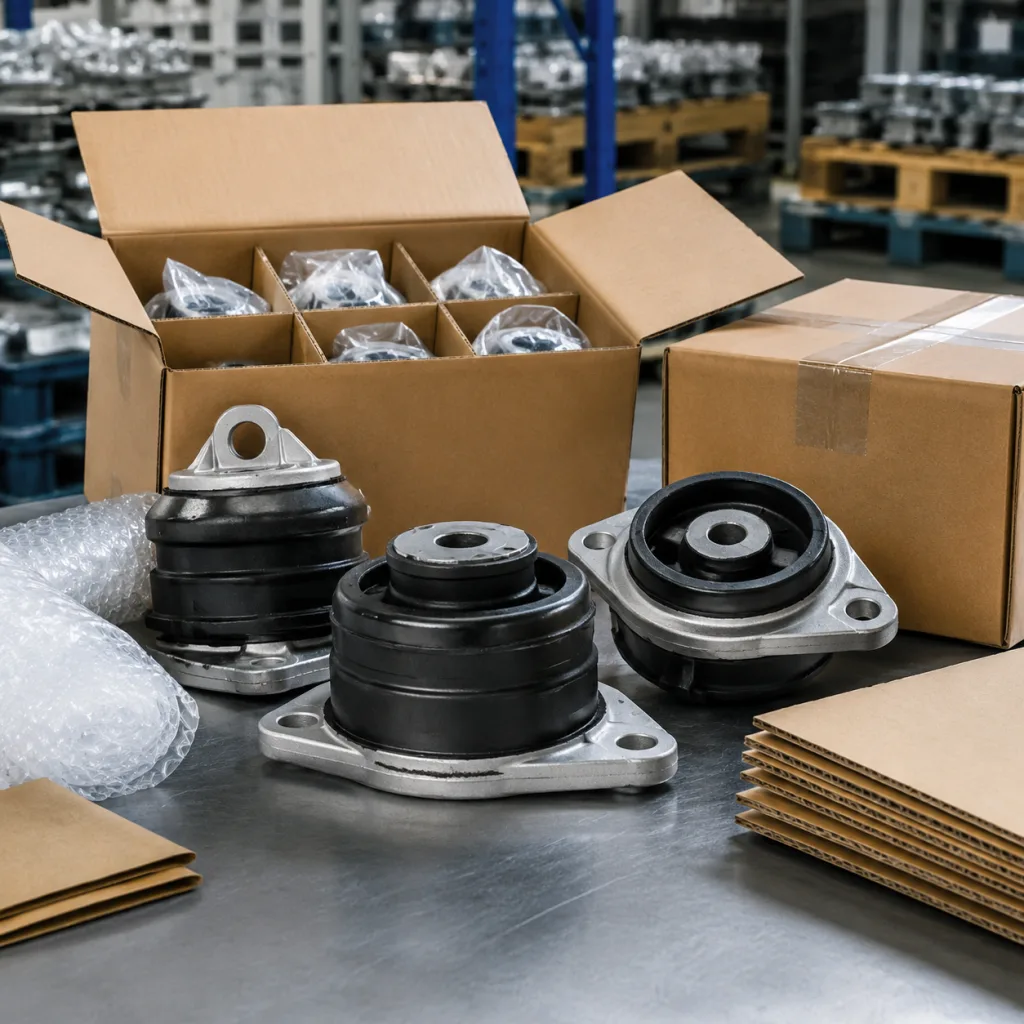
| What is included in the price? | Inspection, packaging, tooling amortisation, and private-label cartons can change landed cost | EXW/FOB/CIF term, packaging cost, tooling cost, 100% inspection surcharge, carton cost, and currency validity are clear |
| How are claims and traceability handled? | Warranty response depends on batch-level evidence | AQL, critical defect definitions, response timing, freight or credit rules, and carton-to-batch labels are agreed |