Camshaft Buick Supplier: Sourcing Guide for Buyers
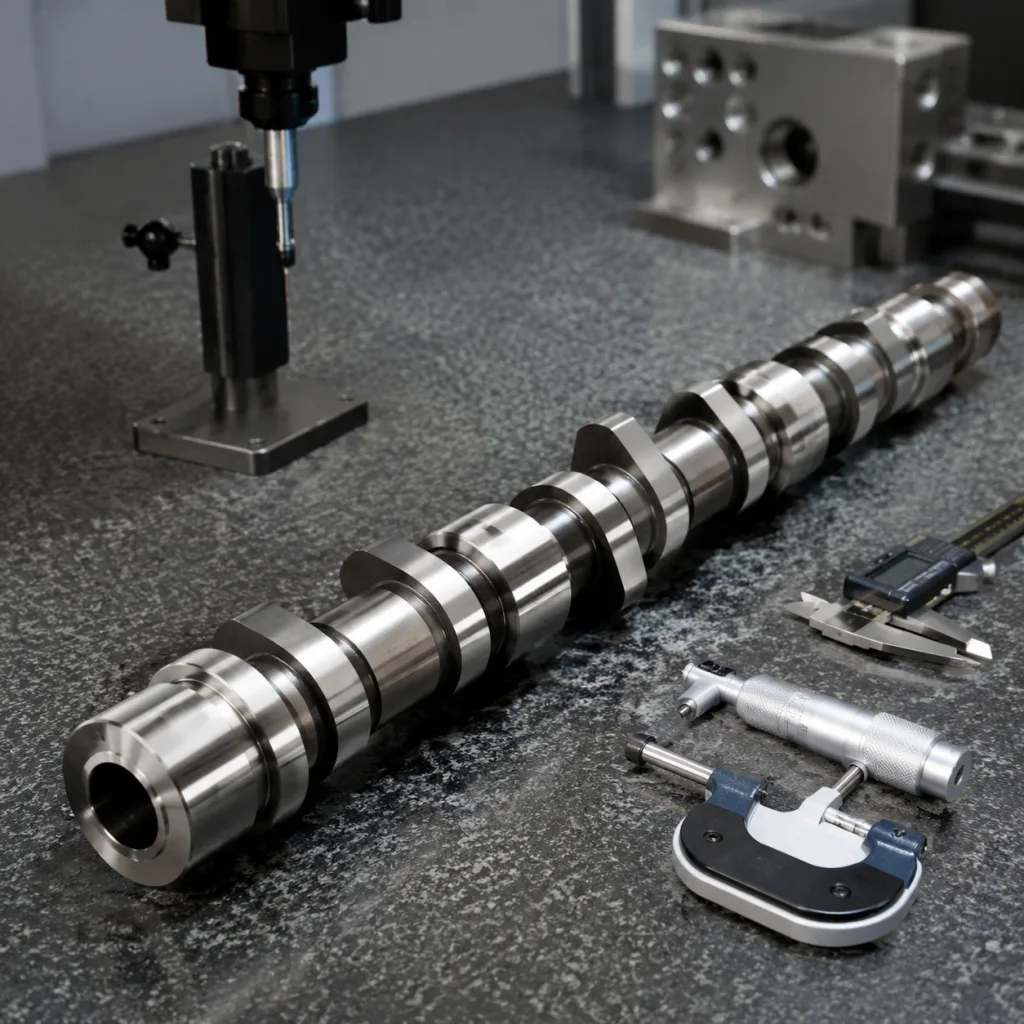
Choosing a camshaft Buick supplier is less about finding the lowest quote and more about avoiding fitment, timing, and traceability mistakes. Buick camshafts are sensitive to profile, journal sizing, trigger features, and the valvetrain package around the part, so a part-number match alone is not enough. Buyers also need consistent metallurgy, repeatable machining, verified heat treatment, and export-ready documentation.
Driventus manufactures engine and powertrain components in Taizhou, Zhejiang, and supplies B2B buyers in the aftermarket, OEM, and repair-chain channels. We operate to IATF 16949:2016 and ISO 9001:2015, with material and process controls suited to export programmes. Driventus is an independent aftermarket manufacturer; brand names are referenced for fitment only. If you are comparing suppliers, the real questions are whether the factory can prove dimensions, hold lead times, and support custom manufacturing when a catalogue part does not fit.
Decision Checklist: What Matters First
Start with fitment, then move to process control. A Buick camshaft purchase that begins with price usually ends with rework.
Confirm these items before you request samples:
- Engine code and displacement
- Camshaft type and OE cross-reference
- Journal diameter and centerline runout tolerance
- Lobe lift, duration, base circle, and timing events
- Surface finish on journals and lobes
- Packaging and corrosion protection for ocean freight
For procurement files, ask for dimensional inspection records, hardness data, and heat-treatment traceability. If the application is being matched to an OE reference such as OE 06A107065, request confirmation of all critical dimensions, not just the part number.
Failure Modes That Commonly Derail Buys
Most sourcing problems show up after the purchase order is issued. The part looks correct on paper, but the build still fails because one critical detail was missed.
Common failure modes:
- A part number matches, but the cam profile does not suit the engine package
- Journal or lobe geometry varies enough to affect valve timing
- Heat treatment is inconsistent, causing premature wear or noise
- Packaging is not moisture-safe, so parts arrive with corrosion risk
- Documentation is thin, making audit or claim handling slow
The safest response is to demand batch records, hardness reports, and lot traceability up front. A camshaft is not a commodity fastener; small deviations change engine behavior.
Supplier Comparison: A Shortlist Framework
A reliable camshaft Buick supplier should show process control from raw material to final inspection. That is the difference between a repeatable programme and a series of one-off transactions.
Driventus supports buyers who need stable supply for distribution or assembly programmes. Our internal process control covers machining, inspection, and packing under a documented quality system. Review the quality system before approving a new vendor.
Use this comparison matrix when shortlisting suppliers:
| Checkpoint | Why it matters | Buyer evidence |
|---|---|---|
| Heat treatment | Controls hardness and wear resistance | Batch records, hardness report |
| Dimensional control | Protects fit and timing accuracy | CMM or gauge report |
| Surface integrity | Reduces scuffing and break-in failures | Visual and finish inspection |
| Traceability | Supports claims and recalls | Lot code and material certificate |
| Export packing | Prevents transit damage | Carton, oiling, and pallet spec |
| Parameter | Typical procurement target |
|---|---|
| Material | Cast iron or alloy steel, per application |
| Hardness | Defined by lobe and journal requirements |
| Journal runout | Tight enough to protect bearing life |
| Lobe-to-lobe consistency | Stable lift and timing across batch |
| Surface finish | Suitable for break-in and low wear |
| Packaging | Oil-coated, sleeve-protected, export ready |