camshaft · 2026-06-07

Camshaft for BMW X5 Aftermarket Replacement: Buyer Guide

A camshaft for BMW X5 aftermarket replacement has to do more than fit into the cylinder head. It must reproduce the correct lobe profile, journal geometry, timing-drive interface, thrust location, hardness, and surface finish for the specific engine application. For B2B buyers, the main sourcing risks are fitment errors, inconsistent heat treatment, excessive runout, poor oil-film support, and batch-to-batch variation that can lead to returns or installation failures.

Driventus supplies engine components from Taizhou, Zhejiang, with production controls aligned to IATF 16949:2016 and ISO 9001:2015. We work with aftermarket distributors, OEM and Tier-1 supply chains, importers, and repair networks that need stable specifications, documented inspection, and traceable output. Driventus is an independent aftermarket manufacturer; BMW and other brand names are referenced for fitment identification only, not as endorsements.

If you are sourcing for the BMW X5 platform, confirm the engine code, intake or exhaust position, variable timing configuration, and OE cross-reference before comparing prices. This guide explains what a replacement camshaft must match, which validation checks matter before shipment, and how buyers can review Driventus catalog coverage and quality controls before placing an order.

What a BMW X5 replacement camshaft must match

A replacement camshaft is a precision valve-train component, not a generic machined shaft. The correct part depends on the BMW X5 engine family, cylinder count, intake or exhaust location, valve-train layout, lobe separation, lift curve, and cam phasing design. A small mismatch in journal size, base circle, timing interface, or thrust face location can create noise, oil-pressure issues, poor timing control, or premature wear.

Before releasing a PO, buyers should verify:

  • Vehicle platform, model year range, and engine code
  • Cylinder count and engine family
  • Intake, exhaust, or matched-pair requirement
  • Single or dual VANOS / variable timing configuration where applicable
  • Confirmed OE cross-reference, using only references that match the same engine programme
  • Bearing journal diameter, length, and oiling features
  • Overall shaft length and thrust face location
  • Sprocket, gear, or actuator interface
  • Lobe lift, duration, base circle, and separation angle
  • Surface hardness and anti-scuff finish on lobes and journals

Dimensional fit is only the starting point. The replacement camshaft must also work with the existing lifters, followers, rockers, seals, timing chain components, and oiling condition. If the valve train has suffered oil starvation, broken followers, contaminated oil, or timing-system damage, installing a new camshaft without correcting the root cause may lead to repeat failure.

OE-equivalence matters more than catalogue wording

For procurement teams, OE-equivalent means the replacement part reproduces the functional dimensions, material characteristics, and operating performance envelope required by the original application. It does not mean approval, sponsorship, or endorsement by the vehicle manufacturer.

Catalog descriptions can help with filtering, but they are not enough for reliable sourcing. Buyers comparing offers should request measured data, a sample review, or drawing confirmation before committing to volume orders.

</tr></thead><tbody> </tbody></table>A supplier should be able to provide inspection records, material declarations, and lot identification that connect the shipped parts to production and quality data. When the application has multiple engine variants, confirm that cross-references have been validated against the exact engine code rather than assumed from the model name alone.

Validation tests used before shipment

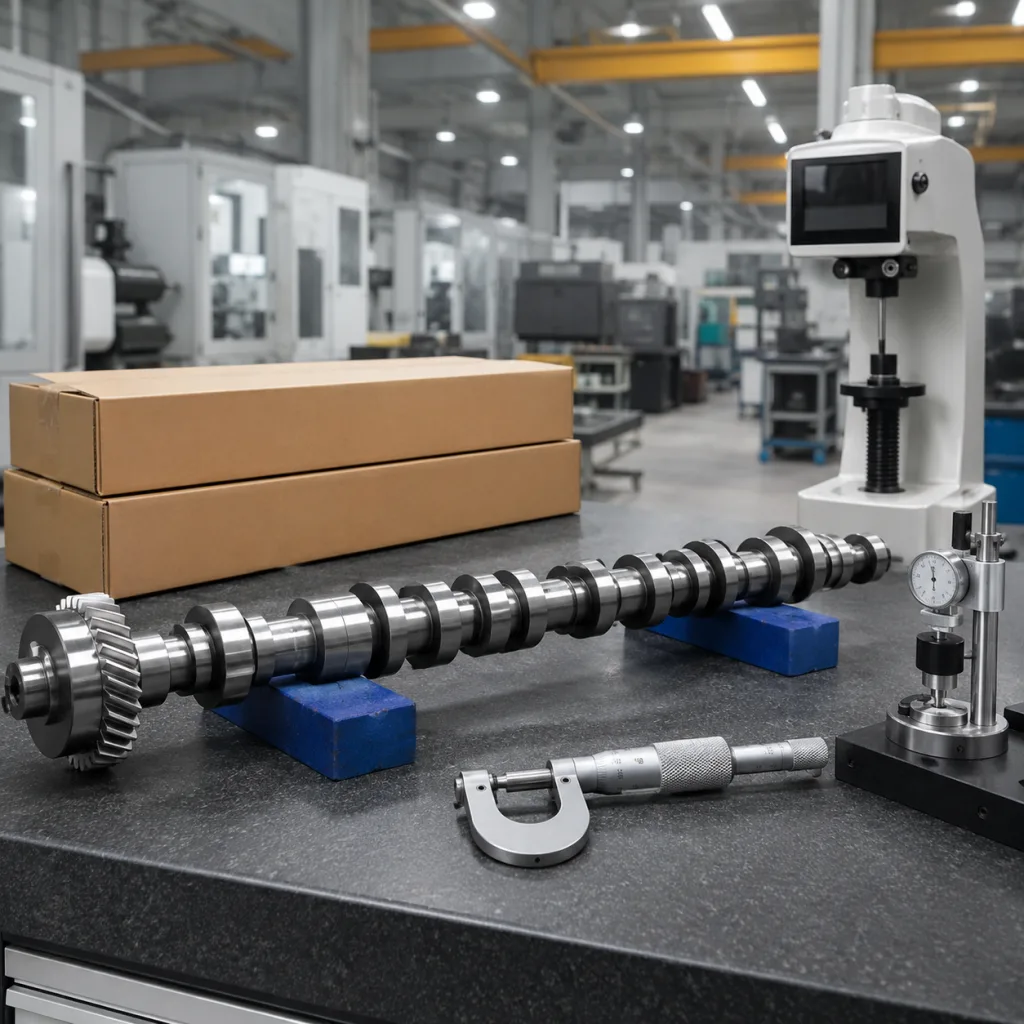
A camshaft supplied into the aftermarket should be controlled through material selection, machining, heat treatment, grinding, cleaning, marking, and final inspection. Visual checking alone is not enough because many failure risks are dimensional or metallurgical rather than cosmetic.

Typical validation and production-control steps include:

1. Incoming material verification against the purchase specification. 2. CNC machining checks for datum accuracy, end features, and rough dimensions. 3. Grinding-process controls at defined intervals for journals and lobes. 4. Heat-treatment confirmation where the design requires hardened contact surfaces. 5. Hardness testing or process records for lobes, journals, and other critical areas. 6. Dimensional inspection of journals, lobes, thrust surfaces, keyways, slots, and timing interfaces. 7. Runout measurement using calibrated fixtures or V-block inspection methods. 8. Surface roughness verification on contact and bearing areas. 9. Cleaning and anti-corrosion protection before packing. 10. Packaging inspection to reduce transit damage, edge impact, and corrosion risk.

For export markets, buyers often request documentation aligned with IATF 16949:2016 and ISO 9001:2015. Where chemical compliance is relevant, REACH (EC) No 1907/2006 declarations may also be required for the finished part, coatings, protective oils, or packaging materials. If your programme needs private-label packaging, laser marking, special corrosion protection, or additional traceability, review our custom manufacturing capability early in the RFQ process so the correct controls can be built into the quotation.

How Driventus supports replacement sourcing

Driventus manufactures engine and powertrain components in Taizhou, Zhejiang, and exports to more than 60 countries. For a BMW X5 replacement camshaft project, the sourcing process normally begins with engine code confirmation, intake or exhaust position, OE cross-reference review, and sample or drawing approval. This reduces the risk of selecting a part based only on the vehicle model name, which can be misleading when the same platform uses several engines or timing-system designs.

Our catalog shows the broader component range, and our engine-component portfolio is organised for buyers managing mixed line cards. When a camshaft is sourced together with cylinder-head, valve-train, or timing-system components, consolidated review can reduce search time and improve fitment consistency across the order.

For direct procurement, we can support specification review, sample comparison, packaging requirements, and document requests before volume shipment. If your internal process requires supplier audits, document packs, or PPAP-style review, our quality system page outlines the controls used across production.

We do not claim OEM approval, and we do not use brand names as endorsements. Driventus is an independent aftermarket manufacturer; BMW and other brand references are used only to define fitment and application scope.

Specification priorities for buyers and import managers

When a camshaft is purchased for distribution, fleet repair, engine rebuilding, or workshop supply, the main commercial risks are incorrect fitment, installer complaints, warranty returns, and inconsistent repeat batches. The strongest control is a purchasing specification that is detailed enough for supplier confirmation and receiving inspection.

Recommended purchasing specification points include:

  • Application: BMW X5 engine family, engine code, and year range
  • Position: intake, exhaust, or matched pair
  • Confirmed OE and aftermarket cross-reference numbers
  • Base material and heat-treatment route
  • Journal diameter, lobe dimensions, base circle, and overall length
  • Journal and lobe hardness requirement
  • Total indicated runout limit
  • Surface finish target on working faces and bearing areas
  • Timing interface and thrust face details
  • Cleaning, oiling, and corrosion-protection requirements
  • Packaging standard for sea, air, or mixed transport
  • Lot traceability, part marking, and label format
  • Inspection report and compliance-document availability

If you need private-label packaging, application-specific labelling, or a build-to-print programme, use our request a quote path and include drawings, samples, target annual volume, and any required inspection format. For larger portfolio projects, we can also support our catalog review against your existing purchasing codes, helping your team identify coverage gaps, duplicate references, and opportunities for consolidated sourcing.

Frequently asked questions

Match the engine code, intake or exhaust position, timing system, and OE cross-reference. Then verify journal dimensions, lobe profile, overall length, thrust location, and timing interface against a sample, drawing, or approved specification before purchase.

Ask for dimensional inspection records, material declaration, traceability by lot, and evidence of controls aligned to IATF 16949:2016 and ISO 9001:2015. REACH declarations may also be needed for parts, coatings, oils, or packaging in some markets.

Yes. We support custom manufacturing requirements such as packaging, marking, labelling, documentation, and application-specific specifications. Share your drawings, samples, target volume, and quality requirements through our contact form for quotation and review.

If you are sourcing a camshaft for BMW X5 aftermarket replacement, send your engine code, OE reference, sample, or drawing and we will review fitment, documentation, and supply options. Please [request a quote](/contact.html).

Request a Quote
Check point What buyers should confirm Why it matters
Lobe profileLift, duration, base circle, flank geometryControls airflow, valve timing, and combustion behavior
Journal geometryDiameter, roundness, length, oiling features, finishProtects oil film, bearing support, and service life
RunoutTotal indicated runout measured on calibrated V-blocks or fixturesExcess runout can cause timing variation, vibration, and uneven wear
MaterialAlloy cast iron, chilled cast iron, or billet steel as specified by the designAffects strength, wear resistance, machinability, and distortion control
Heat treatmentCase hardening, induction hardening, or through-hardening where requiredReduces scuffing, pitting, and lobe wear under high contact stress
Surface finishGround and polished finish on journals and lobesSupports oil retention, lower friction, and stable break-in behavior
Timing interfaceKeyway, slot, gear, sprocket, or actuator interface geometryMaintains correct cam timing and variable timing operation