Camshaft for Buick Regal Aftermarket Replacement Guide
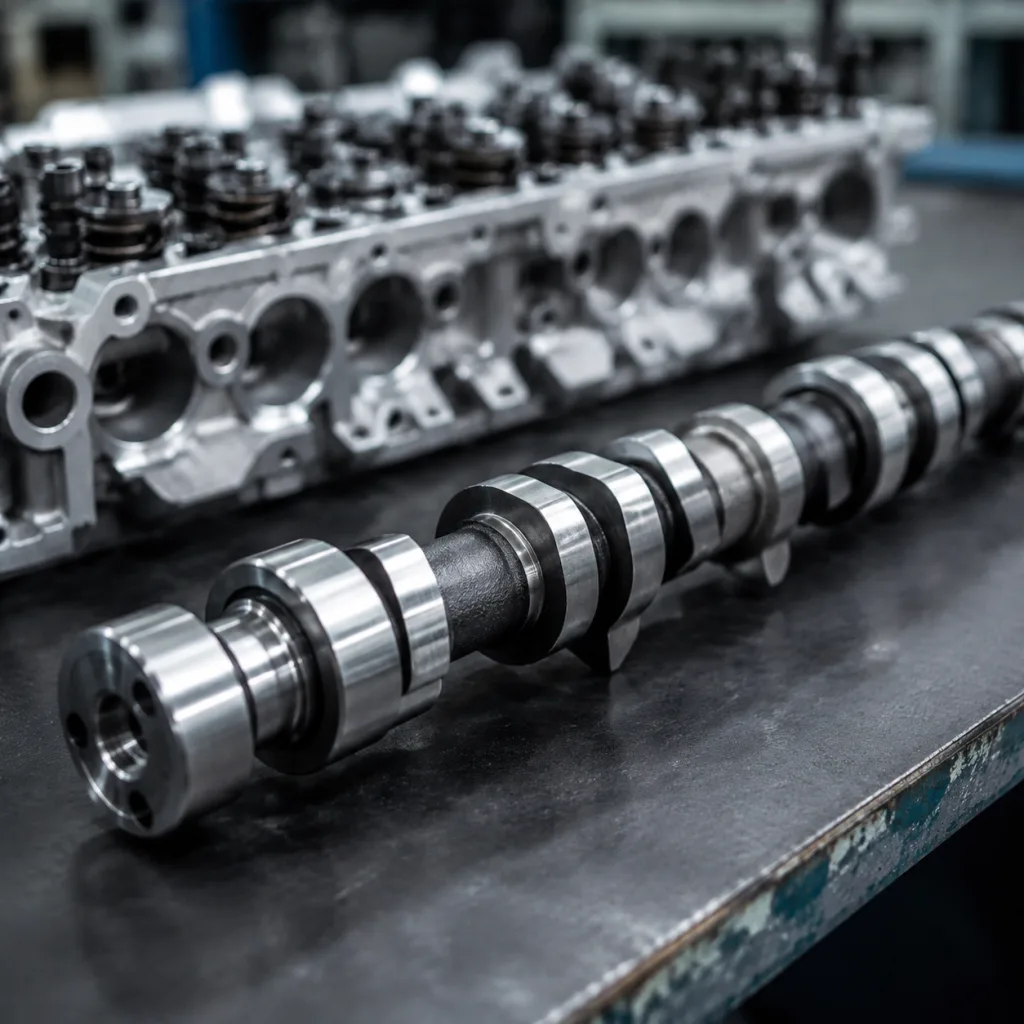
Selecting a camshaft for Buick Regal aftermarket replacement starts with exact engine identification, OE geometry, and the process controls behind each batch. For procurement teams, the issue is not whether a part looks correct, but whether it matches the engine’s valve timing, journal dimensions, sensor interface, and hardness profile consistently from lot to lot. A replacement camshaft should preserve timing events within the approved tolerance window, maintain journal concentricity, and support the correct actuator or reluctor features where applicable. Driventus is an independent aftermarket manufacturer; brand names appear here for fitment reference only. For buyers in the EU, UK, US, Canada, Australia, and Brazil, the most actionable evidence is a dimensioned drawing, hardness and heat-treatment records, and validation aligned with published quality systems. This article explains what to verify before issuing a purchase order, how to compare suppliers on MOQ, price, and lead time, and which documents to request during sampling and approval.
Decision point: what has to match first
For a camshaft for Buick Regal aftermarket replacement, start with the engine identity, not the catalog title. Confirm model year, engine code, displacement, cylinder head variant, valve-train type, and whether the engine uses variable valve timing, hydraulic lifters, or roller followers. Small changes in base circle, lobe separation angle, journal width, or thrust face thickness can alter idle quality, emissions behavior, and wear life.
Minimum procurement checks:
OE reference, VIN break, and engine code match
Overall length, journal diameters, and thrust dimensions within the approved drawing window
Lobe count, lobe lift, timing phasing, and sensor trigger features confirmed against the master sample
Surface finish on journals and lobes documented in Ra or equivalent finish data
Packaging traceability, batch code, inspection record, and production date linked to the lot
Buying thresholds that reduce risk:
Put critical tolerances on the drawing, not in the catalog note
Write the runout limit into the inspection report and measure it on a calibrated fixture
Approve prototype samples before any stock order, especially for low-volume or variant-heavy applications
Define acceptable substitution rules for sensor gear, keyway, and finish type before RFQ release
Spec check: OE-equivalent dimensions and tolerances
A credible aftermarket camshaft should reproduce OE-critical dimensions within controlled tolerances. Buyers should ask for a measured first-article report, not just a drawing. Typical checks include cam journal runout, lobe height variation, thrust face parallelism, and keyway or reluctor alignment where present.
Item
What to confirm
Practical acceptance guidance
Journal diameter
Match to OE bearing clearance
Ask for the nominal size and the allowed tolerance band on each journal
Total length
Same as OE assembly
End-play should remain within the engine builder’s approved range
Lobe lift and timing
Within approved profile window
Require a profile map showing lift at discrete angular points
Hardness depth
Case or induction depth verified
Ask for hardness depth and test location, not a generic hardness statement
Runout
Measured on a calibrated fixture
Specify the maximum allowable TIR on the drawing or inspection sheet
What is the nominal journal diameter and its tolerance by feature number?
What is the maximum acceptable total indicated runout at the center journal?
What is the allowable lobe-to-lobe variation within one shaft?
What is the acceptable surface roughness on journals and lobes after grinding?
What is the inspection method: CMM, profilometer, roundness tester, or fixture-based gauge?
For replacement sourcing, ask for dimensional records tied to the lot number and inspection date. That is the fastest way to reduce fitment risk before sampling moves into production.
Failure modes: where aftermarket camshafts usually slip
Most sourcing problems are not dramatic. They show up as slow wear, noisy operation, or a part that fits but does not behave like the OE shaft. The usual failure modes are dimensional drift, weak process control, and incomplete validation.
Common failure modes:
Journal size is correct on paper, but runout pushes the shaft out of spec after grinding
Lobe geometry matches the drawing overall, but lift variation changes valve events across cylinders
Heat treatment is stated, but case depth or core hardness is not verified by batch
Sensor trigger or keyway geometry is present, but timing signal alignment is off by enough to affect engine control
Packaging looks professional, but traceability breaks once the part reaches inbound receiving
How buyers avoid them:
Demand a lot-specific first-article report instead of a generic compliance note
Tie heat-treatment evidence to the same batch that produced the shipped parts
Confirm that the supplier inspects after heat treatment, not only before it
Require a corrective-action path with response timing if one feature fails
If the supplier cannot show where variation is measured, it is harder to trust the part in fleet, export, or warranty-heavy programs.
Materials and heat treatment: what actually drives wear life
Most automotive camshafts use alloy steel or cast iron, depending on the engine family and original design. The correct material is application-specific, but the buyer should still request material certification, hardness range, heat-treatment method, and surface treatment details. If the design uses induction hardening, the supplier should state the hardened depth, core hardness, and test method. If the design uses a chilled cast profile, the supplier should provide the casting route, machining sequence, and any post-machine stress-relief step.
Technical data to request:
Material grade and heat number on the mill certificate
Rockwell hardness report by batch, with test location identified
Case depth or effective hardened depth where relevant
Surface roughness on journals and lobe flanks after final grinding
Nital etch, microstructure, or metallographic evidence if the program is durability-sensitive
Lubrication compatibility statement for the intended follower type
Process details that separate suppliers:
Critical diameters should be inspected after heat treatment, not only before it
Grinding wheels, dressing intervals, and tool wear controls should be part of the process file
Lot traceability should link raw material, heat-treatment batch, grinding shift, and final inspection record
Machining sequence should make sense for the material and the heat-treatment route
Published quality references matter here. A supplier operating under IATF 16949:2016 and ISO 9001:2015 is expected to control process variation, maintain traceability, and manage corrective action discipline. If you need to review process scope, see our quality system.
Approval path: sample, test, release
Replacement parts should be tested under conditions that reflect real engine duty, not only bench fit. For a camshaft for Buick Regal aftermarket replacement, that usually means profile verification, surface durability, and compatibility with the intended lubrication regime. Where emissions-related fitment is involved, the buyer should also confirm compliance with the relevant application requirements and any regional regulations such as REACH (EC) No 1907/2006.
Recommended approval sequence: 1. Review drawing, material certificate, and process flow before sample shipment 2. Check sample dimensions against the approved nominal and tolerance targets 3. Confirm profile scan against the master sample or design intent curve 4. Run a short dynamometer or endurance simulation where available 5. Recheck wear surfaces, runout, and lobes after cycling 6. Release production only after the inspection records match the sample approval file
Validation items to include:
Profile scan against approved master sample
Runout and dynamic balance check
Surface wear check after endurance cycling
Dimensional audit after heat treatment and grinding
Packaging and corrosion protection review
Label and traceability review to ensure lot-level identification survives inbound logistics
Commercial release rule:
Start with prototype or A-sample quantities when the part has no purchase history
Move to a small pilot order when sample results match the drawing and the failure rate is zero or within internal threshold
Release full-volume ordering only after the supplier confirms repeatability across at least one additional lot
If the program requires a special profile or a non-standard length, custom manufacturing can be used for engineered replacements, provided the drawing, tolerance stack, validation plan, and change-control signoff are agreed before production.
Procurement compare: how to score suppliers side by side
A practical buying process reduces rejects and delayed claims. Ask each supplier to submit the same document set so the offers are comparable.
1. Application list with OE cross-reference, engine code, and model-year break 2. Material certificate and heat-treatment summary with test method 3. First-article inspection report with measured critical dimensions 4. Dimensional drawing with marked critical features and tolerance values 5. Packaging specification, corrosion-prevention method, and label format 6. Production lead time, MOQ, sample policy, and re-order trigger point 7. Warranty terms, nonconformance response time, and corrective-action process
How to compare price, MOQ, and lead time in one RFQ:
Ask for sample pricing separately from mass-production pricing so quotations are not distorted
Request tiered pricing at 100, 300, 500, and 1,000 units, or the actual forecast breakpoints used by the supplier
Specify whether MOQ applies per part number, per material batch, or per shipment
Confirm whether lead time starts from PO date, drawing approval, or receipt of deposit
Include packaging and export documentation in the quote so landed cost can be compared accurately
Buyer decision rule:
Choose the lowest total risk option, not simply the lowest unit price
A slightly higher unit price can be justified if it reduces inspection time, improves traceability, and shortens claim resolution
If two suppliers quote similar prices, favor the one with better dimensional evidence, tighter lot traceability, and clearer escalation response
When a supplier can support repeatable batches, clear traceability, and documented inspection, the part is easier to approve for distributors, repair chains, and export programs. Driventus supplies independent aftermarket engine components to B2B buyers and can support staged sampling, private-label packaging, and application-specific documentation. For direct inquiries, please request a quote.
Frequently asked questions
Match the OE reference, engine code, model-year break, and all critical dimensions, then verify profile, hardness, follower type, and sensor-trigger geometry. Do not rely on visual similarity alone.
Request a drawing, material certificate, heat-treatment summary, hardness report, first-article inspection data, and traceable batch records. For regulated markets, ask for REACH-related declarations where relevant.
Yes, if the application requirements, target dimensions, and validation plan are defined first. Custom manufacturing is suitable when the OE part is unavailable or the project needs a controlled redesign.
If you are sourcing a camshaft for Buick Regal aftermarket replacement, send the OE reference, engine code, target quantity, and required delivery window to start review. Contact us here: /contact.html