Camshaft Audi Replacement: OE-Match Sourcing Guide
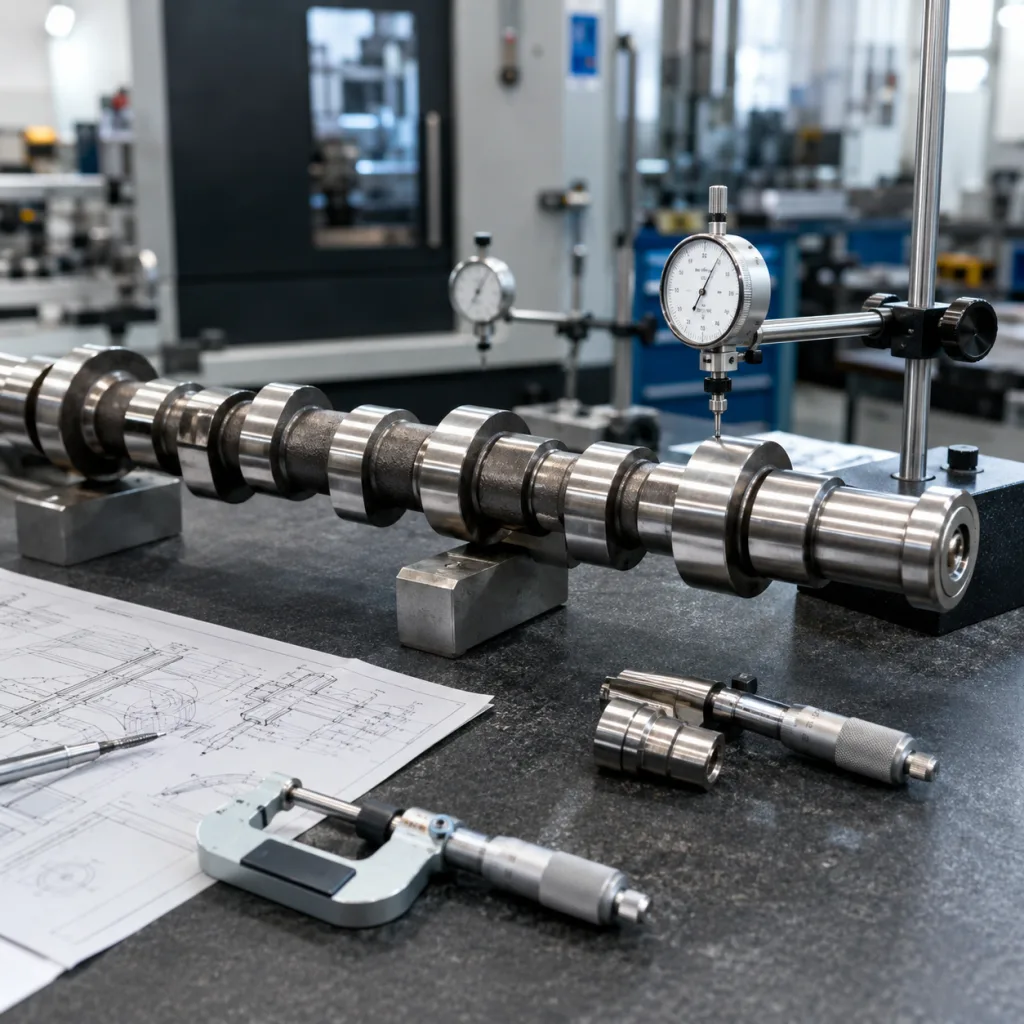
A camshaft Audi replacement order should begin with fitment evidence, not vehicle marketing names. For procurement teams, the priority is to confirm OE-equivalent dimensions, lobe profile, journal size, drive-end geometry, phasing, sensor features, and surface treatment before placing volume orders. A camshaft can look correct and still create timing errors, noise, abnormal wear, or warranty returns if indexing, hardness, or machining control is off.
Driventus supplies camshafts for aftermarket and B2B channels with manufacturing controls aligned to IATF 16949:2016 and ISO 9001:2015. We also work to applicable regulatory and durability expectations, including REACH (EC) No 1907/2006 where relevant and corrosion-related validation methods such as SAE J2527 when specified for the programme.
Driventus is an independent aftermarket manufacturer; brand names are referenced for fitment identification only. For buyers comparing camshaft sources across Europe, the UK, North America, Australia, Brazil, and other export markets, the practical question is straightforward: does the part match the OE envelope, pass inspection, and remain stable in real service? This guide outlines the checks that matter before you approve a replacement line.
What to verify before you source an Audi camshaft
A replacement camshaft is not interchangeable by engine family alone. Even within a familiar platform, differences in engine code, production date, valve train design, sensor indexing, and drive-end detail can separate a correct part from an expensive return. Buyers should verify the following points against an OE sample, technical drawing, or validated cross-reference data:
Overall length and bearing journal positions
Journal diameter, oil groove detail, and runout
Lobe lift, base circle, flank shape, and lobe separation
Cam trigger wheel, encoder, or sensor feature if fitted
Drive-end geometry, keying, gear interface, and phasing marks
Thrust surface location and end-play control area
Surface hardness and finish on journal and lobe contact areas
Packaging, rust prevention, and part identification for export transit
If the application cites an OE number such as OE 06A107065, keep the cross-reference on file with the inspection record. The number alone is not a substitute for measurement, but it gives the purchasing and quality teams a traceable starting point. For most B2B sourcing programmes, the safest approval route is to compare the sample with measurement data before release. That approach is more reliable than matching by model name, body style, or market description alone.
OE-equivalence criteria for replacement orders
For replacement supply, OE-equivalence means dimensional match, functional match, and consistent batch control. A camshaft that fits physically but changes valve timing, thrust location, oiling alignment, or sensor indexing can cause misfire codes, poor performance, installation delays, and warranty exposure.
Core acceptance criteria
Check item
What procurement should require
Typical evidence
Dimensional match
Journals, lobes, length, indexing points, thrust areas, and drive features match the OE drawing or approved sample
First article report, CMM data, gauge report
Material control
Alloy or casting grade and heat-treatment route are defined, documented, and repeatable
Material certificate, process record, hardness report
Surface quality
No scoring, pitting, burrs, abnormal roughness, or grinding defects on bearing and lobe surfaces
Visual inspection, roughness record, final QC report
Dynamic integrity
Low runout and stable rotation under inspection conditions
Straightness/runout report, fixture measurement data
Functional alignment
Timing marks, sensor features, and gear interfaces are correctly phased
Batch and lot traceability from raw material or casting through finished part and packing
Lot code, inspection file, packing record
</tr></thead><tbody> </tbody></table>For many aftermarket programmes, a replacement camshaft should also be checked in the intended cylinder head family. Practical validation points include valve clearance, timing alignment, lubrication path compatibility, and sensor signal consistency where relevant. These checks reduce the risk of approving a part that passes a basic dimensional review but fails during installation or early service.
Materials, heat treatment, and durability checks
Camshaft durability depends on the base material, the hardening method, and the finish on the wear surfaces. Buyers commonly evaluate induction-hardened alloy steel, chilled cast iron, or nitrided finishes depending on the engine duty cycle, OE design, valve train load, and cost target. The correct specification must suit the original application; it should not be selected only from a catalogue description or a general engine-family listing.
Recommended supplier questions:
1. What is the base material specification, and is it consistent with the approved sample? 2. Is hardening localised to lobes and journals, or applied through a broader portion of the component? 3. What hardness range is controlled on the lobe and journal wear surfaces? 4. How is case depth, if applicable, monitored and recorded? 5. Is residual stress controlled after heat treatment and finishing? 6. What surface roughness range is targeted for the bearing journals and lobe faces? 7. What anti-corrosion protection is used for storage, sea freight, and distribution handling?
For export programmes, corrosion protection is not a minor packing detail. Camshafts may move through ocean freight, customs storage, regional warehouses, and cross-dock handling before installation. Moisture exposure during that chain can compromise appearance and, in severe cases, working surfaces. Packaging should include suitable rust preventive treatment, separation between parts, impact protection, and clear lot identification. If your specification includes salt-exposure verification, ask for test method alignment such as SAE J2527 where relevant to the part treatment, coating system, or customer validation plan.
How Driventus supports aftermarket replacement programs
Driventus produces engine and powertrain components in Taizhou, Zhejiang, with vertical process control across machining, inspection, and packing. Our manufacturing system is aligned to IATF 16949:2016 and ISO 9001:2015, supporting traceability, corrective action, document control, and repeatable output for B2B buyers.
For sourcing teams, that control is important because replacement programmes often require:
Stable dimensions across repeat orders and replenishment cycles
Consistent heat-treatment results and surface finish
Labelled lots for warehouse traceability and distributor stock control
Documented inspection records for incoming quality review
Export-ready packing for distributor, private-label, and OEM-service supply chains
Engineering communication when an OE reference has multiple application variants
You can review our catalog for current part families, see our broader engine components range, or request engineering support through custom manufacturing when an OE reference requires a modified profile, controlled documentation package, or private-label programme.
Driventus is an independent aftermarket manufacturer; brand names are referenced for fitment identification only. Our role is to help buyers confirm the technical match, maintain repeatable supply, and reduce avoidable returns in camshaft Audi replacement programmes.
Inspection and validation steps before release
A camshaft replacement order should not move into stock without formal validation. The inspection plan should be proportionate to order volume, application risk, and customer warranty expectations, but the baseline should be clear before production or shipment.
The minimum inspection set should include:
100% visual inspection for nicks, burrs, corrosion, and coating defects
Dimensional sampling for journal diameter, lobe height, base circle, and overall length
Runout measurement on a calibrated fixture
Phase and indexing verification where sensor, gear, slot, or key features are present
Hardness and surface-finish checks on defined wear areas
Packing audit to confirm rust protection, separation, label accuracy, and part identification
Where customer programmes require it, Driventus can support PPAP-style documentation, sample approval, dimensional reports, and batch-level inspection records. Buyers should store incoming inspection data by batch rather than by shipment only, especially when the same part number is distributed through multiple hubs or sold under more than one label.
A practical release process is to approve the first article, confirm the first production lot, and then monitor repeat orders against the same critical dimensions. That gives purchasing, quality, and aftersales teams a shared record if a fitment question or warranty investigation arises later.
Sourcing risks that create returns and warranty exposure
Most camshaft returns trace back to a limited set of causes: wrong fitment, incorrect timing features, poor surface finish, weak corrosion protection, or incomplete batch traceability. The risk increases when purchasing teams rely on a vehicle model description instead of an engine code, OE reference, and dimensional confirmation.
To reduce exposure:
Match the OE reference and engine code before ordering
Check application notes for production-year splits and market-specific variants
Require photos of the drive end, lobes, journals, and sensor features
Ask for dimensional reports on the first lot and on repeat production where needed
Confirm packaging for corrosion protection and transit damage resistance
Keep supplier records for corrective action, batch traceability, and warranty review
Avoid mixing visually similar camshafts without separate part identification and storage control
If your programme needs a stable replacement line for multiple distributors, choose a supplier that can provide technical confirmation, inspection records, and consistent re-order control. That is the difference between a one-off purchase and a repeatable procurement line. For a camshaft Audi replacement programme, the lowest-risk supplier is not simply the one with the closest catalogue match; it is the one that can prove the match and reproduce it across batches.
Frequently asked questions
Use the OE number, engine code, and measured dimensions rather than the model name alone. Confirm length, journal size, lobe profile, thrust location, indexing, and drive-end geometry against the approved sample or drawing.
Request material evidence, dimensional reports, runout data, hardness or surface-finish records where applicable, lot traceability, and final inspection records. For structured programmes, ask for quality-system documents aligned to IATF 16949:2016 and ISO 9001:2015.
Yes. Driventus can support custom manufacturing, batch traceability, inspection documentation, and export packing for aftermarket programmes. Use our contact page to discuss OE references, specifications, branding requirements, and target order volume.
If you are building or validating a replacement programme, send your OE reference, engine code, sample details, and target volume, and we will review fitment options with you at /contact.html