aftermarket replacement parts · 2026-06-12

Cam Belt Replacement: Sourcing OE-Equivalent Kits

Cam belt replacement is a scheduled service item with high downstream risk if the belt, tensioner, idler, or water pump does not match the engine design. For distributors, repair chains, and importers, the key question is not only price per belt but whether the supplied kit matches the OE layout, holds tooth profile accuracy, and survives the full service interval without noise, tracking drift, or premature cracking. Driventus manufactures aftermarket engine components in Taizhou, Zhejiang, with export supply to 60+ countries. This article outlines practical sourcing criteria for timing belt kits, including dimensional checks, material selection, validation testing, packaging control, and documentation. It is written for procurement teams comparing suppliers for European, UK, North American, Australian, and Brazilian aftermarket programmes. Driventus is an independent aftermarket manufacturer; brand names are referenced for fitment only.

Fitment Scope and Kit Strategy

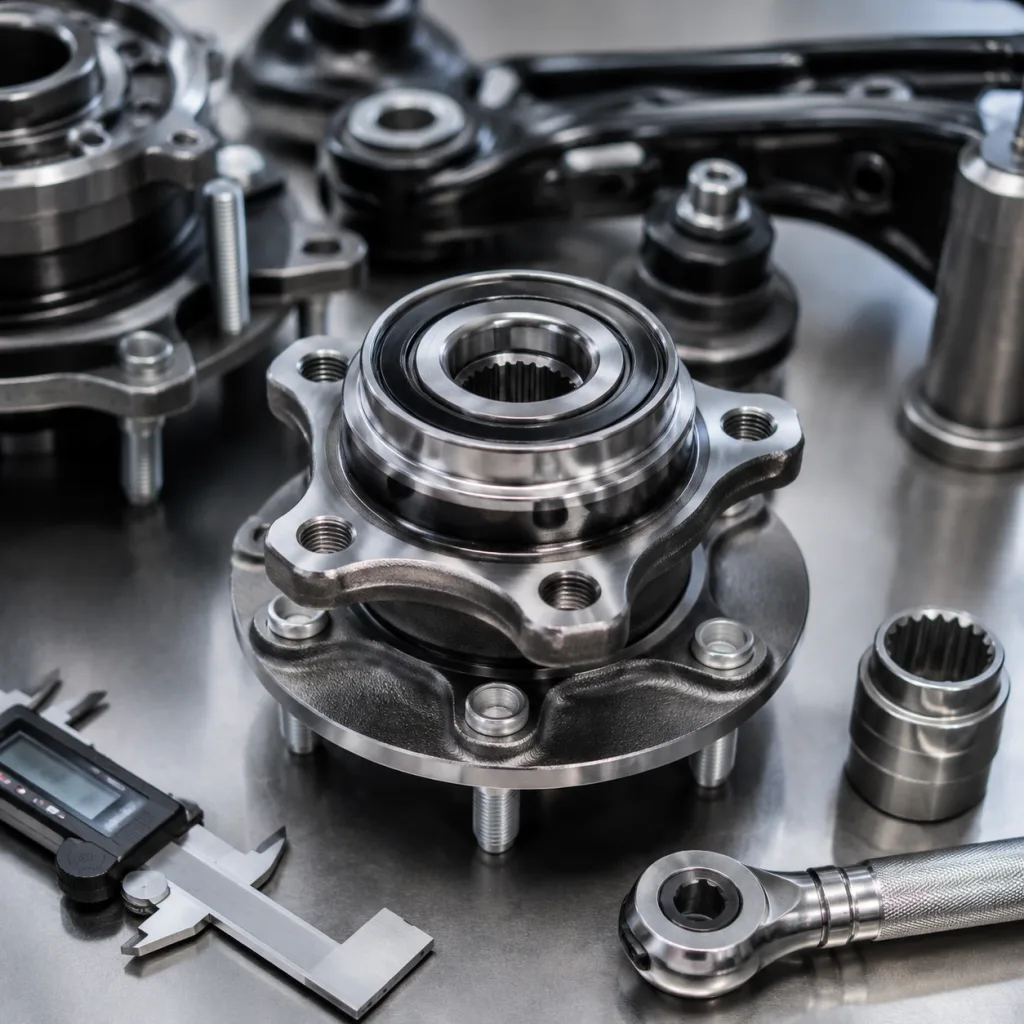
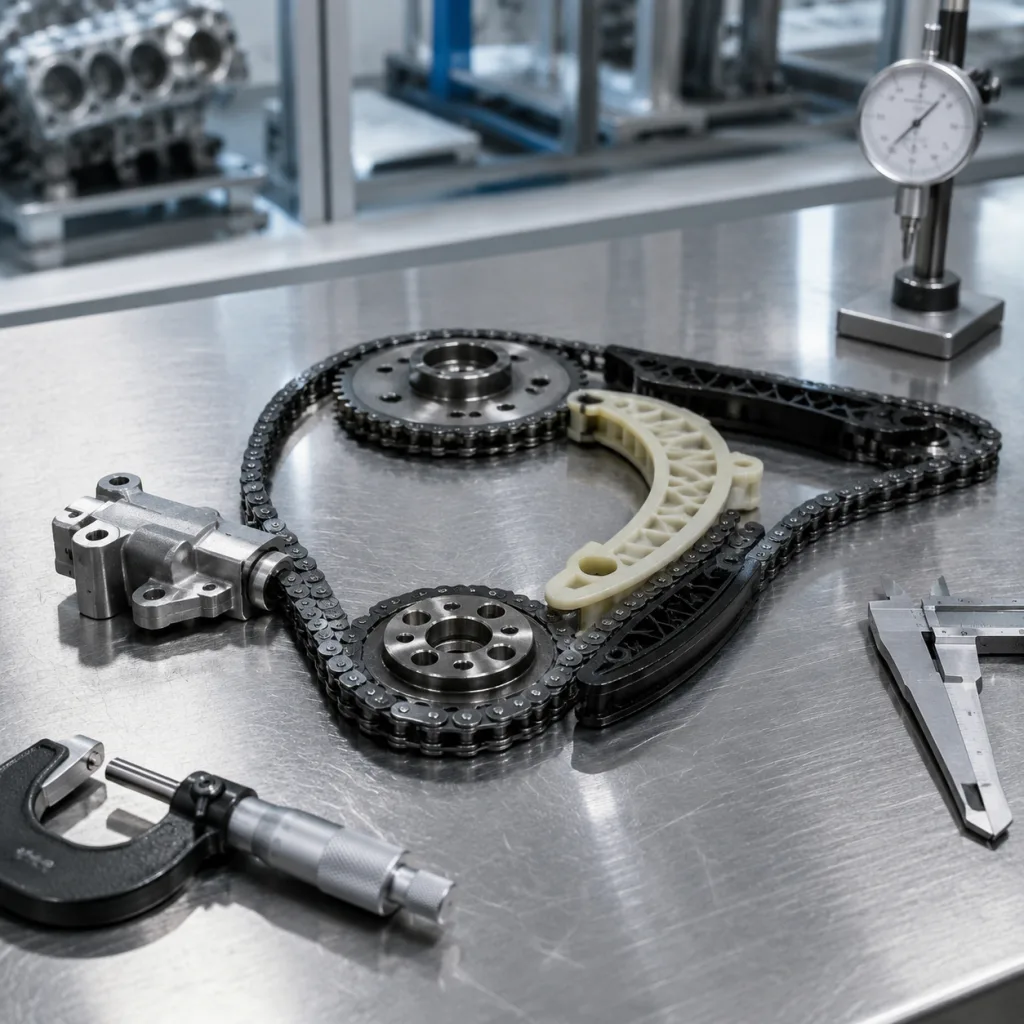
A timing drive is a system, not a single consumable belt. Buyers should define whether they need a belt-only SKU, a belt-and-tensioner set, or a complete kit that also includes idlers, bolts, seals, and a water pump where the pump is belt-driven. A complete kit reduces installer variation and supports a single warranty position for the service job.

Typical B2B assortments are built around engine families, model-year coverage, and OE part-number cross-references where available. Cross-references should be used to confirm application scope, not to imply vehicle manufacturer approval. If a programme uses examples such as OE 06A… or OE 11251…, each reference should be verified against engine code, production date, and pulley tooth count before release.

Procurement teams can review related engine items in our catalog, including adjacent sealing, cooling, and rotating components. For buyers building a private-label timing programme, SKU rationalisation usually starts with high-coverage engine families and then expands to lower-volume applications once return-rate data is available.

Dimensional Match: What Buyers Should Specify

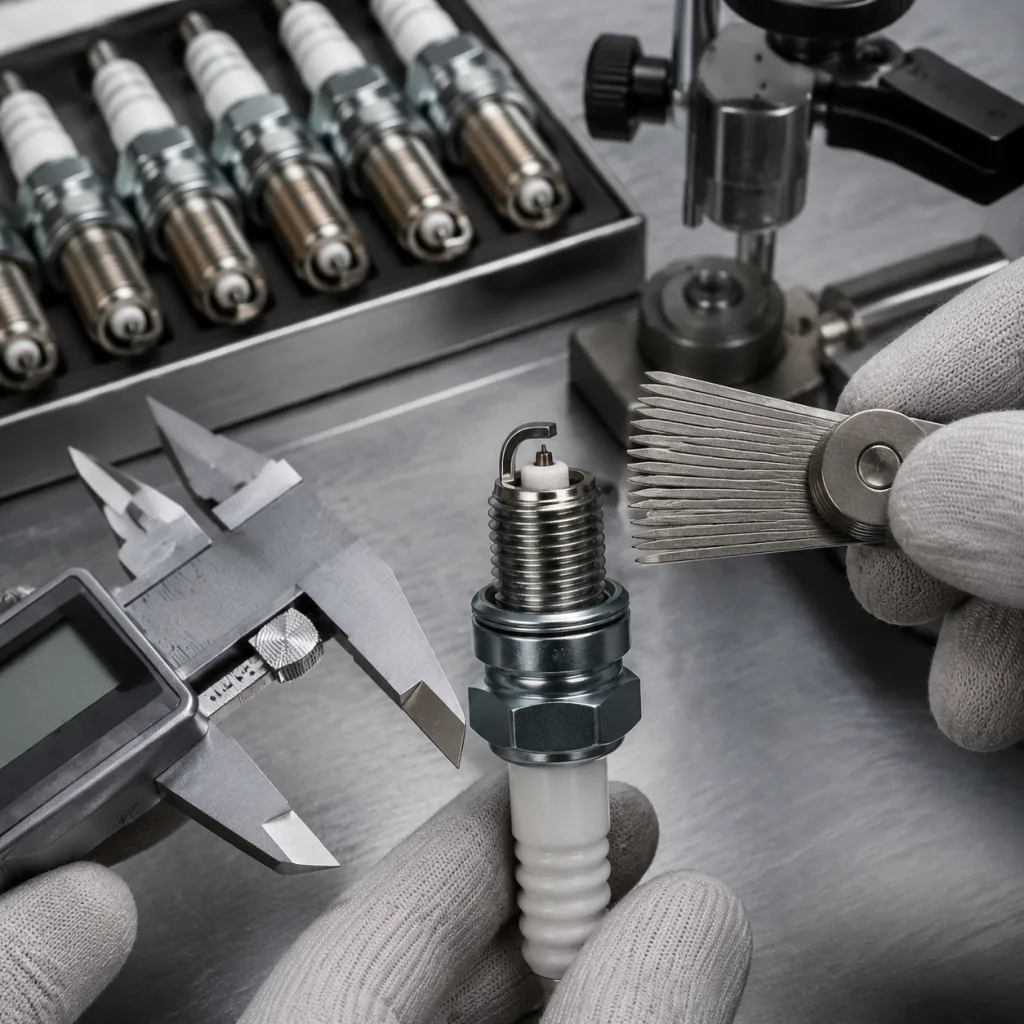
The main acceptance criterion for an aftermarket timing belt kit is dimensional equivalence to the OE service part. Correct length alone is not enough. Tooth pitch, belt width, tooth geometry, tensile cord position, pulley alignment, and tensioner offset all affect running stability.

</tr></thead><tbody> </tbody></table>For replacement programmes, Driventus recommends retaining controlled master samples, signed drawings, and inspection reports for every released SKU. Incoming samples from alternative suppliers should be compared by coordinate measurement, optical profile inspection, and installation trial on representative fixtures. This reduces the risk of visually similar parts entering stock with incorrect pulley offset or tooth geometry.

Materials and Construction Requirements

Modern timing belts commonly use high-temperature rubber compounds, glass-fibre tensile cords, and wear-resistant fabric facing on the tooth surface. The construction must resist heat, oil mist, cyclic bending, and tooth-root fatigue. Tensioner and idler assemblies require stable bearing grease, hardened bearing races, effective seals, and consistent spring or hydraulic damping behaviour depending on the application.

For cam belt replacement kits, a procurement specification should include:

  • Belt compound type and operating temperature range declared by the supplier
  • Tooth fabric adhesion and abrasion resistance checks
  • Tensile cord material and elongation control method
  • Tensioner spring torque or damping curve, where applicable
  • Bearing radial clearance, grease type, and seal construction
  • Water pump impeller material, shaft seal type, and leak-test result where included
  • Salt-spray or corrosion-resistance requirement for exposed metal brackets
  • Packaging method to prevent belt crimping, contamination, and bearing impact damage

Chemical compliance should be reviewed for destination markets. For EU supply, REACH (EC) No 1907/2006 is relevant to substances in materials and packaging. For quality management, supplier documentation should align with IATF 16949:2016 and ISO 9001:2015. These standards do not replace part validation, but they support traceability, corrective-action control, and production discipline.

Validation Testing for Replacement Confidence

Buyers should separate routine inspection from validation testing. Routine inspection confirms that production lots match the approved specification. Validation testing confirms that the design and materials can survive intended operating conditions. Both are needed before supply is scaled.

Parameter Typical buyer check Why it matters
Belt tooth countMatch to application drawing or validated samplePrevents valve timing error
Belt widthControlled to drawing toleranceSupports pulley tracking and edge wear control
Tooth pitch and profileMatched to pulley systemReduces jump risk and tooth shear
Tensile cord positionVerified by cross-section inspectionMaintains elongation control under load
Tensioner mounting faceFlatness and hole position checkedPrevents belt misalignment
Idler bearing rotationNoise, radial play, seal dragReduces NVH and early bearing failure
Water pump pulley offsetMeasured against datumMaintains belt path on pump-driven systems

</tr></thead><tbody> </tbody></table>Driventus uses controlled inspection planning within its quality system, supported by IATF 16949:2016 and ISO 9001:2015 certification. For timing components, buyers should ask how nonconforming material is segregated, how tooling wear is monitored, and how lot-level traceability is maintained from rubber compound, bearings, castings, or machined brackets to final packed kits.

Packaging, Labelling and Aftermarket Distribution

A technically correct kit can still create field issues if packaging and labelling are weak. Belts should not be folded sharply or compressed under heavy components. Bearings, pumps, and metal brackets should be separated from the belt surface. Printed installation notes should identify torque requirements, replacement sequence, and any one-time-use fasteners, where applicable.

For wholesalers and repair chains, label structure affects warehouse accuracy. A timing kit label should include part number, application summary, barcode, batch number, country of origin, production date or lot code, and cross-reference data where authorised. The label should avoid wording that suggests vehicle manufacturer endorsement.

Importers should also check carton strength, palletisation, humidity protection, and language requirements for their market. Brazil, the EU, the UK, Canada, Australia, and the US each have different customs and labelling practices. A good supplier should be able to support neutral packaging, private-label packaging, and market-specific documentation without changing the approved technical specification.

Supplier Evaluation and Programme Launch

Before issuing a purchase order, procurement teams should evaluate technical capability and production control together. A low unit price is not useful if the supplier cannot maintain consistent tooth profile, bearing quality, or kit completeness over repeat batches.

Recommended launch sequence:

1. Define target applications, annual volume, and service kit level. 2. Confirm cross-reference policy and avoid unsupported OE claims. 3. Request drawings, material summaries, and validation reports. 4. Approve pre-production samples after dimensional and fitment checks. 5. Conduct pilot orders with batch traceability and incoming inspection. 6. Review installer feedback, warranty returns, and packaging damage data. 7. Release full-volume supply only after corrective actions are closed.

Driventus supports aftermarket kit development and custom manufacturing for buyers that need controlled specifications, private-label packaging, or application-specific assemblies. For cam belt replacement programmes, the strongest results usually come from early agreement on drawings, test evidence, packaging format, and claim-handling rules before price negotiation is finalised.

Frequently asked questions

A basic kit normally includes the belt, tensioner, and idler pulleys. For applications where the water pump is driven by the belt, many buyers specify a complete kit with pump, seals, bolts, and installation notes. The exact contents should match the engine layout and service procedure.

Check tooth count, belt width, tooth profile, tensioner geometry, idler bearing dimensions, and pulley offset against approved drawings or master samples. Fitment should also be confirmed on representative fixtures or engines before production release. Cross-references are useful, but they should not replace dimensional inspection.

Request IATF 16949:2016 and ISO 9001:2015 certificates, control plans, inspection reports, material summaries, validation test reports, traceability records, and packaging specifications. For EU markets, review REACH (EC) No 1907/2006 substance compliance where relevant.

If you are sourcing timing belt kits or related engine components for distribution, repair-chain, or private-label supply, share your target applications and annual volumes with Driventus. Our team can review fitment scope and documentation when you [request a quote](/contact.html)

Request a Quote
Test area Typical method Procurement evidence to request
Belt enduranceDynamic running under load and temperatureTest report with hours, speed, load, and failure criteria
Tooth shear resistanceStatic or cyclic tooth load testingMinimum force result and sample size
Tensile strengthBelt pull testResult against approved specification
Heat ageingExposure at defined temperature and durationBefore/after hardness, cracking, and strength data
Tensioner performanceTorque, damping, or spring-force checksCurve or measurement report by batch
Bearing durabilityNoise, temperature rise, and radial playPre- and post-test measurements
Water pump seal integrityPressure or vacuum leak test100% production leak-test record if pump is included