Spark Plug Replacement Cost: B2B Pricing Factors
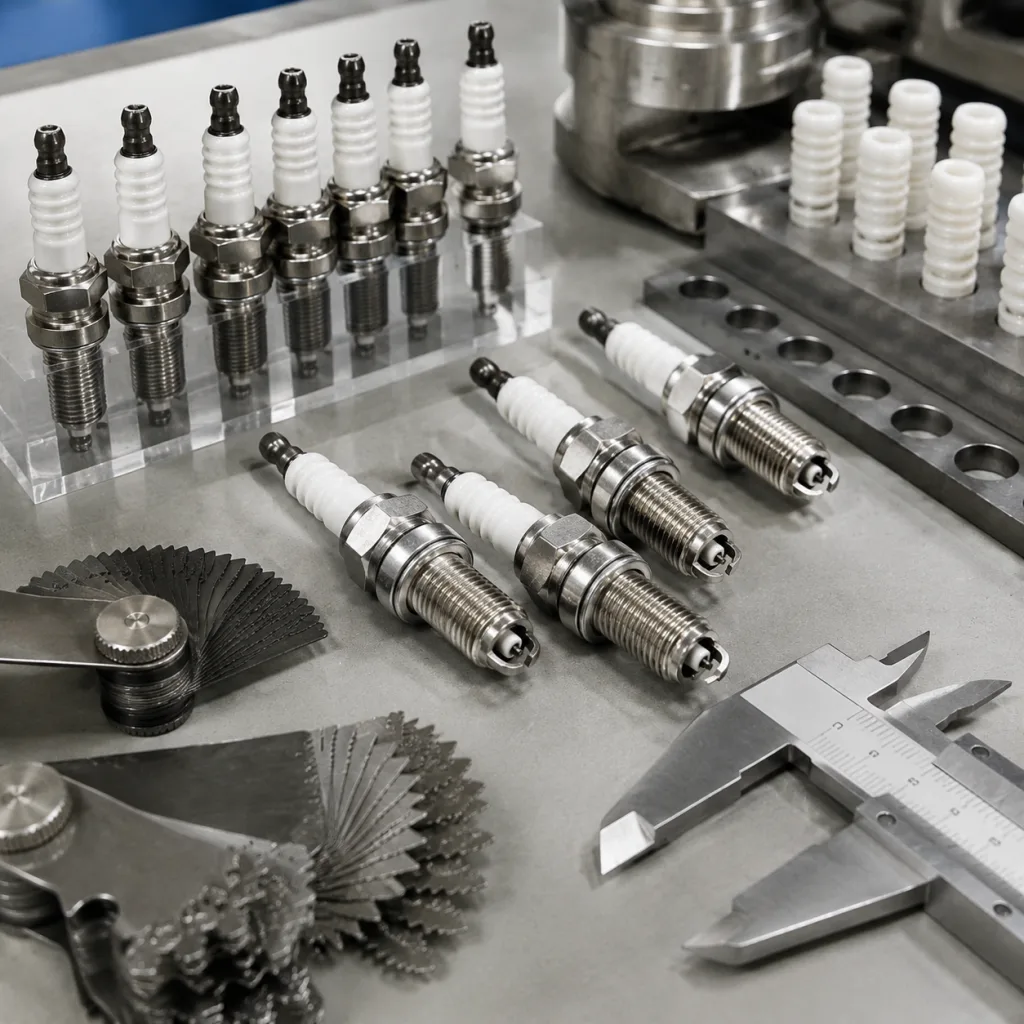
Spark plug replacement cost is often framed as a retail service price, but procurement teams need a wider commercial view. For distributors, repair chains and fleet maintenance buyers, the real cost includes plug specification, packaging, failure risk, workshop time, inventory carrying cost and supplier consistency. A low unit price can become expensive if electrode wear, thread quality, heat-range mismatch or poor fitment data increases returns and rework. This guide breaks down the commercial and technical factors that affect replacement budgets for copper-core nickel, platinum, double-platinum and iridium spark plugs. It also explains how to compare supplier quotations, what validation evidence to request, and when custom manufacturing may be justified for private-label or programme business. Driventus is an independent aftermarket manufacturer; brand names are referenced for fitment only.
What Buyers Actually Pay For
The visible line item is the plug price, but the total programme cost is broader. A repair chain looks at bay time, technician variation and comeback rate. A distributor watches fill rate, carton damage, claims and slow-moving inventory. An OEM or Tier-1 sourcing team will usually focus on process capability, dimensional control, traceability and corrective-action discipline.
Typical cost elements include:
- Unit part cost: electrode material, resistor design, ceramic grade, shell plating, production complexity and order volume.
- Inbound logistics: sea freight, air freight for urgent replenishment, customs clearance, pallet configuration and mixed-container efficiency.
- Packaging: bulk packs, inner boxes, private-label cartons, barcode labels, market-specific markings and e-commerce protection.
- Labour exposure: vehicle access time, plug count per engine, coil removal, torque procedure and thread condition at removal.
- Quality risk: misfire claims, incorrect heat range, cracked insulators, loose terminals, poor thread finish or cylinder-head damage.
- Inventory cost: SKU breadth across reach, seat type, hex size, heat range, electrode grade and terminal configuration.
For B2B buyers, spark plug replacement cost should be calculated per installed vehicle or per maintenance event, not only per piece. A four-cylinder engine using accessible standard plugs has a different risk profile from a V6 or V8 using long-life fine-wire plugs in a compact engine bay. The lowest quoted unit price is rarely the lowest programme cost if it adds claims, stock complexity or workshop uncertainty.
Typical Cost Ranges by Plug Type
Prices vary by market, application and purchase volume, so the table below should be used as a planning reference for aftermarket programmes rather than a retail quotation. Labour changes even more sharply because engine layout, access and regional workshop rates vary by vehicle population.
| Plug type | Common electrode design | Typical B2B unit price band | Typical service interval | Cost notes |
|---|---|---|---|---|
| Copper core nickel | Nickel alloy ground and centre electrode | Low | 20,000-40,000 km | Lower piece price, shorter interval, useful for older applications and easy-access service work |
| Platinum | Platinum pad or fine centre electrode | Medium | 60,000-100,000 km | Better wear resistance and more stable gap growth than nickel designs |
| Double platinum | Platinum on centre and ground electrode | Medium to high | 80,000-100,000 km | Common where waste-spark or reverse-polarity ignition requires wear protection on both electrodes |
| Iridium | Fine-wire iridium centre electrode, often with a platinum ground pad | High | 100,000 km or more | Higher unit price, lower replacement frequency and tighter manufacturing control requirements |
| Specification item | Procurement relevance | Typical verification method |
|---|---|---|
| Thread diameter and reach | Prevents cylinder-head damage and incorrect combustion position | Thread gauges, dimensional inspection |
| Seat type | Determines sealing method and torque behaviour | Visual and dimensional check |
| Hex size | Affects tool compatibility in workshops | Caliper or socket fit check |
| Heat range | Controls firing-end temperature and deposit burn-off | Application validation and cross-reference review |
| Resistor value | Supports electromagnetic interference suppression and stable ignition behaviour | Resistance measurement |
| Electrode gap | Influences ignition voltage demand, cold start and misfire risk | Gap gauge, automated inspection |
| Ceramic strength | Reduces cracking during installation, thermal cycling and service | Mechanical and thermal shock tests |
| Terminal configuration | Ensures secure connection with coils or plug leads | Pull test and fitment check |