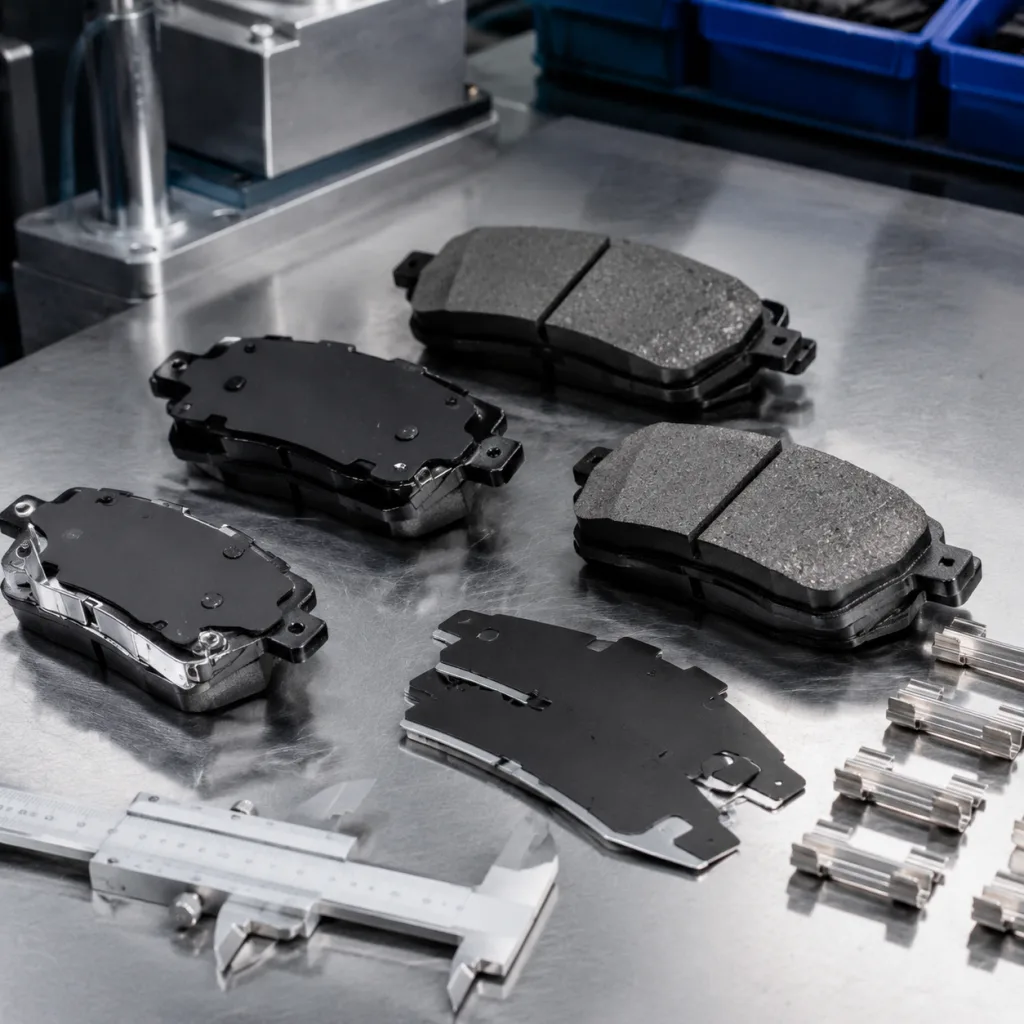
Audi brake pad replacement demand is shaped by scheduled servicing, MOT or roadworthiness failures, fleet maintenance, and workshop recommendations. For distributors and repair-chain buyers, the sourcing decision is not just a price comparison. The pad set must seat correctly in the caliper, deliver stable friction through temperature cycles, limit noise and dust complaints, and arrive with documentation suitable for the destination market. Driventus supplies aftermarket brake pads and related braking components for B2B programmes where dimensional consistency, batch traceability, and packaging accuracy are part of the purchasing standard. This guide outlines practical procurement checks for Audi applications, including OE-style dimensional matching, friction-material validation, standards references, manufacturing controls, and import documentation. Driventus is an independent aftermarket manufacturer; brand names are referenced for fitment only.
Fitment Data Comes Before Price Comparison
Audi platforms can use different brake systems across model year, engine, axle load, wheel size, production date, and market specification. The same model name may have more than one front or rear pad shape, especially when caliper suppliers or trim packages change during a generation. For procurement teams, application data should therefore be treated as a controlled technical input rather than a catalogue note added after sourcing.
For an Audi brake pad replacement programme, the minimum fitment data set should include:
Vehicle make, model, year range, engine code, and axle position
Caliper type or brake system identifier where available
Pad outline drawing with length, width, thickness, chamfers, slots, and wear-sensor location
Hardware contents, including clips, shims, bolts, and electronic wear leads where specified
Cross-reference mapping to OE-style numbers only where verified by drawing and sample check
Packaging label rules for EAN, buyer SKU, country of origin, and batch traceability
Buyers reviewing audi brake pad replacement lines should avoid approving a part from a visual catalogue image alone. A backing-plate ear, tab, or locating profile that is only 0.5–1.0 mm out of position can lead to rattle, difficult installation, uneven drag, or early customer complaints. Where the programme covers several markets, a safer process is to validate VIN-derived sample sets, drawings, and application notes before placing bulk orders.
Relevant pad families can be reviewed through our catalog, with technical confirmation handled before quotation.
OE-Equivalent Does Not Mean Vehicle Maker Approval
In aftermarket brake pad sourcing, OE-equivalent means the replacement part is designed to match the functional requirements of the original service part. That includes envelope dimensions, backing-plate geometry, sensor provision, friction behaviour, compressibility, corrosion protection, and noise-control features. It does not mean approval, certification, sponsorship, or endorsement by the vehicle manufacturer.
Driventus is an independent aftermarket manufacturer; brand names are referenced for fitment only. Any reference to Audi applications is used to identify compatibility, not affiliation.
A practical replacement specification should cover:
Material grade, bond line, chamfer and slot pattern
Batch formula control, shear test record
Shim system
Rubber, multi-layer, or coated shim construction
Noise test summary, retention inspection
Wear sensor
Correct side, connector style, cable length
Sample fitment check, continuity test
Hardware kit
Clips and bolts included only where specified
Packing list, first-article inspection
Label data
SKU, axle position, batch, quantity, origin
Packaging artwork approval, carton audit
</tr></thead><tbody> </tbody></table>Clear definitions reduce catalogue disputes, installation delays, and warranty noise. They also help repair chains standardise technician experience across sites, because the pad set arrives with the expected accessories and does not require local grinding, bending, or hardware substitution.
Validation Testing for Replacement Programmes
Brake pads are safety-critical wear components, so replacement validation must go beyond static measurements. The friction material has to operate predictably during cold stops, repeated moderate stops, fade conditions, recovery, humidity exposure, and bedding-in. For a distributor, the goal is not to collect every possible test report; it is to match the validation plan to the vehicle application, market regulation, and warranty exposure.
Common validation references include SAE J2522 for dynamometer-based effectiveness characterisation and SAE J2521 for brake noise evaluation. SAE J2527 is also used for brake-lining friction material characterisation. For European-market programmes, buyers should confirm whether the product scope requires ECE R90 approval for replacement brake linings. EU importers may also request environmental and material declarations under REACH (EC) No 1907/2006.
Important test outputs for a buying file include:
Friction coefficient stability across defined pressure, speed, and temperature ranges
Fade and recovery behaviour after repeated high-energy stops
Shear strength between friction material and backing plate
Compressibility at room temperature and elevated temperature
Noise tendency from dynamometer or vehicle-level screening
Corrosion resistance of backing plates and hardware after salt-spray exposure
Batch traceability from raw friction mix to packed carton
An Audi brake pad replacement line does not need the same validation budget for every SKU. A low-volume rear pad for older vehicles may justify a narrower programme than a front axle pad used across high-turn fleet models. What matters is that the test evidence is relevant, current, and linked to the friction grade and backing-plate design being purchased.
Manufacturing Controls Buyers Should Audit
A brake pad supplier should be assessed on repeatability, not only sample quality. Pre-production samples can be hand-selected; production lots show whether mixing, pressing, curing, grinding, coating, and packing are stable under normal factory conditions.
Driventus operates under IATF 16949:2016 and ISO 9001:2015. These systems support process control, corrective action, supplier management, and traceability expectations for automotive components. Buyers can review our quality system before arranging a supplier audit.
Key audit points for brake pad replacement sourcing include:
Friction-material mixing: recipe control, weighing accuracy, lot separation, humidity control
Pressing and curing: temperature profile, pressure setting, dwell time, tooling maintenance
For distributors with private-label requirements, custom manufacturing can cover pad material selection, shim configuration, carton artwork, barcoding, and market-specific documentation. The technical file should be agreed before mass production begins, so approved samples, inspection standards, packing rules, and compliance records all describe the same product.
Replacement Range Planning for Distributors
Audi brake pad replacement coverage is usually best built in phases. A new distributor may start with high-turn front axle sets for common vehicles. A mature programme may add rear pads, electronic wear sensors, hardware kits, brake discs, and linked service parts so workshops can source a complete braking job from one supplier.
Range planning should use vehicle parc data, workshop demand, return history, and SKU overlap with other Volkswagen Group applications. Where one pad shape covers several model families, demand may justify higher stock levels and local warehousing. Where coverage is narrow or application complexity is high, buyers may prefer made-to-order production with clear minimum order quantities.
Commercial variables to confirm before launch include:
MOQ per SKU and per friction formulation
Standard lead time for repeat orders and first private-label orders
Sample quantity, inspection timing, and approval responsibility
Carton quantity, pallet quantity, and container loading plan
Warranty handling rules and evidence required for claims
Country-specific labelling, language, and compliance declarations
Search behaviour around this topic is influenced by workshops, parts sellers, and procurement teams looking for dependable replacement supply. The content opportunity is practical rather than promotional: buyers need accurate fitment, consistent quality evidence, clear packaging control, and quotation support that reflects their target market.
Import Documentation and Ordering Checklist
Before issuing a purchase order, buyers should align technical, commercial, and compliance records. A complete approval file reduces delays at incoming inspection and limits later disagreement over what was sampled, quoted, packed, or certified.
A concise sourcing checklist:
Confirm final application list and axle position for every SKU
Approve drawings, samples, friction grade, shim type, and hardware contents
Request ECE R90 evidence where applicable to the target market
Confirm REACH (EC) No 1907/2006 declarations for EU-bound shipments
Review IATF 16949:2016 and ISO 9001:2015 certificate scope and expiry dates
Lock packaging artwork, label fields, carton strength, and pallet format
Agree AQL or inspection criteria for dimensional, visual, and packing checks
Define claim handling, photo evidence, return samples, and corrective-action timing
For buyers replacing an existing supplier, side-by-side sample comparison is useful. Measure the incumbent pad, the proposed replacement, and the approved drawing together. Check thickness, backing-plate fit, chamfer geometry, shim seating, sensor routing, and accessory count. This process takes longer than catalogue matching, but it prevents many launch failures in multi-location service networks.
Frequently asked questions
Many replacement brake linings sold in Europe fall under ECE R90 requirements. Buyers should confirm the exact product scope, vehicle application, and target market before ordering, and request supporting documentation where applicable.
Yes. Driventus can support private-label packaging, SKU labels, carton artwork, barcoding, and agreed hardware contents, subject to technical approval, MOQ, and compliance requirements for the destination market.
Provide application list, axle position, pad drawings or samples, required standards, packaging format, annual volume, delivery destination, and any OE-style cross-reference data already used in your catalogue.
For Audi brake pad replacement sourcing, share your application list, target market, and packaging requirements with our engineering and export team. You can [request a quote](/contact.html).