Aftermarket Car Parts Buying Guide for Procurement Teams
Procurement teams buy aftermarket car parts to keep vehicles running with the right fit, finish, and service life at a controlled cost. That takes more than comparing prices. Buyers need dimensional match, material control, traceability, and production systems that can hold repeatable quality from batch to batch. In engine and powertrain applications, even a small deviation in bore size, journal diameter, gasket compression, or pump flange geometry can create warranty exposure and delay service work. Driventus is an independent aftermarket manufacturer; brand names are referenced for fitment only. For buyers in the EU, UK, US, Canada, Australia, and Brazil, the practical question is whether a supplier can deliver OE-equivalent parts with documented validation, export-ready compliance, and dependable lead times. This guide explains what to verify before a trial order, how to compare suppliers, and which standards matter when sourcing replacement parts at scale.
What procurement teams should verify first
When evaluating aftermarket car parts, start with the part data, not the unit price. The key checks are fitment, material specification, dimensional tolerance, and the supplier’s ability to reproduce the same result over time.
Confirm OE cross-reference by application, engine code, and year range.
Request measured dimensions, not only catalogue descriptions.
Ask for material grade, heat treatment, and coating details where relevant.
Review packaging, traceability, and batch identification.
Validate the supplier’s quality system and export experience.
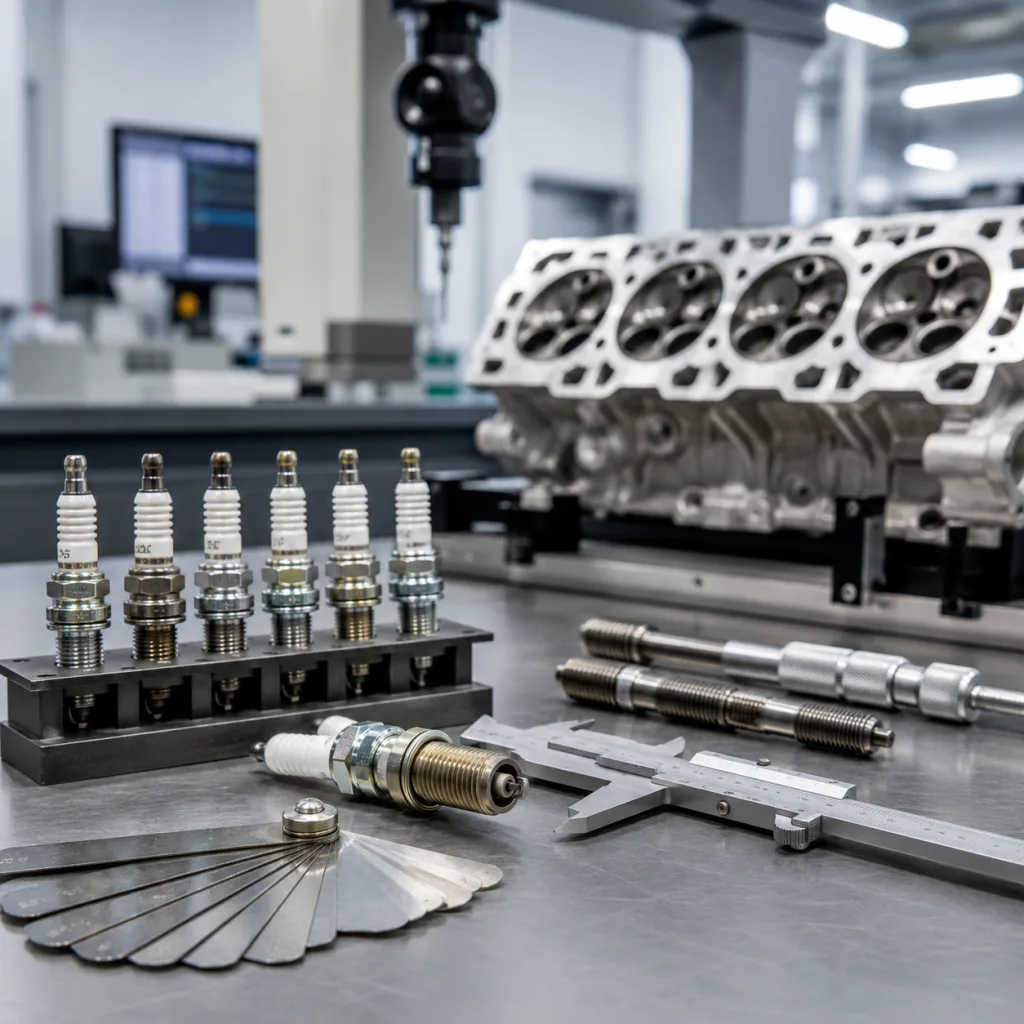
For engine-related items, the difference between acceptable and rejected stock is often measured in microns or tenths of a millimetre. A piston skirt profile, crankshaft journal finish, or gasket bead height must match the intended assembly envelope. If the supplier cannot provide a clear data sheet, the buyer carries the risk.
Replacement parts need OE-equivalent geometry
Replacement decisions should be based on dimensional equivalence and functional performance. A part may look similar in photos and still fail in assembly because of machining drift, incorrect alloy selection, or insufficient surface finish.
Item
What to verify
Typical risk if missed
Pistons
Crown shape, skirt clearance, ring groove width
Noise, oil consumption, scuffing
Crankshafts
Journal diameter, fillet radius, hardness
Bearing failure, vibration
Gaskets
Compressed thickness, bead pattern, material compatibility
Oil or coolant leakage
Water pumps
Impeller geometry, shaft seal, mounting face
Overheating, early seal wear
Turbochargers
CHRA balance, actuator calibration, oil path
Boost errors, contamination
</tr></thead><tbody> </tbody></table>Where possible, request PPAP-style documentation, first article inspection results, and sample approval before production release. That matters especially for multi-location repair chains and distributors that need consistent fitment across regions. For buyers of aftermarket car parts, dimensional control is more useful than broad claims about compatibility.
Standards and compliance that matter in sourcing
A credible supplier should be able to explain how parts are controlled from incoming material to final shipment. For Driventus, the baseline framework is `IATF 16949:2016` and `ISO 9001:2015`, supported by process control, inspection records, and batch traceability. For material and market access, buyers should also consider `REACH (EC) No 1907/2006` for the EU and relevant country-specific import requirements.
Ask for these documents on every programme:
certificate copies for `IATF 16949:2016` and `ISO 9001:2015`
material test reports for castings, forgings, and elastomer compounds
dimensional inspection reports with sample size stated
surface treatment or coating specification where applicable
packing list, carton labels, and country-of-origin declaration
For emission-related or vehicle-system-adjacent items, the end customer may also require market-specific evidence such as `ECE R-83` references or durability testing protocols, depending on application. For testing methods, buyers often ask for salt-spray or corrosion data aligned with published methods such as `SAE J2527` where relevant to UV or durability exposure. Always match the test method to the part family; a valid report for one component does not prove suitability for another.
How to compare suppliers on more than price
A low first quote can hide expensive follow-up costs. Compare suppliers using a structured checklist that reflects engineering, supply, and commercial risk.
Supplier check
Strong signal
Weak signal
Technical response time
Answers with drawings and measured data
Sends only a price sheet
Tooling control
Owns dies, jigs, and gauges
Depends on unclear subcontractors
MOQ and lead time
Offers stable replenishment planning
Changes terms after trial order
Validation support
Shares inspection and test data
Asks buyer to verify everything
Export handling
Clear incoterms and packing control
Vague shipping commitments
</tr></thead><tbody> </tbody></table>Buyers sourcing aftermarket car parts should also assess whether the factory can support forecast-based replenishment, private label packaging, and mixed-SKU container loading. For distributors, the operational value is not just unit cost. It is the ability to avoid stockouts, reduce returns, and keep interchange data clean across markets.
Where Driventus fits in the supply chain
Driventus is set up for B2B buyers that need repeatable replacement quality and export-ready supply. The company manufactures engine and powertrain components in Taizhou, Zhejiang, with vertical control across key processes. That matters when the purchase order includes multiple families such as pistons, crankshafts, gaskets, water pumps, and turbochargers.
Typical buyer priorities we support:
distributor programmes with stable demand and defined SKU lists
OEM and Tier-1 sourcing that needs controlled batches and documentation
repair-chain supply that needs consistent fitment across locations
private-label and mixed-portfolio orders with packaging requirements
For a buyer reviewing our catalog, the starting point is application match, not a generic product list. If your programme needs a drawing review, technical sampling, or packaging customisation, our custom manufacturing path is designed for that workflow. If you need a quick commercial response, use the quote request route and include OE references, annual volume, target market, and inspection requirements.
Frequently asked questions
Match the OE reference, engine or chassis code, and key dimensions from a drawing or sample. For critical parts, ask for inspection data and a first-article sample before release.
For automotive programmes, ask for `IATF 16949:2016` and `ISO 9001:2015`. For market access, review any material and compliance documents tied to `REACH (EC) No 1907/2006` and local import rules.
Yes. We support custom manufacturing, including packaging, labelling, and mixed-SKU supply planning for distributors and repair networks.
If you are sourcing aftermarket car parts for a new programme or replenishment cycle, send your OE references, target volumes, and inspection needs through /contact.html.