Car Spark Plug Replacement: Fitment and Validation
Car spark plug replacement is more than matching a part number. For procurement teams, the priority is OE-equivalent fitment: thread size, reach, hex, seat type, projected tip geometry, heat range, and terminal configuration all need to match the application before a vehicle goes into service. If any of those dimensions are wrong, the result can be misfire risk, accelerated electrode wear, or thread damage. Driventus supplies spark plugs for aftermarket distribution, repair networks, and OEM-aligned programs with controlled production under IATF 16949:2016 and ISO 9001:2015. Driventus is an independent aftermarket manufacturer; brand names are referenced for fitment only. This article explains how to validate replacement plugs, what to compare on a specification sheet, and how to reduce returns through dimensional control and testing. For procurement, the goal is straightforward: source a plug that installs correctly, performs consistently, and supports stable supply.
What matters in a replacement spark plug
For replacement sourcing, the spark plug must match the engine, not just the catalog description. The critical checks are:
- Thread diameter and pitch
- Reach and seat type
- Hex size for tool access
- Heat range and insulator design
- Electrode material and gap
- Terminal style and resistor specification
- Anti-seize or plated shell finish, if required by the application
A valid replacement should preserve ignition performance, installation torque, and combustion chamber clearance. If the plug sits too deep or too shallow, heat transfer changes. If the seat type is wrong, sealing fails. For procurement records, keep OE 06A107065-style cross-references only when the OE number is already part of the application record.
Dimensional checks before purchase
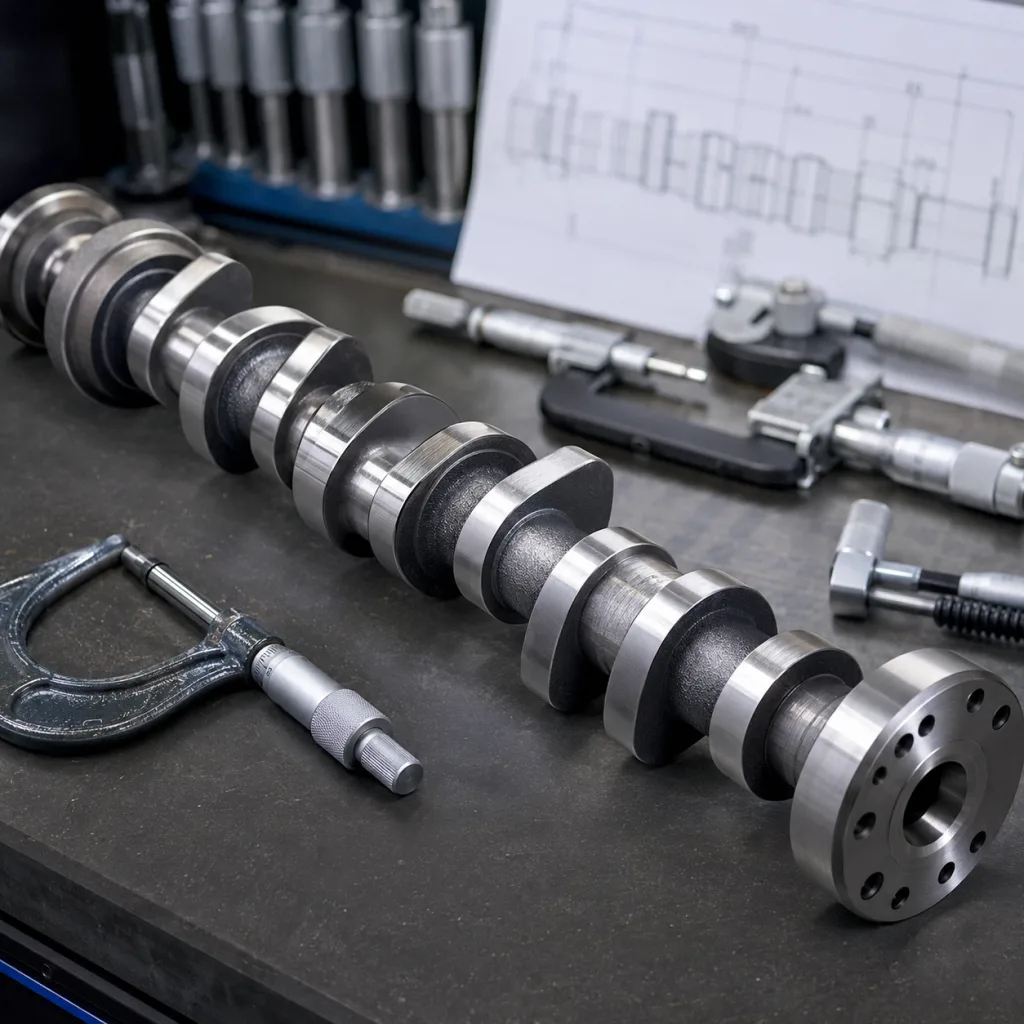
Use the drawing, not only the box label, when approving a new source. A basic comparison set should include the following.
| Parameter | What to verify | Why it matters |
|---|---|---|
| Thread | Diameter and pitch | Prevents cross-threading and fit issues |
| Reach | Installed depth in mm | Controls combustion chamber exposure |
| Seat | Tapered or gasket seat | Affects sealing and torque |
| Hex | Socket size | Confirms service access |
| Gap | Factory-set gap | Influences firing voltage |
| Terminal | Top terminal type | Ensures ignition coil connection |
| Insulator | Nose length and projection | Affects heat range and fouling resistance |