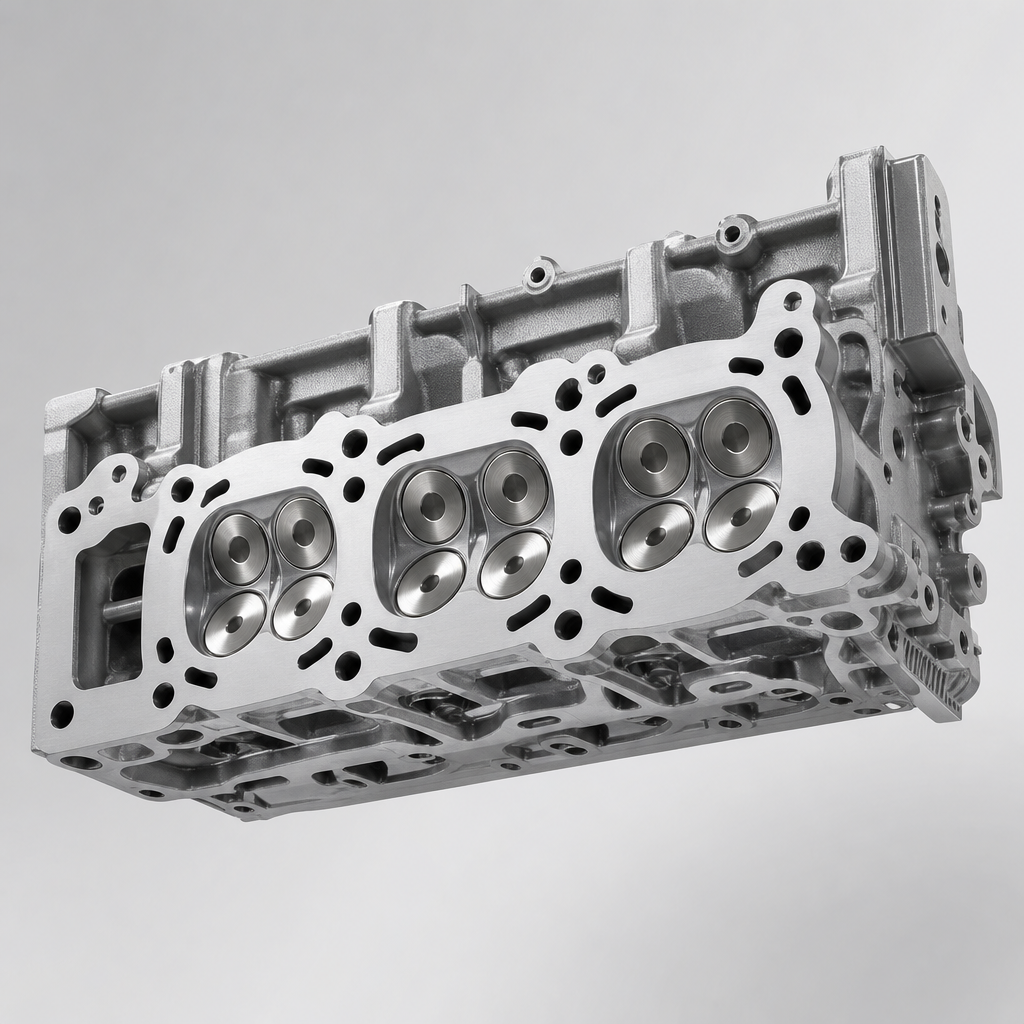
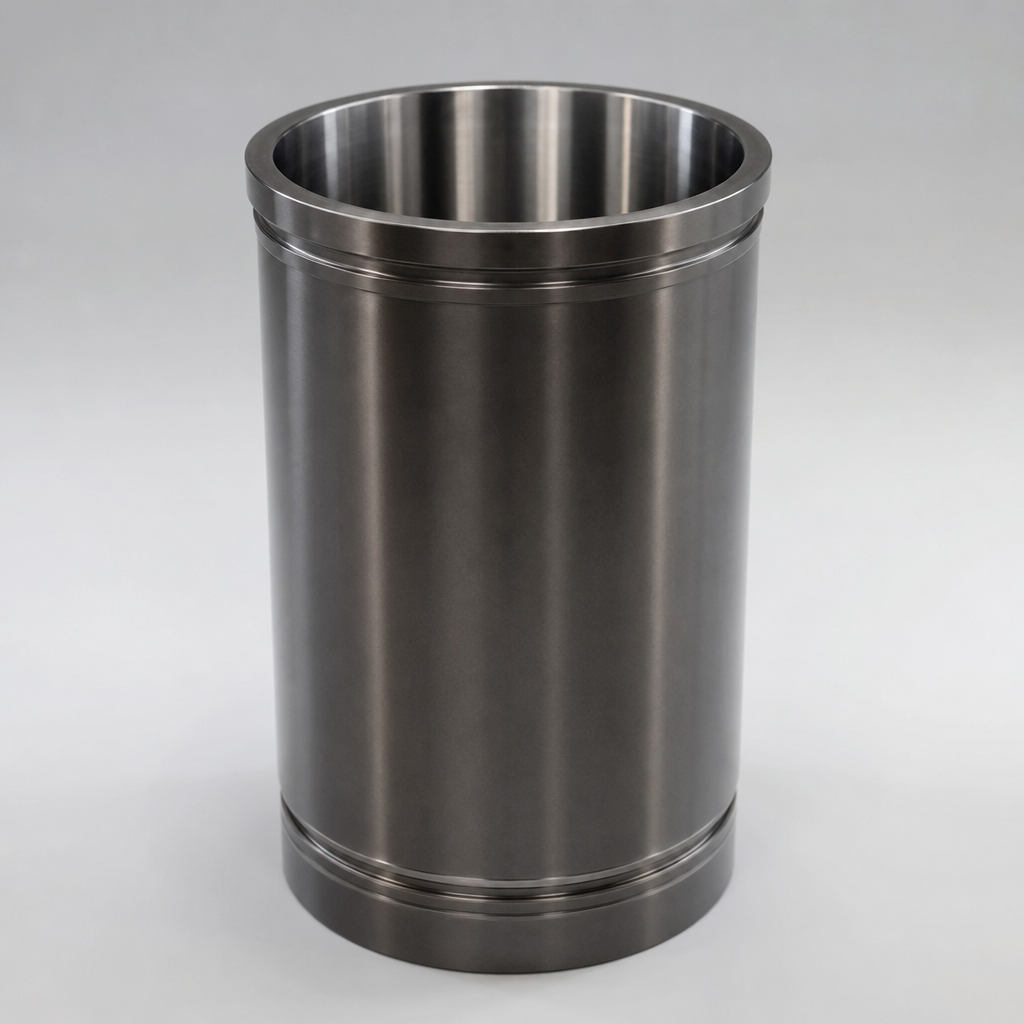
A **white smoke from exhaust repair cost guide** should begin with a simple distinction: white smoke is a symptom, while repair cost comes from the fault behind it. For fleet workshops, repair groups, and parts buyers, that difference is the whole job. One vehicle needs nothing more than confirmation of cold-weather condensation. Another ends up with a head-gasket set, machining, fresh bolts, fluids, and a week of downtime. At the top end, a cracked head, damaged block, or failed turbo can push the invoice beyond **$8,000**.
In most markets, the real spread is wide: roughly $80 for a minor leak inspection and hose repair, up to $8,000+ for severe internal engine damage or engine replacement. Labour often makes up 35-60% of the invoice once the cylinder head comes off. The major cost driver is not the smoke itself but the failure path: coolant entering the chamber or exhaust, unburned fuel leaving as vapour, or harmless moisture burning off in a cold exhaust. Time matters too. A vehicle driven another 500-2,000 km with active coolant intrusion can move from a manageable sealing repair to head, turbo, catalyst, DPF, or engine damage.
That is why accurate quoting has to follow inspection, not assumption. Cold-start behaviour, coolant loss rate, oil condition, compression balance, leak-down results, and combustion-gas evidence in the cooling system all change the commercial picture. A useful estimate should also state the stage of certainty: diagnosis only, strip-down in progress, or full measurement completed. This guide breaks down the main cost bands, the failure patterns behind them, and the parts groups that usually determine the final invoice. Driventus is an independent aftermarket manufacturer; brand names are referenced for fitment only. Buyers reviewing replacement parts can also check our catalog, quality system, and custom manufacturing.
First decision: harmless vapour or a billable fault?
Not every white plume leads to a repair order. In practice, the first commercial decision is whether the exhaust is showing normal condensation, coolant contamination, or fuel-related vapour.
The three usual explanations are:
Normal condensation after a cold start, often clearing within 1-3 minutes or the first 2-5 km in cold, humid conditions
Coolant entering the combustion chamber or exhaust path, commonly from a head gasket failure, cracked head, cracked block, or EGR cooler leak where fitted
Unburned fuel vapour, seen more often on diesel engines with injector, timing, glow, or compression issues
The fastest way to frame risk is to ask when the smoke appears and whether it disappears fully. Vapour that clears as the exhaust warms may carry zero repair cost. Smoke that remains at idle for 5-10 minutes, continues under load, or returns after full warm-up usually points to a real fault.
A workshop should also check for signs that move the case out of the low-risk category:
Sweet coolant odour at the tailpipe
Early or excessive expansion-tank pressurisation
Milky oil, rising oil level, or coolant contamination
Coolant loss greater than about 0.25-0.50 L per 100 km with no visible external leak
Compression spread above roughly 10-15% between cylinders
Leak-down above about 20% on a suspect cylinder
Those are not cosmetic details. They are the indicators that separate a no-parts release from a head-off job.
Cost map by failure mode: what actually changes the invoice
The symptom may look similar across vehicles. The invoice usually does not. Some repairs are parts-led. Others are dominated by labour, machining, and secondary damage.
Fault source
Typical parts involved
Usual repair scope
Indicative cost range*
Condensation only
No parts
Verify and release
$0-$80
Minor external coolant leak reaching hot exhaust
Hose, clamp, flange gasket
Leak repair and clean-down
$80-$250
Intake or manifold coolant passage leak
Intake gasket, manifold gasket
Gasket replacement, pressure test
$180-$600
Head gasket failure
Head gasket set, head bolts, fluids
Strip, inspect, skim if required, reassemble
$700-$2,500
Cracked cylinder head
Head, gasket set, bolts, seals
Replace head or rebuild after testing
$1,200-$3,800
Cracked engine block
Short block or complete engine
Major rebuild or engine replacement
$2,500-$8,000+
Turbocharger coolant or oil seal failure
Turbocharger, feed/return lines, gaskets
Turbo replacement and system flush
$600-$2,200
Diesel injector or timing fault
Injectors, seals, control components
Test, code, replace as needed
$250-$1,800
EGR cooler internal leak where fitted
EGR cooler, gaskets, coolant
Cooler replacement and verification
$450-$1,600
</tr></thead><tbody> </tbody></table>\*Indicative combined parts and labour range in export-market workshop pricing, excluding local taxes.
For quoting, four cost buckets matter most:
Diagnostic labour: usually 0.5-2.0 hours
Primary repair labour: commonly 4-8 hours for intake or EGR work, 8-18 hours for head-gasket jobs, and 12-25+ hours for engine replacement
Parts basket: from less than $50 for basic hoses and clamps to $700-$2,000+ for head, turbo, or major component assemblies
Sublet machining/testing: often $80-$350 for pressure testing, skimming, crack inspection, and valve work
This is where a white smoke from exhaust repair cost guide becomes useful or useless. If it only lists symptoms, it stays generic. If it ties those symptoms to the likely invoice structure, buyers can price risk properly.
A hose leak onto a hot exhaust is a short repair. A head gasket may start as one line item and expand into bolts, seals, machining, fluids, and aftertreatment inspection. Same smoke. Completely different commercial outcome.
Before you quote parts: a step-by-step inspection path
The most expensive mistake is early certainty. Quoting a head gasket before confirming the fault path often leads to missed parts, underpriced labour, or comeback claims.
A dependable workflow is usually:
1. Verify the complaint at cold start, warm idle, and under load 2. Pressure-test the cooling system cold and hot, using cap-rated pressure or workshop specification 3. Check for combustion gases in coolant with a block tester or equivalent analyser 4. Run compression or leak-down tests across all cylinders 5. Inspect plugs or injector tips for steam-cleaned cylinders or unusual deposits 6. Check engine oil for dilution, emulsification, or overfill 7. Approve strip-down only if test data supports internal leakage 8. Measure before final quoting: head flatness, crack status, surface condition, liner protrusion where relevant
For service networks and procurement teams, the record set matters almost as much as the repair itself. Buyers should ask workshops to document:
Coolant consumption per 100 km or per operating hour
Whether overheating happened before the smoke complaint
Compression figures for every cylinder
Leak-down percentage and air-loss path: radiator, crankcase, intake, or exhaust
Head-flatness measurement after removal
Pressure-test result for the head and, where relevant, the EGR cooler
Whether the engine uses torque-to-yield head bolts
Whether catalyst, oxygen sensor, DPF, or SCR components may have seen coolant contamination
A practical approval structure looks like this:
Quote Stage 1: diagnosis only, typically 0.5-2.0 hours
Quote Stage 2: strip and inspect, often 4-8 additional hours
Quote Stage 3: final repair quote after measurement and reuse decisions are confirmed
That staged approach is slower at the front. It is usually cheaper at the back.
Where replacement parts are needed, buyers often review sealing and related engine components together through our catalog, especially when multi-site repair groups are standardising kits by engine family.
Spec deep-dive: which parts drive cost, delay, and comeback risk
White-smoke jobs rarely become expensive because of one dramatic component alone. More often, the invoice grows through labour overlap, one-time-use hardware, machining, and small missing items that stop reassembly.
Typical parts on a head-gasket repair:
Head gasket set
Cylinder-head bolts or studs where specified
Valve cover gasket
Intake and exhaust manifold gaskets
Valve stem seals if the head is stripped
Timing parts if access requires removal
Coolant, engine oil, and filter
Thermostat and water pump when preventive replacement makes sense
Typical parts on a turbo-related repair:
Turbocharger assembly
Oil feed and return gaskets or pipes
Coolant line seals where water-cooled
Exhaust mounting gasket set
Intake seals and hose clamps
For workshop supply, the high-risk items are often the cheapest ones. A $5-$20 omitted seal, bolt, or clamp can leave a vehicle waiting 24-72 hours for completion. That is why kit structure matters.
The most common invoice drivers break down like this:
Head gasket set: value depends on material construction, bore tolerance, coating consistency, and hole-position accuracy
TTY head bolts: low-cost per piece, but often mandatory; reusing them can create immediate comeback risk
Water pump and thermostat: moderate-cost items with strong labour overlap once access is open
Turbo oil feed hardware: inexpensive relative to the turbo, but critical because contamination or restriction can destroy the replacement unit
Machining and pressure testing: often underestimated in early quotes, yet frequently one of the largest additions on head jobs
From a sourcing perspective, a complete kit often outperforms a lower piece price. First-time completion matters more than saving a few dollars on one gasket line.
Manufacturing control is also relevant here. Head gaskets and manifold gaskets should be traceable to material and batch records under a documented quality system aligned with IATF 16949:2016 and ISO 9001:2015. Buyers commonly ask for flatness, thickness, bead or stopper height, coating adhesion, torque-retention, and leakage-validation data. Where elastomeric or coated materials are supplied into the EU, REACH (EC) No 1907/2006 documentation is commonly requested as well.
This is especially useful when stocking engine components for recurring failures across shared engine platforms.
Repair or replace? A commercial threshold framework
Not every confirmed fault should be repaired. The technical answer and the economic answer are sometimes different.
A head-gasket or upper-engine repair is often still economical when:
Overheating was brief or absent
Compression loss is limited rather than widespread
The head remains within service flatness limits
There is no bearing noise or long-term coolant-in-oil damage
The block deck remains serviceable
The case weakens quickly when:
The engine hydro-locked
Coolant contaminated the oil for an extended period
The cylinder head fails pressure testing
The block is cracked or warped
Turbocharger and aftertreatment components also need replacement
For fleets, a simple rule is to compare the all-in repair estimate with both asset value and downtime cost. Once the repair reaches roughly 40-60% of market value, or creates more than 3-7 days of lost service, engine-swap or replacement options usually deserve a serious review.
A common failure mode in approvals is quoting only the first visible job. A vehicle comes in as a head-gasket case. After strip-down, the parts basket expands by 20-35% because the head fails pressure test, the turbo shows contamination, or the DPF requires inspection. That shift is normal. It should be anticipated.
On the supply side, the same economics shape stocking:
Fast-moving service kits are usually stocked locally when monthly demand is predictable
Large castings, heads, and turbo assemblies are often held regionally to limit dead stock
Mixed-engine workshop groups often prefer kit MOQs of 10-50 sets per SKU rather than container-scale buys
Slower heavy items are commonly sourced on make-to-order or scheduled replenishment terms
If a repair network needs adapted kits, label control, or mixed-load supply, that usually falls under custom manufacturing.
After the repair: how good shops prevent a second failure
A repaired vehicle can still come back smoking. Usually for one of two reasons: the original cause was only partially identified, or adjacent parts were reused after they were already outside service limits.
Post-repair validation should include:
Cooling-system pressure retention after a full heat cycle
Combustion-gas recheck in coolant
Confirmed thermostat opening and fan operation
Verification that oil and coolant circuits are no longer cross-contaminating
Road test under load with exhaust observation
Final coolant level confirmation after cool-down
Strong release criteria are straightforward:
No abnormal white plume once warm idle stabilises
Cooling system holds specified test pressure without meaningful drop
No fresh coolant loss during road test or handover cycle
No overheat events, pending misfire codes, or injector balance faults after repair
For buyers, this section matters because comeback prevention starts upstream. Dimensional consistency, lot traceability, and inspection records on gaskets, pumps, turbo hardware, and seals usually matter more than broad catalogue size.
Commercial controls should match the repair profile:
MOQ logic: gasket and seal programs often work at 25-100 sets per SKU, while private-label or custom-packed kits may require higher volumes
Price logic: compare unit cost against completion rate, not just piece price
Lead-time logic: fast-moving sealing kits are often 2-6 weeks ex works when tooling is approved, while new custom kits or validation samples can extend to 6-10 weeks
Tolerance logic: fit-critical and sealing parts should be controlled to drawing dimensions with recorded inspection results, especially for thickness, hole location, port alignment, and surface finish
If your team is assessing recurring coolant-ingress or exhaust-smoke repairs, the cleanest approach is still the least glamorous one: start with measured failure data, then build the parts basket around the confirmed fault path.
Frequently asked questions
Yes. Light vapour on a cold start can be normal condensation, especially in low ambient temperatures or humid conditions. It should usually clear within 1-3 minutes or after the exhaust reaches operating temperature. Persistent white smoke, coolant loss above a trace level, misfire, or a sweet odour usually justifies pressure testing and combustion-gas checks.
No. White smoke can also result from an intake gasket leak, EGR cooler fault, injector issue, turbocharger problem, timing error, or simple condensation. The correct process is symptom verification followed by cooling-system, compression, and leak-down testing, then strip-down measurements if the first tests indicate internal leakage.
Ask for batch traceability, material-control records, dimensional inspection data, and compliance documentation where required, such as REACH (EC) No 1907/2006 for relevant materials. For production control, IATF 16949:2016 and ISO 9001:2015 are useful benchmarks. Commercially, also ask for MOQ by SKU, sample policy, ex-works lead time, packaging options, and whether the supplier can build complete service kits rather than single loose items.
If you are reviewing parts supply for coolant-ingress, gasket, water pump, or turbo-related repairs, you can [request a quote](/contact.html) with your engine list, target MOQ, and demand profile.