**Wheel hub assembly replacement cost** varies more than many buyers expect. The spread is not just about the invoice price of the hub. It comes from how the assembly is built, how hard it is to remove the old unit, what hardware must be renewed, and how much risk sits behind the job once the vehicle leaves the bay.
A basic first-generation bearing-and-hub unit is a different cost proposition from a preloaded assembly with an integrated wheel speed sensor, flange hardware, and OE-equivalent tolerance control. Labour shifts too: vehicle class, axle design, corrosion, press-fit versus bolt-on construction, tool access, and whether the repair includes axle nuts, seals, backing plates, alignment, or runout checks all change the final number.
For distributors, repair groups, and procurement teams, the real issue is total service-chain cost. A cheaper hub can become the expensive option if sensor output is unstable, hardware is missing, stud quality is weak, or flange runout creates repeat labour. In current aftermarket buying, a common stability benchmark for a passenger-vehicle hub assembly is hub-face runout at or below 0.03-0.05 mm, flange perpendicularity within drawing tolerance, rotational torque within an approved window, and 100% sensor-function verification where the sensor or encoder is integrated.
The sections below break wheel hub assembly replacement cost into practical buying decisions: what makes up the installed cost, where market ranges usually sit, which specifications actually move price, how low-cost and OE-equivalent options compare, and what validation steps reduce claim risk later.
Start with the real cost stack, not just the hub price
When evaluating wheel hub assembly replacement cost, separate it into three buckets:
Component cost
Labour cost
Risk cost
That sounds simple, but many buying mistakes happen because only the first line is compared.
A modern hub assembly may include:
Hub flange
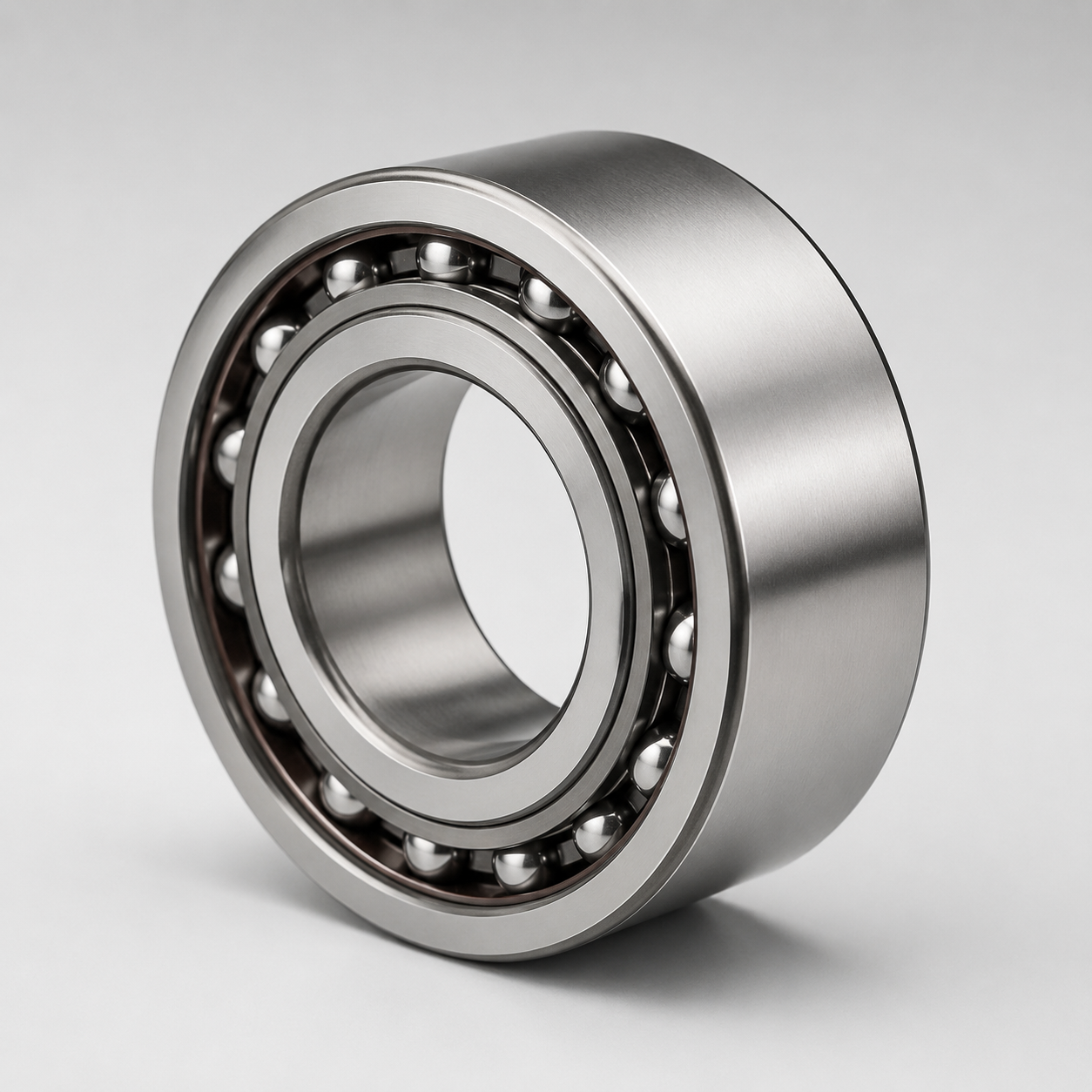
Rolling-element bearing set
Wheel mounting studs or bolts
Integrated ABS / wheel speed sensor or encoder ring
Seal package
Circlip, axle nut, or installation hardware in some kits
Labour often overtakes part value on seized, high-mileage, or road-salt-exposed vehicles. Front and rear jobs can differ sharply. So can bolt-on and press-fit designs.
</tr></thead><tbody> </tbody></table>A practical installed-cost model for one corner looks like this:
Total installed cost = part cost + labour hours x local labour rate + hardware + expected claim reserve + freight/handling
Useful planning assumptions:
Bolt-on rear hub, clean vehicle: 0.7-1.2 labour hours
Front driven hub, moderate corrosion: 1.2-2.0 labour hours
Press-fit bearing/hub arrangement: 2.0-3.5 labour hours
Road-salt seizure or spline damage risk: add 0.5-1.5 hours contingency
New axle nut / snap ring / mounting bolts: US$6-35 per corner depending on platform
Runout or ABS diagnostic check: 0.2-0.5 hours
The commercial point is blunt: a US$12-20 saving on the hub can disappear with only 0.2-0.3 extra labour hours at US$80-120/hour, or with one ABS-related comeback. That is why kit completeness, dimensional consistency, and sensor stability directly shape wheel hub assembly replacement cost.
Use vehicle type to estimate the likely replacement-cost window
The figures below are indicative 2026 aftermarket ranges for replacement parts and installed service in major English-speaking markets. Actual values still depend on vehicle park, labour rate, brand position, and whether the workshop fits an economy, mid-range, or OE-equivalent unit.
Vehicle/application
Typical part range
Typical labour range
Total fitted range
Small passenger car, non-driven axle
US$45-110
US$90-220
US$135-330
Mid-size passenger car, driven axle
US$65-180
US$120-300
US$185-480
SUV / crossover with integrated sensor
US$90-220
US$140-360
US$230-580
Light commercial van / pickup
US$110-280
US$160-420
US$270-700
Premium or low-volume platform
US$150-380
US$180-500
US$330-880
</tr></thead><tbody> </tbody></table>These ranges assume one corner only.
If both sides are replaced in one visit, labour per side may drop slightly because setup time is shared. The total invoice still rises, especially when hardware is renewed on both sides and extra inspection is added.
Why one axle costs more than another
Rear non-driven hubs are often straightforward bolt-on units. Front driven hubs may involve:
Driveshaft removal
A new axle nut torqued to specification, sometimes with torque-angle procedure
Extra care around ABS harness routing and connector protection
More intensive corrosion cleaning on mating surfaces
Higher risk of seized splines or damaged fasteners during removal
Architecture matters just as much as vehicle class. Some platforms use compact bolt-on hub units that come off quickly. Others need the bearing pressed from the knuckle, component transfer, or suspension disassembly. That is where wheel hub assembly replacement cost jumps.
Indicative labour-hour benchmarks behind these ranges
Application type
Common service time
Rear bolt-on hub, passenger car
0.8-1.1 hr
Front bolt-on hub, FWD passenger car
1.2-1.8 hr
SUV / AWD front hub with sensor
1.5-2.2 hr
Van / pickup heavy-duty front hub
1.8-2.8 hr
Press-in bearing + hub service
2.3-3.8 hr
</tr></thead><tbody> </tbody></table>For buyers planning stock, these differences matter. High-turn passenger references may justify local shelf coverage. Slower-moving van or premium numbers often make more sense through central stocking, planned fill rates, or consolidated sourcing.
Typical aftermarket supply economics by order size
Buying scenario
Typical MOQ
Typical ex-works price logic
Typical lead time
Mixed trial order for validation
20-50 pcs per SKU
Highest unit price due to setup and packaging spread
30-45 days if existing tooling
Regular distributor order
100-300 pcs per SKU
Mid-level pricing, stable carton and marking
35-50 days
Programme / private-label run
500-1,000+ pcs per SKU
Better price due to machining, heat-treat, and packaging scale
45-60 days
</tr></thead><tbody> </tbody></table>In practice, economy-grade passenger hubs may move at US$18-35 ex-works, mid-range at US$28-55, and OE-equivalent sensor-integrated units at US$45-95+, depending on mass, bearing type, and included hardware. Landed pricing then rises with freight mode, import duty, carton density, and warranty allowance.
What usually makes one hub assembly cost more than another
Not all hubs for the same application are built to the same process discipline. Two parts may fit the same vehicle and still carry very different field risk.
Differences in wheel hub assembly replacement cost usually come from process capability, materials, sensor validation, and included content—not just fitment.
Common technical cost drivers
Bearing architecture: Gen 1, Gen 2, and Gen 3 designs carry different integration levels and assembly complexity.
Ring and flange metallurgy: steel cleanliness, hardness control, and heat-treatment stability influence fatigue life.
Raceway finishing: tighter surface finish helps noise control and rolling stability.
Preload setting: bad preload leads to heat, noise, or premature looseness.
Sensor integration: active or passive wheel speed sensing adds electronics cost and validation work.
Corrosion protection: coating quality matters in road-salt and humid environments.
Stud quality: thread accuracy and strength affect installation consistency.
Grease and sealing system: lubricant and seal design shape contamination resistance and service life.
For OE-equivalent aftermarket supply, buyers should verify hub face runout, rotational torque, axial play, sensor consistency, and mounting-interface accuracy. Where relevant, material and substance compliance should also align with REACH (EC) No 1907/2006.
A manufacturer working under IATF 16949:2016 and ISO 9001:2015 should be able to show traceability, incoming-material control, process records, and inspection planning. Buyers can review our quality system for the framework used on replacement component production.
Concrete specifications buyers should request
Ask suppliers to state target values or control windows, not general quality claims:
Hub face runout: typically <=0.03-0.05 mm
Flange perpendicularity: often <=0.04-0.06 mm depending on platform
Axial end play: commonly controlled to near zero measurable play on preloaded Gen 2/Gen 3 units
Rotational torque: approved range by bearing size and grease fill, for example 1.0-3.5 N·m on many passenger units after assembly
Wheel stud thread class / fit: often checked 100% with go/no-go gauges
ABS sensor air-gap / signal validation: 100% electrical continuity plus dynamic signal sampling where integrated
Salt-spray resistance: commonly 72-240 hours depending on coating type and programme expectation
Grease fill quantity: often ±3-5% versus target mass
Heat treatment hardness: lot-by-lot verification per drawing requirement
Process steps that separate low-price from stable-price supply
1. Forging or bar-stock control with heat number traceability 2. CNC turning and drilling with in-process SPC on critical diameters and PCD features 3. Heat treatment with hardness mapping and distortion review 4. Grinding or fine finishing of raceway-related surfaces 5. Washing and cleanliness control before grease fill and final assembly 6. Bearing preload setting by force or displacement control during assembly 7. 100% sensor function check on integrated ABS references 8. Final rotational torque and noise check by sampling or 100% according to programme level 9. Rust-preventive oil or e-coat / phosphate treatment before packing 10. Drop-tested packaging that protects studs, connector clips, and encoder surfaces
Those controls add cost up front. They also lower the chance that a cheap quote turns into a higher wheel hub assembly replacement cost after install.
Low-cost versus OE-equivalent: where the saving holds, and where it fails
This is not a simple premium-versus-budget debate. The better question is: where can you accept variation, and where will variation create labour claims?
Comparison point
Lower-cost option
OE-equivalent focused option
Bearing noise control
Wider performance spread
Tighter NVH consistency
Flange runout
More variable machining
Closer control of perpendicularity and runout
Sensor reliability
Higher risk of intermittent ABS issues
More stable signal validation
Coating durability
Basic transit protection
Better corrosion resistance in field use
Included hardware
May be omitted
More often supplied where fitment requires it
Return rate risk
Higher on sensitive applications
Lower total claim exposure
</tr></thead><tbody> </tbody></table>For price-led retail, a wider performance spread may be commercially acceptable if returns are manageable and labour reimbursement is limited. For repair chains, fleets, and installer-led distributors, that logic usually fails. Labour claims erase part savings fast.
The same part-positioning issue shows up by vehicle type. A budget hub may be acceptable on an older low-value platform with limited mileage. It is far harder to justify on taxis, delivery vans, police vehicles, or fleet assets where downtime and repeat visits are expensive.
If you are reviewing private-label or programme supply, our custom manufacturing support covers packaging, marking, specification alignment, and inspection documentation for agreed applications.
A simple channel-comparison model
Factor
Economy-focused hub
OE-equivalent hub
Example buy price
US$24
US$39
Average install labour
1.5 hr
1.5 hr
Labour rate
US$100/hr
US$100/hr
Hardware included
Partial
Full
Extra hardware needed
US$12
US$0-5
Estimated return/claim rate
3.0-5.0%
0.5-1.5%
Typical labour claim reserve per unit sold
US$4-10
US$1-3
Expected total service cost tendency
Lower upfront, less predictable
Higher upfront, more stable
</tr></thead><tbody> </tbody></table>In this example, the OE-equivalent unit costs US$15 more to buy. But if it avoids one labour claim in every 30-50 sales, margin can improve.
Questions to ask before approving the lowest quote
Is the quote for a bare hub only or a complete assembly with studs, sensor, and nut where required?
Are mounting bolts, axle nuts, and circlips single-use items on the target application?
What is the supplier's warranty return rate by failure mode for similar references?
What controls are declared for runout, preload, and sensor testing?
Is corrosion protection limited to plain oil or suitable for salt-belt markets?
Does the supplier support mixed-SKU MOQ, or only full MOQ per reference?
That short list helps turn a low unit quote into a real wheel hub assembly replacement cost comparison.
Validation checklist: the steps that prevent expensive surprises later
Cost control gets easier when fitment and quality problems are screened out before shipment. For hub assemblies, good validation should cover dimensions, installed performance, and logistics protection.
Key checks before approval
Mounting flange dimensions against drawing
Bolt-hole position and stud geometry
Bearing internal clearance / preload verification
Rotational torque measurement
Hub face runout and flange wobble
Seal integrity and grease retention
Wheel speed sensor output where integrated
Salt-spray or corrosion-resistance checks where specified
Packaging protection to avoid transit damage to sensor leads and studs
Where wheel-end performance interacts with the broader brake system, buyers may also reference wider aftermarket durability expectations such as SAE J2527 for brake dynamometer screening, even though it is not a hub-bearing standard. Likewise, emissions standards such as ECE R-83 do not apply directly to wheel hubs, but they illustrate the level of documentation discipline often expected in export programmes.
In practice, application-specific evidence is more useful than a generic declaration. Sample fit checks, torque confirmation, ABS signal verification, and post-install NVH feedback tell you more.
Driventus is an independent aftermarket manufacturer; brand names are referenced for fitment only.
For procurement teams building application coverage, our catalog can be used as a starting point for replacement-part families and programme discussion.
Recommended approval workflow for buyers
1. RFQ stage: request drawing-critical dimensions, included-hardware list, coating type, warranty terms, MOQ, and quoted lead time. 2. Sample stage: inspect 5-10 pcs per reference for appearance, dimensions, stud fit, connector fit, and packaging condition. 3. Bench validation: check runout, rotational torque, marking traceability, and sensor signal on all samples. 4. Vehicle trial: install on 2-5 vehicles representative of the target platform mix, including at least one higher-mileage or corrosion-exposed vehicle where possible. 5. Post-install review: confirm no ABS warning light, no abnormal NVH, and no mounting-face interference after 100-500 km field use. 6. Pilot order: place limited commercial volume and monitor warranty/return data before releasing full programme business.
Practical acceptance criteria often used in aftermarket sourcing
Check item
Typical control approach
Critical dimensions
Cpk/SPC evidence on selected dimensions where volume justifies it
Runout
Sample or 100% check to agreed limit, often <=0.05 mm
Rotational torque
Compared against approved reference window
Sensor function
100% electrical test for integrated sensor units
Packaging
No stud punch-through, no connector crush, no corrosion after storage simulation
Carton marking
Part number, batch/lot, origin, quantity, barcode if required
</tr></thead><tbody> </tbody></table>These steps reduce the odds that a low part price turns into a much higher wheel hub assembly replacement cost after fitting.
How distributors and repair groups actually bring installed cost down
The fastest way to reduce wheel hub assembly replacement cost is not always negotiating a lower buy price. It is removing wasted labour, avoiding repeat repairs, and cutting preventable claims.
Recommended actions:
Use sales history to identify high-frequency wheel-end references by region.
Approve hub assemblies by validation level, not by price alone.
Standardise whether axle nuts, circlips, sensor clips, and related hardware must be included.
Track warranty returns by failure mode: noise, play, ABS fault, seal leakage, stud issue.
Ask suppliers for PPAP-style dimensional evidence where programme volume justifies it.
Set packaging requirements for moisture protection and anti-impact separation.
Collect installer feedback on fit, torque consistency, and removal of protective coatings before installation.
Review low-volume SKUs regularly to reduce dead stock and improve purchasing focus.
For importers serving the EU, UK, US, Canada, Australia, and Brazil, consistency in carton labelling, traceability, and substance compliance can also simplify customs handling and downstream account approval.
When comparing supply options, include landed cost, claim rate, packaging damage rate, fitment accuracy, and install-time feedback from workshops. Unit price alone hides too much.
For application review or commercial discussion, you can request a quote.
Operating practices that usually improve cost performance
Build an A/B/C SKU matrix: A-items stocked locally, B-items stocked centrally, C-items bought to forecast or order.
Set a minimum completeness rule for applications needing axle nuts, circlips, or sensor clips so workshops are not delayed by missing hardware.
Use a claim-cost threshold: if labour reimbursement plus freight regularly exceeds the savings from a cheaper line, reclassify that SKU to OE-equivalent supply.
Track first-90-day returns separately from long-tail warranty, because early returns often point to fitment, sensor, or packaging issues rather than fatigue life.
Review supplier OTIF and actual production lead time, not just quoted lead time, especially on low-volume references.
Example purchasing logic by business model
Buyer type
What usually matters most
Suggested sourcing approach
Price-led online retailer
Sharp unit price, low carton damage, broad application list
Mixed line strategy with strict return-data monitoring
Installer-focused distributor
Fit speed, low comeback rate, included hardware
Mid-range to OE-equivalent on high-labour applications
Fleet maintenance group
Downtime, repeatability, warranty response
Approved vendor list with field-trial sign-off
Private-label importer
Margin, brand consistency, packaging compliance
Programme MOQs with fixed inspection plan and artwork control
</tr></thead><tbody> </tbody></table>## MOQ, price, and lead-time trade-offs buyers should expect
Lower MOQ usually means higher unit price because machining setup, mixed inventory balancing, and packaging changeover are spread over fewer pieces.
Faster lead time often means choosing from existing semi-finished inventory, which can limit coating, hardware-kit, or branding options.
Private-label packaging generally adds 7-15 days for artwork confirmation, carton printing, and packing-line scheduling.
Consolidated multi-SKU orders can reduce freight per unit, but only if carton dimensions and pallet density are controlled to avoid damage to studs and sensor leads.
For many buyers, the strongest result comes from splitting the range: OE-equivalent supply for labour-sensitive or fleet-heavy references, and value-focused supply for older, lower-risk passenger applications. In practice, that usually lowers total wheel hub assembly replacement cost better than forcing one price tier across every SKU.
Frequently asked questions
The spread usually comes from bearing quality, preload control, sensor integration, corrosion protection, included hardware, and validation depth. Two parts may fit the same vehicle but still differ in runout control, NVH performance, coating durability, and warranty risk. In buying terms, the quote may also differ because one supplier prices a bare assembly while another includes studs, nut, circlip, branded packaging, and 100% sensor testing.
Often, yes. On seized or driven-axle applications, removal time, corrosion cleaning, and hardware renewal can make labour equal to or higher than the part value. A 1.5-hour job at US$100 per hour already adds US$150 before hardware, so even a modest fitment issue can change the real wheel hub assembly replacement cost more than a small unit-price difference.
Not always, but many workshops recommend checking the opposite side for noise, play, and mileage-related wear. For fleet maintenance, replacing in pairs may reduce repeat visits and scheduling disruption when both sides are at a similar wear stage, though the decision should still depend on condition and operating history. Buyers supporting fleets often set pair-replacement guidelines only after reviewing axle mileage, duty cycle, and historical failure symmetry.
If you are reviewing wheel-end sourcing for distribution or repair networks, Driventus can discuss fitment coverage, validation points and programme supply. Contact our team to review your requirement at /contact.html