Replacing a valve seat is a machining decision before it is an installation task. The insert has to seal the valve, transfer heat into the cylinder head, stay locked in the pocket, and leave enough material for accurate final cutting. If one of those conditions is missed, the repair may pass a quick bench check and still fail through leakage, recession, hot-spotting, or insert movement.
The right approach depends on seat material, interference fit, bore condition, seat width, guide alignment, chamber geometry, and whether the head is cast iron or aluminium. For sourcing teams, the same logic applies to the part specification: OD, ID, height, chamfer, material family, hardness, machining allowance, OD tolerance, traceability, packaging, MOQ, lead time, and inspection method all affect whether a seat is usable in repeat production.
Driventus is an independent aftermarket manufacturer; brand names are referenced for fitment only. This guide explains how valve seats are evaluated, removed, installed, finish-machined, validated, and sourced for passenger car, light-duty, and industrial engine programmes.
Start With The Job The Seat Must Survive
A valve seat has two jobs: create the valve sealing surface and conduct heat from the valve head into the cylinder head. Exhaust seats carry the heavier burden because they face higher temperature, hot gas flow, and repeated impact. When the seat geometry or material is wrong, the symptoms are usually direct: low compression, local hot spots, unstable idle, valve burning, or accelerated valve recession.
Before deciding valve seat how to replace in a specific head, define the service duty. A low-load petrol intake seat, a turbocharged exhaust seat, and an LPG or CNG industrial exhaust seat should not be treated as the same sourcing or machining problem.
Control these four requirements first:
Outside diameter and interference fit in the head bore, often controlled around 0.05-0.15 mm depending on OD, head material, and OEM practice
Inside diameter and machining allowance before final cutting, commonly leaving 0.3-0.8 mm radial stock for finishing
Material hardness, wear resistance, and heat-transfer capability, with many passenger and light-duty seats specified around 30-45 HRC or equivalent supplier ranges
Position relative to the combustion chamber, valve guide, valve face, installed height, and final contact band
For procurement, the question is not only whether the insert can be pressed into the head. The useful question is whether it will keep seat width, concentricity, sealing load, and heat rejection through the intended duty cycle. A purchase drawing should state OD, ID, height, chamfers, radius breaks, material, hardness, surface condition, and whether the dimensions describe the raw blank or the finish-machined seat.
Inspection Decides Whether Replacement Is Worth Doing
Do not start by cutting out the old insert. Start by proving the head can accept a reliable repair.
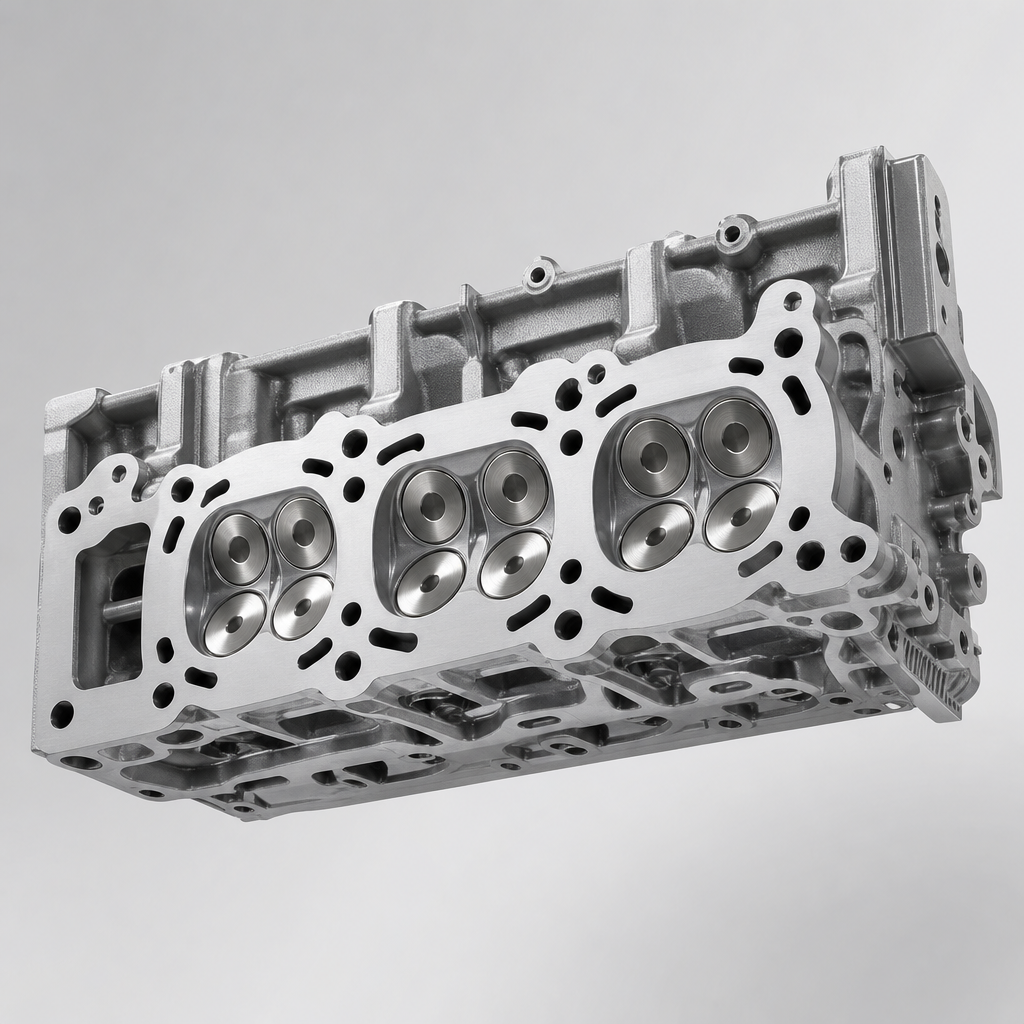
Check valve margin, guide wear, seat recession, head flatness, chamber condition, and signs of overheating. A new seat may cut cleanly on the machine but fail in service if the guide is already outside specification. In aluminium heads, inspect for cracks between the seat pocket and water jacket and around thin bridge areas.
Use this pre-machining checklist:
1. Verify valve stem-to-guide clearance against the engine maker's limits. Typical light-duty intake clearances may be about 0.025-0.060 mm and exhaust clearances about 0.040-0.090 mm, but the engine data must govern. 2. Inspect the existing seat for pitting, burning, looseness, movement, or recession. Recession greater than about 0.25 mm from the service baseline often justifies replacement. 3. Confirm chamber depth, valve protrusion, installed height targets, and recession limits before selecting an oversize insert. 4. Check whether the head has already been machined oversize or fitted with a previous repair insert. Common service oversizes may increase OD by 0.25, 0.50, or 1.00 mm.
If OE cross-reference data is used, confirm the application by the supplied part-number pattern, such as OE 06A107065 when provided by the customer or catalogue. Do not rely on visual similarity. Two seats can look alike and still differ in material, height, machining allowance, or required interference.
For repeat purchasing, record the measured pocket size, requested oversize, valve head diameter, guide ID, and final seat angle in the RFQ. That prevents suppliers from quoting from catalogue guesswork when the repair actually depends on measured head condition.
Tooling Is A Process Control, Not A Workshop Accessory
The tool list is familiar, but the purpose is often underestimated. Each tool protects one part of the repair: bore integrity, seat retention, guide alignment, final sealing, or inspection evidence.
Item
Purpose
Typical control point
Valve seat remover or boring tool
Extract the old seat
Leave parent bore undamaged, typically stopping 0.05-0.10 mm before breakthrough
Seat bore micrometer or bore gauge
Measure the pocket
Check size, taper, and ovality at 3 depths and 4 clock positions
Liquid nitrogen, dry ice, or hot head fixture
Assist installation
Control thermal handling; avoid moisture and thermal shock
Seat driver or press tooling
Install the new seat squarely
Prevent tilt, galling, and edge damage; driver face must contact evenly
Seat and guide machine
Cut final seat angles
Control concentricity, width, and contact position
Dial indicator
Check runout
Guide-to-seat alignment, commonly held below 0.03-0.05 mm TIR for quality rebuilds
</tr></thead><tbody> </tbody></table>Replacement seats are commonly made from sintered metal, alloy steel, powdered metal, or hardened cast iron. Selection depends on engine type, fuel, operating temperature, and head material. A qualified supplier should state the material family, hardness range, dimensional tolerance, and machining allowance supplied on the blank.
For buying control, ask the supplier to define OD tolerance clearly, such as +/-0.01 mm, +/-0.015 mm, or another agreed limit. Interference fit cannot be managed from nominal size alone, especially when different repair oversizes are stocked together.
Removal Failure Modes: Protect The Pocket First
The safest removal method is usually to machine the old seat wall thin, then collapse the ring inward. Pulling or forcing the insert out can tear parent metal from the bore and turn a normal replacement into an oversize repair or scrap head.
Use a controlled removal sequence:
1. Clean the head and identify the seat location, chamber features, and nearby thin areas. 2. Support the head on a stable fixture so the bore remains square to the tool. 3. Bore the seat wall nearly through while staying clear of the aluminium or cast iron pocket. 4. Split or collapse the remaining ring with a controlled punch or cutter. 5. Lift out the seat and inspect the pocket before choosing the repair size.
If the old seat has moved, the pocket tells the story. Look for fretting, polished areas, heat staining, aluminium pickup, or local bore distortion. These marks usually point to insufficient interference, excessive combustion temperature, detonation, poor previous machining, or loss of clamp from repeated thermal cycling.
A damaged pocket may need oversize machining or local repair before a new insert can be installed. In production remanufacturing, classify removed pockets by size band: standard, +0.25 mm, +0.50 mm, or scrap. That data helps procurement forecast real demand for repair-seat sizes instead of buying slow stock based on assumptions.
Installation Sequence: Fit, Temperature, Depth
A reliable installation starts with a clean, measured pocket. Remove carbon, oxide, burrs, and raised material left by the old insert. Measure the bore at several depths and clock positions, then compare those readings with the new seat's outside diameter.
Interference fit is the critical variable. Too little allows movement. Too much can distort the bore, damage heat transfer, or crack an aluminium head. As a working reference, many aluminium cylinder heads use roughly 0.07-0.15 mm interference on common passenger-car seat diameters. Cast-iron heads may use lower values such as 0.04-0.10 mm. Larger industrial seats, turbocharged exhaust seats, LPG/CNG applications, and thin bridge areas need engineering confirmation rather than a generic rule.
Follow this installation sequence:
1. Chill the seat blank if the approved process allows thermal contraction, for example with dry ice or liquid nitrogen using clean, dry handling. 2. Warm the cylinder head uniformly where the material and repair method require it. Avoid local torch heating that distorts the pocket. 3. Align the seat with the guide axis before pressing or driving load is applied. 4. Drive or press the seat in one continuous, square motion with the correct tooling. 5. Confirm full seating with no tilt, rock, debris trap, or visible witness gap.
After insertion, verify that the seat has not shifted and that the pocket edge has not been damaged. A slight upset at the edge is acceptable only where the design and workshop method allow it, and only if bore finish and installed depth remain controlled.
For remanufacturing work, record final installed depth. It affects chamber volume, valve protrusion, compression ratio, and future service margin. For sourced seats, specify whether the supplier ships standard OD blanks, repair oversizes, or customer-specific OD increments, because that choice changes both inventory depth and machining time per head.
Finish Cutting: Where Most Good Inserts Become Good Repairs
The installed insert is only a blank until it is cut to the correct width, angle, and location. A typical three-angle layout uses a top cut, seating angle, and throat cut. Many modern applications add more angles or radiused transitions for airflow and durability. The exact profile depends on the engine family, but the sealing band must land on the valve face in the specified position.
Watch the details that decide whether the repair lasts:
Seat width must match the duty cycle. It needs enough area for heat transfer and enough sealing pressure to prevent leakage. Typical light-duty intake seats may finish around 1.0-1.5 mm wide; exhaust seats are often about 1.5-2.2 mm depending on valve diameter and heat load.
Concentricity between guide and seat should stay within machine capability and engine specification. Many rebuilders target less than 0.03-0.05 mm TIR.
Surface finish must seal without aggressive lapping. Chatter marks, torn metal, and hard spots should be corrected by machining, not hidden with polishing.
Contact pattern should be positioned correctly on the valve face, not crowded against the margin or stem side. A common target is slightly outboard of centre while maintaining the specified margin.
Heavy hand lapping is not a fix for poor machining. It can confirm contact, but it cannot correct a crooked guide relationship, incorrect interference fit, or a seat cut too wide, too narrow, or in the wrong location.
If the supplier provides semi-finished seats, confirm the starting ID and throat allowance. The machine shop needs enough stock to cut the final 30/45/60 degree or application-specific profile without breaking through the insert geometry.
Validation Questions Before The Head Leaves The Bench
A seat replacement is complete only after the assembled head passes checks that match the failure risks. Leakage is the obvious concern, but valve protrusion, spring installed height, retainer-to-seal clearance, and cam or piston clearance can also move after seat work. In emissions-sensitive engines, seat condition affects combustion stability, misfire margin, and hydrocarbon control.
Ask these validation questions:
Does the assembled head pass vacuum or leak-down testing? Many shops use a stable vacuum reading or a low-pressure fluid/air check to screen visible leakage before shipment.
Is the contact pattern correct after marking compound verification, and has the head been cleaned so no abrasive or dye residue remains in the chamber?
Are final valve lift-to-seat, retainer, and piston clearances acceptable, especially after head resurfacing or valve-tip grinding?
For high-load, turbocharged, LPG, CNG, or industrial applications, has the process addressed exhaust seat recession and insert movement under temperature and pressure?
Where the build must align with published quality requirements, reference IATF 16949:2016 and ISO 9001:2015 for controlled processes. Check material or chemical compliance against REACH (EC) No 1907/2006 where applicable. For exhaust durability testing, buyers may ask for validation aligned with SAE J2527 where relevant, or with an equivalent internal endurance method.
Make sure the cited test method controls the actual failure mode. For purchase approval, retain a sample report showing OD, ID, height, hardness, material lot, visual condition, and packaging inspection, then tie that report to the batch number on the carton.
Buyer Scenario: Comparing Catalogue Seats With Drawing-Based Supply
For procurement, replacement quality depends on more than the finished ring. The supplier has to control dimensions, material, hardness, traceability, and packaging well enough that workshop results repeat from batch to batch. Machined edges also need protection; a damaged seat can become a rework problem before it ever reaches installation.
A practical comparison starts by separating engineering logic from commercial logic. Engineering should define OD tolerance, ID allowance, height, chamfer, material family, hardness, marking, inspection AQL, and packaging. Purchasing can then compare MOQ, unit price, tooling cost, sample cost, lead time, and order cadence.
Catalogue seats may be quoted with lower MOQs. Drawing-based or uncommon oversize seats may require 500-2,000 pieces per size, depending on material and tooling. Standard repeat items may ship in 2-6 weeks when blanks or tooling already exist. New custom sizes can require 6-10 weeks after drawing approval and sample confirmation.
Price moves with material grade, OD and height mass, machining steps, heat treatment, inspection level, and packaging density. A lower quote is not comparable unless the same tolerance and documentation package is included.
Driventus supports buyers who need repeatable supply for valve seats and related engine components. Review our catalog, confirm process capability through our quality system, or discuss drawing-based custom manufacturing for non-standard applications. If you also source guides, valves, or other top-end parts, the broader engine range is listed at /products/engine-components.html.
For programme work, request PPAP-style documentation where needed, and define acceptance limits for OD, ID, height, hardness, material family, installed-depth target, and seat angle before release. A useful supplier scorecard tracks on-time delivery, dimensional rejects, mixed-part incidents, carton damage, and engineering response time, because valve-seat supply failures often appear first as workshop rework rather than obvious incoming defects.
Frequently asked questions
Replace it if there is recession, deep pitting, cracking, looseness in the pocket, heat damage, or repeated leakage after correct valve grinding. Measure the seat, valve, and guide as a system; recession greater than about 0.25 mm from baseline, visible insert movement, or a pocket that will not hold the specified interference usually justifies replacement.
Only if there is enough remaining material to restore the specified width, angle, and contact position without moving the sealing band too far on the valve face. If the pocket is loose, cracked, oval, or already oversize beyond the next repair insert, replacement or head repair is the correct path.
Exhaust seats often use harder, heat-resistant alloys or sintered materials, but the best choice depends on fuel type, combustion temperature, head material, cooling, and duty cycle. LPG, CNG, turbocharged, and industrial engines normally need tighter material control than low-load petrol intake seats.
Yes. We work from drawing data, samples, or controlled OE cross-reference information supplied by the buyer. Driventus is an independent aftermarket manufacturer; brand names are referenced for fitment only. For accurate quoting, provide OD, ID, height, material or hardness target, annual volume, MOQ target, required documents, and requested delivery schedule.
For controlled fitment data, drawings, or sourcing support, contact Driventus and request a quote at /contact.html.