Shock Absorber Replacement Cost: What Buyers Should Expect
Shock absorber replacement cost is rarely about the damper alone. The spread between two quotes usually comes from axle position, vehicle class, labour time, hardware replacement, alignment, freight, and the supplier’s process control. For distributors, fleet buyers, and repair groups, the real metric is total installed cost against return risk.
That matters because a low ex-works price can be wiped out by noise complaints, leakage, inconsistent damping, fitment delays, or one repeat labour event. Buyers therefore need to compare dimensional fit, rod finish, seal quality, weld control, corrosion protection, and validation depth—not just catalogue coverage.
A practical B2B formula is: ex-works unit cost + accessory kit cost + freight per set + import burden + workshop labour + alignment/diagnostic time + expected warranty reserve. On a common passenger-car axle set, a damper that costs USD 8-15 more ex-works can still be the cheaper program if it reduces claims or avoids rework. Driventus operates under IATF 16949:2016 and ISO 9001:2015; in this article, the focus is how buyers should break down shock absorber replacement cost, where quotes usually go wrong, and which technical checks protect margin over time.
Start with the real number: installed shock absorber replacement cost, not piece price
Most pricing mistakes happen at the first step: comparing only the damper price. In practice, installed shock absorber replacement cost usually has four layers:
1. Damper unit price — twin-tube, monotube, gas-charged, and heavy-duty designs do not cost the same. 2. Associated hardware — mounts, bump stops, dust boots, bearings, spring seats, and fasteners may need replacement. 3. Labour time — front struts usually take more time than simple rear shocks. 4. Post-install work — alignment, road test, and on some platforms sensor or ADAS-related checks.
Buyers should also confirm whether a quote is for one unit or an axle pair. Professional service practice normally replaces dampers in pairs on the same axle to maintain left-right balance in damping, braking, and handling.
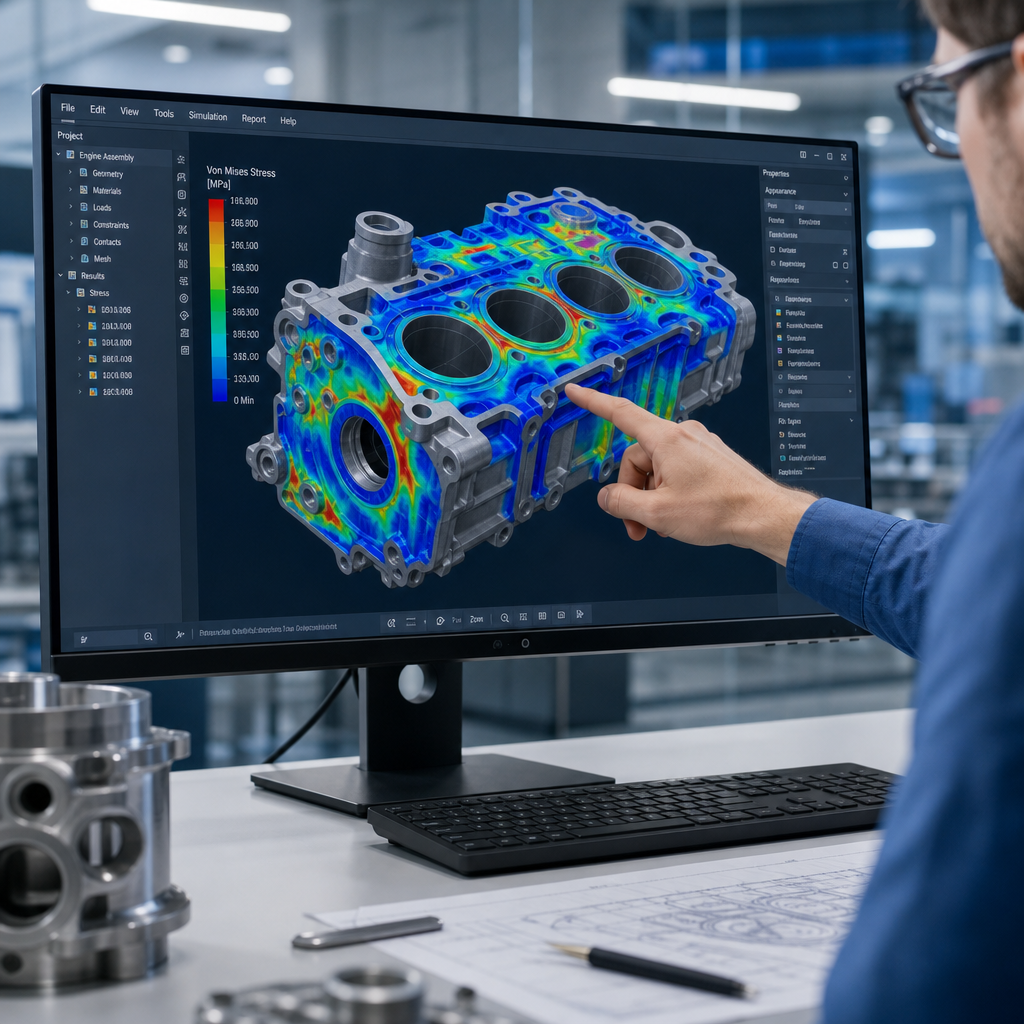
Front strut replacement, workshop process, vehicle electronics
</tr></thead><tbody> </tbody></table>Front strut work usually costs more than rear shock work because the front assembly often ties into the spring, top mount, and steering geometry. On SUVs, pickups, and light commercial vehicles, heavier assemblies and longer labour times push shock absorber replacement cost higher. Rust-prone markets add another variable: seized fasteners and corroded hardware can turn a normal job into a time-heavy one.
Concrete labour and add-on ranges buyers can model
For budgeting across workshop networks, these are practical planning ranges per axle set:
Operation
Typical labour time
Budget note
Rear shocks, simple passenger-car layout
0.8-1.5 hours
Usually lowest installed cost
Front MacPherson struts
1.8-3.2 hours
Spring compression and alignment usually required
SUV / crossover front struts
2.0-3.8 hours
Heavier assemblies, more frequent seized fasteners
LCV front or rear heavy-duty units
1.5-3.5 hours
Varies by payload package and chassis access
Wheel alignment after front strut work
0.6-1.0 hours
Often quoted separately
ADAS or steering-angle reset where required
0.2-0.8 hours
Platform dependent, not universal
</tr></thead><tbody> </tbody></table>At labour rates of USD 45-120 per hour, a difference of just 0.8 hour changes installed shock absorber replacement cost by USD 36-96 per axle before parts margin. That is why fitment accuracy and complete hardware supply have real financial value.
B2B quotation logic
Ask suppliers to quote in a structure you can compare:
EXW/FOB price per piece
price per axle set
whether mount/boot/bump stop kit is included
master carton quantity and net/gross weight
sample lead time and production lead time
MOQ by SKU and MOQ by mixed order
warranty policy and labour allowance policy
A rear shock at USD 14.80/pc FOB may look cheaper than one at USD 18.20/pc FOB. But if the lower-priced part needs separate boots, offers weaker corrosion resistance, or causes fitment friction, the installed job can end up costing more within the same sales cycle.
Benchmark the market by scenario: what buyers should expect by axle and vehicle type
The ranges below are broad trade-market references for English-speaking export markets. They are useful for planning, not for retail quoting. Actual installed prices will move with taxes, freight, duty, exchange rates, and local labour rates.
Application
Parts scope
Typical installed range per axle
Notes
Small passenger car, rear
2 rear shocks + basic hardware
USD 180-360
Simpler access, lower labour
Small passenger car, front
2 front struts + mounts
USD 320-700
Alignment usually required
Mid-size sedan / hatchback, rear
2 rear shocks + boots/stops
USD 220-420
Higher variance by platform
Mid-size sedan / hatchback, front
2 front struts + mounts + alignment
USD 380-850
Spring handling increases labour
SUV / crossover, rear
2 rear shocks
USD 260-520
Larger units, heavier-duty tuning
SUV / crossover, front
2 front struts + mounts + alignment
USD 450-980
May include electronic sensor transfer
Light commercial vehicle
2 units, front or rear
USD 300-900
Payload rating affects specification
</tr></thead><tbody> </tbody></table>These numbers assume conventional hydraulic or gas-charged aftermarket dampers. Shock absorber replacement cost climbs fast when the platform uses adaptive damping, self-levelling, electronic control, or air suspension. In those cases, both parts cost and diagnostic labour rise.
The procurement lesson is simple: lowest part cost does not guarantee lowest installed cost. A cheap damper can trigger extra workshop time, alignment repeat work, ride complaints, leakage claims, or premature replacement. Buyers managing multi-region tenders should also account for freight density, carton damage risk, and local labour differences.
Typical ex-works and import budgeting ranges
For conventional aftermarket programs, these are workable B2B planning references:
Product type
Typical EXW/FOB range per piece
Typical MOQ per SKU
Usual production lead time
Economy rear twin-tube shock
USD 8-16
100-300 pcs
30-45 days
Standard gas-charged rear shock
USD 12-22
100-300 pcs
30-45 days
Front strut assembly body
USD 18-38
80-200 pcs
35-50 days
SUV / LCV heavy-duty shock
USD 18-36
80-200 pcs
35-50 days
Monotube or premium performance type
USD 28-65
50-150 pcs
45-60 days
</tr></thead><tbody> </tbody></table>Actual pricing depends on rod diameter, tube thickness, bracket complexity, coating system, included hardware, packaging spec, and order mix. Mixed-container orders usually lower average freight burden compared with emergency air replenishment.
Freight and MOQ logic that changes landed cost
A common sourcing error is to compare only piece price without converting everything to cost per axle set. Example:
rear shock EXW price: USD 15.00/pc
2 pieces per axle set: USD 30.00
accessory kit: USD 4.00-9.00 per axle
ocean freight + inland + handling allocated: USD 2.00-6.00 per axle depending on volume and destination
import duty/tax/customs overhead: market specific
That puts a typical landed B2B parts cost for a basic passenger-car rear axle at roughly USD 36-45 before local distribution margin. Low-volume air orders can add more than the original ex-works value of the part. So MOQ planning and forecast discipline directly affect shock absorber replacement cost.
As a rule, suppliers can usually sharpen pricing when buyers offer:
annual forecast by application family
mixed-order MOQ at container level
stable private-label artwork
agreed packaging standard without repeated changes
60-90 day forward schedule visibility
Why two similar-looking dampers can produce very different cost outcomes
A shock absorber is easy to commoditise on paper. In the field, the differences show up fast. Price variation usually comes from material choice, machining control, surface treatment, validation depth, and batch consistency—not just margin.
Core technical factors
Piston rod material and finish: hard chrome quality, surface roughness, straightness, and wear resistance affect seal life and leakage risk.
Seal package: elastomer formulation and oil/temperature compatibility matter under cycling.
Tube and weld quality: poor weld control or loose tube tolerances can affect pressure retention, durability, and fit.
Valve tuning repeatability: left-right damping consistency matters for braking, handling, and customer feel.
Corrosion resistance: coating performance is critical in coastal and winter-salt markets.
Mounting dimensions: eye-to-eye length, stroke, bracket geometry, thread size, and bushing hardness must match closely.
A technically credible program should include validation such as:
Dimensional inspection against approved drawings
Damping force verification on compression and rebound curves
Durability cycling under defined load and stroke conditions
Leakage testing after endurance and temperature exposure
Salt spray testing where coating performance matters
Rubber-to-metal bond checks for integrated mounts or bushings
Buyers should separate marketing language from measurable evidence. If a damper is sold as OE-equivalent, that should be backed by force-curve data, fitment checks, and endurance results—not visual similarity alone. In adjacent chassis categories, buyers may also see standards such as SAE J2527. Broader vehicle compliance discussions may reference ECE R-83, though it does not certify a damper itself. For coatings, oils, and material content, chemical compliance may need review under REACH (EC) No 1907/2006.
A higher-priced damper is not automatically better. But very low pricing often signals compromises in validation, corrosion protection, or process control. Those compromises usually reappear later as higher claim rates and higher installed shock absorber replacement cost.
Practical specifications buyers should request
Parameter
Typical buyer request
Why it affects cost
Rod diameter
e.g. 11-22 mm depending on application
Larger rods and tighter finish control increase durability and material cost
Rod surface roughness
e.g. Ra ≤ 0.20-0.40 μm
Directly influences seal wear and leakage risk
Rod straightness
e.g. ≤ 0.10-0.25 mm over specified length
Poor straightness shortens seal life
Tube wall thickness
application specific, commonly 1.2-2.5 mm+
Affects dent resistance and weld stability
Gas charge pressure
model specific, often 2-8 bar for low-pressure gas twin-tube
Exact values vary by model, but buyers should ask for control plans covering:
extended/compressed length tolerance: commonly within ±1.0-2.0 mm
mounting hole or stud position: commonly within ±0.3-0.8 mm
bracket angle/location: controlled to drawing to avoid installation stress
thread conformity: GO/NO-GO verification by lot
weld appearance and penetration standard: visual plus destructive validation by sampling
If a supplier cannot discuss tolerances in concrete terms, audit risk goes up—and fitment claims usually follow.
Process detail behind the price
A more robust shock absorber often costs more because the process is heavier:
induction-hardened and chrome-plated rod processing
automated tube cutting and end-forming
controlled welding fixtures for bracket repeatability
piston and valve-disc sorting by thickness grade
100% air-leak or oil-leak check after assembly
end-of-line damping test by sampling or 100% on critical programs
phosphate, e-coat, or powder-coat steps with cure verification
Those steps add labour, energy, fixturing, and inspection expense at the factory. They also reduce ppm risk and warranty cost later.
Common failure modes in sourcing: where ‘cheap’ shock absorber replacement cost goes wrong
The hidden cost in a damper program usually appears after installation. A quotation can look competitive and still fail commercially if the supplier misses a few basic controls.
boots or mounts not supplied where the workshop assumes they are included
bracket position drift that increases install time
poor carton protection causing bent rods or damaged studs in transit
weak catalogue mapping that creates left/right or OE cross-reference errors
coating failure in winter-salt markets
unstable force-curve consistency between batches
Other practical cost-reduction measures include:
replacing mounts and boots with the damper where required
standardising axle-pair replacement policy
using batch traceability labels for field claim analysis
auditing carton design and rod-end protection for ocean freight shipments
checking whether alignment is included in workshop quotations
reviewing how the supplier handles supersessions, design updates, and label changes
These checks matter because warranty cost is never just the value of the failed part. It often includes labour reimbursement, reverse logistics, admin, customer dissatisfaction, and lost confidence from key accounts. A supplier with better drawing control and better packaging can therefore deliver lower total shock absorber replacement cost even when unit price is higher.
Buyers reviewing new supply sources can inspect our catalog for product scope, our quality system for process controls, and custom manufacturing for private-label or drawing-based programmes.
Warranty-cost model buyers can use
A simple sourcing model is:
Expected warranty cost per axle set = claim rate × (part credit + freight + admin + labour allowance)
Example:
landed parts cost per axle set: USD 42
outbound and reverse logistics exposure: USD 10
admin/inspection handling: USD 6
workshop labour allowance on valid claim: USD 45
total cost per warranty event: USD 103
If Supplier A runs at 0.8% claims and Supplier B runs at 3.0% claims, expected warranty cost is:
Supplier A: USD 0.82 per axle set
Supplier B: USD 3.09 per axle set
That USD 2.27 gap can erase much of the apparent saving from a cheaper unit price.
MOQ, pilot order, and approval logic
For new sourcing programs, a practical approval path is:
1. samples: 2-10 pcs per part number for dimensional and fitment review 2. pilot order: 50-200 pcs per SKU for market trial 3. first production order: 100-500 pcs per SKU or mixed MOQ by value/container plan 4. release to stocking after claim and fitment review from first 60-120 days of sales
Buyers should also clarify whether MOQ applies:
per individual SKU
per model family
per brand packaging design
per total order value
A stated MOQ of 200 pieces may be manageable if mixed across a family, but difficult if imposed on every slow-moving reference.
Packaging controls that prevent preventable returns
Ask for concrete packaging data such as:
inner pack quantity: usually 1 pc
master carton quantity: often 4-10 pcs depending on size
rod-end cap or sleeve protection
VCI bag or anti-rust bag where required
carton burst strength and drop-test method
pallet pattern and pallet height limit for container loading
For long rods and bracketed struts, poor packaging alone can inflate shock absorber replacement cost without any weakness in the damping unit itself.
OE-equivalent or just close enough? A fit-and-performance checklist for buyers
OE-equivalent should be treated as a sourcing standard, not a catalogue slogan. The useful question is not whether the part looks similar. It is whether it matches the required fitment envelope, damping behaviour, durability threshold, and corrosion performance for the destination market.
A sound comparison includes:
Extended and compressed length
Mounting interface geometry
Rod diameter and tube diameter
End fitting tolerance
Bushing hardness range
Compression and rebound force windows
Noise and leakage performance after endurance testing
Where an enquiry references an OE number, cross-references should be handled carefully in the format OE 06A107065 only when that numbering is already supplied by the customer or catalogue source. This supports application matching without implying vehicle manufacturer approval.
For importers supplying workshop networks, the objective is not to duplicate every internal detail of the original unit. The objective is functional equivalence in the areas that affect installation and service life. A part can look right on the bench and still create a higher shock absorber replacement cost if rod finish, bushing hardness, or valving consistency drift outside the acceptable range.
Driventus is an independent aftermarket manufacturer; brand names are referenced for fitment only.
Data points that make OE-equivalent claims credible
Item
What to compare
Practical target
Extended length
OE sample vs aftermarket sample
Within approved drawing tolerance
Compressed length
OE sample vs aftermarket sample
Within approved drawing tolerance
Stroke
Functional travel
No topping/bottoming in normal use
Mounting width / stud size
Bench fitment
Must match vehicle hardware without force-fit
Damping curve
Compression and rebound at defined speed
Within agreed window, often ±10-15% vs target
Bushing hardness
Shore A
Within specified range to control NVH
Corrosion coating
Coating type and test result
Suitable for destination market
</tr></thead><tbody> </tbody></table>Where possible, request force-velocity data at multiple shaft speeds such as 0.1 m/s, 0.3 m/s, and 0.52 m/s or the supplier's standard protocol. The exact speeds vary by lab; what matters is curve shape and repeatability, not one isolated number.
Real fitment checks before approval
A credible pre-launch review should include:
bench measurement against drawing and OE sample
trial installation on vehicle or validated fixture
torque confirmation on studs/nuts/bolt sleeves
clearance check at full droop and compression
road test for knock, rattle, rebound control, and steering return
post-test leak inspection and fastener recheck
Even one-vehicle fitment validation is better than relying only on catalogue mapping. On higher-volume programs, buyers should prioritise at least one left-hand and one right-hand installed check where applicable, because bracket orientation and brake-line tab position are common error points.
Questions that uncover weak OE-equivalent claims
Was the force curve matched to an OE sample, a market target, or only to physical dimensions?
Are all critical dimensions checked 100%, by sampling, or only at first-off?
Is the bushing compound application-specific or shared across multiple models?
Has the coating been validated for coastal or winter-salt duty?
Is there field performance data from a similar export market?
Those questions turn OE-equivalent into something buyers can audit and act on.
Build the program backwards from demand, MOQ, and margin
A replacement damper program performs best when buyers start from stock economics, not from catalogue size. The goal is to balance service level, claim control, and SKU discipline.
A distributor or repair-chain buyer should review:
vehicle parc concentration by axle type
front-strut versus rear-shock demand split
claim rate by supplier and application family
average labour exposure on returned parts
carton cube efficiency for container loading
accessory attach rate for mounts and boots
seasonal demand patterns in winter-salt or rough-road regions
For B2B import programmes, it also helps to separate economy, standard, and heavy-duty lines with clear technical definitions. If damping curve, coating system, bushing specification, or mount design differs, the catalogue should say so directly instead of relying on price tier alone.
Stock planning should reflect the full economics of shock absorber replacement cost. High-frequency applications can justify deeper inventory because fast supply supports workshop retention and accessory attachment. Slow movers may be better handled through controlled replenishment or regional hubs. Suspension parts are bulky; warehouse space and container volume matter more than many buyers expect.
Driventus supports shock absorber sourcing with drawing control, application review, and private-label options for distributors and chain service networks. If you need pricing by axle set, packaging specification, or validation documents for a target market, use the product and engineering information in our catalog and request a quote for the next step.
SKU planning and MOQ strategy
A practical opening range for many distributors is:
20-50 high-turning SKUs for launch in one market
focus first on the top vehicle parc applications covering 60-80% of local replacement demand
maintain paired accessories for the same applications to increase invoice value per repair
Because dampers are bulky and demand is uneven, buyers should segment stock as:
Segment
Typical service target
Stock logic
A movers
30-45 days
Hold local inventory
B movers
20-30 days
Replenish on regular cycle
C movers
0-15 days
Consolidate or source through hub
Trial/new items
Controlled pilot quantity
Review after first sales cycle
</tr></thead><tbody> </tbody></table>### Container and warehouse economics
Suspension products are volume-sensitive. Buyers should ask for:
carton dimensions per SKU
pieces per cubic metre
pallet footprint and stacking rules
mixed-container loading plan
label format compatible with WMS scanning
If one supplier offers a lower unit price but weaker carton density, the shipment may carry fewer saleable axle sets per container. Landed cost per piece then rises by several percentage points.
Lead-time planning buyers can actually use
For routine aftermarket programs, a workable purchasing rhythm is often:
sample confirmation: 7-15 days if tooling exists
artwork approval: 5-10 days
mass production: 30-50 days for repeat items
ocean transit: market dependent, often 20-45 days
buffer stock target: 1.2-1.8 months of average sales for core items
Quoted lead time is only meaningful if raw material, packaging, and label approvals are frozen. Repeated changes to artwork, barcodes, or included hardware can extend delivery by 1-3 weeks.
Margin logic for a cost-sensitive program
The most stable programs usually protect margin in four ways:
1. avoid overbuying slow movers just to hit MOQ 2. bundle mounts/boots where attach rate is high 3. reserve premium lines for applications where labour cost makes failure expensive 4. review claim cost by supplier quarterly, not just purchase price
That is how buyers keep shock absorber replacement cost competitive for the end user while still protecting distributor profitability and workshop confidence.
Frequently asked questions
Yes. In professional service practice, replacing both units on the same axle helps maintain balanced damping, braking stability, and tyre contact. Single-side replacement can create left-right performance differences, uneven ride response, and a higher risk of customer complaints. For B2B buyers, axle-pair sales also make quoting and warranty tracking more consistent.
Front assemblies are often integrated struts with springs, mounts, and steering geometry interfaces. Labour time is higher, spring compression may be required, and wheel alignment is commonly needed after installation. On some newer vehicles, additional sensor checks can further increase shock absorber replacement cost. In many markets, front labour is roughly 1.8-3.2 hours per axle versus 0.8-1.5 hours for simpler rear shocks.
Request certification status, dimensional inspection records, damping test data, corrosion test information, packaging specification, and application cross-reference control. It is also wise to ask about batch traceability, drawing revision management, and return-analysis process, since these controls help reduce total installed cost and protect against avoidable claims. Commercially, buyers should also confirm MOQ per SKU, mixed-order policy, ex-works or FOB pricing, production lead time, and whether hardware kits are included.
If you are comparing damper programs for distribution, fleet service, or private label, we can review fitment scope, validation data, MOQ structure, packaging options, and pricing by axle set. Contact the Driventus team here: /contact.html