control arm · 2026-06-16

Removing Upper Control Arm: Replacement Buyer's Guide

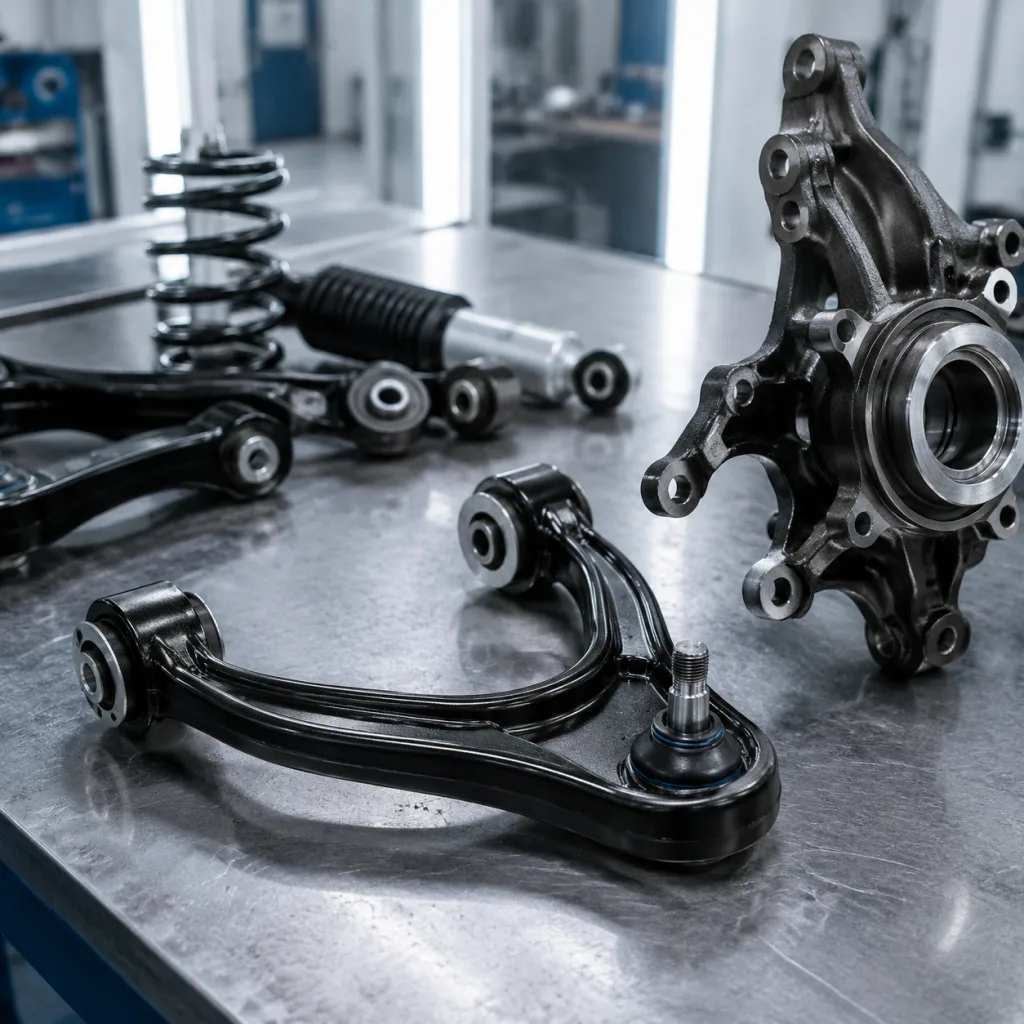
Removing an upper control arm is rarely just a workshop step. It is the point where the fault, the vehicle variant, and the replacement specification all have to agree. The arm may be coming off because the vehicle has torn bushings, a loose ball joint, collision damage, clunks over bumps, steering pull, or uneven tyre wear. For buyers, the risk is simple: a part that looks close can still move camber, caster, steering return, and tyre wear if the pivot centres, ball-joint taper, bushing clocking, offset, coating, or hardware are wrong. A 1–2 mm error at the pivot or ball-joint centre can be enough to turn a normal alignment into a repeat complaint. This guide treats upper control arm replacement as a sourcing decision, not a generic repair note. It covers when removal should trigger replacement, how to compare complete arms with service parts, which dimensions deserve proof, and what supplier data helps keep fitment repeatable. Driventus is an independent aftermarket manufacturer; brand names are referenced for fitment only.

Decision Point: Why Is the Upper Control Arm Being Removed?

Start with the reason for removal. A control arm removed during a clean chassis rebuild is a different buying case from one removed after tyre scrub, brake dive, or a pothole impact. The fault pattern tells the buyer whether a complete assembly, a bushing kit, a ball joint, or a deeper geometry check is needed.

Use the removed part as evidence, not waste. A sound upper control arm should not show cracked rubber, oil-soaked bushings, loose ball-joint preload, distorted mounting eyes, or bends near the ball-joint housing. In the workshop, raise the vehicle by the specified lift points, unload the suspension, check radial and axial ball-joint movement with a dial indicator where possible, and compare left/right arm position before loosening pivot bolts or alignment shims.

Common replacement triggers include:

  • Torn or delaminated bushings with visible fore-aft movement under braking or roughly 1–2 mm of sleeve walk.
  • Ball joint looseness, torn boot, dry articulation, or stud movement beyond the vehicle maker’s service limit.
  • Impact distortion that shifts camber or caster, often visible when the ball-joint centre is compared with the opposite side.
  • Corrosion around pivot sleeves, tapered studs, weld toes, or bushing eyes.
  • Ovalised bolt holes, torque-loss witness marks, or signs that the sleeve has rotated in the bracket.

If the arm is bent or the ball joint is integrated, replacement is usually safer than pressing in a single part. The same applies where bushing clocking is fixed by design or where removing upper control arm hardware disturbs shims, eccentrics, or alignment references. For procurement, attach the inspection result to the RFQ. It helps the supplier confirm assembly type, side, hardware pack, and any service notes before samples are released.

Fitment Failure Modes That Do Not Show Up in Product Photos

A replacement arm can look right on a screen and still fail at the vehicle. Most fitment problems come from small differences in geometry, hardware, or variant selection. Before ordering, confirm platform, side, model-year break, engine or drivetrain variant, suspension package, ride height, and left-hand/right-hand specificity. For mixed fleets, do not rely on appearance alone. Use VIN, OE number, chassis code, and a removed sample when the application has mid-year changes.

</tr></thead><tbody> </tbody></table>Keep OE cross-references with the sample part, VIN, and application note. This reduces revision errors when one platform carries several upper control arm variants across model years. For RFQs, state annual volume, first release quantity, packaging preference, required documents, and whether PPAP/FAI-style approval is expected. Those details affect MOQ, sample timing, and unit price as much as the part drawing does.

Complete Assembly vs Bushings or Ball Joint: A Cost-and-Risk Comparison

The cheapest part is not always the cheapest repair. When removing upper control arm assemblies already consumes workshop time, a complete arm can prevent a second operation caused by a noisy pressed bushing, a marginal old joint, or an orientation error. Service-only parts still have a place, but they depend on tooling discipline and the condition of the original arm.

Failure mode What causes it Buyer prevention check
Alignment cannot be brought into rangePivot spacing, offset, or ball-joint centre differsConfirm drawing values or sample match, usually within ±0.5–1.0 mm depending on design
Stud will not seat correctly in the knuckleWrong taper, stud length, thread pitch, or nut styleVerify taper angle, usable thread length, nut engagement, and no bottoming in the knuckle
New arm creates noise or harshnessBushing type, void direction, rubber hardness, or sleeve offset differsCheck bushing orientation, clocking marks, sleeve width, and construction before release
Premature corrosion in serviceCoating is thin, incomplete, or unsuitable for road-salt marketsRequest coating type, film thickness, and salt-spray or cyclic corrosion target
Hardware loosens or cannot be torqued correctlyOld fasteners reused where new ones are required, or supplied hardware is mismatchedIdentify torque-to-yield bolts, prevailing-torque nuts, washers, split pins, and torque notes

</tr></thead><tbody> </tbody></table>Complete assemblies are easier to standardise across branches and markets. They reduce variation in press quality, sleeve alignment, and technician interpretation. Service-only parts require more control: correct press direction, support under the bushing eye, bushing clocking to the specified angle, and final pivot-bolt torque at normal ride height rather than with the suspension hanging.

For cost planning, ask for both assembly pricing and service-part pricing where available. Complete arms usually cost more to buy and ship, but they may reduce total installed cost when labour exceeds 0.5–1.0 hour per side or when vehicle downtime is expensive. Confirm whether MOQ is per side, per part number, or per left/right pair. That detail is easy to miss and expensive to correct after the purchase order is raised.

Specification Deep-Dive: Measurements That Control Real Fit

Upper control arms should not be approved by part number alone. Compare the physical construction against a removed sample or an approved drawing set. The important checks are small, but they decide whether the vehicle aligns, whether the boot clears, and whether the arm survives the market it is sold into.

Key construction points include:

  • Forged, stamped, cast, fabricated steel, or aluminium construction, because stiffness and fatigue behaviour are not interchangeable.
  • Bushing clocking, sleeve width, eye thickness, void direction, and sleeve offset.
  • Ball-joint stud taper, thread form, castle-nut or flange-nut style, boot height, and dust-boot clearance.
  • Coating coverage at weld seams, pierced holes, edges, pockets, and internal cavities.
  • Clearance to the spring seat, strut body, anti-roll bar, brake hose, wheel, and inner arch through full lock and jounce.

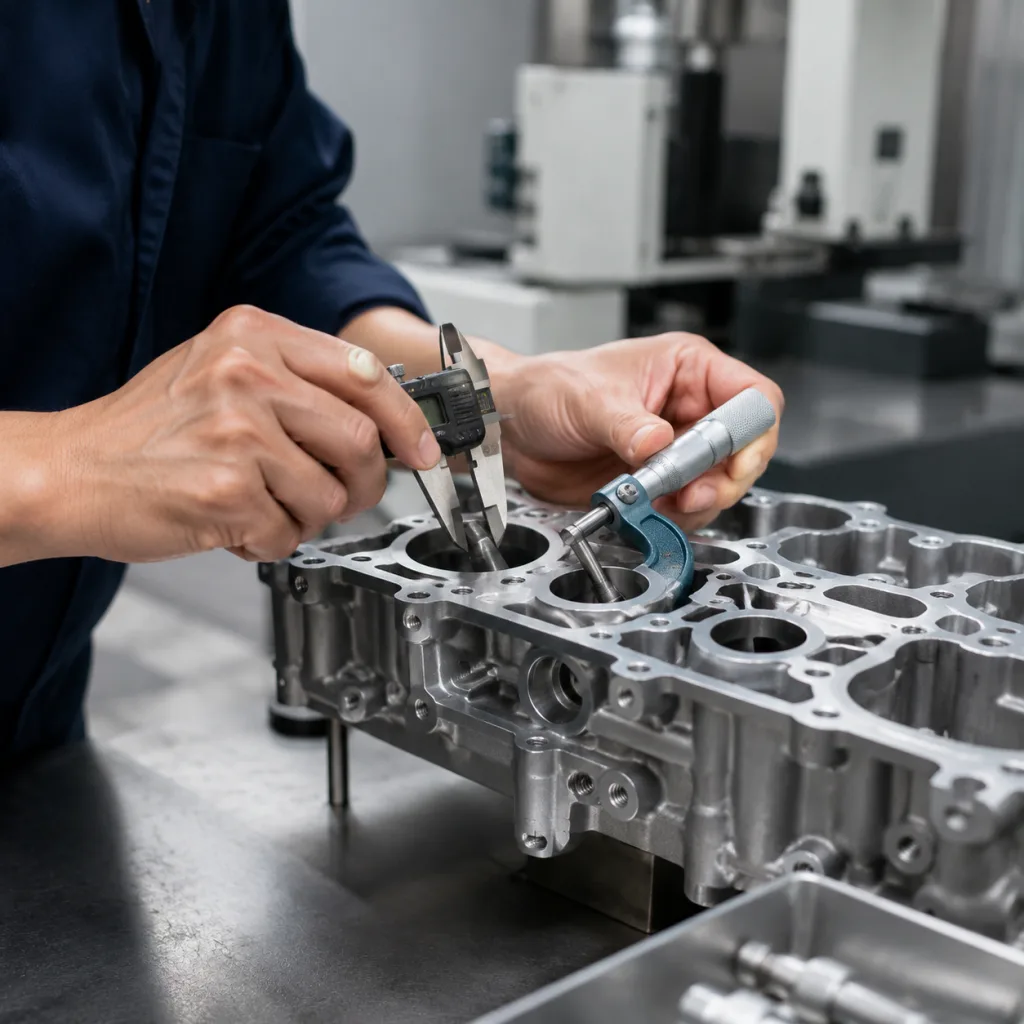
Record the old arm’s major dimensions before teardown where possible. Use calibrated calipers, height gauge, taper gauge, thread gauge, and a flat reference plate. Avoid measuring rubber-loaded dimensions after removal has distorted the bushing. Take pivot and ball-joint centre measurements from the metal sleeve and housing.

Option Advantages Risks Best fit
Complete armFaster installation, fixed geometry, fewer mixed componentsHigher unit price and larger carton volumeFleet repair, export programmes, high labour cost, downtime-sensitive work
Bushing kit onlyLower part cost; useful when the ball joint and arm are soundPress work, bushing clocking errors, hidden fatigue on aged armsControlled workshop rebuilds with correct fixtures
Ball joint onlySolves isolated joint wear where the design is serviceablePoor choice if the arm is bent, corroded, or has aged bushingsSelected applications with replaceable ball-joint design

</tr></thead><tbody> </tbody></table>For high-wear or road-salt markets, ask for corrosion data rather than a cosmetic finish statement. Buyer requirements often include 72–240 hours neutral salt spray for basic zinc-coated hardware, higher cyclic corrosion targets for coated arms, and clear red-rust criteria at edges, welds, and stone-chip areas. For fatigue-sensitive programmes, request material grade, heat-treatment condition where applicable, weld process control for fabricated arms, and sample load-test or durability evidence.

Supplier Q&A: What Proves Repeatable Fitment?

A strong control arm supplier should be able to support the part with data, not just a price. The questions below separate a fitment-controlled programme from a catalogue guess.

Can the supplier prove the sample matches the removed arm? Ask for inspection against pivot centres, ball-joint centre, bushing clocking, side identification, sleeve width, and stud taper. A visual match is not enough.

What quality and compliance records are available? At minimum, request dimensional inspection records, material declarations where relevant, coating information, and batch traceability. For European and UK supply chains, REACH (EC) No 1907/2006 matters for substance compliance. For audited manufacturing, IATF 16949:2016 and ISO 9001:2015 are the main quality references buyers expect.

How will the parts arrive and be identified? Confirm packaging and labelling for warehouse handling: left/right marking, barcode, carton strength, corrosion protection, hardware bags, and private-label requirements if applicable.

What are the realistic timing and MOQ assumptions? Buyers commonly plan 2–4 weeks for sample preparation on an existing application, longer if tooling or validation is needed, and 30–60 days for first production after approval depending on volume and finishing capacity. MOQ and price depend on current production status, hardware inclusion, coating complexity, left/right pairing, packaging, and whether the order ships LCL, palletised, or containerised.

Where does Driventus fit in the sourcing process? Driventus can support programme-level sourcing through our catalog, documented quality system, and custom manufacturing for platform-specific requirements. This is useful when a buyer needs a controlled replacement for a high-volume line, a private-label programme, or a market where first-time fitment matters.

For a clean RFQ, include application data, sample images, OE references already on file, annual forecast, target release date, required documents, and any warranty return data. The better the fault and fitment evidence, the lower the risk of releasing the wrong upper control arm into stock.

Frequently asked questions

Yes. The arm position affects camber and caster, even when the new part matches the old one closely. Alignment is usually required after replacement and should be verified again if the vehicle still pulls or the steering wheel is off-centre.

Only if the vehicle specification allows it and the hardware is undamaged. Torque-to-yield bolts, corroded threads, or distorted washers should be replaced. Reusing compromised fasteners can create clamp-load loss and noise.

Request dimensional data, coating information, batch traceability, compliance declarations, and a sample comparison against the removed arm. If the programme is sensitive, ask for inspection records and production control details before release.

If you need a fitment-checked upper control arm programme, batch traceability, or a platform-specific quotation, contact Driventus at /contact.html

Request a Quote
Measurement Buyer check Useful specification detail
Mount-to-mount lengthConfirms OE geometry windowCentre distance, bracket width, and offset to ball-joint centre
Bushing eye ID/ODConfirms bolt and sleeve compatibilityBolt clearance, sleeve length, rubber hardness target, and void orientation
Stud taper fitConfirms seating without forcing or bottomingTaper angle, small/large diameter, thread pitch, and usable thread length
Part mass and section depthFlags hidden material or process changesCompare sample mass; investigate deviations above about 5%
Finish thicknessSupports corrosion expectationsZinc, e-coat, powder coat, or paint type with measured film thickness