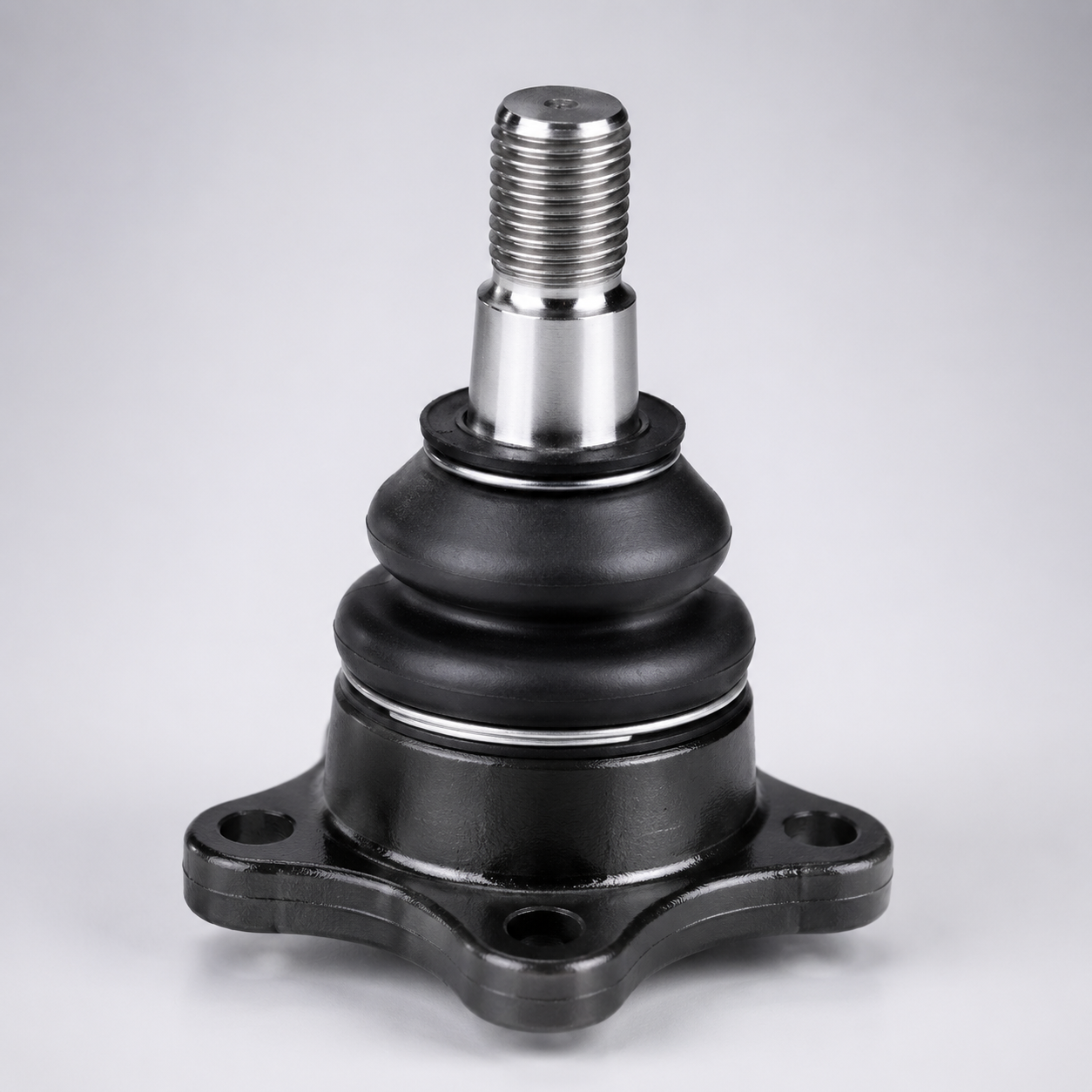
rear main seal · 2026-07-02

Rear Main Seal Material: Specs, Limits, and Selection

Rear crankshaft seals fail quietly until they do not: oil mist, bellhousing contamination, clutch issues, warranty claims, and teardown cost. The material decision sits behind all of that. For aftermarket distribution, rebuild kits, and OE-equivalent supply, rear main seal material has to match the shaft finish, lubricant chemistry, housing design, crankcase temperature, and installation method. “Rubber” is not a specification.

This guide treats the seal as an engineered purchasing item, not a catalogue line. It compares NBR, HNBR, FKM, and PTFE options, then turns those differences into sourcing checks: compound family, hardness range, lip geometry, garter spring specification where applicable, dimensional tolerance, validation data, and supplier controls. Driventus is an independent aftermarket manufacturer; brand names are referenced for fitment only.

Start with the leak risk, not the rubber name

A rear crankshaft seal works in an awkward zone: oil splash, crankcase pressure pulses, shaft eccentricity, heat cycles, installation variation, and long idle-to-load transitions all meet at one lip. Rear main seal material affects radial contact force, hardening rate, debris generation, sealing torque, and the way the lip responds after thousands of thermal cycles.

The buying decision should begin with the failure modes most likely in the application:

  • Heat ageing: bulk oil may sit around 90-130°C, while local lip temperature can run 10-25°C higher
  • Chemical attack: mineral oils, PAO synthetics, ester-containing oils, additive packages, soot loading, and 2-8% fuel dilution can change swell and hardness
  • Compression set: permanent deformation reduces lip interference and opens a leakage path
  • Shaft wear: a soft or grooved sealing track accelerates lip wear, even with a better compound
  • Cold-start leakage: poor low-temperature flexibility can let the lip lose contact before oil viscosity stabilizes
  • Assembly damage: spring-loaded elastomer lips and dry-running PTFE lips fail differently when installed incorrectly

The trap is simple: a low-cost seal can pass a dimensional check and still fail early if the crankcase runs hotter than the compound’s continuous limit, shaft runout is above about 0.10-0.20 mm TIR, or the lubricant package drives swelling, shrinkage, or hardening.

Rear seal constructions vary. Some are metal-cased radial shaft seals. Some use rubber outside diameters. Others are integrated carrier assemblies with moulded sealing elements. In all cases, the compound has to fit the operating envelope and the supplier’s process controls under IATF 16949:2016 and ISO 9001:2015 discipline. Buyers should also check the mating system: shaft roughness around Ra 0.2-0.8 um, shaft hardness commonly 45 HRC or above for steel sealing tracks, and a housing bore tolerance that holds the OD without distorting the case.

Material comparison: NBR, HNBR, FKM, and PTFE

The common rear main seal material choices are not interchangeable upgrades. Each changes cost, thermal reserve, chemical resistance, friction, and installation risk.

</tr></thead><tbody> </tbody></table>\*Actual PTFE limits depend on filler system, housing design, shaft condition, pressure, shaft speed, and duty cycle.

NBR is still the cost baseline. Typical hardness is 65-75 Shore A, with 70 Shore A common for standard radial lip seals. It offers acceptable oil resistance and good flexibility, but heat ageing and compression set become visible in hotter crankcase environments. NBR works best where temperature, blow-by, and drain intervals are moderate. It is also the usual choice for large aftermarket runs where target price is tight and warranty exposure is understood.

HNBR is the step up when NBR is too fragile but FKM is commercially hard to justify. It offers better oxidation resistance, stronger mechanical-property retention, and improved tear strength. Common hardness ranges are 65-80 Shore A, depending on lip geometry and spring load. Buyers often choose it for mixed field conditions, longer service intervals, and platforms where claim history suggests ordinary NBR is marginal.

FKM is used when heat and chemistry dominate the risk. It is more suitable for turbocharged engine environments, long drain intervals, biodiesel contamination traces, and varnish-forming conditions. FKM rear seal compounds are often specified in 70-80 Shore A ranges. The tradeoff is price: as a working estimate, HNBR may run 20-50% above NBR, while FKM can run 50-150% above NBR, depending on size, region, and annual volume.

PTFE is a different design choice, not just a better rubber. PTFE lips are selected for low friction, dry-running start behaviour, reduced wear, and higher shaft speeds. Many are supplied without a garter spring and rely on a formed lip angle rather than elastic squeeze alone. They become attractive when shaft surface speed exceeds about 10-15 m/s, when friction reduction matters, or when thermal cycling pushes elastomers too close to their limit. The catch is installation: folded lips, wrong lubrication practice, missing fitting cones, or poor shaft finish can ruin the advantage.

Spec deep-dive: what must be controlled before approval

Rear main seal material does not define interchangeability by itself. Two seals can share a compound family and still behave differently because of lip geometry, spring force, case design, OD retention, or shaft requirements. A proper sourcing file should tie the compound to the drawing and to the intended application.

Before approval, verify:

  • Inner diameter, outer diameter, and width against drawing tolerances, commonly within ISO 6194 style limits or the OE drawing requirement
  • Lip design: single lip, double lip, dust lip, or hydrodynamic pattern
  • Elastomer hardness, usually in Shore A with an acceptance band around +/-5 Shore A unless the drawing is tighter
  • Spring material and tension where a garter spring is used, including wire grade, corrosion protection, and free-length control
  • Case material and coating, such as carbon steel with zinc treatment or stainless steel where required
  • Shaft surface requirement, often Ra 0.2-0.8 um, no lead, and no plunge grinding marks across the seal track
  • Runout and concentricity limits for shaft and housing, because excess eccentricity raises lip pumping and wear
  • Static and dynamic leakage test results, with test duration, shaft speed, oil temperature, and pressure stated
  • Compression set and heat ageing data, such as 70 h at 125°C or 150°C depending on compound family
  • Material compliance, including REACH (EC) No 1907/2006 where relevant

The data pack should also state whether the seal is designed for dry or lubricated installation, whether a wear sleeve is recommended on grooved shafts, and whether the lip is directional. For PTFE designs, confirm whether a fitting cone or installation sleeve is mandatory and whether the seal needs a dwell period on the shaft before engine rotation.

For buyers managing several engine families, cross-reference control matters. If an enquiry references an OE-style code such as OE 11251…, the supplier should connect that reference to the full dimensional record and drawing revision, not just a catalogue match.

You can review related engine sealing and rotating components in our catalog and discuss application-specific drawings through custom manufacturing.

Decision framework by duty cycle

A workable material choice usually comes from the operating condition, then the price target. Reversing that order creates samples that look acceptable on the bench but fail in the field.

Material Typical continuous temperature Short-term peak Oil and additive resistance Low-temperature flexibility Best fit Procurement caution
NBR-40°C to 100-120°C125-135°CModerateGoodLegacy and standard-duty enginesLow cost, but limited reserve above 110°C
HNBR-35°C to 140-150°C160°CGoodGoodHigher-load or uncertain field conditionsCosts more than NBR, but ages better
FKM-20°C to 200°C220°CVery goodModerateHigh-temperature modern enginesStrong chemical resistance, weaker cold flexibility than NBR/HNBR
PTFEapprox. -40°C to 200-230°C*230-250°CExcellentGoodLow-friction, high-speed designsInstallation and shaft finish are critical

</tr></thead><tbody> </tbody></table>Use three separate requirements in the purchasing specification:

  • Seal material requirement
  • Shaft and housing condition requirement
  • Installation condition requirement

That split prevents a common warranty argument: the seal meets the compound specification, but the shaft is grooved, the housing is misaligned, or the installer treated a PTFE lip like a conventional rubber seal.

A practical escalation rule works for many aftermarket programmes. Choose NBR for cost-led legacy platforms with known mild duty. Move to HNBR where thermal load, drain interval, or field condition is uncertain. Specify FKM or PTFE when high heat, high speed, lubricant chemistry, or friction target makes the added material cost smaller than one field return. Still validate fit, lip load, and running behaviour before changing material on an existing part number.

Audit the supplier around the ways seals actually fail

Rear main seal material selection needs evidence behind it. Catalogue claims are not enough for B2B supply, especially when the same part number may be sold across climates, oil types, and service habits.

Ask the supplier for:

  • Incoming raw-material control records
  • Compound traceability by batch
  • Hardness and dimensional inspection reports
  • Heat ageing and media-resistance test summaries
  • Leakage or endurance test method descriptions
  • Packaging and shelf-life control procedures

The audit should follow the failure modes. If the concern is lip hardening, look at compound control, cure consistency, and heat-ageing data. If leakage appears after installation, review lip handling, fitting sleeves, garter spring retention, OD coating, and housing fit. If claims cluster by production lot, traceability and cavity-to-cavity variation matter more than another catalogue cross-reference.

Where the supplier manufactures complete sealing components rather than trading them, verify tool maintenance, moulding control, spring sourcing where relevant, and final inspection discipline. A documented quality system aligned with IATF 16949:2016 and ISO 9001:2015 helps reduce variation between lots, especially on lip geometry, cure consistency, and finished dimensions. Buyers should also ask how flash removal, FKM post-curing where applicable, and multi-cavity tooling variation are controlled.

Useful validation data includes test conditions, not only pass/fail wording. Dynamic leakage results should state shaft speed in rpm, oil temperature, test duration in hours, shaft offset or runout, and whether the sample size was 5 pcs, 10 pcs, or more. For aftermarket approval, first-article dimensional data across several points in the tolerance band is stronger than a single inspection report from one cavity.

For export programmes, request restricted-substance confirmation under REACH (EC) No 1907/2006 and any destination-market requirements. Emissions regulations such as ECE R-83 are not seal material standards, but leakage control still supports engine durability and oil-consumption management.

Driventus supports batch-controlled production and technical review through our quality system and application development routes. For broader engine items, see /products/engine-components.html if you are combining seals with gaskets, pistons, or crankshaft-related parts.

RFQ checklist that prevents mismatched samples

A rear crankshaft seal RFQ should make the material decision visible. If the enquiry only lists a part number and target price, the supplier has to guess the duty cycle, compound level, packaging, and documentation burden.

Include:

  • Part drawing or full dimensions
  • Required compound family: NBR, HNBR, FKM, or PTFE
  • Temperature range and oil type
  • Shaft diameter tolerance and surface finish target
  • Housing material and bore tolerance
  • Installation method, including dry or lubricated fitting
  • Packaging requirement for distributor or service-kit supply
  • Annual volume, MOQ target, and destination market
  • Required PPAP level or equivalent documentation, if applicable

For private-label aftermarket supply, define marking format, carton specification, and barcode rules before quotation. For a non-standard carrier seal or a duty-cycle-specific compound adjustment, raise that before tooling approval, not after first samples arrive.

Separate the commercial quantities as well. Ask for sample quantity, trial order quantity, and mass-order volume as different lines. Typical ranges might be 10-50 pcs for samples, 300-1,000 pcs for trial orders, and 1,000-5,000 pcs for repeat production, depending on size, packaging, and existing tooling. Lead times should be split the same way: 2-4 weeks for stock-size samples from existing tools, 4-6 weeks for first-off samples from adjusted tooling, and 6-10 weeks for mass production after approval and deposit.

That structure makes quotations comparable. A cheaper unit price can hide a longer replenishment cycle, weaker documentation, higher MOQ, or a rear main seal material that is marginal for the application.

For technical review, sample planning, or commercial discussion, you can request a quote. Driventus is an independent aftermarket manufacturer; brand names are referenced for fitment only.

Frequently asked questions

NBR is still common in standard-duty applications because it balances cost with acceptable oil resistance and flexibility. Typical NBR rear seal compounds are often supplied around 70 Shore A and work best where continuous temperatures stay near 100-120°C. For higher heat, longer drain intervals, or stricter durability targets, many buyers move to HNBR or FKM for better ageing and thermal stability.

Not always. PTFE offers low friction, broad chemical resistance, and strong high-speed performance, but it is more sensitive to shaft finish and installation method. The right rear main seal material depends on temperature, shaft speed, lip design, mating surface condition, and validation data, not on material cost alone.

Buyers should ask for dimensional reports, hardness data, compound identification, batch traceability, leakage or endurance test information, and compliance statements such as REACH where required. It is better when those records also show test conditions such as temperature, hours, rpm, and sample size. Process certification under IATF 16949:2016 and ISO 9001:2015 is also useful when evaluating production consistency.

If you are comparing rear main seal material options or need a quote for standard or custom rear crankshaft seals, Driventus can review drawings and application data with your team. Contact us here: /contact.html

Request a Quote
Operating condition Preferred material direction Why it fits Sourcing note
Standard passenger engine, moderate oil temperatureNBR or HNBRBalanced cost and performanceNBR is workable below about 110-120°C continuous lip temperature; HNBR adds reserve
Extended drain intervals or higher oxidation stressHNBRBetter ageing resistanceUseful where service intervals exceed 10,000-15,000 km equivalent
High under-bonnet temperature or turbocharged engineFKMHigher thermal and chemical stabilityBetter when sustained local temperatures approach 150-180°C
High shaft speed or low-friction targetPTFEReduced friction and broad media resistanceCheck shaft finish and installation tooling before approval
Rebuild programme with mixed field conditionsHNBR or FKMMore tolerance to variable duty cyclesHigher unit price may reduce claim rate and SKU splits