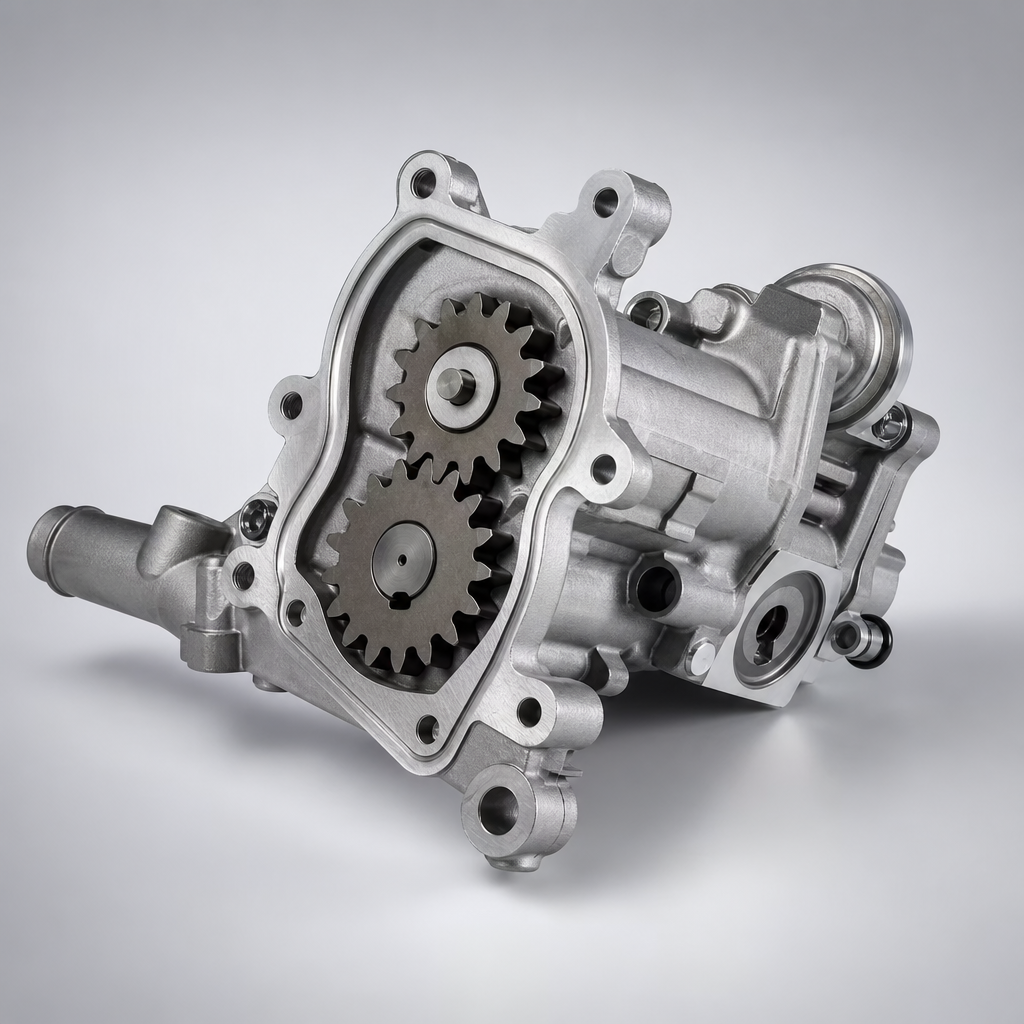
REACH Compliance for High Pressure Fuel Pump Buyers
For procurement teams, **reach compliance for high pressure fuel pump** sourcing is not a formality. It affects import exposure, customer declarations, supplier approval, and change control after launch. A pump assembly may include machined steel, aluminium housings, coatings, elastomers, seals, adhesives, lubricants, plastics, and packaging materials. Each can carry a different reporting burden under **REACH (EC) No 1907/2006**.
The real problem is not the regulation itself. It is the weak evidence buyers are often given: a broad “REACH compliant” statement with no material declaration, no clear SVHC position, and no process for updates when materials or regulations change. That gap creates risk fast, especially for EU-bound shipments or customers asking for part-level proof.
This article approaches the topic from a buyer’s point of view rather than as a generic checklist. It shows how to decide where to look first, what usually fails, which documents matter, and how compliance interacts with RFQ timing, MOQ, lead time, and supplier control. Driventus is an independent aftermarket manufacturer; brand names are referenced for fitment only.
Start with the decision: where REACH risk actually sits in a pump assembly
REACH (EC) No 1907/2006 applies to substances, mixtures, and articles placed on the EU market. In most cases, a high pressure fuel pump is treated as an article. But that does not mean buyers can stop at the assembly level. Proper reach compliance for high pressure fuel pump review still requires looking through the build and checking which materials, coatings, seal systems, plastics, and residual chemicals are present.
The smartest first step is not to ask whether the whole pump is “compliant.” It is to separate low-risk and high-risk elements.
Ask these questions first:
Does any article in the assembly contain an SVHC above 0.1% w/w?
Are restricted substances present in coatings, sealants, greases, oils, or plating systems?
Is the declaration supported by current sub-tier material data?
Is there a process to update the statement after ECHA Candidate List changes?
Typical pump elements to review include:
Forged or machined body materials
Cam followers and hardened wear surfaces
Springs and fasteners
Elastomer seals and O-rings
Adhesives, assembly greases, and threadlockers
Zinc, nickel, phosphate, or other conversion coatings
Plastic electrical connectors where fitted
Primary packaging materials
Do not weight those items equally. A bare machined steel body is usually straightforward from a REACH disclosure standpoint. A plated outlet fitting, FKM seal set, PA66-GF connector, or pre-applied threadlocker is not. Those are the places where buyers should expect named material evidence.
Useful detail often includes:
Body and flange materials: carbon steel, alloy steel, stainless steel, or aluminium alloy with heat treatment route
Surface systems: zinc-nickel plating thickness typically 8-15 µm, phosphate layers typically 2-10 g/m², passivation chemistry, and topcoat type
Elastomers: NBR, HNBR, FKM, or fluorosilicone seals with temperature range and compound code
Plastics: POM, PPS, PA66-GF30, or PBT connector bodies and insulators
Assembly chemicals: threadlocker grade, grease type, anti-corrosion oil, and cure or flash-off status
The point is simple: a family-wide blanket statement is weak evidence. A stronger buyer file shows where the supplier looked, which subcomponents were screened, and why the higher-risk materials were treated differently.
There is also a useful indirect signal here. Dimensional control does not prove REACH status, but suppliers that can clearly state plunger-to-bore clearance, body flatness within 0.03-0.05 mm, connector seal compression range, and plating thickness tolerance are usually better at material traceability too. Process discipline tends to travel together.
If you are reviewing multiple part numbers across platforms, it helps to map them against our catalog (/products.html) and separate standard products from parts that need customer-specific material controls.
Compare document quality before you compare price
A workable compliance file needs more than a sales declaration. Before supplier approval, buyers should request a document set that proves both current status and future control.
Document
Purpose
What to check
REACH declaration
Confirms article status and overall SVHC position
Issue date, legal entity, scope, revision control
SVHC statement
Identifies whether SVHCs exceed 0.1% w/w
Candidate List reference date and part-number coverage
Material declaration or BOM-level substance data
Supports technical review
Coverage of metals, elastomers, coatings, plastics
Change-control procedure
Manages future substance changes
Notification timing and approval workflow
Test or supplier evidence for plating/rubber systems
Verifies high-risk materials
Named sub-tier source, date, and material specification
Quality certifications
Demonstrates process control
IATF 16949:2016 and ISO 9001:2015 status
</tr></thead><tbody> </tbody></table>## What a usable declaration must contain
At minimum, procurement teams should confirm:
Full supplier legal name and manufacturing site reference
Exact part number or part-number range covered
Date of declaration and revision number
Explicit reference to REACH (EC) No 1907/2006
Candidate List reference date, or a clear statement that monitoring is ongoing
Signature or authorised issuer details
This is where weak files usually show themselves. If the declaration has no revision control, no named scope, or no issuing authority, it is not complete enough for approval.
A practical way to assess the pack is to split it into levels:
Level 1: mandatory for RFQ approval — REACH declaration, SVHC statement, part list, and supplier legal entity details
Level 2: mandatory before SOP or first shipment — BOM-level material coverage, coating and elastomer evidence, change-control flow, and quality certifications
Level 3: required for high-risk or customer-specific projects — full IMDS-style material breakdown, lab reports for plating or rubber compounds, packaging declarations, and customer-format compliance templates
Document age matters too. Undated claims should not pass.
Common controls are:
REACH declaration issued within the last 12 months
SVHC check updated within 3 months of the latest ECHA Candidate List revision for active programmes
Plating, rubber, or plastic sub-tier statements no older than 12-24 months, depending on risk and supplier performance
Change-notification commitment written as 30-90 days prior notice before any material, process, or sub-tier source change
For RFQ comparison, it helps to score compliance quality instead of treating it as a side note. One workable model is 40% document completeness, 30% sub-tier traceability, 20% change-control strength, and 10% response speed. That keeps a low-price quote with a weak file from rising to the top.
Where the programme involves customer-specific dimensions, coatings, or seal materials, request custom manufacturing (/oem-services.html) documentation early so the compliance scope is defined before PPAP or pilot builds.
Deep-dive the materials most likely to fail review
Not all materials create the same REACH exposure. In high pressure fuel pump assemblies, the sharpest review usually sits around surface treatments, elastomer compounds, engineering plastics, and process chemicals that remain on the shipped part.
1. Coatings and plating
Zinc-based finishes, nickel systems, passivation layers, and anti-corrosion treatments should be checked against the actual chemistry used, not just a finish description on a drawing. Buyers should ask for finish type, nominal thickness, thickness tolerance, salt-spray target where specified, and the exact plating specification code.
A zinc-nickel system at 10-12 µm with clear trivalent passivation and sealer is useful evidence. “Anti-rust plated” is not.
2. Seals and elastomers
O-rings, lip seals, and diaphragms deserve more scrutiny than the metallic housing. These components may contain additives, fillers, curing agents, pigments, or plasticisers that do not appear in a simple top-level declaration.
Request:
Polymer family
Compound number
Hardness range such as 70 ±5 Shore A or 90 ±5 Shore A
Operating temperature band
Fluid compatibility basis
This matters because a switch from HNBR to FKM for fuel resistance is not just a technical change. It can trigger a new compliance review.
3. Adhesives and assembly aids
Threadlockers, retaining compounds, greases, and temporary protective oils are often missed because the supplier reviews only the structural parts. Buyers should ask whether these materials are fully cured, flashed off, or intentionally retained on the article, and whether the declaration identifies them by product grade.
Even small retained quantities, such as 0.1-0.5 g per unit, can matter if they remain on the shipped part.
4. Plastic connectors and overmoulds
Connector bodies and insulators should be reviewed for flame retardants, stabilisers, recycled content, and colour additives where relevant. A useful declaration names the resin family, glass-fill content, and colour code.
“Plastic plug” tells the buyer almost nothing.
5. Packaging
Packaging is separate from the pump, but many customer programmes still ask for a consolidated declaration file. If so, inner tray material, VCI bag type, label adhesive, carton grade, and desiccant specification may all need to be listed.
A simple internal ranking helps focus review time:
Low complexity: bare machined steel or aluminium parts with standard heat treatment
Medium complexity: plated components and simple seal sets
High complexity: mixed-material assemblies with polymers, coatings, adhesives, and electrical content
That ranking also improves supplier conversations. For high-complexity assemblies, buyers should ask whether the declaration is based on direct sub-tier evidence, current specifications, or old assumptions carried over from a prior programme.
A practical risk matrix looks like this:
Material area
Typical risk level
Evidence expected
Typical buyer action
Machined steel body
Low
Mill cert or material grade statement
Confirm grade and revision
Zinc-nickel or phosphate finish
Medium
Plating declaration and spec
Verify chemistry and thickness
FKM/HNBR seal set
Medium to high
Compound declaration from moulder
Check polymer family and compound code
PA66/PBT connector
Medium
Resin declaration
Confirm additives and colour system
Adhesive, grease, oil
High if retained
Product-grade declaration
Confirm retained quantity and process status
</tr></thead><tbody> </tbody></table>Where drawings specify critical fits, combine compliance review with technical review. Suppliers that control tappet clearance, spring free length tolerance, outlet port thread gauge results, and seal groove dimensions are generally more reliable than those offering only marketing claims. In practice, buyers often use checkpoints such as ±0.01-0.03 mm on precision sliding components and Cp/Cpk ≥1.33 on critical characteristics as indirect evidence that the process is stable enough to hold material consistency too.
Audit the control system, not just the paperwork
A supplier can provide correct paperwork once and still create exposure six months later. That is why reach compliance for high pressure fuel pump sourcing should be tied to supplier control systems, not handled as a one-time document chase.
Use this checklist during sourcing, onboarding, or annual review:
Is there a documented procedure for material compliance review?
Are raw materials and coatings approved against controlled specifications?
Does purchasing flow REACH requirements down to sub-tier suppliers?
Are incoming materials traceable by lot or batch?
Is there a formal change-notification period for substance or process changes?
Are obsolete declarations removed from active use?
Are engineering, quality, and purchasing responsibilities clearly defined?
Is there a retained record of supplier declarations and revision history?
Certified systems such as IATF 16949:2016 and ISO 9001:2015 help here. They do not prove article compliance on their own, but they do increase confidence that documents, revisions, nonconformities, and supplier changes are managed in a controlled way.
At Driventus, buyers reviewing our quality system (/quality.html) typically focus on traceability, incoming material control, and document revision management for engine and powertrain components.
In audit practice, go beyond yes-or-no questions. Ask for records, timings, and examples.
Useful control points include:
Incoming material lots linked to pump batch numbers within 2 hours or less during trace-back exercises
Retention of material declarations, plating certifications, and seal compound records for at least 3-7 years, depending on programme requirements
Defined Engineering Change Notice review cycle, typically 24-72 hours for internal assessment after receipt
Supplier commitment to notify material or process changes 30-90 days before implementation
Periodic revalidation of high-risk sub-tier materials every 12 months for active parts or at each new production lot for custom compounds
A capable supplier should also be able to explain the real control flow:
1. Approved raw material and bought-out part list released by engineering 2. Purchasing issue of controlled specs to plating, rubber, plastic, and chemical sub-tier suppliers 3. Incoming inspection of material grade, coating certs, and seal batch labels 4. Lot-based assembly records linking components to the finished pump batch 5. Final packing release only after document match between BOM revision and compliance file 6. Controlled reissue of declarations when material source or process route changes
If that sequence is vague, the compliance statement is probably administrative rather than process-based.
And one more distinction matters: REACH review does not replace technical validation. If the programme also requires durability or emissions-related checks, those sit alongside compliance review. Depending on the application, buyers may also reference frameworks such as ECE R-83 for emissions-related context or SAE J2527 where broader material validation appears in customer requirements.
Use a step-by-step sourcing flow that catches problems early
Procurement teams reduce delays when they force compliance review into the sourcing sequence instead of leaving it to the end.
1. Define the exact part scope Confirm part numbers, fitment range, destination market, and whether the pump is a standard catalogue item or a modified build. Record annual volume, service-life expectation, and any customer-imposed material restrictions.
2. Request the compliance pack Obtain the REACH declaration, SVHC statement, material data, and change-control procedure. For RFQs, set a return deadline such as 5-10 working days so commercial review does not move ahead without compliance evidence.
3. Review high-risk materials Flag coatings, elastomers, plastics, and retained chemicals for deeper checking. Ask for plating thickness, seal compound code, connector resin family, and product-grade chemical details instead of generic descriptions.
4. Cross-check dates and revisions Make sure declaration date, BOM revision, drawing revision, and Candidate List review position all align. If they do not, stop there.
5. Verify system control Check whether the supplier operates under IATF 16949:2016 or ISO 9001:2015 and how sub-tier declarations are managed. Confirm who owns compliance internally.
6. Write purchasing conditions State that any material or process change affecting substance status requires prior notification and, where needed, buyer approval. Many buyers use 30-90 days advance notice and hold shipment until approval if the change is compliance-relevant.
7. Store evidence by part number Keep the approved declaration set in the supplier file for each pump family. If material content differs, separate files by housing, seal kit, and connector variant.
8. Schedule refresh points Review declarations at defined intervals and whenever the ECHA Candidate List changes. Annual review is common. High-risk builds or customer-specific programmes may justify 6-month refresh cycles.
This sequence matters because compliance is tied to commercial reality.
Typical sourcing patterns are:
Catalogue pump, low customization: MOQ often 50-200 pcs, lead time 2-6 weeks, lower compliance burden if existing declarations are current
Private-label pump with standard materials: MOQ often 200-500 pcs, lead time 4-8 weeks, extra review for labels, packaging, and traceability format
Custom pump with changed seal, coating, or connector: MOQ often 300-1,000 pcs, lead time 6-12 weeks or longer, new compliance file usually required before pilot or PPAP release
The commercial logic is straightforward. If the supplier must validate a new elastomer compound, change plating chemistry, qualify a new connector resin, or issue fresh customer-format declarations, price and lead time move with it even when the pump geometry stays the same.
At RFQ stage, buyers should ask three direct questions:
Which quoted price assumes the existing approved material set?
Which MOQ applies if seal compound, coating, or packaging specification changes?
What additional lead time is required for new declarations, sub-tier evidence, or customer-format compliance templates?
A strong RFQ sheet often shows this in separate columns: standard build price, modified-material price, standard MOQ, modified MOQ, standard lead time, modified lead time, and declaration availability date. That makes supplier comparison far more reliable.
If you are qualifying a new supply source, combine the compliance review with commercial checks such as MOQ, lead time, warranty terms, and packaging specification. For broader sourcing review, start from our catalog (/products.html) and then narrow the documentation set to the exact pump family under consideration.
Failure modes: the mistakes that trigger import or customer issues
Most REACH failures in pump sourcing do not start with the metallic body. They start with poor scope definition, outdated declarations, or the assumption that lower-visibility materials do not matter.
Common mistakes include:
Accepting a declaration with no part-number scope
Using a statement that does not mention REACH (EC) No 1907/2006
Failing to review coatings, seals, plastics, or adhesives
Keeping outdated declarations after a material or process change
Treating company certification as proof of substance compliance
Missing sub-tier evidence for rubber and plastic components
Not defining who must notify the buyer when the Candidate List changes
The fix is not complicated. Require traceable documentation linked to the sold part number, backed by revision control and a written change-notification process.
This becomes more important when a buyer needs a pump built to customer drawings, private-label requirements, or modified materials. In those cases, the compliance file should be reopened, not copied over from a standard item. That is especially true for custom manufacturing (/oem-services.html) projects where seal compounds, coatings, packaging, or connector materials may differ from stock production.
The costliest failures are often commercial and regulatory at the same time. For example:
A sample is approved with one seal compound, but production is built with a different compound and no revised declaration
A plated fitting moves to a backup supplier even though plating chemistry or thickness window differs from the approved source
A quoted 4-week delivery turns into 8-10 weeks because the required elastomer or packaging adhesive has no current compliance file
The buyer orders below the true MOQ for a custom material variant and forces a rushed sub-tier purchase with weak traceability
One family declaration is used across several pump variants even though only some versions include connectors, seal kits, or pre-applied chemicals
A useful prevention method is to define red-flag triggers that reopen the review.
Recheck compliance whenever any of the following changes occur:
New sub-tier supplier for plating, seals, plastics, or chemicals
Seal hardness, material family, or colour code change
Coating spec change, including thickness range or passivation system
Packaging material change where customer declarations include shipping materials
Drawing revision affecting any bought-out or overmoulded component
MOQ break that causes a different process route or alternate source approval
If you need a part-specific compliance review for an RFQ, you can request a quote (/contact.html) with the target part list, annual volume, destination market, and required declarations.
Frequently asked questions
Yes. Even a mainly metallic pump should be assessed because coatings, seals, lubricants, and polymer components can affect substance reporting. Buyers should ask for a part-specific declaration that references REACH (EC) No 1907/2006, identifies the exact part number covered, and states the Candidate List review date. If the pump includes plated fittings, retained oils, or seal kits, those subcomponents should be named rather than hidden inside a generic statement.
No. ISO 9001:2015 or IATF 16949:2016 supports process control, but it does not replace a product-level REACH declaration, an SVHC review, or supporting sub-tier material evidence for the pump assembly. A compliant sourcing file normally includes part-specific declarations, current sub-tier data for higher-risk materials such as elastomers and coatings, and a written change-notification period of around 30-90 days.
Refresh them at a defined interval and whenever the ECHA Candidate List changes, the part design changes, or a sub-tier material or process changes. Annual review is a common minimum control for sourcing files, but higher-risk programmes may justify 6-month refresh cycles. Many buyers also require new review before first shipment if the quoted lead time extends long enough that the original declaration may no longer match the current Candidate List status.
If you need part-specific declarations, material review support, or sourcing input for pump programmes, contact Driventus to discuss the requirement set at /contact.html