Radiator Replacement: OE-Equivalent Sourcing Criteria
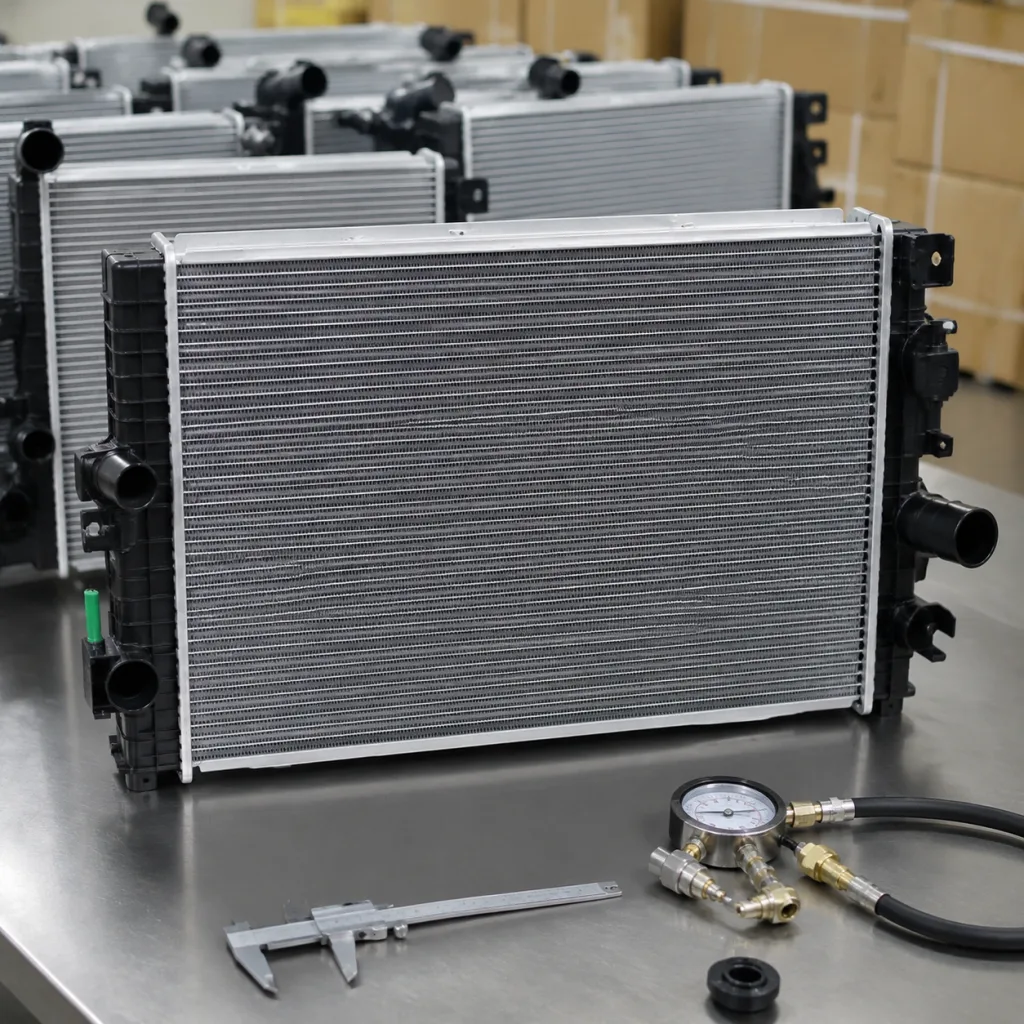
Radiator replacement programmes for distributors, repair chains and fleet service networks require more than broad application coverage. Dimensional accuracy, reliable heat rejection and low warranty return rates all depend on how well each radiator matches the vehicle system and how consistently it is produced. A unit that appears correct in the catalogue but fails at the tube-to-header seal, misaligns at the mounts or conflicts with the pressure cap can create avoidable claims across many locations.
Procurement teams should therefore look beyond price per unit and confirm the engineering controls behind the part. Core geometry, tank material, fin density, transmission oil cooler configuration, pressure testing, corrosion resistance and export packaging all affect the true programme cost. Driventus manufactures aluminium and plastic tank radiators for independent aftermarket supply, using controlled incoming materials, brazing process checks and final leak testing. Driventus is an independent aftermarket manufacturer; brand names are referenced for fitment only. Buyers can review related cooling and engine components in our catalog at /products.html and align technical requirements before volume sourcing.
Replacement Fit Depends on More Than Core Size
For a replacement radiator, visible core dimensions are only the starting point. A complete sourcing specification should also define mounting boss position, hose neck angle, fan shroud interface, drain plug location, cap seat geometry and any integrated oil cooler ports. Even a small deviation can increase installation time, cause interference with surrounding parts or make the SKU unsuitable for multi-location repair networks.
Typical engineering data requested during quotation includes drawing references, sample approval records, OE part-number cross-references where available, and application tables by model, engine, transmission and production year. If the buyer provides an OE cross-reference such as OE 06A… or OE 11251…, it should be used only for fitment identification, not as a claim of vehicle manufacturer approval.
A practical B2B sourcing file should include:
- Core width, height and thickness, measured from defined datum points
- Tank material grade and glass-fibre reinforcement content where applicable
- Tube pitch, fin pitch and louvre pattern
- Inlet and outlet diameter tolerance, often controlled within ±0.3 mm to ±0.5 mm depending on neck design
- Mounting hole position tolerance, commonly held within ±1.0 mm for bracketed assemblies
- Pressure cap rating compatibility where the cap seat is part of the radiator
- Packaging drop-test and stacking requirements for export shipments
Accurate fitment reduces installer complaints, while validated thermal and pressure performance reduces field failures after the vehicle returns to service.
Materials and Construction Options
Most late-model passenger and light commercial vehicle radiators use aluminium cores with crimped plastic tanks. Heavy-duty, performance and legacy applications may instead specify aluminium welded tanks, copper-brass construction or reinforced variants. Each option has different implications for cost, durability, repairability and supplier process control.
| Construction type | Common use | Procurement advantages | Watch points |
|---|---|---|---|
| Aluminium core with plastic tanks | Passenger cars, light vans | Competitive cost, low weight, wide application coverage | Crimp seal quality, tank ageing, gasket material |
| Full aluminium welded | Heavy-duty or upgraded applications | Higher mechanical strength, repairable in some markets | Weld consistency, higher unit cost, fixture control |
| Copper-brass | Older vehicle parc, selected industrial uses | Established repair methods, good thermal conductivity | Higher weight, raw material price volatility |
| Aluminium core with integrated oil cooler | Automatic transmission applications | Consolidated fitment, OE-style layout | Port thread accuracy, internal cooler leak testing |
| Test or control item | Typical purpose | Procurement evidence to request |
|---|---|---|
| Air-under-water leak test or dry leak test | Confirms sealing of core, tanks and cooler circuits | 100% final inspection record or control plan |
| Burst pressure test | Verifies safety margin above working pressure | Validation report by part family |
| Thermal cycle test | Checks expansion and contraction at the tank-header joint | Test conditions and cycle count |
| Vibration test | Evaluates bracket, core and tank durability | Fixture method and pass/fail criteria |
| Salt spray or corrosion exposure | Screens coating and aluminium corrosion resistance | Internal report or customer-specific requirement |
| Dimensional inspection | Confirms fitment and mounting accuracy | First article inspection report |