Price to Fix a Wheel Bearing: What Actually Changes the Cost
The **price to fix a wheel bearing** is not driven by one number. It moves with the repair method, the vehicle platform, labour time, axle position, and whether the job needs only a bearing or a complete hub assembly. Costs also jump when corrosion, ABS issues, or damaged related parts turn a routine replacement into a longer mechanical repair.
For procurement teams supplying repair chains or aftermarket distributors, the real question is not just unit price. It is whether the selected part format keeps installed cost, claim rate, and workshop time under control. A part that saves $10 at purchase can lose money fast if it adds press-work risk, triggers an ABS comeback, or lifts warranty returns. This article breaks down where the money goes, where buyers misread the economics, and what to verify before sourcing wheel bearing kits or hub units. Driventus is an independent aftermarket manufacturer; any brand references are for fitment identification only.
Start with the repair path, because that sets the bill
When a workshop quotes the price to fix a wheel bearing, the first decision is repair format. That choice shapes both labour time and the odds of complications.
Repair type
Typical parts range
Typical labour time
Typical installed cost
Press-in wheel bearing only
$18-$65
1.5-3.0 hours
$180-$420
Bearing kit with seals / snap rings
$25-$90
1.5-3.0 hours
$200-$460
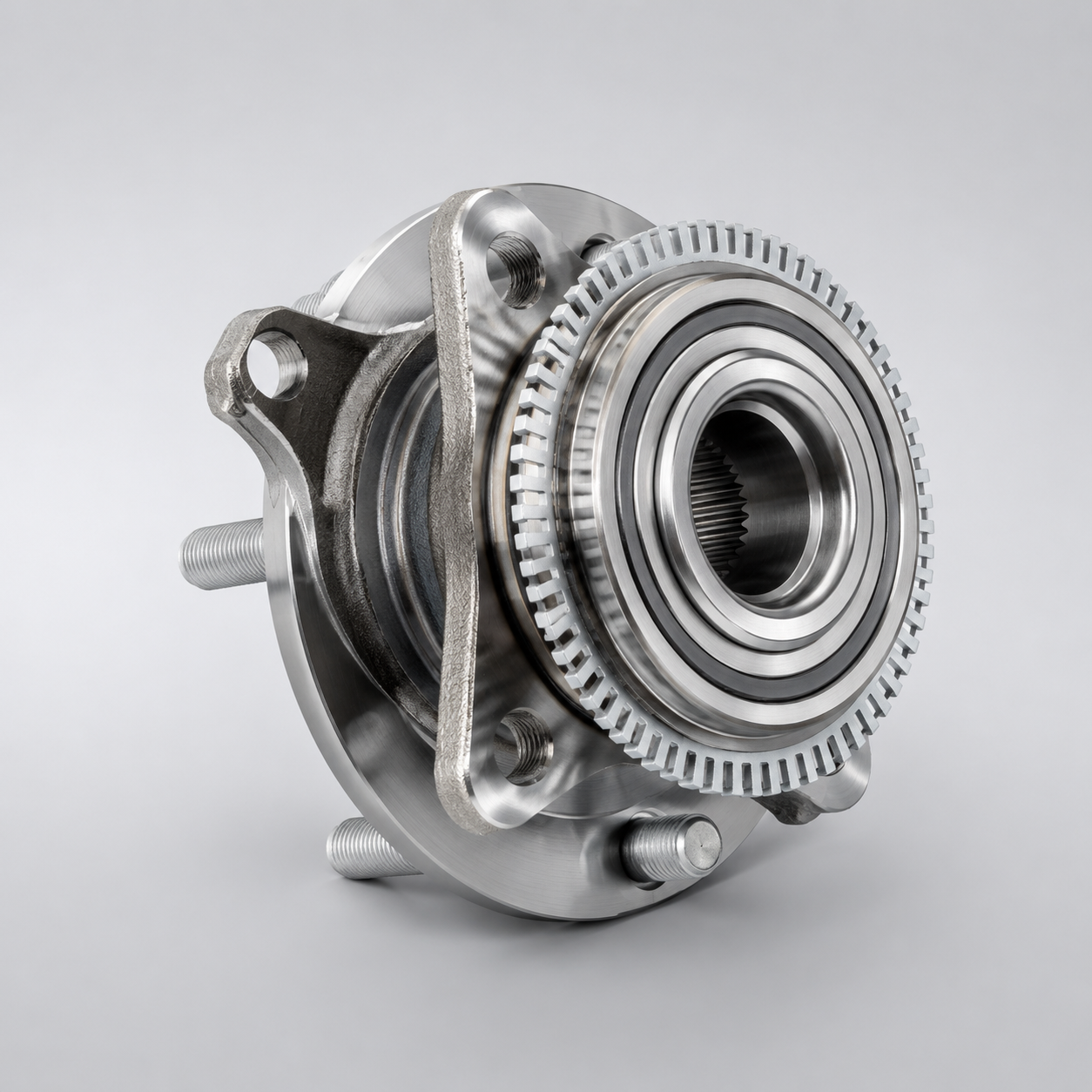
Bolt-on hub bearing assembly
$35-$140
0.8-2.0 hours
$160-$380
Rear integrated hub with ABS encoder
$45-$160
1.0-2.2 hours
$180-$420
Heavy SUV / van hub unit
$70-$220
1.5-3.5 hours
$260-$620
</tr></thead><tbody> </tbody></table>The pattern is simple. Press-in bearings usually look cheaper on paper, but they expose the workshop to more labour and more installation variability. Hub assemblies cost more as parts, yet often cut time and reduce tool dependence.
In the US, urban labour rates often run from $110 to $190 per hour; smaller markets often sit closer to $80-$130. In many EU markets, independent workshop labour commonly falls in the €70-€140 per hour range, with dealer rates above that. That is why an extra 0.5 labour hour can add $40-$95 before tax.
For sourcing teams, product format changes the supply picture too:
Gen 1 press-in bearings usually offer the lowest ex-works price but create higher workshop labour exposure.
Gen 2 / Gen 3 hub units usually raise the piece price while reducing installation time and handling risk.
Kitted repairs with nut, circlip, seal, and related hardware may add only $2-$8 at supply level but can prevent delays and claim disputes.
Typical wholesale terms also vary by format:
Supply format
Common MOQ
Sample lead time
Production lead time
Standard bearing, neutral pack
100-300 pcs/SKU
7-15 days
25-40 days
Hub assembly, neutral pack
50-200 pcs/SKU
7-15 days
30-45 days
Application kit / private label
200-500 pcs/SKU
10-20 days
35-50 days
New-tooling or low-volume special item
Case by case
20-45 days
45-75 days
</tr></thead><tbody> </tbody></table>The cheapest advertised bearing is not always the cheapest repair. If tolerances drift, sealing is weak, or fit-up force is inconsistent, the saving disappears in noise complaints, ABS faults, or premature failures.
Six failure points that push wheel bearing cost upward
If you want to explain why the price to fix a wheel bearing rises, start with the failure points that add labour, parts, or comeback risk.
1. Bearing architecture
A generation 1 press-in bearing usually carries a lower part cost but a higher labour burden. A generation 2 or 3 hub unit costs more as a component, yet often installs faster. In many workshops, the time gap between a press-in bearing and a bolt-on hub is 0.7-1.5 hours per side.
2. Front versus rear axle
Front positions usually take more abuse from steering and braking loads. Removal can take longer because of driveshaft nuts, tight torque values, or corroded fasteners. Front axle nuts are often tightened in roughly the 180-300 Nm range depending on platform, so reassembly errors can damage preload and shorten service life.
3. Corrosion and extraction difficulty
Rust changes the job fast. Snow-belt and coastal vehicles often need pullers, heat, replacement hardware, or extra cleanup before the new part can be installed correctly. Severe corrosion can add 0.5-1.5 labour hours and shift a nominal $220 repair into the $320-$450 range.
4. ABS integration
Many modern hubs include encoder rings or integrated sensor targets. When encoder quality is unstable, the part may fit mechanically but still trigger an immediate warning light. Buyers should ask for pole-count validation, sensor-gap compatibility, and functional checks on encoded units.
5. Collateral parts
Extra cost often comes from small items that are easy to overlook:
axle nuts and one-time-use fasteners
circlips, seals, and dust caps
damaged steering knuckles or hubs
wheel speed sensors
alignment after front-end disassembly
Individually, these may seem minor. Together, they can add $10-$60 in parts and $40-$150 in extra service value.
6. Vehicle class
Compact cars usually sit at the low end of the range. Crossovers, pickups, light commercial vans, and AWD platforms usually cost more because access is harder and load requirements are higher. Larger bearings, heavier flanges, and tougher durability targets raise both ex-works cost and installed cost.
Why the lowest part price often produces the highest real cost
For distributors and repair groups, part price alone is a weak buying metric. The better lens is total ownership cost across the warranty period.
Buying factor
Low-control supply risk
What procurement should verify
Bearing steel and heat treatment
Early noise, spalling, short life
Material grade, hardness range, metallurgical records
Raceway geometry
Vibration, excess preload variation
Dimensional control, roundness, surface finish data
Grease fill
Overheating or poor cold-start lubrication
Grease specification and fill consistency
Seal design
Water ingress, grease loss
Seal material compatibility and ingress testing
ABS encoder accuracy
Warning lights, sensor faults
Functional validation on encoded units
Corrosion protection
Seized fits, poor shelf performance
Coating thickness and salt-spray resistance
</tr></thead><tbody> </tbody></table>A credible supplier should work inside a documented quality system and provide traceability. For automotive buyers, IATF 16949:2016 and ISO 9001:2015 remain core signals of process control. Exported parts should also align with REACH (EC) No 1907/2006 where applicable.
Push for measurable controls, not generic claims. Useful checkpoints include:
hardness control, often with raceway targets around HRC 58-64 depending on design
bore and outside-diameter tolerance control to drawing values in the micron range
hub flange runout and mounting-face runout records for integrated units
rotating torque windows before shipment to screen out preload issues
grease fill mass tolerance within a narrow gram range per cavity
salt-spray performance for coated surfaces, often benchmarked at 72-240 hours depending on finish
When a supplier cannot show inspection records, torque checks, end-play control data, or validation for seal integrity and noise performance, the risk moves downstream to the distributor or workshop. A return-rate gap between 0.5% and 3.0% is not small. On 10,000 units, that means 250 additional claims, and each installed claim can easily cost $80-$200 once freight, labour support, and administration are included. You can review our catalog and quality system pages to see how these controls are commonly presented in a B2B sourcing context.
A simple buyer model for estimating installed wheel bearing cost
A useful buying model treats the price to fix a wheel bearing as an installed-cost problem, not a catalog-price problem.
Basic formula
Installed repair cost = part cost + labour cost + related hardware + diagnostic / alignment charges + expected warranty exposure
That last term matters. A lower-grade hub that saves $28 on purchase can lose the entire advantage if even a small percentage comes back with noise, looseness, or ABS complaints.
A simple SKU-level model looks like this:
Expected total cost per installed unit = landed part cost + average labour allowance + hardware allowance + comeback rate × average claim cost
Expected total cost = $37 + $135 + $12 + (0.04 × $120) = $188.80 before reputational damage.
At first glance, it still looks cheaper. But if the true claim cost is $180 rather than $120, that advantage disappears. That is why price comparisons only make sense when paired with realistic field-performance assumptions.
Checks that belong in the sourcing model
whether the application uses a press-in bearing or complete hub assembly
static and dynamic load rating versus vehicle class
dimensional interchangeability with OE drawing targets
sealing material for water, dust, and road salt exposure
torque retention requirements for axle nuts and mounting bolts
packaging protection against transport contamination
Commercial items matter as well:
MOQ by SKU and whether mixed-size consolidation is accepted
ex-works versus FOB or CIF quote basis
repeat-order lead time versus first-order label approval time
safety-stock support for fast-moving references
sample policy, PPAP-style documentation availability, and warranty debit procedure
For high-volume programmes, private-label packing, custom kitting, and controlled marking formats can matter just as much as part cost, especially when serving chain workshops. Where that applies, custom manufacturing may be more relevant than buying loose standard stock.
Scenario: how waiting too long changes the repair economics
Timing changes the price to fix a wheel bearing more than many buyers or end customers expect.
A bearing that starts with a light hum is often still a contained repair. Leave it too long, and the job can expand into a hub, sensor, fastener, or knuckle problem. At that point, the workshop is no longer replacing a bearing; it is managing secondary damage.
A practical progression looks like this:
Condition at intake
Typical repair scope
Cost effect
Light noise, no measurable play
Bearing or hub only
Stays near base cost
Noise plus initial play
Bearing/hub plus hardware
Usually adds $10-$40
Heat discoloration or seized fit
Hub, sensor, fasteners, extra extraction labour
Often adds $80-$220
Damaged knuckle / spindle interface
Extended mechanical repair
Can add $150-$500+
</tr></thead><tbody> </tbody></table>For workshops, the lesson is straightforward: early intervention usually protects the labour budget. For distributors and fleet suppliers, the lesson is different: consistent product quality helps prevent repeat visits and unstable service intervals.
This is where preload control, surface finish, seal retention, and corrosion protection start to matter commercially. Buyers supporting fleet or repair-chain contracts should compare fitted cost, claim rate, and batch-to-batch stability, not just ex-works price.
For importers, it is also worth asking how the supplier controls batch traceability, rust preventive application, and final inspection before shipment. Those details affect shelf life, corrosion resistance, and installation reliability in export markets such as the EU, UK, US, Canada, Australia, and Brazil. As a working benchmark, well-packed hub units are often expected to maintain stable shelf condition for 12-24 months in dry storage when bag sealing, carton protection, and preservative control are handled correctly.
Questions to settle before placing a volume order
Before choosing a supplier, procurement teams should ask questions that connect directly to field performance and the real price to fix a wheel bearing.
Start with the basics:
product type coverage: generation 1, 2, and 3 wheel bearings and hub units
plant certification: IATF 16949:2016 and ISO 9001:2015
compliance support: REACH (EC) No 1907/2006 declarations where needed
traceability: batch code control and retention period for quality records
packaging options: neutral, private label, or application kit format
commercial terms: MOQ, lead time, claim handling, and sample approval flow
Then push the conversation into specifics:
What is the MOQ per SKU, and is a 50-100 piece trial order possible?
What is the standard production lead time, and how much does peak season extend it?
How quickly can samples be supplied, and are sample charges credited back against opening orders?
What dimensional report format is available, and how are noise, endurance, and encoder checks documented?
What are the standard carton quantities, pallet patterns, and shipment weights?
How are claims handled, how fast is root-cause feedback issued, and is the remedy replacement or credit?
If exclusive markings, rings, or seals are developed, who owns the tooling?
For distributors expanding range coverage, it usually makes sense to begin with high-turn applications where repair demand is frequent and price sensitivity is high. A disciplined supplier review can reduce claim rates without pushing the workshop-installed price out of market.
If you are comparing sourcing options for hub assemblies or bearing kits, Driventus can support application review, technical documentation, and export supply planning. Request a quote if you want to discuss programme volumes or fitment coverage.
Frequently asked questions
For many passenger vehicles, installed cost commonly falls between $160 and $420. Heavy SUVs, vans, and difficult press-in jobs can exceed that range, especially where corrosion, ABS integration, or extra hardware increases labour time. In buyer cost models, each additional 0.5 labour hour often adds roughly $40-$95 depending on local workshop rates.
Usually yes on part price, but not always on total repair cost. A hub assembly often installs 0.7-1.5 labour hours faster, so labour savings can offset the higher component price, especially in markets with high workshop hourly rates or where press removal risk is high.
Check dimensional consistency, material and heat-treatment control, seal performance, grease specification, ABS encoder validation, traceability, and plant certification such as IATF 16949:2016 and ISO 9001:2015. Buyers should also confirm MOQ, production lead time, claim-handling process, packaging format, and measurable controls such as hardness, runout, rotating torque, and corrosion-test standards.
If you are benchmarking wheel bearing supply for distribution or repair-network programmes, Driventus can provide technical and commercial support on pricing, MOQ, lead time, validation expectations, and fitment planning without overcomplicating the sourcing process. Contact the team here: /contact.html